Chloe Wigston Smith - Böcker
Visar alla böcker från författaren Chloe Wigston Smith. Handla med fri frakt och snabb leverans.
6 produkter
6 produkter
Novels, Needleworks, and Empire
Material Entanglements in the Eighteenth-Century Atlantic World
Inbunden, Engelska, 2024
605 kr
Skickas inom 7-10 vardagar
The first sustained study of the vibrant links between domestic craft and British colonialism Finalist, Susanne M. Glasscock Book Prize In the eighteenth century, women’s contributions to empire took fewer official forms than those collected in state archives. Their traces were recorded in material ways, through the ink they applied to paper or the artifacts they created with muslin, silk threads, feathers, and shells. Handiwork, such as sewing, knitting, embroidery, and other crafts, formed a familiar presence in the lives and learning of girls and women across social classes, and it was deeply connected to colonialism. Chloe Wigston Smith follows the material and visual images of the Atlantic world that found their way into the hands of women and girls in Britain and early America—in the objects they made, the books they held, the stories they read—and in doing so adjusted and altered the form and content of print and material culture. A range of artifacts made by women, including makers of color, brought the global into conversation with domestic crafts and consequently placed images of empire and colonialism within arm’s reach. Together, fiction and handicrafts offer new evidence of women’s material contributions to the home’s place within the global eighteenth century, revealing the rich and complex connections between the global and the domestic.
1 431 kr
Skickas inom 7-10 vardagar
This groundbreaking study examines the vexed and unstable relations between the eighteenth-century novel and the material world. Rather than exploring dress's transformative potential, it charts the novel's vibrant engagement with ordinary clothes in its bid to establish new ways of articulating identity and market itself as a durable genre. In a world in which print culture and textile manufacturing traded technologies, and paper was made of rags, the novel, by contrast, resisted the rhetorical and aesthetic links between dress and expression, style and sentiment. Chloe Wigston Smith shows how fiction exploited women's work with clothing - through stealing, sex work, service, stitching, and the stage - in order to revise and reshape material culture within its pages. Her book explores a diverse group of authors, including Jane Barker, Jonathan Swift, Daniel Defoe, Eliza Haywood, Samuel Richardson, Henry Fielding, Charlotte Lennox, John Cleland, Frances Burney and Mary Robinson.
Small Things in the Eighteenth Century
The Political and Personal Value of the Miniature
Inbunden, Engelska, 2022
1 189 kr
Skickas inom 7-10 vardagar
Offering an intimate history of how small things were used, handled, and worn, this collection shows how objects such as mugs and handkerchiefs were entangled with quotidian practices and rituals of bodily care. Small things, from tiny books to ceramic trinkets and toothpick cases, could delight and entertain, generating tactile pleasures for users while at the same time signalling the limits of the body's adeptness or the hand's dexterity. Simultaneously, the volume explores the striking mobility of small things: how fans, coins, rings, and pottery could, for instance, carry political, philosophical, and cultural concepts into circumscribed spaces. From the decorative and playful to the useful and performative, such small things as tea caddies, wampum beads, and drawings of ants negotiated larger political, cultural, and scientific shifts as they transported aesthetic and cultural practices across borders, via nationalist imagery, gift exchange, and the movement of global goods.
Small Things in the Eighteenth Century
The Political and Personal Value of the Miniature
Häftad, Engelska, 2025
356 kr
Skickas inom 7-10 vardagar
Offering an intimate history of how small things were used, handled, and worn, this collection shows how objects such as mugs and handkerchiefs were entangled with quotidian practices and rituals of bodily care. Small things, from tiny books to ceramic trinkets and toothpick cases, could delight and entertain, generating tactile pleasures for users while at the same time signalling the limits of the body's adeptness or the hand's dexterity. Simultaneously, the volume explores the striking mobility of small things: how fans, coins, rings, and pottery could, for instance, carry political, philosophical, and cultural concepts into circumscribed spaces. From the decorative and playful to the useful and performative, such small things as tea caddies, wampum beads, and drawings of ants negotiated larger political, cultural, and scientific shifts as they transported aesthetic and cultural practices across borders, via nationalist imagery, gift exchange, and the movement of global goods.
493 kr
Skickas inom 7-10 vardagar
This groundbreaking study examines the vexed and unstable relations between the eighteenth-century novel and the material world. Rather than exploring dress's transformative potential, it charts the novel's vibrant engagement with ordinary clothes in its bid to establish new ways of articulating identity and market itself as a durable genre. In a world in which print culture and textile manufacturing traded technologies, and paper was made of rags, the novel, by contrast, resisted the rhetorical and aesthetic links between dress and expression, style and sentiment. Chloe Wigston Smith shows how fiction exploited women's work with clothing - through stealing, sex work, service, stitching, and the stage - in order to revise and reshape material culture within its pages. Her book explores a diverse group of authors, including Jane Barker, Jonathan Swift, Daniel Defoe, Eliza Haywood, Samuel Richardson, Henry Fielding, Charlotte Lennox, John Cleland, Frances Burney and Mary Robinson.
372 kr
Skickas inom 7-10 vardagar
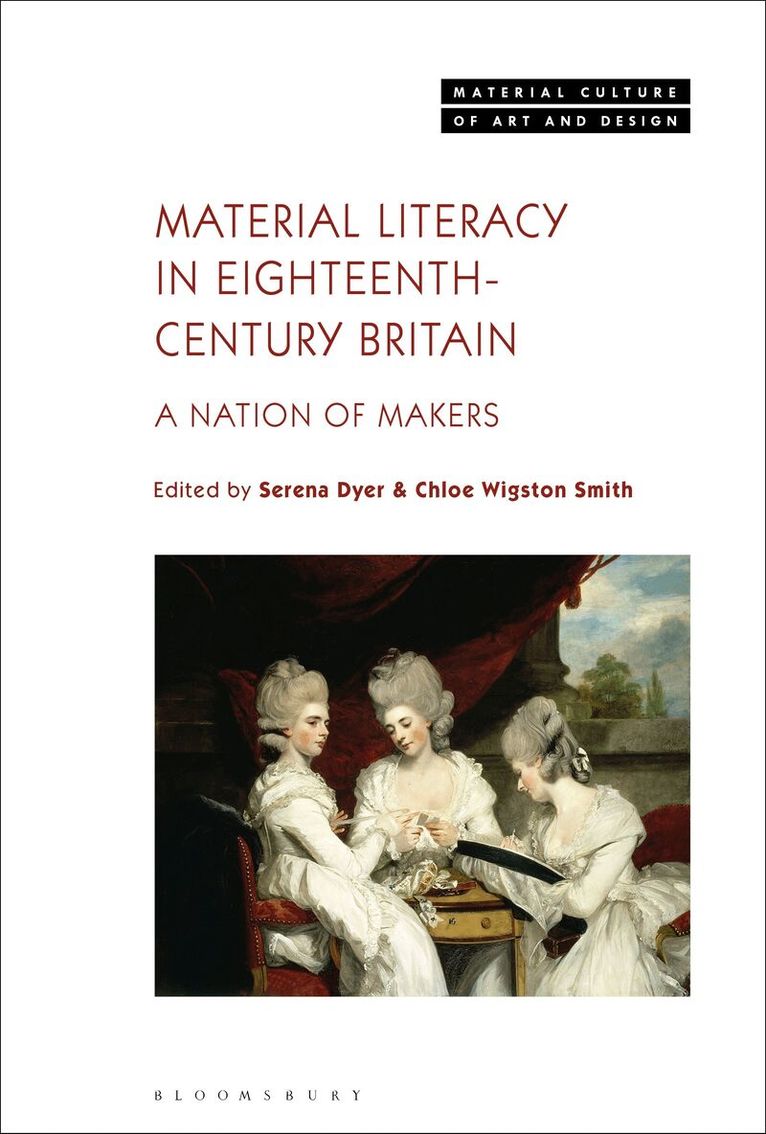
Longlisted for the Historians of British Art Book Prize 2023The 18th century has been hailed for its revolution in consumer culture, but Material Literacy in Eighteenth-Century Britain repositions Britain as a nation of makers. It brings new attention to 18th-century craftswomen and men with its focus on the material knowledge possessed not only by professional artisans and amateur makers, but also by skilled consumers. This book gathers together a group of interdisciplinary scholars working in the fields of art history, history, literature and museum studies to unearth the tactile and tacit knowledge that underpinned fashion, tailoring and textile production. It invites us into the workshops, drawing rooms and backrooms of a broad range of creators, and uncovers how production and manual knowledge extended beyond the factories and machines which dominate industrial histories.This book illuminates, for the first time, the material literacies learnt, enacted and understood by British producers and consumers. The skills required for sewing, embroidering and the textile arts were possessed by a large proportion of the British population: men, women and children, professional and amateur alike. Building on previous studies of shoppers and consumption in the period, as well as narratives of manufacture, this collection documents the multiplicity of small producers behind Britain’s consumer revolution, reshaping our understanding of the dynamics between making and objects, consumption and production. It demonstrates how material knowledge formed an essential part of daily life for eighteenth-century Britons. Craft technique, practice and production, the contributors show, constituted forms of tactile languages that joined makers together, whether they produced objects for profit or pleasure.