Beth Fowkes Tobin - Böcker
Visar alla böcker från författaren Beth Fowkes Tobin. Handla med fri frakt och snabb leverans.
8 produkter
8 produkter
403 kr
Tillfälligt slut
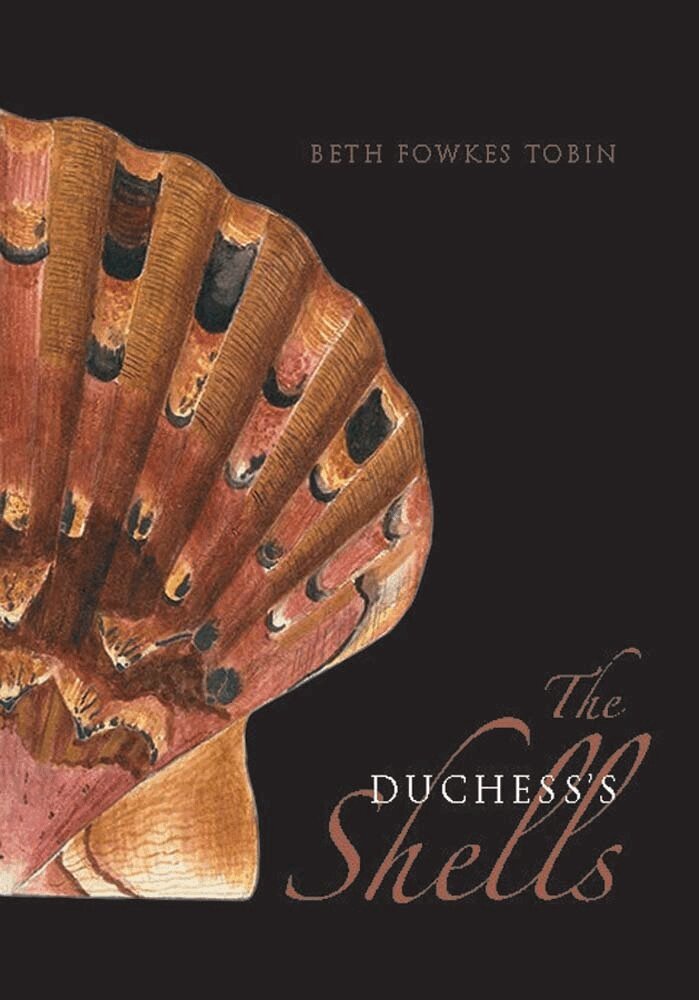
Margaret Cavendish Bentinck, the 2nd Duchess of Portland (1715–1785), was one of the wealthiest women in eighteenth-century Britain. She collected fine and decorative arts (the Portland Vase was her most famous acquisition), but her great love was natural history, and shells in particular. Over the course of twenty years, she amassed the largest shell collection of her time, which was sold after her death in a spectacular auction. Beth Fowkes Tobin illuminates the interlocking issues surrounding the global circulation of natural resources, the commodification of nature, and the construction of scientific value through the lens of one woman’s marvelous collection. This unique study tells the story of the collection’s formation and dispersal—about the sailors and naturalists who ferried rare specimens across oceans and the dealers’ shops and connoisseurs’ cabinets on the other side of the world. Exquisitely illustrated, this book brings to life Enlightenment natural history and its cultures of collecting, scientific expeditions, and vibrant visual culture.Published for the Paul Mellon Centre for Studies in British Art
2 236 kr
Skickas inom 10-15 vardagar
In contrast to much current scholarship on women and material culture which focuses primarily on women as consumers, this essay collection provides case studies of women who produced material objects. The essays collected here make an original contribution to material culture studies by focusing on women's social practices in relation to material culture. The essays as a whole are concerned with women's complex and active engagement with material culture in the various stages of the material object's life cycle, from design and production to consumption, use, and redeployment. Also, theorized and described are the ways in which women engaged in meaning making, identity formation, and commemoration through their manipulation of materials and techniques, ranging from taxidermy and shell work to collecting autographs and making scrapbooks. This volume takes as its object of investigation the overlooked and often despised categories of women's decorative and craft activities as sites of important cultural and social work. This volume is interdisciplinary with essays by art historians, social historians, literary critics, rhetoricians, and museum curators. The scope of the volume is international with essays on eighteenth-century German silhouettes, Australian aboriginal ritual practices, Brittany mourning rites, and Soviet-era recipes that provide a comparative framework for the majority of essays which focus on British and North American women who lived and worked in the long nineteenth century. This volume will appeal to a broad range of students and scholars in women's history, art history, cultural studies, museum studies, anthropology, cultural and social history, literature, rhetoric, and material culture studies.
3 406 kr
Tillfälligt slut
988 kr
Skickas inom 10-15 vardagar
With its control of sugar plantations in the Caribbean and tea, cotton, and indigo production in India, Britain in the eighteenth and nineteenth centuries dominated the global economy of tropical agriculture. In Colonizing Nature, Beth Fowkes Tobin shows how dominion over "the tropics" as both a region and an idea became central to the way in which Britons imagined their role in the world.Tobin examines georgic poetry, landscape portraiture, natural history writing, and botanical prints produced by Britons in the Caribbean, the South Pacific, and India to uncover how each played a crucial role in developing the belief that the tropics were simultaneously paradisiacal and in need of British intervention and management. Her study examines how slave garden portraits denied the horticultural expertise of the slaves, how the East India Company hired such artists as William Hodges to paint and thereby Anglicize the landscape and gardens of British-controlled India, and how writers from Captain James Cook to Sir James E. Smith depicted tropical lands and plants.Just as mastery of tropical nature, and especially its potential for agricultural productivity, became key concepts in the formation of British imperial identity, Colonizing Nature suggests that intellectual and visual mastery of the tropics-through the creation of art and literature-accompanied material appropriations of land, labor, and natural resources. Tobin convincingly argues that the depictions of tropical plants, gardens, and landscapes that circulated in the British imagination provide a key to understanding the forces that shaped the British Empire.
Picturing Imperial Power
Colonial Subjects in Eighteenth-Century British Painting
Häftad, Engelska, 1999
557 kr
Skickas inom 3-6 vardagar
This study of colonialism and art examines the intersection of visual culture and political power in late-eighteenth-century British painting. Focusing on paintings from British America, the West Indies, and India, Beth Fowkes Tobin investigates the role of art in creating and maintaining imperial ideologies and practices-as well as in resisting and complicating them.Informed by the varied perspectives of postcolonial theory, Tobin explores through close readings of colonial artwork the dynamic middle ground in which cultures meet. Linking specific colonial sites with larger patterns of imperial practice and policy, she examines paintings by William Hogarth, Benjamin West, Gilbert Stuart, Arthur William Devis, and Agostino Brunias, among others. These works include portraits of colonial officials, conversation pieces of British families and their servants, portraits of Native Americans and Anglo-Indians, and botanical illustrations produced by Calcutta artists for officials of the British Botanic Gardens. In addition to examining the strategies that colonizers employed to dominate and define their subjects, Tobin uncovers the tactics of negotiation, accommodation, and resistance that make up the colonized’s response to imperial authority. By focusing on the paintings’ cultural and political engagement with imperialism, she accounts for their ideological power and visual effect while arguing for their significance as agents in the colonial project. Pointing to the complexity, variety, and contradiction within colonial art, Picturing Imperial Power contributes to an understanding of colonialism as a collection of social, economic, political, and epistemological practices that were not monolithic and inevitable, but contradictory and contingent on various historical forces. It will interest students and scholars of colonialism, imperial history, postcolonial history, art history and theory, and cultural studies.
Small Things in the Eighteenth Century
The Political and Personal Value of the Miniature
Inbunden, Engelska, 2022
1 189 kr
Skickas inom 7-10 vardagar
Offering an intimate history of how small things were used, handled, and worn, this collection shows how objects such as mugs and handkerchiefs were entangled with quotidian practices and rituals of bodily care. Small things, from tiny books to ceramic trinkets and toothpick cases, could delight and entertain, generating tactile pleasures for users while at the same time signalling the limits of the body's adeptness or the hand's dexterity. Simultaneously, the volume explores the striking mobility of small things: how fans, coins, rings, and pottery could, for instance, carry political, philosophical, and cultural concepts into circumscribed spaces. From the decorative and playful to the useful and performative, such small things as tea caddies, wampum beads, and drawings of ants negotiated larger political, cultural, and scientific shifts as they transported aesthetic and cultural practices across borders, via nationalist imagery, gift exchange, and the movement of global goods.
Small Things in the Eighteenth Century
The Political and Personal Value of the Miniature
Häftad, Engelska, 2025
356 kr
Skickas inom 7-10 vardagar
Offering an intimate history of how small things were used, handled, and worn, this collection shows how objects such as mugs and handkerchiefs were entangled with quotidian practices and rituals of bodily care. Small things, from tiny books to ceramic trinkets and toothpick cases, could delight and entertain, generating tactile pleasures for users while at the same time signalling the limits of the body's adeptness or the hand's dexterity. Simultaneously, the volume explores the striking mobility of small things: how fans, coins, rings, and pottery could, for instance, carry political, philosophical, and cultural concepts into circumscribed spaces. From the decorative and playful to the useful and performative, such small things as tea caddies, wampum beads, and drawings of ants negotiated larger political, cultural, and scientific shifts as they transported aesthetic and cultural practices across borders, via nationalist imagery, gift exchange, and the movement of global goods.
843 kr
Skickas inom 10-15 vardagar
In contrast to much current scholarship on women and material culture which focuses primarily on women as consumers, this essay collection provides case studies of women who produced material objects. The essays collected here make an original contribution to material culture studies by focusing on women's social practices in relation to material culture. The essays as a whole are concerned with women's complex and active engagement with material culture in the various stages of the material object's life cycle, from design and production to consumption, use, and redeployment. Also, theorized and described are the ways in which women engaged in meaning making, identity formation, and commemoration through their manipulation of materials and techniques, ranging from taxidermy and shell work to collecting autographs and making scrapbooks. This volume takes as its object of investigation the overlooked and often despised categories of women's decorative and craft activities as sites of important cultural and social work. This volume is interdisciplinary with essays by art historians, social historians, literary critics, rhetoricians, and museum curators. The scope of the volume is international with essays on eighteenth-century German silhouettes, Australian aboriginal ritual practices, Brittany mourning rites, and Soviet-era recipes that provide a comparative framework for the majority of essays which focus on British and North American women who lived and worked in the long nineteenth century. This volume will appeal to a broad range of students and scholars in women's history, art history, cultural studies, museum studies, anthropology, cultural and social history, literature, rhetoric, and material culture studies.