Chris Matthew Sciabarra - Böcker
Visar alla böcker från författaren Chris Matthew Sciabarra. Handla med fri frakt och snabb leverans.
5 produkter
5 produkter
481 kr
Skickas inom 7-10 vardagar
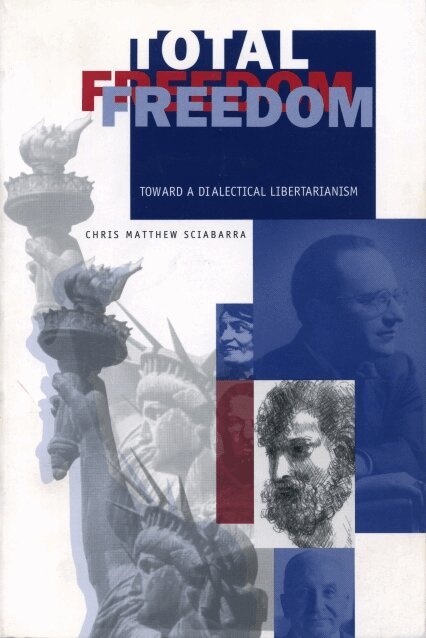
Building upon his previous books about Marx, Hayek, and Rand, Total Freedom completes what Lingua Franca has called Sciabarra’s "epic scholarly quest" to reclaim dialectics, usually associated with the Marxian left, as a methodology that can revivify libertarian thought. Part One surveys the history of dialectics from the ancient Greeks through the Austrian school of economics. Part Two investigates in detail the work of Murray Rothbard as a leading modern libertarian, in whose thought Sciabarra finds both dialectical and nondialectical elements. Ultimately, Sciabarra aims for a dialectical-libertarian synthesis, highlighting the need (not sufficiently recognized in liberalism) to think of the "totality" of interconnections in a dynamic system as the way to ensure human freedom while avoiding "totalitarianism" (such as resulted from Marxism).
460 kr
Skickas inom 7-10 vardagar
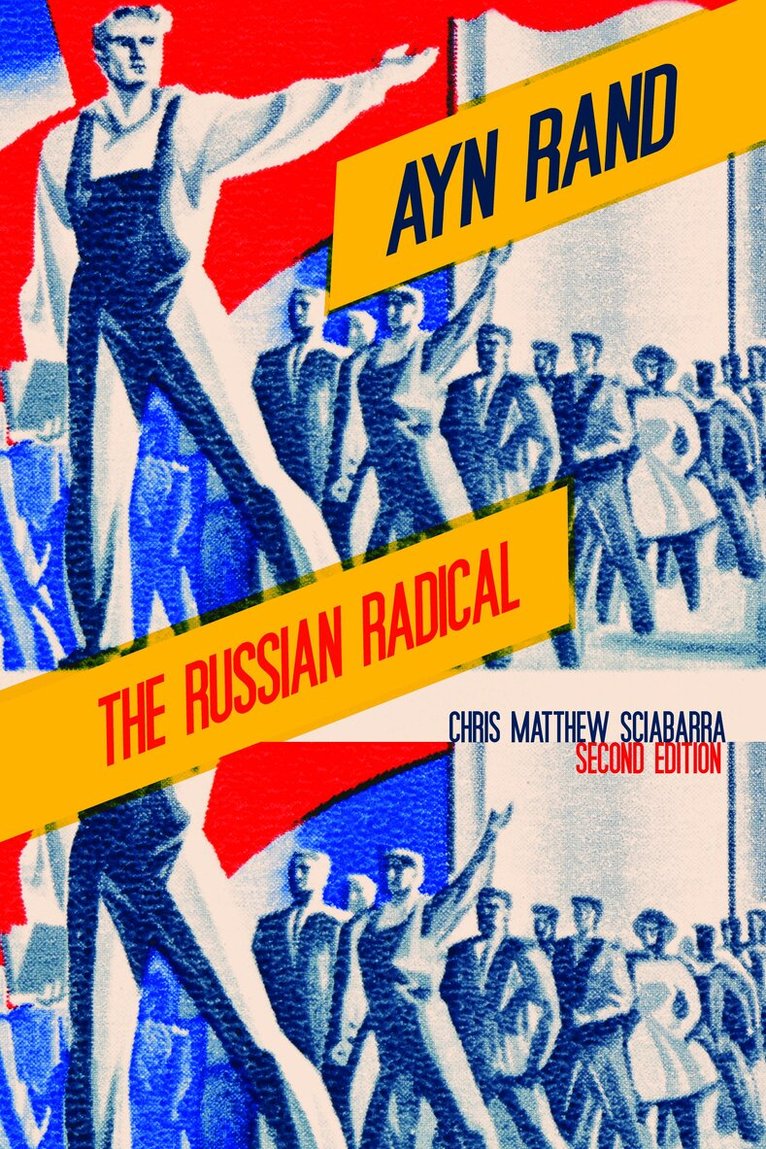
Author of The Fountainhead and Atlas Shrugged, Ayn Rand (1905–1982) is one of the most widely read philosophers of the twentieth century. Yet, despite the sale of over thirty million copies of her works, there have been few serious scholarly examinations of her thought. Ayn Rand: The Russian Radical provides a comprehensive analysis of the intellectual roots and philosophy of this controversial thinker. It has been nearly twenty years since the original publication of Chris Sciabarra’s Ayn Rand: The Russian Radical. Those years have witnessed an explosive increase in Rand sightings across the social landscape: in books on philosophy, politics, and culture; in film and literature; and in contemporary American politics, from the rise of the Tea Party to recent presidential campaigns. During this time Sciabarra continued to work toward the reclamation of the dialectical method in the service of a radical libertarian politics, culminating in his book Total Freedom: Toward a Dialectical Libertarianism (Penn State, 2000). In this new edition of Ayn Rand, Chris Sciabarra adds two chapters that present in-depth analysis of the most complete transcripts to date documenting Rand’s education at Petrograd State University. A new preface places the book in the context of Sciabarra’s own research and the recent expansion of interest in Rand’s philosophy. Finally, this edition includes a postscript that answers a recent critic of Sciabarra’s historical work on Rand. Shoshana Milgram, Rand’s biographer, has tried to cast doubt on Rand’s own recollections of having studied with the famous Russian philosopher N. O. Lossky. Sciabarra shows that Milgram’s analysis fails to cast doubt on Rand’s recollections—or on Sciabarra’s historical thesis.
1 057 kr
Tillfälligt slut
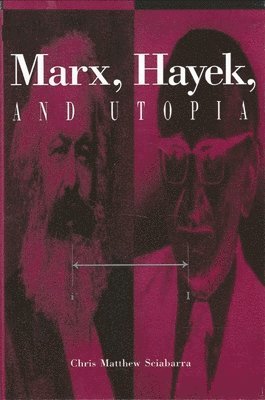
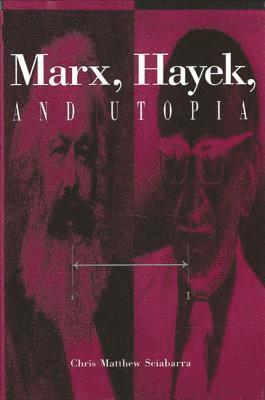
Develops a critique of utopianism through a comparison of the works of Karl Marx and F. A. Hayek, challenging conventional views of both Marxian and Hayekian thought.This book develops a critique of utopianism through a provocative comparison of the works of Karl Marx and F. A. Hayek, thus engaging two vastly different traditions in critical dialogue. By emphasizing the methodological and substantive similarities between Marxian and Hayekian perspectives, it challenges each tradition's most precious assumptions about the other. Through this comparative analysis, the book articulates the crucial distinctions between utopian and radical theorizing.Sciabarra examines the dialectical method of social inquiry common to both Marxian and Hayekian thought and argues that both Marx and Hayek rejected utopian theorizing because it internalizes an abstract, ahistorical, exaggerated sense of human possibility. The chief disagreement between Marx and Hayek, he shows, is not political but epistemological, reflecting their differing assumptions about the limits of reason.
552 kr
Skickas inom 3-6 vardagar
Develops a critique of utopianism through a comparison of the works of Karl Marx and F. A. Hayek, challenging conventional views of both Marxian and Hayekian thought.This book develops a critique of utopianism through a provocative comparison of the works of Karl Marx and F. A. Hayek, thus engaging two vastly different traditions in critical dialogue. By emphasizing the methodological and substantive similarities between Marxian and Hayekian perspectives, it challenges each tradition's most precious assumptions about the other. Through this comparative analysis, the book articulates the crucial distinctions between utopian and radical theorizing.Sciabarra examines the dialectical method of social inquiry common to both Marxian and Hayekian thought and argues that both Marx and Hayek rejected utopian theorizing because it internalizes an abstract, ahistorical, exaggerated sense of human possibility. The chief disagreement between Marx and Hayek, he shows, is not political but epistemological, reflecting their differing assumptions about the limits of reason.
568 kr
Skickas inom 10-15 vardagar
This collection of essays explores the ways in which the defense of liberty can be bolstered by use of a dialectical method—that is, a mode of analysis devoted to grasping the full context of philosophical, cultural, and social factors requisite to the sustenance of human freedom. Its strength lies in the variety of disciplines and perspectives represented by contributors who apply explicitly dialectical tools to a classical liberal / libertarian analysis of social and cultural issues. In its conjoining of a dialectical method, typically associated with the socialist left, to a defense of individual liberty, typically associated with the libertarian right, this anthology challenges contemporary attitudes on both ends of the political spectrum. Though this conjunction of dialectics and liberty has been explored before in several works, including a trilogy of books written by one of our coeditors (Chris Matthew Sciabarra), this volume will be the first one of its kind to bring together accomplished scholars in political science, economics, philosophy, aesthetics, psychology, law, history, education, and rhetoric.