
Chris Upton – författare
Visar alla böcker från författaren Chris Upton. Handla med fri frakt och snabb leverans.
3 produkter
3 produkter
Häftad, Engelska, 2011
218 kr
Skickas
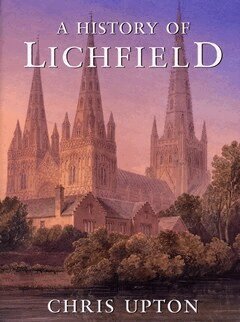
Lichfield, of all the towns and cities in the West Midlands, has the longest and most intriguing history. Its famous son, Dr. Samuel Johnson, called it 'a city of philosophers' and the extraordinary society of writers, scientists and thinkers who lived in the shadow of its great cathedral in the 18th century proved his point. By that time the city already had well over a thousand years of history under its belt, since St Chad came down from York in the 7th century and recognised Lichfield as a place of mystery and power, perfect for his new church. In the Middle Ages, powerful bishops fortified the town and the close and created one of the earliest markets in the Midlands. Such was its importance that every English king included it in his itinerary. In the 1640s Lichfield was the focus for one of the most dramatic conflicts of the Civil War, when within four years the city came under siege three times. In this important new book, Dr. Upton, who is as well known for his entertaining style of writing as for his erudition, has provided a comprehensive and compelling account of one of England's great cathedral cities from its early Saxon origins to its modern growth. A tale of two cities - the ecclesiastical centre of prime importance and the market town struggling to emerge from the shade of the three famous spires - it takes in a holy well, a royal prisoner, a notorious asylum and Dr. Darwin's amorous cat with many amusing stories of former residents and notable incidents. It is the book that Lichfield has been waiting for!
Häftad, Engelska, 2019
243 kr
Skickas inom 11-20 vardagar
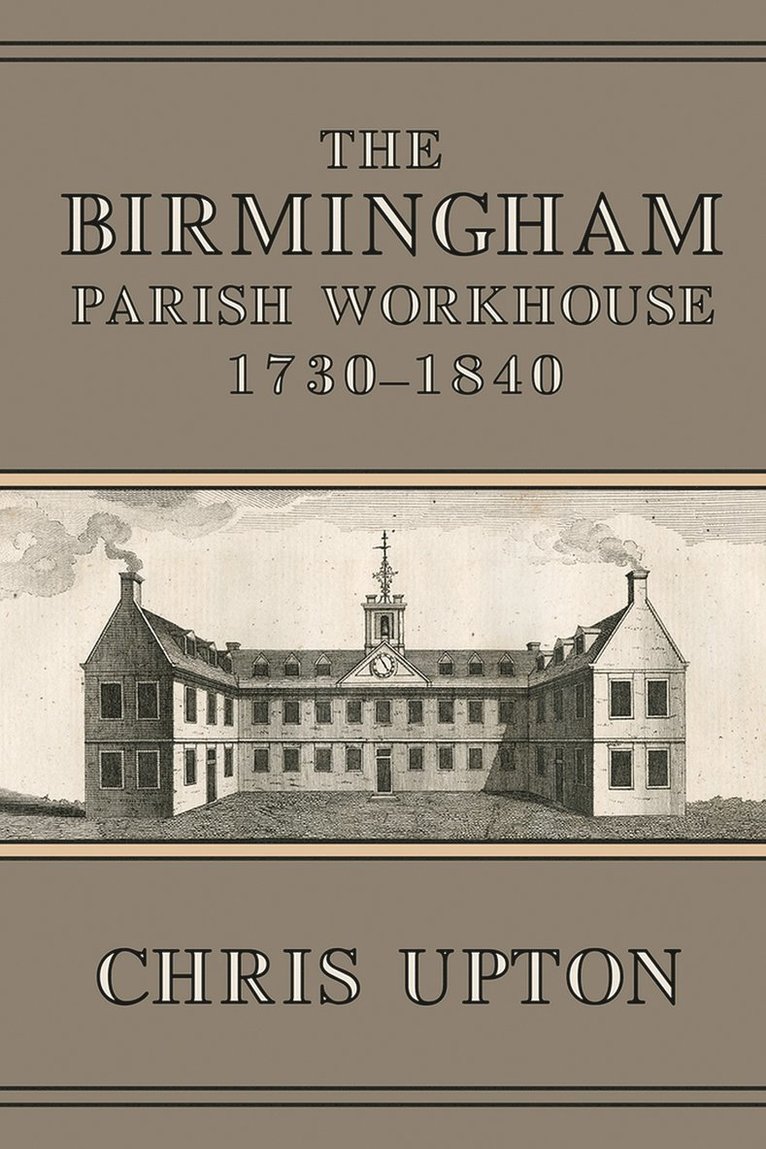
Very little is known of the first workhouse in Birmingham, which was located in Lichfield Street. Even the assumed date of its building, given as 1733 by William Hutton, Birmingham’s first historian, is wrong. This book is the first attempt to write a history of the workhouse and the ancillary welfare provision for Birmingham, frequently referred to as the `Old Poor Law’. The first workhouse remained in operation until 1852 when a new building with its infamous `arch of tears’ was constructed in Winson Green and the original building’s history has been overlooked as a result of the association of the word `workhouse’ with Nassau Senior and Edwin Chadwick’s `New’ Poor Law, implemented in 1834.This study of welfare in Birmingham in the century before the Poor Law Amendment Act reveals some surprising facts which fly in the face of the scholarly consensus that the old system was incompetently administered and inadequately organised. A workhouse infirmary opened in the 1740s, long before the General Infirmary in Summer Lane. The Overseers of the Poor built a well organised `Asylum for the Infant Poor’ before the end of the eighteenth century. Work was found for the able-bodied. The insane were housed separately in specialist facilities. Food, although dreary, was certainly adequate. The records of the Overseers and the Poor Law Guardians reveal a complex balancing act between maintaining standards of care and controlling spending. Although there was mismanagement, most famously in 1818 when George Edmonds exposed embezzlement by workhouse officials, the picture which emerges will be familiar to our age when welfare services struggle to meet public needs with limited budgets.
Inbunden, 2001
192 kr
Tillfälligt slut