Christen Mucher - Böcker
Visar alla böcker från författaren Christen Mucher. Handla med fri frakt och snabb leverans.
6 produkter
6 produkter
941 kr
Skickas inom 10-15 vardagar
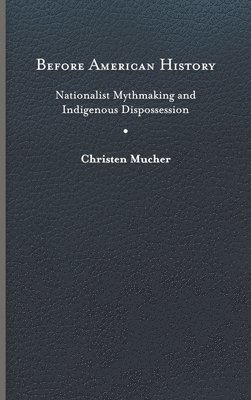
Before American History juxtaposes Mexico City’s famous carved Sun Stone with the mounded earthworks found throughout the Midwestern states of the U.S. to examine the project of settler nationalism from the 1780s to the 1840s in two North American republics usually studied separately. As the U.S. and Mexico transformed from European colonies into independent nations—and before war scarred them both—antiquarians and historians compiled and interpreted archives meant to document America’s Indigenous pasts. These settler-colonial understandings of North America’s past deliberately misappropriated Indigenous histories and repurposed them and their material objects as "American antiquities," thereby writing Indigenous pasts out of U.S. and Mexican national histories and national lands and erasing and denigrating Native peoples living in both nascent republics.Christen Mucher creatively recovers the Sun Stone and mounded earthworks as archives of nationalist power and Indigenous dispossession as well as objects that are, at their material base, produced by Indigenous people but settler controlled and settler interpreted. Her approach renders visible the foundational methodologies, materials, and mythologies that created an American history out of and on top of Indigenous worlds and facilitated Native dispossession continent-wide. By writing Indigenous actors out of national histories, Mexican and U.S. elites also wrote them out of their lands, a legacy of erasure and removal that continues when we repeat these eighteenth- and nineteenth-century settler narratives and that reverberates in discussions of immigration, migration, and Nativism today.
378 kr
Skickas inom 10-15 vardagar
Before American History juxtaposes Mexico City’s famous carved Sun Stone with the mounded earthworks found throughout the Midwestern states of the U.S. to examine the project of settler nationalism from the 1780s to the 1840s in two North American republics usually studied separately. As the U.S. and Mexico transformed from European colonies into independent nations—and before war scarred them both—antiquarians and historians compiled and interpreted archives meant to document America’s Indigenous pasts. These settler-colonial understandings of North America’s past deliberately misappropriated Indigenous histories and repurposed them and their material objects as "American antiquities," thereby writing Indigenous pasts out of U.S. and Mexican national histories and national lands and erasing and denigrating Native peoples living in both nascent republics.Christen Mucher creatively recovers the Sun Stone and mounded earthworks as archives of nationalist power and Indigenous dispossession as well as objects that are, at their material base, produced by Indigenous people but settler controlled and settler interpreted. Her approach renders visible the foundational methodologies, materials, and mythologies that created an American history out of and on top of Indigenous worlds and facilitated Native dispossession continent-wide. By writing Indigenous actors out of national histories, Mexican and U.S. elites also wrote them out of their lands, a legacy of erasure and removal that continues when we repeat these eighteenth- and nineteenth-century settler narratives and that reverberates in discussions of immigration, migration, and Nativism today.
Decolonizing "Prehistory
Deep Time and Indigenous Knowledges in North America
Inbunden, Engelska, 2021
657 kr
Skickas inom 7-10 vardagar
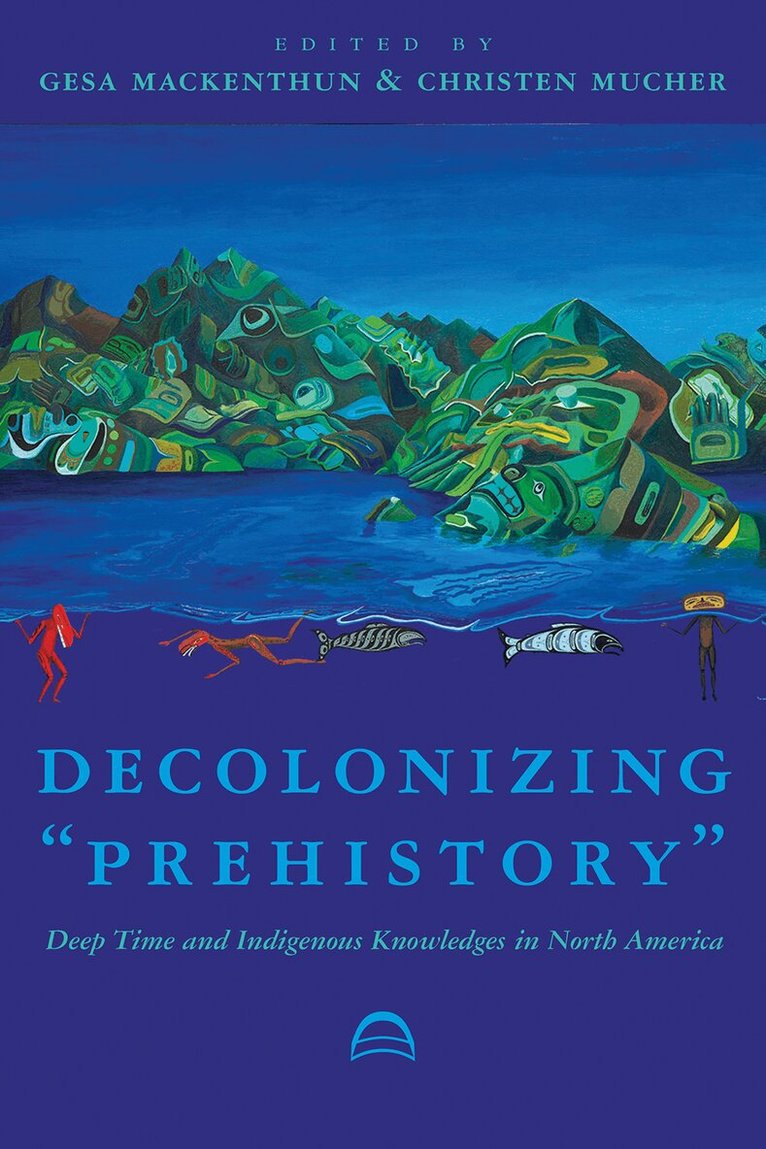
Decolonizing 'Prehistory' combines a critical investigation of the documentation of the American deep past with perspectives from Indigenous traditional knowledges and attention to ongoing systems of intellectual colonialism. Bringing together experts from American studies, archaeology, anthropology, legal studies, history, and literary studies, this interdisciplinary volume offers essential information about the complexity and ambivalence of colonial encounters with Indigenous peoples in North America, and their impact on American scientific discourse. The chapters in this book reveal how anthropology, archaeology, and cultural heritage have shaped the collective ideological construction of Indigenous cultures, while actively empowering the voices that disrupt conventional tropes and narratives of 'prehistory.'Constructions of America's ancient past - or the invention of American 'prehistory' - occur in national and international political frameworks, which are characterized by struggles over racial and ethnic identities, access to resources and environmental stewardship, the commodification of culture for touristic purposes, and the exploitation of Indigenous knowledges and histories by industries ranging from education to film and fashion. The past's ongoing appeal reveals the relevance of these narratives to current-day concerns about individual and collective identities and pursuits of sovereignty and self-determination, as well as to questions of the origin - and destiny - of humanity. Decolonizing 'Prehistory' critically examines and challenges the paradoxical role that modern scholarship plays in adding legitimacy to, but also delegitimizing, contemporary colonialist practices.Contributors: Rick Budhwa, Keith Thor Carlson, Kirsten Matoy Carlson, Jessica Christie, Philip J. Deloria, Melissa Gniadek, Annette Kolodny, Gesa Mackenthun, Christen Mucher, Naxaxalhts'i (aka Albert 'Sonny' McHalsie), Jeff Oliver, Mathieu Picas, Daniel Lord Smail, Coll Thrush
386 kr
Skickas inom 7-10 vardagar
Decolonizing “Prehistory” combines a critical investigation of the documentation of the American deep past with perspectives from Indigenous traditional knowledges and attention to ongoing systems of intellectual colonialism. Bringing together experts from American studies, archaeology, anthropology, legal studies, history, and literary studies, this interdisciplinary volume offers essential information about the complexity and ambivalence of colonial encounters with Indigenous peoples in North America, and their impact on American scientific discourse. The chapters in this book reveal how anthropology, archaeology, and cultural heritage have shaped the collective ideological construction of Indigenous cultures, while actively empowering the voices that disrupt conventional tropes and narratives of “prehistory.”Constructions of America’s ancient past—or the invention of American “prehistory”—occur in national and international political frameworks, which are characterized by struggles over racial and ethnic identities, access to resources and environmental stewardship, the commodification of culture for touristic purposes, and the exploitation of Indigenous knowledges and histories by industries ranging from education to film and fashion. The past’s ongoing appeal reveals the relevance of these narratives to current-day concerns about individual and collective identities and pursuits of sovereignty and self-determination, as well as to questions of the origin—and destiny—of humanity. Decolonizing “Prehistory” critically examines and challenges the paradoxical role that modern scholarship plays in adding legitimacy to, but also delegitimizing, contemporary colonialist practices.Contributors: Rick Budhwa, Keith Thor Carlson, Kirsten Matoy Carlson, Jessica Christie, Philip J. Deloria, Melissa Gniadek, Annette Kolodny, Gesa Mackenthun, Christen Mucher, Naxaxalhts’i (aka Sonny McHalsie), Jeff Oliver, Mathieu Picas, Daniel Lord Smail, Coll Thrush
983 kr
Skickas inom 10-15 vardagar
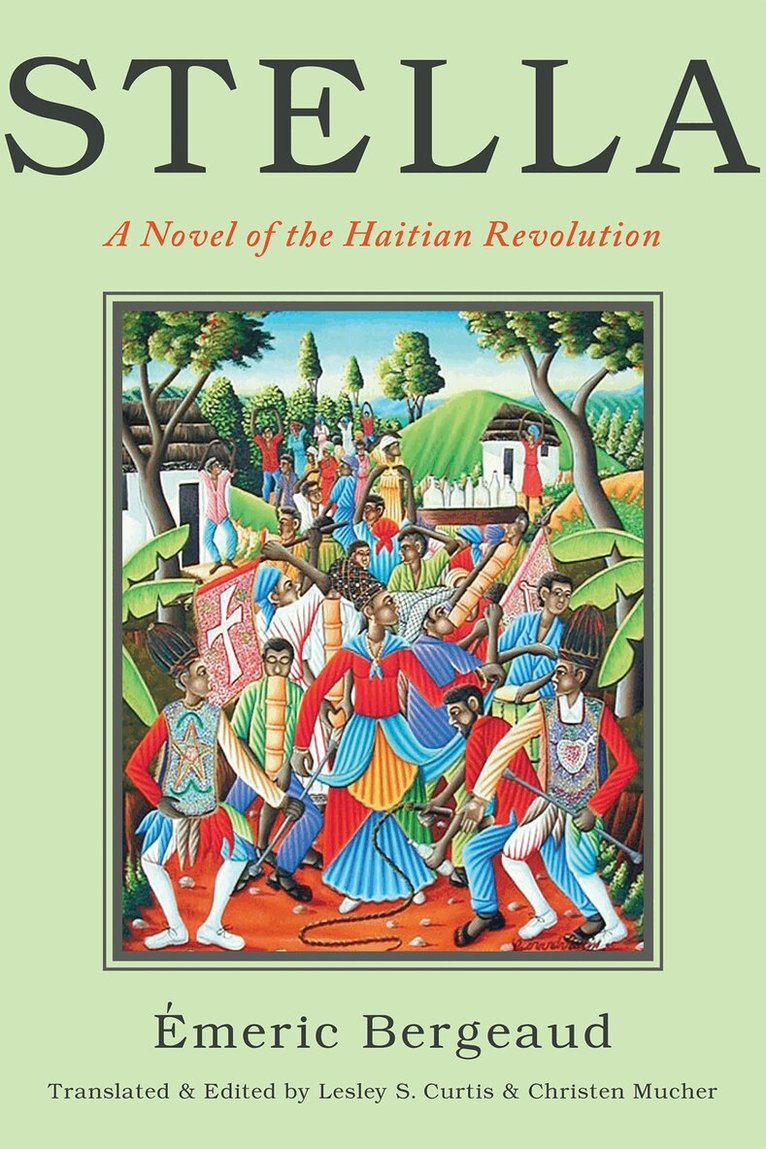
Stella, first published in 1859, is an imaginative retelling of Haiti's fight for independence from slavery and French colonialism. Set during the years of the Haitian Revolution (1791-1804), Stella tells the story of two brothers, Romulus and Remus, who help transform their homeland from the French colony of Saint-Domingue to the independent republic of Haiti. Inspired by the sacrifice of their African mother Marie and Stella, the spirit of Liberty, Romulus and Remus must learn to work together to found a new country based on the principles of freedom and equality. This new translation and critical edition of Émeric Bergeaud's allegorical novel makes Stella available to English-speaking audiences for the first time. Considered the first novel written by a Haitian, Stella tells of the devastation and deprivation that colonialism and slavery wrought upon Bergeaud's homeland. Unique among nineteenth-century accounts, Stella gives a pro-Haitian version of the Haitian Revolution, a bloody but just struggle that emancipated a people, and it charges future generations with remembering the sacrifices and glory of their victory. Bergeaud's novel demonstrates that the Haitians—not the French—are the true inheritors of the French Revolution, and that Haiti is the realization of its republican ideals. At a time in which Haitian Studies is becoming increasingly important within the English-speaking world, this edition calls attention to the rich though under-examined world of nineteenth-century Haiti.
373 kr
Skickas inom 7-10 vardagar
Stella, first published in 1859, is an imaginative retelling of Haiti's fight for independence from slavery and French colonialism. Set during the years of the Haitian Revolution (1791-1804), Stella tells the story of two brothers, Romulus and Remus, who help transform their homeland from the French colony of Saint-Domingue to the independent republic of Haiti. Inspired by the sacrifice of their African mother Marie and Stella, the spirit of Liberty, Romulus and Remus must learn to work together to found a new country based on the principles of freedom and equality. This new translation and critical edition of Émeric Bergeaud's allegorical novel makes Stella available to English-speaking audiences for the first time. Considered the first novel written by a Haitian, Stella tells of the devastation and deprivation that colonialism and slavery wrought upon Bergeaud's homeland. Unique among nineteenth-century accounts, Stella gives a pro-Haitian version of the Haitian Revolution, a bloody but just struggle that emancipated a people, and it charges future generations with remembering the sacrifices and glory of their victory. Bergeaud's novel demonstrates that the Haitians—not the French—are the true inheritors of the French Revolution, and that Haiti is the realization of its republican ideals. At a time in which Haitian Studies is becoming increasingly important within the English-speaking world, this edition calls attention to the rich though under-examined world of nineteenth-century Haiti.