Christi van der Westhuizen - Böcker
Visar alla böcker från författaren Christi van der Westhuizen. Handla med fri frakt och snabb leverans.
4 produkter
4 produkter
3 118 kr
Skickas inom 10-15 vardagar
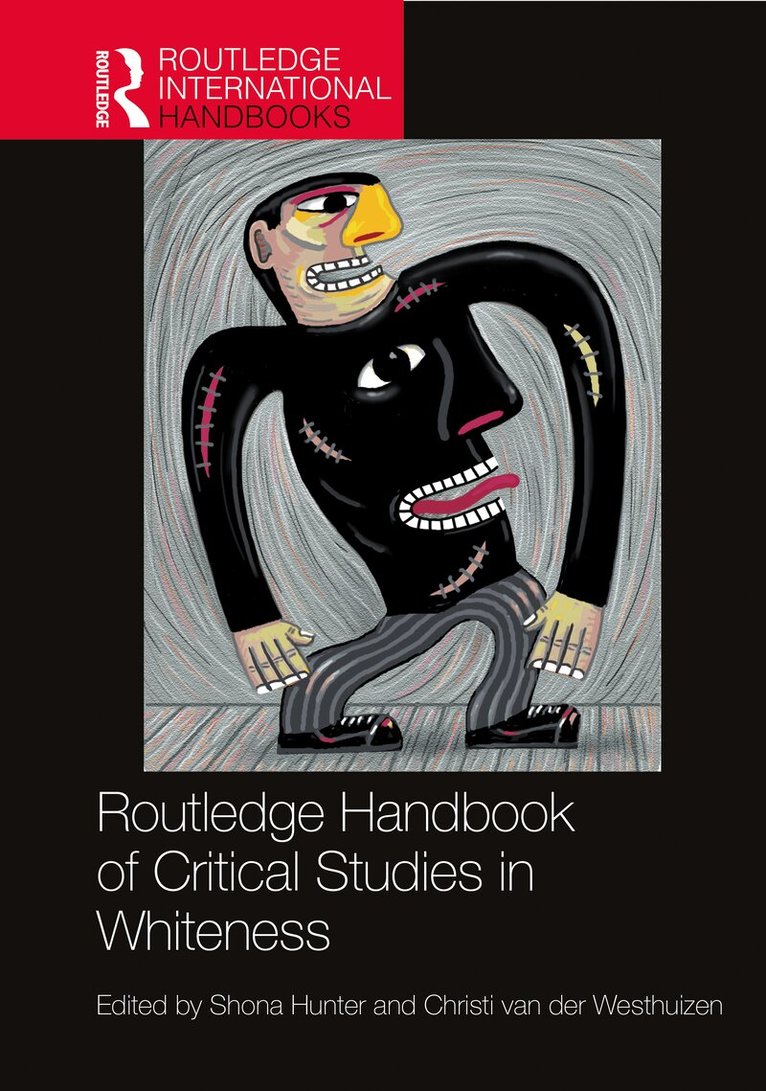
This handbook offers a unique decolonial take on the field of Critical Whiteness Studies by rehistoricising and re-spatialising the study of bodies and identities in the world system of coloniality.Situating the critical study of whiteness as a core intellectual pillar in a broadly based project for racial and social justice, the volume understands whiteness as elaborated in global coloniality through epistemology, ideology and governmentality at the intersections with heteropatriarchy and capitalism. The diverse contributions present Black and other racially diverse scholarship as crucial to the field. The focus of inquiry is expanded beyond Northern Anglophone contexts to challenge centre/margin relations, examining whiteness in the Caribbean, South Africa and the African continent, Asia, the Middle East as well as in the United States and parts of Europe. Providing a transdisciplinary approach and addressing debates about knowledges, black and white subjectivities and newly defensive forms of whiteness, as seen in the rise of the Radical Right, the handbook deepens our understanding of power, place, and culture in coloniality.This book will be an invaluable resource for researchers, advanced students, and scholars in the fields of Education, History, Sociology, Anthropology, Psychology, Political Sciences, Philosophy, Critical Race Theory, Feminist and Gender Studies, Postcolonial and Decolonial Studies, Security Studies, Migration Studies, Media Studies, Indigenous Studies, Cultural Studies, Critical Diversity Studies, and African, Latin American, Asian, American, British and European Studies.
643 kr
Skickas inom 10-15 vardagar
This handbook offers a unique decolonial take on the field of Critical Whiteness Studies by rehistoricising and re-spatialising the study of bodies and identities in the world system of coloniality.Situating the critical study of whiteness as a core intellectual pillar in a broadly based project for racial and social justice, the volume understands whiteness as elaborated in global coloniality through epistemology, ideology and governmentality at the intersections with heteropatriarchy and capitalism. The diverse contributions present Black and other racially diverse scholarship as crucial to the field. The focus of inquiry is expanded beyond Northern Anglophone contexts to challenge centre/margin relations, examining whiteness in the Caribbean, South Africa and the African continent, Asia, the Middle East as well as in the United States and parts of Europe. Providing a transdisciplinary approach and addressing debates about knowledges, black and white subjectivities and newly defensive forms of whiteness, as seen in the rise of the Radical Right, the handbook deepens our understanding of power, place, and culture in coloniality.This book will be an invaluable resource for researchers, advanced students, and scholars in the fields of Education, History, Sociology, Anthropology, Psychology, Political Sciences, Philosophy, Critical Race Theory, Feminist and Gender Studies, Postcolonial and Decolonial Studies, Security Studies, Migration Studies, Media Studies, Indigenous Studies, Cultural Studies, Critical Diversity Studies, and African, Latin American, Asian, American, British and European Studies.
3 320 kr
Skickas inom 10-15 vardagar
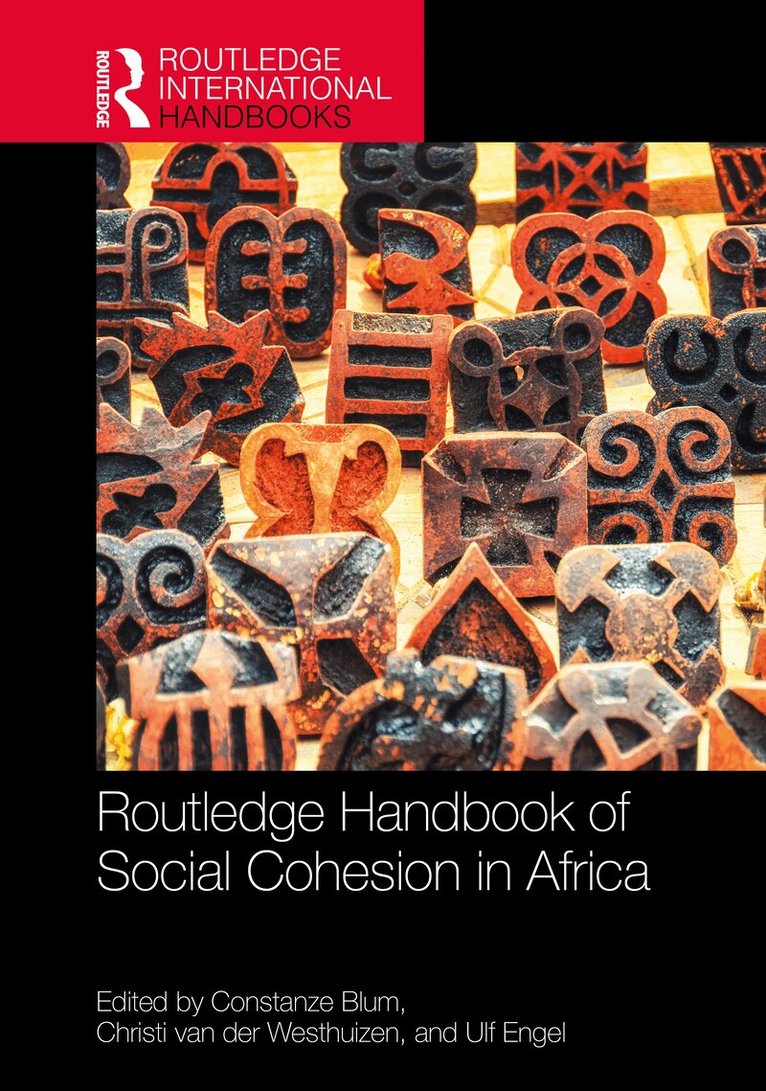
Routledge Handbook of Social Cohesion in Africa explores the meaning of social cohesion in an African context, comparing and historicizing empirical findings from across the continent as well as prioritizing African knowledges in interrogating institutional actors and policy environments. Social cohesion is closely associated with processes of peacebuilding and development, and many scholars and international institutions consider it a precondition, or necessary component, for the building of resilient collectives or institutions. However, the term remains vague and difficult to pin down, and it has been criticized as serving a pacifying and even anti-political function in certain contexts. There is an empirical gap when it comes to studying how the concept is approached in and for the African continent. Drawing on cutting-edge original research, this handbook addresses the empirical, intellectual, and pragmatic complexities and limitations, as well as affordances, of social cohesion and related concepts. Key theoretical contributions and case studies from across the continent are used to problematize a Western-centric approach to social cohesion and to bring in kindred African concepts, such as asabiyyah (North Africa), Gadaa (Ethiopia), and ubuntu (Southern Africa). The book considers how different institutional actors are measuring social cohesion in Africa and investigates selected state and non-state policies on social cohesion.Based on critical, post-colonial thinking throughout, this book will be an important resource not only for policy-makers but also for researchers and academics working in African studies; sociology; politics; global development; queer and gender studies; and conflict, peace, and security studies.
331 kr
Skickas inom 11-20 vardagar
At the opening of South Africa’s first democratic parliament in 1994, newly elected president Nelson Mandela issued a clarion call to an unlikely group: white Afrikaans women, who during apartheid occupied the ambivalent position of being both oppressor and oppressed. He conjured the memory of poet Ingrid Jonker as ‘both an Afrikaner and an African’ who ‘instructs that our endeavours must be about the liberation of the woman, the emancipation of the man and the liberty of the child’. More than two decades later, the question is: how have white Afrikaans-speaking women responded to the liberating possibilities of constitutional democracy? With Afrikaner nationalism in disrepair, and official apartheid in demise, have they re-imagined themselves in opposition to colonial ideas of race, gender, sexuality and class? Sitting Pretty explores this postapartheid identity through the concepts of ordentlikheid, as an ethnic form of respectability, and the volksmoeder, or mother of the nation, as enduring icon. Issues of intersectionality, space, emotion and masculinity are also investigated.