Christian Kerslake - Böcker
Visar alla böcker från författaren Christian Kerslake. Handla med fri frakt och snabb leverans.
3 produkter
3 produkter
1 817 kr
Skickas inom 3-6 vardagar
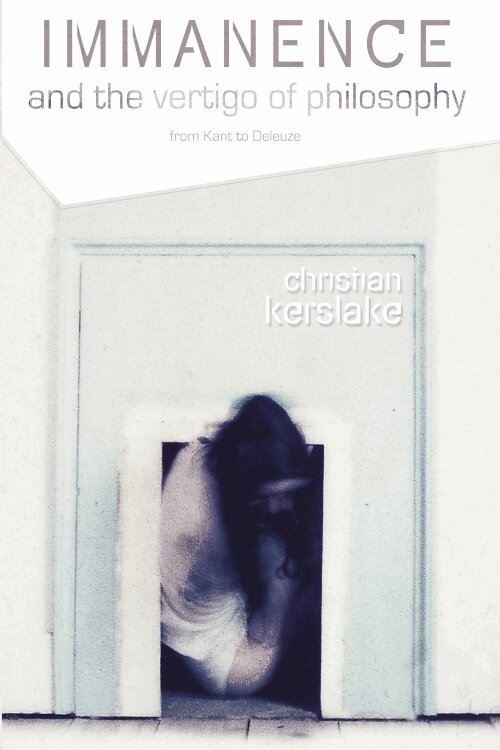
One of the terminological constants in the philosophical work of Gilles Deleuze is the word 'immanence', and it has therefore become a foothold for those wishing to understand exactly what 'Deleuzian philosophy' is. Deleuze's philosophy of immanence is held to be fundamentally characterised by its opposition to all philosophies of 'transcendence'. On that basis, it is widely believed that Deleuze's project is premised on a return to a materialist metaphysics. Christian Kerslake argues that such an interpretation is fundamentally misconceived, and has led to misunderstandings of Deleuze's philosophy, which is rather one of the latest heirs to the post-Kantian tradition of thought about immanence. This will be the first book to assess Deleuze's relationship to Kantian epistemology and post-Kantian philosophy, and will attempt to make Deleuze's philosophy intelligible to students working within that tradition. But it also attempts to reconstruct our image of the post-Kantian tradition, isolating a lineage that takes shape in the work of Schelling and Wronski, and which is developed in the twentieth century by Bergson, Warrain and Deleuze.
2 225 kr
Skickas inom 10-15 vardagar
By the end of the twentieth century, it had been almost forgotten that the Freudian account of the unconscious was only one of many to have emerged from the intellectual ferment of the second half of the 19th century. The philosophical roots of the concept of the unconscious in Leibniz, Kant, Schelling and Schopenhauer had also been occluded from view by the dominance of Freudianism. From his earliest work of the 1940s, until his final writings of the 1990s, Gilles Deleuze stood at odds with this dominant current, rejecting Freud as sole source for ideas about the unconscious. This most 'contemporary' of French philosophers acted as custodian of all the ideas that had been rejected by the proponents of the psychoanalytic model, carefully preserving them and, when possible, injecting them with new life. In 1950s and 60s Deleuze turned to Henri Bergson's theories of memory and instinct and to Carl Jung's theory of archetypes. In "Difference and Repetition (1968)" he conceived of a 'differential unconscious' based on Leibnizian principles. He was also immersed from the beginning in esoteric and occult ideas about the nature of the mind."Deleuze and the Unconscious" shows how these tendencies combine in Deleuze's work to engender a wholly new approach to the unconscious, for which active relations to the unconscious are just as important as the better known pathologies of neurosis and psychosis.
611 kr
Skickas inom 3-6 vardagar
Psychoanalysis claims that the individual human mind is structured by its childhood relationships with its parents. But the theory of attachment, evolutionary psychology and contemporary philosophy of mind have all recently re-introduced new dimensions of innateness into mental development and pathology. If attachment is an instinct, then what is the psychological status of the child's relation to the mother? If the mind is in part a product of evolution, then how far down do the inhibitory mechanisms of the mind go? If the mind of the child is shaped by their encounter with a set of prohibitions, how, in the light of contemporary 'cognitive science' and philosophy of mind, can the child be conceived as 'taking on' a rule? How is the construction of the mind related to the normative ends of cognitive experience? Today, it is Lacanian psychoanalysis which most vigorously defends psychoanalytic theory and practice from the encroachment of the biological and 'cognitive' sciences. But a paradigm shift nevertheless appears to be underway, in which the classical psychoanalytic theories about the Oedipus complex, primary and secondary repression, sexual difference and psychosexuality, the role of symbols,etc, are being dismantled and reintegrated into a new synthesis of biological and psychological theories. In this collection of theoretical essays by philosophers and psychoanalysts, encounters are brought about between Freudian and Lacanian psychoanalysis on the one hand, and attachment theory, evolutionary psychology and philosophy of mind on the other.