Christiana Payne - Böcker
Visar alla böcker från författaren Christiana Payne. Handla med fri frakt och snabb leverans.
5 produkter
5 produkter
535 kr
Tillfälligt slut
1 328 kr
Skickas inom 10-15 vardagar
In the century following the foundation of the Royal Academy in 1768, British art had an international reputation: prints spread knowledge of the work of British artists around the globe, and it was widely seen as the product of a modern, commercial society, and much admired by artists as diverse as Goya in Spain, Delacroix in France, and Bierstadt in America. In recent years, scholars working on this period have become increasingly aware of the international context of their subject, but there has been no systematic analysis of the reception of British art abroad. This collection of essays looks at the uses made of the paintings of Reynolds, Hogarth, Lawrence and their contemporaries on the continent of Europe, and in the colonies and ex-colonies of Australia and America. The authors go beyond the simple issue of 'influence' to consider how ideas and artistic conventions originating in the British Isles were adapted, appropriated or resisted in these new environments. In the process, some surprising views of British art emerge, demonstrating how a multi-faceted view from the outside can correct and enrich the narrative produced within a national school, and revealing some of the important connections that are obscured when art is studied, as it so often is, within narrow national boundaries.

632 kr
Skickas inom 10-15 vardagar
In the century following the foundation of the Royal Academy in 1768, British art had an international reputation: prints spread knowledge of the work of British artists around the globe, and it was widely seen as the product of a modern, commercial society, and much admired by artists as diverse as Goya in Spain, Delacroix in France, and Bierstadt in America. In recent years, scholars working on this period have become increasingly aware of the international context of their subject, but there has been no systematic analysis of the reception of British art abroad. This collection of essays looks at the uses made of the paintings of Reynolds, Hogarth, Lawrence and their contemporaries on the continent of Europe, and in the colonies and ex-colonies of Australia and America. The authors go beyond the simple issue of 'influence' to consider how ideas and artistic conventions originating in the British Isles were adapted, appropriated or resisted in these new environments. In the process, some surprising views of British art emerge, demonstrating how a multi-faceted view from the outside can correct and enrich the narrative produced within a national school, and revealing some of the important connections that are obscured when art is studied, as it so often is, within narrow national boundaries.

678 kr
Kommande
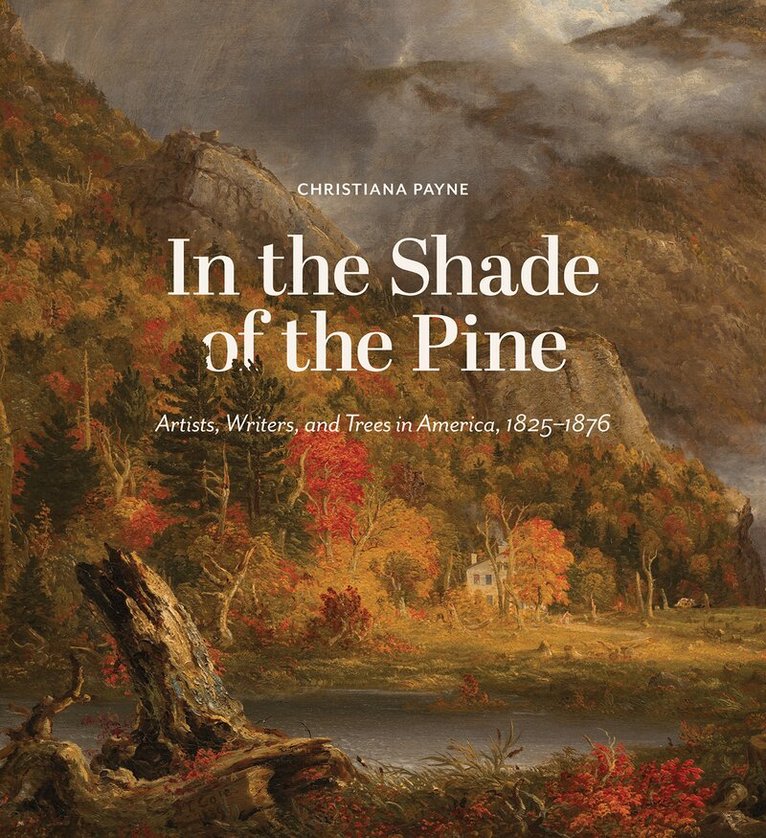
In recent years, there has been a growing recognition of the importance of trees both as allies in the fight against climate change and as sources of emotional well-being. In nineteenth-century America, against a backdrop of accelerating deforestation much like today’s, writers and artists found emotional solace and symbolic meaning in the woods, identifying trees as a civic and spiritual good in need of preservation. In the Shade of the Pine: Artists, Writers, and Trees in America, 1825–1876 explores the significance of trees in the visual and literary imagination of mid-nineteenth-century America through the work of seven artists and writers: Thomas Cole’s explorations of the Catskills; Albert Bierstadt’s portrayal of the splendid trees of California, including the ancient giant sequoias; the paintings and drawings of Asher Brown Durand and Frederic Edwin Church; the photographs of William James Stillman; and the environmental writings of Susan Fenimore Cooper and Henry David Thoreau. This richly illustrated volume shows the unique influence the ecology of their land had on the emotional and intellectual landscapes of a generation. In their careful study of the woods—the beauty of trees, their practical importance to human beings and other living creatures, and the power of the forest to confer spiritual and emotional benefits—these artists and writers laid the groundwork for an ecological consciousness that remains vitally relevant today.
306 kr
Skickas inom 7-10 vardagar
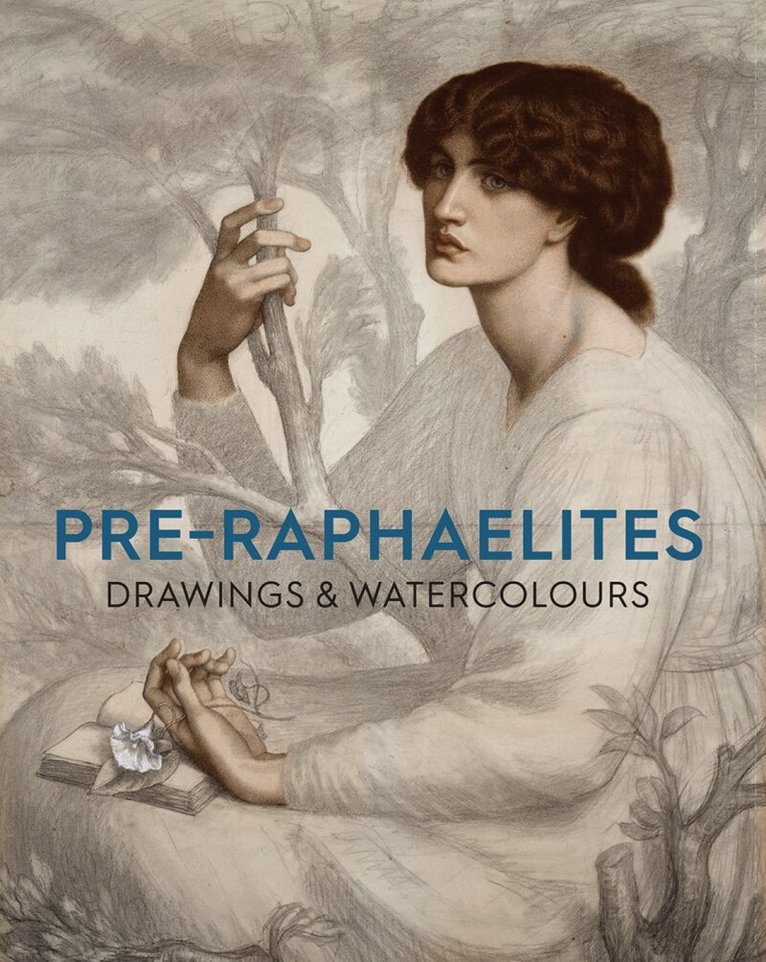
Oxford has a special place in the history of Pre-Raphaelitism. Thomas Combe (superintendent of the Clarendon Press) encouraged John Everett Millais and William Holman Hunt at a crucial early stage of their careers, and his collection became the nucleus of the Ashmolean collection of works by the Brotherhood and their associates. Two young undergraduates, William Morris and Edward Burne-Jones, saw the Combe collection and became enthusiastic converts to the movement. With Dante Gabriel Rossetti, in 1857 they undertook the decoration of the debating chamber (now the Old Library) of the Oxford Union. The group’s champion John Ruskin also studied in Oxford, where he oversaw the design of the University Museum of Natural History and established the Ruskin School of Drawing. Jane Burden, future wife of Morris and muse (probably also lover) of Rossetti, was a local girl, first spotted at the theatre in Oxford. Oxford’s key role in the movement has made it a magnet for important bequests and acquisitions, most recently of Burne-Jones’s illustrated letters and paintbrushes. The collection of watercolours and drawings includes a wide variety of appealing works, from Hunt’s first drawing on the back of a tiny envelope for The Light of the World (Keble College), to large, elaborate chalk drawings of Jane Morris by Rossetti. It is especially rich in portraits, which throw an intimate light on the friendships and love affairs of the artists, and in landscapes which reflect Ruskin’s advice to ‘go to nature’. More than just an exhibition catalogue, this book is a showcase of the Ashmolean's incredible collection, and demonstrates the enormous range of Pre-Raphaelite drawing techniques and media, including pencil, pen and ink, chalk, watercolour, bodycolour and metallic paints. It will include designs for stained glass and furniture, as well as preparatory drawings for some of the well-known paintings in the collection.