Christina Gerhardt - Böcker
Visar alla böcker från författaren Christina Gerhardt. Handla med fri frakt och snabb leverans.
6 produkter
6 produkter
295 kr
Skickas inom 7-10 vardagar
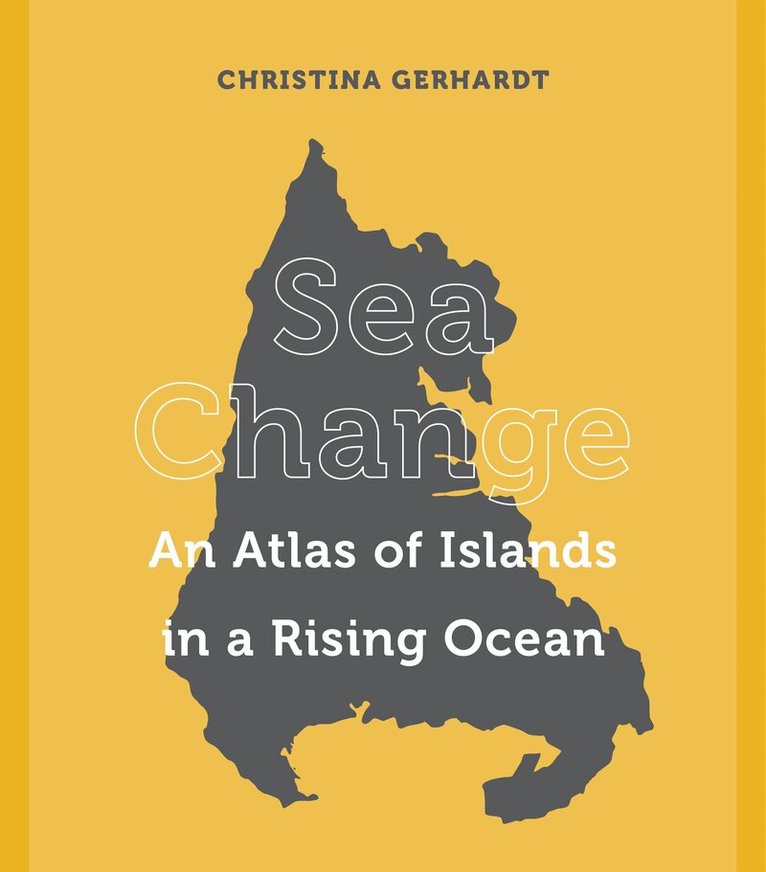
"A stunning atlas of the present and future."—Rebecca Solnit, author of several books including Infinite Cities: A Trilogy of Atlases—San Francisco, New Orleans, New York"An impassioned plea to save what remains of these remarkable island communities."—Booklist, starred reviewOne of the Best Science Books of 2023, New ScientistThis immersive portal to islands around the world highlights the impacts of sea level rise and shimmers with hopeful solutions to combat it. Atlases are being redrawn as islands are disappearing. What does an island see when the sea rises? Sea Change: An Atlas of Islands in a Rising Ocean weaves together essays, maps, art, and poetry to show us—and make us see—island nations in a warming world.Low-lying islands are least responsible for global warming, but they are suffering the brunt of it. This transportive atlas reorients our vantage point to place islands at the center of the story, highlighting Indigenous and Black voices and the work of communities taking action for local and global climate justice. At once serious and playful, well-researched and lavishly designed, Sea Change is a stunning exploration of the climate and our world's coastlines. Full of immersive storytelling, scientific expertise, and rallying cries from island populations that shout with hope—"We are not drowning! We are fighting!"—this atlas will galvanize readers in the fight against climate change and the choices we all face.
350 kr
Skickas inom 10-15 vardagar
Examines the political cinema of 1968 in relation to global events.1968 and Global Cinema addresses a notable gap in film studies. Although scholarship exists on the late 1950s and 1960s New Wave films research that puts cinemas on 1968 into dialogue with one another across national boundaries is surprisingly lacking. Only in recent years have histories of 1968 begun to consider the interplay among social movements globally. The essays in this volume, edited by Christina Gerhardt and Sara Saljoughi, cover a breadth of cinematic movements that were part of the era’s radical politics and independence movements. Focusing on history, aesthetics, and politics, each contribution illuminates conventional understandings of the relationship of cinema to the events of 1968, or ""the long Sixties.""The volume is organized chronologically, highlighting the shifts and developments in ideology in different geographic contexts. The first section examines both the visuals of new cinemas as wellas new readings of the period’s politics in various geopolitical iterations. This half of the book begins with an argument that while the impact of Italian Neorealism and the French New Wave on subsequent global new waves is undeniable, the influence of cinemas of the so-called Global South is pivotal for the eras cinema as well. The second section considers the lasting impact of 1968 and related cinematic new waves into the 1970s. The essays in this section range from China's Cultural Revolution in cinema to militancy and industrial struggle in 1070s worker's films in Spain. In these ways, the volume provides fresh takes and allows for new discoveries of the cinemas of the long 1968.1968 and Global Cinema aims to achieve balance between new readings of well-known films filmmakers and movements as well as new research that engages lesser-known bodies of films and film tests. The volume is ideal for graduate and undergraduate courses on the long sixties, political cinema, 1968, and new waves in art history, cultural studies and film and media studies.Contributors: Robert Stam, Lily Saint, Rocco Giansante, Peter Hames, Rita de Grandis, Morgan Adamson, David Desser, Graeme Stout, Mauro Resmini, Man-tat Terence Leung, Allyson Nadia Field, Sarah Hamblin, J. M. Tyree, Victor Fan, Laurence Coderre, Pablo La Parra-Perez, Paula Rabinowitz, Sara Saljoughi, Christina Gerhardt.
991 kr
Skickas inom 10-15 vardagar
Examines the political cinema of 1968 in relation to global events.1968 and Global Cinema addresses a notable gap in film studies. Although scholarship exists on the late 1950s and 1960s New Wave films research that puts cinemas on 1968 into dialogue with one another across national boundaries is surprisingly lacking. Only in recent years have histories of 1968 begun to consider the interplay among social movements globally. The essays in this volume, edited by Christina Gerhardt and Sara Saljoughi, cover a breadth of cinematic movements that were part of the era’s radical politics and independence movements. Focusing on history, aesthetics, and politics, each contribution illuminates conventional understandings of the relationship of cinema to the events of 1968, or ""the long Sixties.""The volume is organized chronologically, highlighting the shifts and developments in ideology in different geographic contexts. The first section examines both the visuals of new cinemas as wellas new readings of the period’s politics in various geopolitical iterations. This half of the book begins with an argument that while the impact of Italian Neorealism and the French New Wave on subsequent global new waves is undeniable, the influence of cinemas of the so-called Global South is pivotal for the eras cinema as well. The second section considers the lasting impact of 1968 and related cinematic new waves into the 1970s. The essays in this section range from China's Cultural Revolution in cinema to militancy and industrial struggle in 1070s worker's films in Spain. In these ways, the volume provides fresh takes and allows for new discoveries of the cinemas of the long 1968.1968 and Global Cinema aims to achieve balance between new readings of well-known films filmmakers and movements as well as new research that engages lesser-known bodies of films and film tests. The volume is ideal for graduate and undergraduate courses on the long sixties, political cinema, 1968, and new waves in art history, cultural studies and film and media studies.Contributors: Robert Stam, Lily Saint, Rocco Giansante, Peter Hames, Rita de Grandis, Morgan Adamson, David Desser, Graeme Stout, Mauro Resmini, Man-tat Terence Leung, Allyson Nadia Field, Sarah Hamblin, J. M. Tyree, Victor Fan, Laurence Coderre, Pablo La Parra-Perez, Paula Rabinowitz, Sara Saljoughi, Christina Gerhardt.
1 888 kr
Skickas inom 10-15 vardagar
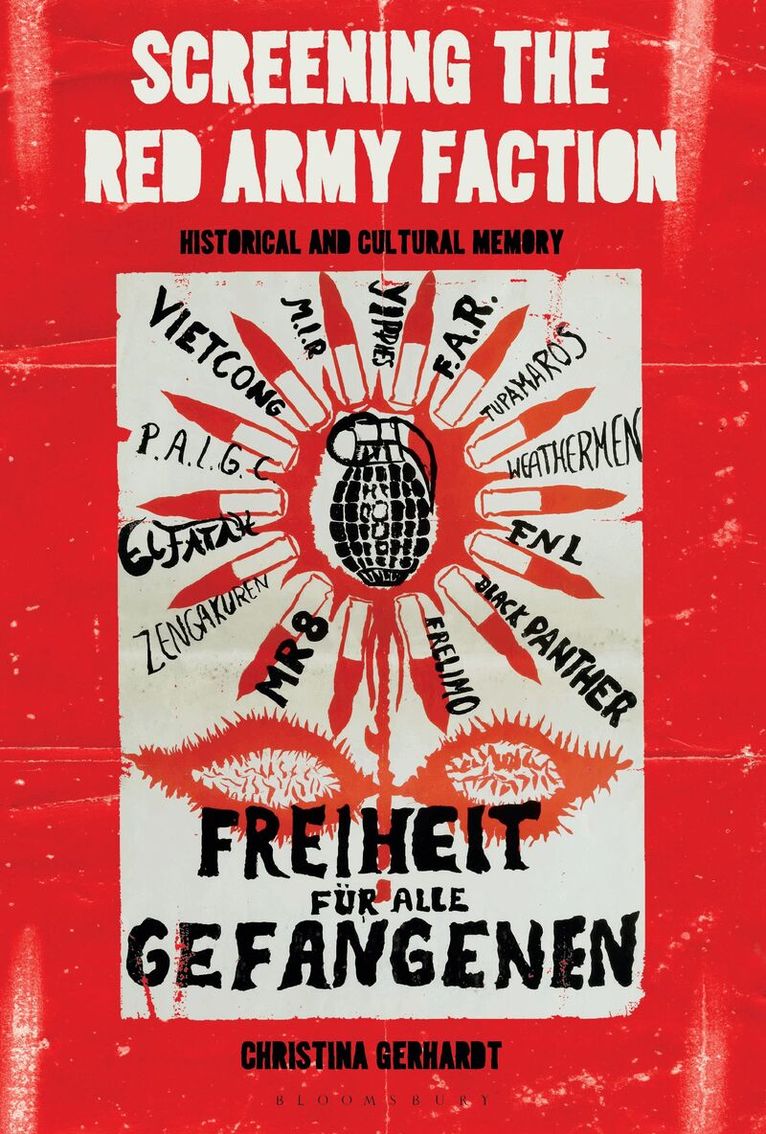
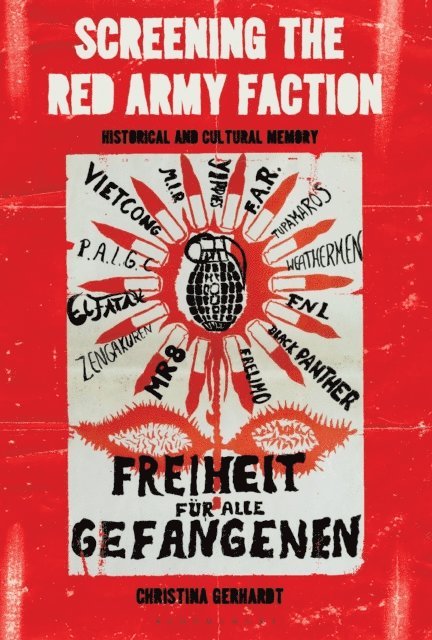
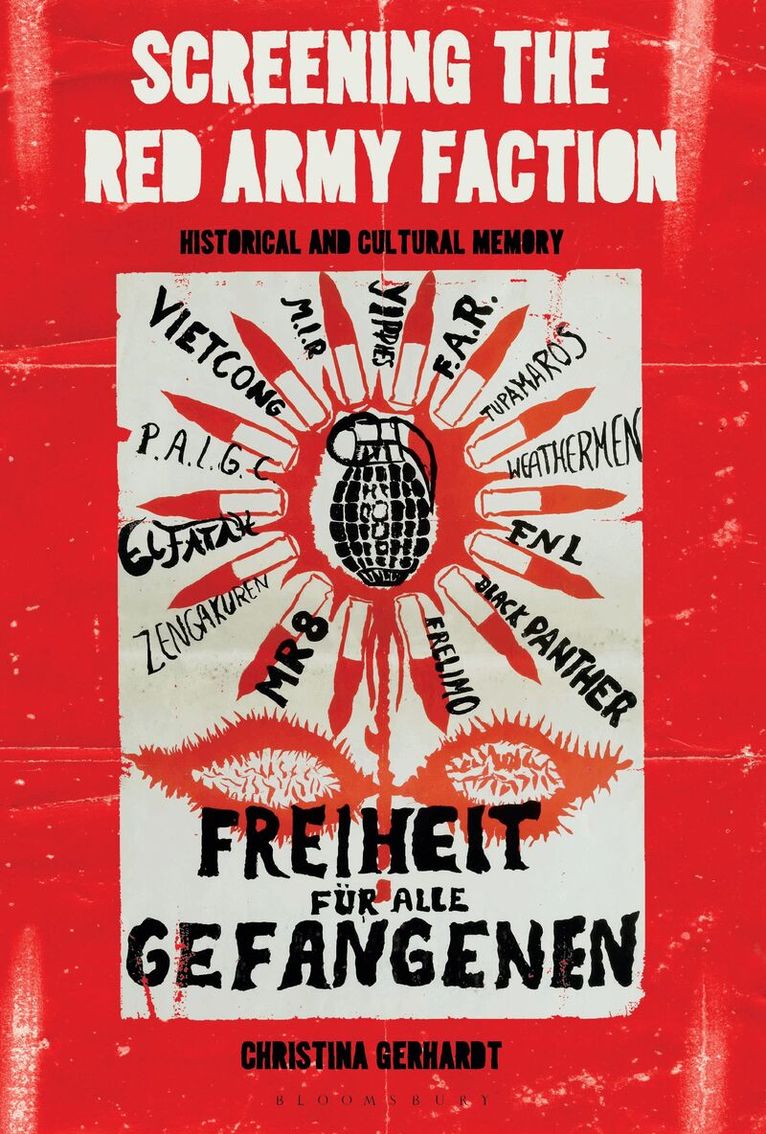
Screening the Red Army Faction: Historical and Cultural Memory explores representations of the Red Army Faction (RAF) in print media, film and art, locating an analysis of these texts in the historical and political context of unfolding events. In this way, the book contributes both a new history and a new cultural history of post-fascist era West Germany that grapples with the fledgling republic's most pivotal debates about the nature of democracy and authority; about violence, its motivations and regulation; and about its cultural afterlife. Looking back at the history of representations of the RAF in various media, this book considers how our understanding of the Cold War era, of the long sixties and of the RAF is created and re-created through cultural texts.
475 kr
Skickas inom 10-15 vardagar
Screening the Red Army Faction: Historical and Cultural Memory explores representations of the Red Army Faction (RAF) in print media, film and art, locating an analysis of these texts in the historical and political context of unfolding events. In this way, the book contributes both a new history and a new cultural history of post-fascist era West Germany that grapples with the fledgling republic's most pivotal debates about the nature of democracy and authority; about violence, its motivations and regulation; and about its cultural afterlife. Looking back at the history of representations of the RAF in various media, this book considers how our understanding of the Cold War era, of the long sixties and of the RAF is created and re-created through cultural texts.
Del 20 - Screen Cultures: German Film and the Visual
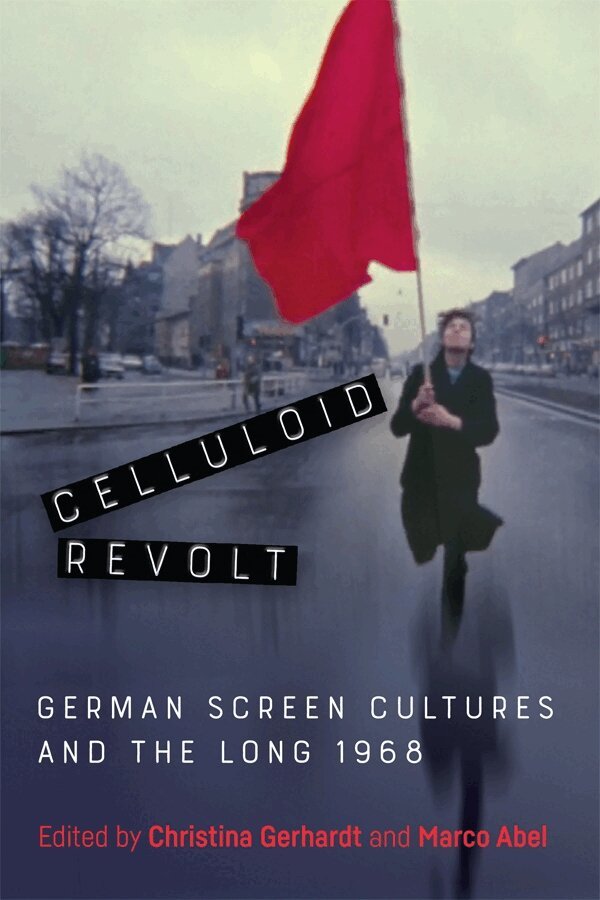
Celluloid Revolt
German Screen Cultures and the Long 1968
Inbunden, Engelska, 2019
1 249 kr
Skickas inom 10-15 vardagar
Provides new insights into German-language cinema around 1968 and its relationship to the period's epoch-making cultural and political happenings.The epoch-making revolutionary period universally known in Germany as '68 can be argued to have predated that year and to have extended well into the 1970s. It continues to affect German and Austrian society and culture to this day. Yet while scholars have written extensively about 1968 and the cinema of other countries, relatively little sustained scholarly attention has thus far been paid to 1968 and West German, East German, and Austrian cinemas. Now, five decades later, Celluloid Revolt sets out to redress that situation, generating new insights into what constituted German-language cinema around 1968 and beyond. Contributors engage a range of cinemas, spanning experimental and avant-garde cinema, installations and exhibits; short films, animated films, and crime films; collectively produced cinemas, feminist films, and Arbeiterfilme (workers' films); as well as their relationship to cinemas of other countries, such as French cinéma vérité and US direct cinema.Contributors: Marco Abel, Tilman Baumgärtel, Madeleine Bernstorff, Timothy Scott Brown, Michael Dobstadt, Sean Eedy, Thomas Elsaesser, IanFleishman, Christina Gerhardt, Lisa Haegele, Randall Halle, Priscilla Layne, Ervin Malakaj, Kalani Michell, Evelyn Preuss, Patricia Anne Simpson, Fabian Tietke, Andrew Stefan Weiner.Christina Gerhardt is Associate Professor of German and Film Studies at the University of Hawai'i at Manoa. Marco Abel is Professor of English and Film Studies at the University of Nebraska-Lincoln.