Christina Vella - Böcker
Visar alla böcker från författaren Christina Vella. Handla med fri frakt och snabb leverans.
3 produkter
3 produkter
384 kr
Skickas inom 7-10 vardagar
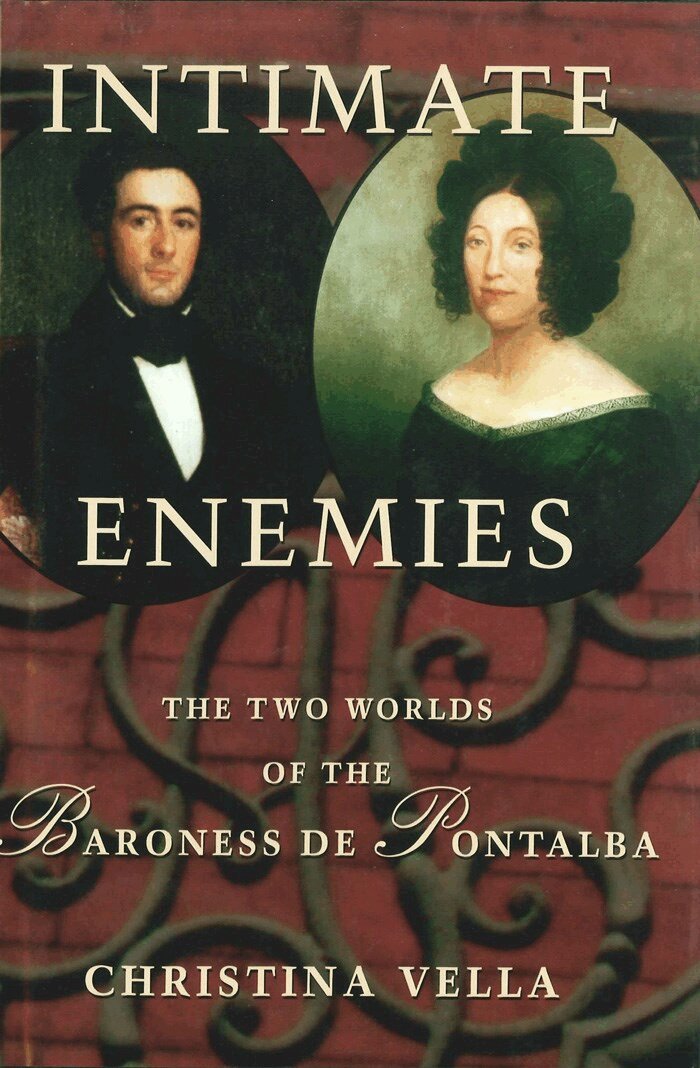
Born into wealth in New Orleans in 1795 and married into misery fifteen years later, the Baroness Micaela Almonester de Pontalba led a life ripe for novelization. Intimate Enemies, however, is the spellbinding true account of this resilient woman's life -- and the three men who most affected its course.Immediately upon marrying Celestin de Pontalba, Micaela was removed to his family's estate in France. For twenty years her father-in-law attempted to drive her to abandon Celestin; by law he could then seize control of her fortune. He tried dozens of strategies, including at one point instructing the entire Pontalba household to pretend she was invisible. Finally, in 1834, the despairing elder Pontalba trapped Micaela in a bedroom and shot her four times before turning his gun on himself.Miraculously, she survived. Five years later, after securing both a separation from Celestin and legal power over her wealth, Micaela focused her attention on building, following in the footsteps of her late, illustrious father, Andres Almonester. Her Parisian mansion, the Hotel Pontalba, is today the official residence of the American embassy in France; and her Pontalba Buildings, which flank Jackson's Square in New Orleans, form together with her father's St. Louis Cathedral, Presbytere, and Cabildo one of the loveliest architectural complexes in America.As for Celestin, he eventually suffered a total physical and mental breakdown and begged Micaela to return. She did so, caring for him for the next twenty-three years until her death in 1874.In Intimate Enemies, Christina Vella embroiders the compelling story of the Almonester-Pontalba alliance against a richly woven background of the events and cultures of two centuries and two vivid societies. She provides a window into the yellow fever epidemics that raged in New Orleans; the rebuilding of Paris, the Paris Commune uprising, and the Second Empire of Napoleon III; European ideas of power, class, money, marriage, and love during the baroness' lifetime and their inflection in the New World setting of New Orleans; medical treatments, legal procedures, imperial court life, banking practices, and much more.Combining the historian's meticulous research with the biographer's exacting knowledge of her subject and the novelist's gift for narrative, Vella has crafted a rare cross-genre work that will capture the imagination and admiration of every reader.
390 kr
Skickas inom 10-15 vardagar
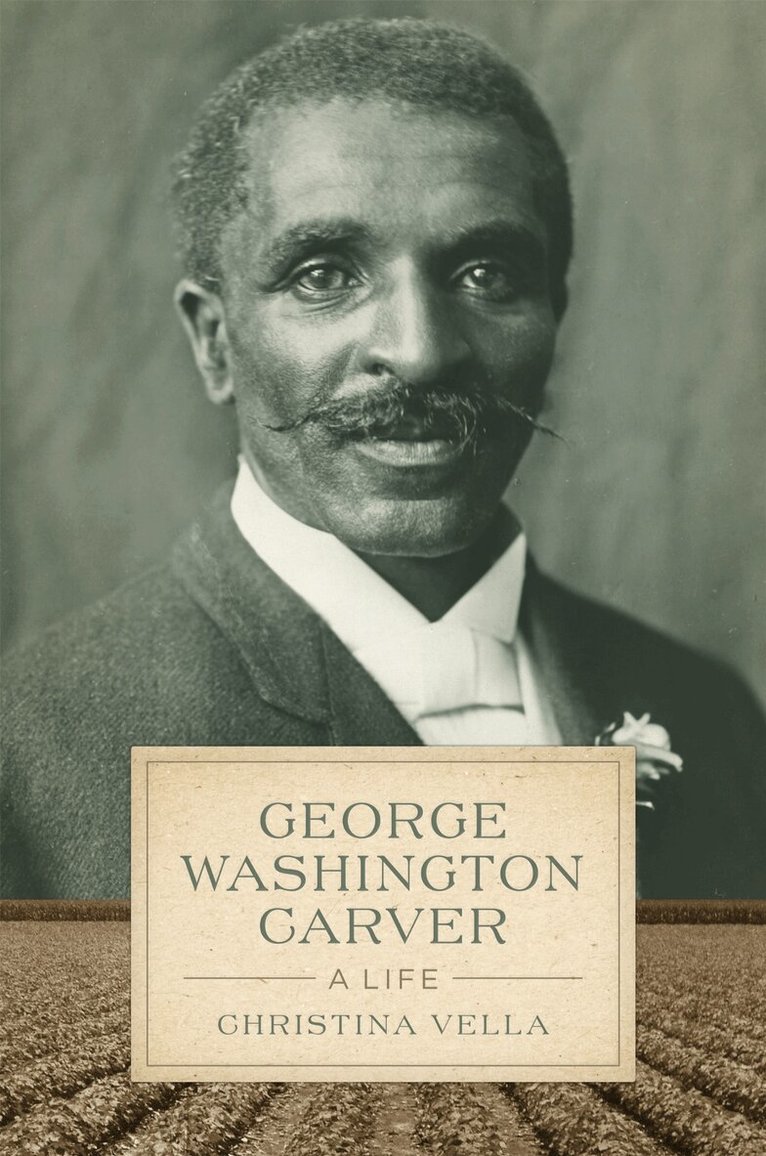
Nearly every American can cite at least one of the accomplishments of George Washington Carver. The many tributes honoring his contributions to scientific advancement and black history include a national monument bearing his name, a U.S.-minted coin featuring his likeness, and induction into the National Inventors Hall of Fame. Born into slavery, Carver earned a master's degree at Iowa State Agricultural College and went on to become that university's first black faculty member. A keen painter who chose agricultural studies over art, he focused the majority of his research on peanuts and sweet potatoes. His scientific breakthroughs with the crops—both of which would replenish the cotton-leached soil of the South—helped spare multitudes of sharecroppers from poverty. Despite Carver's lifelong difficulties with systemic racial prejudice, when he died in 1943, millions of Americans mourned the passing of one of the nation's most honored and well-known scientists. Scores of children's books celebrate the contributions of this prolific botanist, but no biographer has fully examined both his personal life and career until now.Christina Vella offers a thorough biography of George Washington Carver, including in-depth details of his relationships with his friends, colleagues, supporters, and those he loved. Despite the exceptional trajectory of his career, Carver was not immune to the racism of the Jim Crow era or the privations and hardships of the Great Depression and two world wars. Yet throughout this tumultuous period, his scientific achievements aligned him with equally extraordinary friends, including Teddy Roosevelt, Mohandas Gandhi, Henry A. Wallace, and Henry Ford.In pursuit of the man behind the historical figure, Vella discovers an unassuming intellectual with a quirky sense of humor, striking eccentricities, and an unwavering religious faith. She explores Carver's anguished dealings with Booker T. Washington across their nineteen years working together at the Tuskegee Institute—a turbulent partnership often fraught with jealousy. Uneasy in personal relationships, Carver lost one woman he loved to suicide and, years later, directed his devotion toward a white man.A prodigious and generous scholar whose life was shaped by struggle and heartbreak as well as success and fame, George Washington Carver remains a key figure in the history of southern agriculture, botanical advancement, and the struggle for civil rights. Vella's extensively researched biography offers a complex and compelling portrait of one of the most brilliant men of the last century.
268 kr
Skickas inom 5-8 vardagar
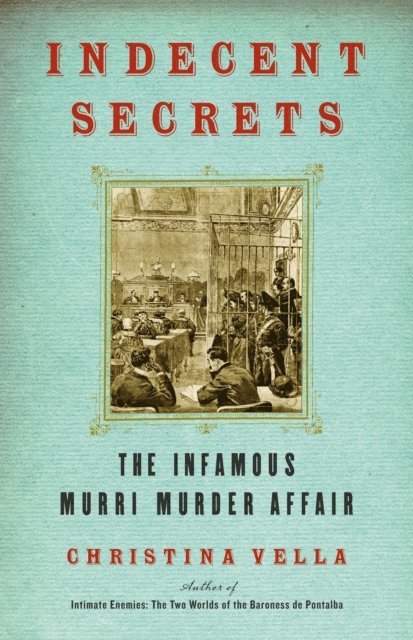
On a hot summer day in Italy in 1902, the brutally stabbed body of Count Francesco Bonmartini was discovered, by means of its decomposing stench, inside his locked apartment. He was a typical Italian provincial aristocrat in all but one way: he had married into a prominent but deeply troubled family. His father-in-law was one of the nation's most famous doctors. His wife, Linda, a young freethinker, was the apple of her father's eye. Linda's brother dabbled in anarchism. Linda's lover was her father's top assistant. Her relations with them were illicit, incestuous -- and murderous. The scandal that erupted was a top news story in Europe and America for three consecutive years. Investigators uncovered successive layers of a conspiracy that constantly twisted and changed its shape. The suspects included all these men as well as their servants and lovers. There was a diverse array of murder weapons, including knives, heavy pellets, and poison. There were rumors of missing accomplices. Intimate relations among many suspects were uncovered through sensational letters and testimonials. Witnesses died mysteriously. A suspect tried to kill himself. One question lingered throughout and still haunts researchers today: what role did Bonmartini's widow, Linda, known as "The Enchantress," play? Was she the spider at the center of the vast web, or did the plot originate with the key men who loved her so desperately? Scholar and writer Christina Vella combines meticulous research with a novelist's eye for a great story. As she unspools the tight, tense drama, she offers a fascinating picture of Italian society in the early 20th century, with a historian's insights into life at both the top and the bottom. From sexual dysfunctions, to prison conditions, to the patronage systems that permeated medicine, law, and politics, the Bonmartini murder provides a window into a rich world. The result is an unforgettable story and an invaluable introduction to an Italy that is still recognizable today.