Christine Howe – författare
2 158 kr
Skickas inom 10-15 vardagar
652 kr
Skickas inom 10-15 vardagar
757 kr
Läs direkt efter köp
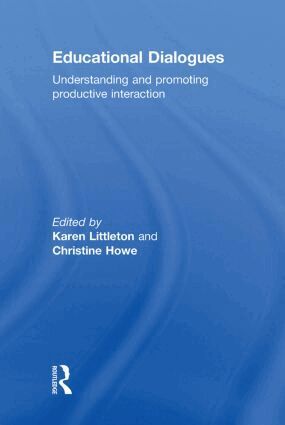
Educational Dialogues provides a clear, accessible and well-illustrated case for the importance of dialogue and its significance for learning and teaching. The contributors characterise the nature of productive dialogues, to specify the conditions and pedagogic contexts within which such dialogues can most effectively be resourced and promoted.
Drawing upon a broad range of theoretical perspectives, this collection examines:
theoretical frameworks for understanding teaching and learning dialogues teacher-student and student-student interaction in the curricular contexts of mathematics, literacy, science, ICT and philosophy the social contexts supporting productive dialogues implications for pedagogic design and classroom practice.Bringing together contributions from a wide range of internationally renowned researchers, this book will form essential reading for all those concerned with the use of dialogue in educational contexts.
757 kr
Läs direkt efter köp
Educational Dialogues provides a clear, accessible and well-illustrated case for the importance of dialogue and its significance for learning and teaching. The contributors characterise the nature of productive dialogues, to specify the conditions and pedagogic contexts within which such dialogues can most effectively be resourced and promoted.
Drawing upon a broad range of theoretical perspectives, this collection examines:
theoretical frameworks for understanding teaching and learning dialogues teacher-student and student-student interaction in the curricular contexts of mathematics, literacy, science, ICT and philosophy the social contexts supporting productive dialogues implications for pedagogic design and classroom practice.Bringing together contributions from a wide range of internationally renowned researchers, this book will form essential reading for all those concerned with the use of dialogue in educational contexts.
2 090 kr
Skickas inom 10-15 vardagar
544 kr
Skickas inom 10-15 vardagar
631 kr
Läs direkt efter köp
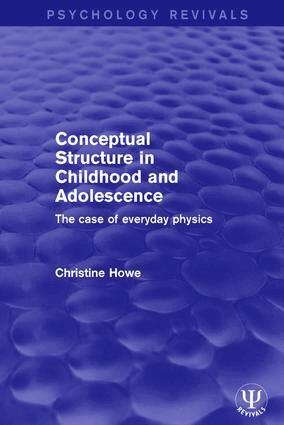
‘Heat breaks up charcoal and puts sulphur dioxide in’; ‘The air pulls faster on heavy masses.’ These and other similar statements by school-aged children untutored in physics carry two messages. First, children’s pre-instructional conceptions of the physical world are a far cry from the received wisdom of science; second, despite their lack of orthodoxy, children’s conceptions carry a definite sense of causal mechanism. This sense of mechanism is the focal concern of this book, originally published in 1998, for it raises issues of central importance to both psychological theory and educational practice.
In particular, some psychologists have claimed that human cognition is organised around causal mechanisms along the lines of a theory. This carries specific implications for teaching. Does the existence in children’s thinking of causal mechanisms relating to the physical world support these psychologists? Does this have consequences for the teaching of science?
Christine Howe reviews evidence relating to pre-instructional conceptions in three broad topic areas: heat and temperature; force and motion; floating and sinking. A wide range of published work is discussed, including the author’s own research. In addition, a new study covering all three topic areas is reported for the first time. The message is that causal mechanisms can indeed play an organising role, that untutored cognition can in other words be genuinely theoretical. However, this tendency is highly domain-specific, occurring in some topic areas but not in others.
Having drawn these conclusions, Christine Howe discusses their meaning in terms of both cognitive development and educational practice. A model is outlined which synthesises Piagetian action-groundedness with Vygotskyan cultural-symbolism and has a distinctive message for classrooms. This title will be useful to cognitive and developmental psychologists and to science educators alike.
631 kr
Läs direkt efter köp
‘Heat breaks up charcoal and puts sulphur dioxide in’; ‘The air pulls faster on heavy masses.’ These and other similar statements by school-aged children untutored in physics carry two messages. First, children’s pre-instructional conceptions of the physical world are a far cry from the received wisdom of science; second, despite their lack of orthodoxy, children’s conceptions carry a definite sense of causal mechanism. This sense of mechanism is the focal concern of this book, originally published in 1998, for it raises issues of central importance to both psychological theory and educational practice.
In particular, some psychologists have claimed that human cognition is organised around causal mechanisms along the lines of a theory. This carries specific implications for teaching. Does the existence in children’s thinking of causal mechanisms relating to the physical world support these psychologists? Does this have consequences for the teaching of science?
Christine Howe reviews evidence relating to pre-instructional conceptions in three broad topic areas: heat and temperature; force and motion; floating and sinking. A wide range of published work is discussed, including the author’s own research. In addition, a new study covering all three topic areas is reported for the first time. The message is that causal mechanisms can indeed play an organising role, that untutored cognition can in other words be genuinely theoretical. However, this tendency is highly domain-specific, occurring in some topic areas but not in others.
Having drawn these conclusions, Christine Howe discusses their meaning in terms of both cognitive development and educational practice. A model is outlined which synthesises Piagetian action-groundedness with Vygotskyan cultural-symbolism and has a distinctive message for classrooms. This title will be useful to cognitive and developmental psychologists and to science educators alike.
Peer Groups and Children's Development
502 kr
Skickas inom 5-8 vardagar
Peer Groups and Children's Development
1 130 kr
Skickas inom 5-8 vardagar
1 320 kr
Läs direkt efter köp
Peer Groups and Children''s Development considers the experiences of school-aged children with their peer groups and its implications for their social, personal and intellectual development
Focuses on the peer group experiences of children attending school in Western societies, from five years of age through to adolescence Considers peer groups in classrooms, friendships made within and outside of school, and the groups that children participate in for extra-curricular activities Includes a final summary which brings together the significant implications for theory, policy and practice Unique in that no other volume reviews and integrates literature relating to peer groups in both classroom and out-of-class settings Addresses the research interests of psychologists and educationalists, as well as the practical concerns of teachers, parents, counsellors, and policy makers