Christine M. Crow - Böcker
Visar alla böcker från författaren Christine M. Crow. Handla med fri frakt och snabb leverans.
2 produkter
2 produkter
493 kr
Skickas inom 7-10 vardagar
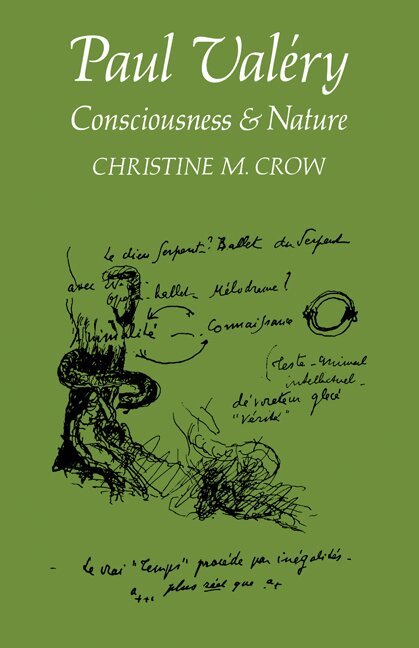
Paul Valery refused to choose between art and science. Although critics have often separated in their discussions of his work his poetry and his thought, he looked upon poetic composition as but one means of deepening his interest in the human mind in all its possibilities. It has been said nevertheless that because of his predominant interest in the mind - in the nature of self-awareness in particular - he was concerned only superficially with anything apart from mental processes. Dr Crow shows that this is not so: on the contrary, self-awareness for Valery was the mainspring of a sensitive and detailed involvement with the forms and processes of the natural world. By concentrating on a theme so central to Valery's interests as consciousness and nature, this book has the merit of approaching his many-sided writings from the point of their greatest unity. The book provides one of the first comprehensive studies of the underlying unity of Valery's poetry and thought.
493 kr
Skickas inom 7-10 vardagar
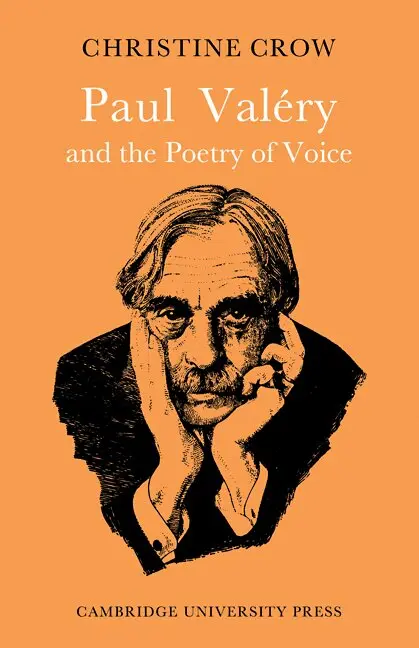
This is one of the first studies to treat Valéry's theory and practice of poetry together and is the first full-length study of his poetry in English. Discussion of his ideas on poetic composition leads to a detailed analysis of the principal poetry: the long term poem La Jeune Parque and all the poems in the main collection. While serving as a step-by-step introduction to Valéry's poetic achievement, the argument is not merely neutral; it elicits and comments on his little-known concept of 'Voice', now seen increasingly to be central. This is not simply the acoustic or musical effect of one poet's verse: it relates to the inner monologue we all hear within ourselves. By concentrating on Valéry's unusually thorough understanding of this area of exchange between willed and spontaneous modes of perception and creativity, the book is able to approach without jargon the much debated question of the subject - 'Who speaks in a poem?' It proposes some unexpected conclusions concerning Valéry's relationship to both Mallarméan Symbolism and contemporary Structuralist thought. This searching study will interest linguists, philosophers and psychologists, as well as students of literature and literary history.