Christine Oppong - Böcker
Visar alla böcker från författaren Christine Oppong. Handla med fri frakt och snabb leverans.
6 produkter
6 produkter
Del 8 - Cambridge Studies in Social and Cultural Anthropology
Marriage Among a Matrilineal Elite
A Family Study of Ghanaian Senior Civil Servants
Häftad, Engelska, 2009
415 kr
Skickas inom 7-10 vardagar
A study of conjugal and kin relationships in a group of urban, educated West Africans, Akan Senior Civil Servants in Accra. As well as representing a contribution to the growing body of data on marriage and family life in West Africa, the book is an exercise in methodology in which the aim has been to evolve ways of documenting and comparing two major aspects of conjugal family relationships: the division of labour, resources and power between spouses, and the extent to which the conjugal family is a functionally discrete unit in a number of domestic activity areas. This documentation and analysis leads to the examination of marital continuity and change among urban migrants from a region characterised by matrilineal descent and inheritance.
315 kr
Skickas inom 10-15 vardagar
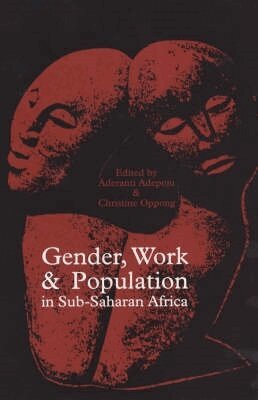
Examines evidence from across the region and highlights important areas in which policy-relevant research is required.If policies enhancing human development are to be put into practice then consideration is needed of the contribution of women to the labour market in sub-Saharan Africa, where women have the highest rates of economic activity andfertility in a context of the highest levels of maternal and child mortality in the world.Published in association with the International Labour Office (ILO)
Middle Class African Marriage
A Family Study of Ghanaian Senior Civil Servants
Inbunden, Engelska, 2023
1 430 kr
Skickas inom 10-15 vardagar
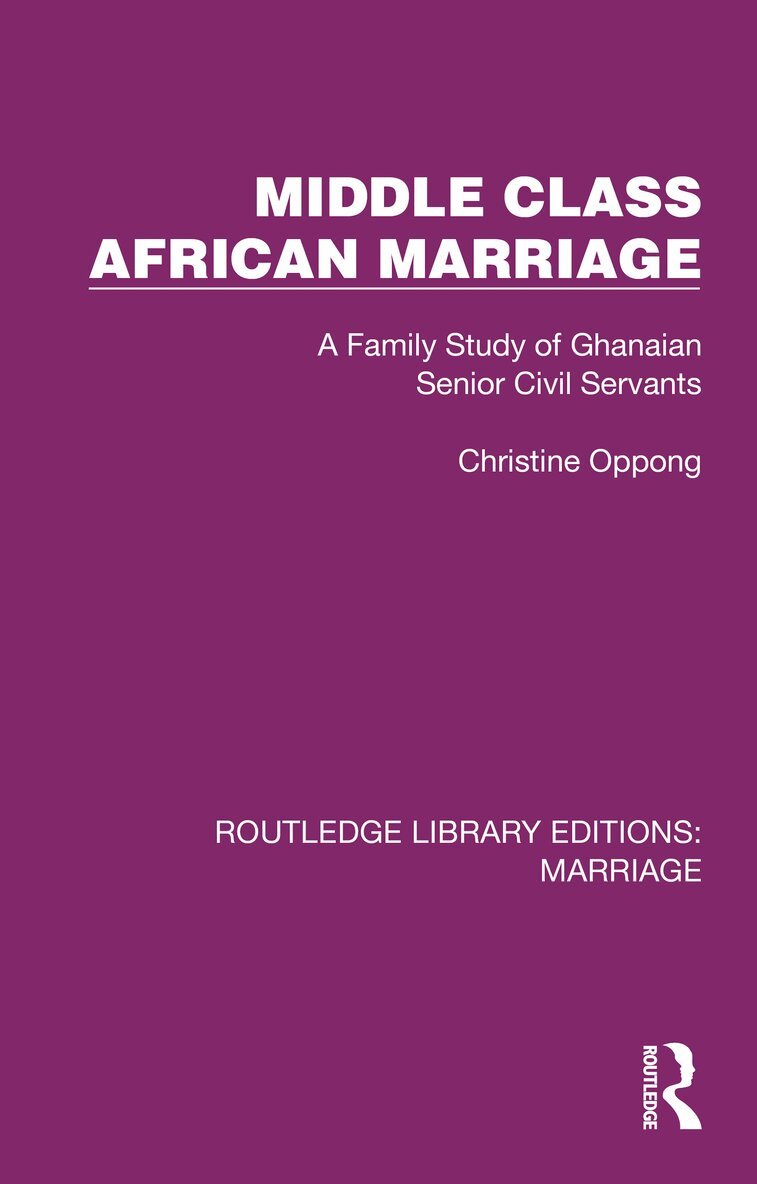
In the 1970s among peoples of the third world migration, paid employment, and urban living had caused changes in domestic economies, in decision making in households, and in the sexual division of labour and power. This was particularly so in areas formerly subjected to colonial domination and therefore the influence of European mores and institutions.This book, previously published in 1974 as Marriage Among a Matrilineal Elite, this edition in 1981, provides one of the few detailed accounts of such changes, by a writer who has lived the kind of life she describes, that of the urban educated Akan of Southern Ghana – people who have migrated from farming and fishing villages to Accra the capital to find employment in government institutions after protracted higher education, often overseas.The study is particularly interesting because it focuses upon people from an ethnic area practicing matrilineal descent and inheritance, in which women and men have traditionally both worked in agriculture: in which husbands and wives have customarily resided in separate houses, affording both sexes considerable autonomy as spouses and in which women have held important political offices, as well as sharing responsibilities for maintenance of dependent children. Akan women provide an important model of responsible energetic females, who have in the past and to some extent in the present, avoided the domestic trap of wifely dependence. But, as we read, the trap is open to those who forsake traditional patterns of economic endeavour or whose resources vis á vis their men folk are reduced.The book was also a significant contribution to the comparative sociology of the family at the time, providing an exercise in methodology in which the aim has been to evolve ways of documenting and comparing two major aspects of change in conjugal family relationships. On one hand, the division of labour, resources and power between spouses – the ‘jointness or segregation’ of the conjugal role relationship – and on the other, the extent to which the conjugal family is a functionally discrete unit in a number of domestic activity areas: in popular and ambiguous terms whether the family is ‘extended’ or ‘nuclear’. The use of sociological concepts developed in other areas of the world gives this book a significant position in the development of a cross culturally valid sociology of the family. The subject matter and conceptual frameworks used here will thus be of interest to sociologists, economists and anthropologists in general and to specialists in African and Black studies, Women’s Studies and Sex Roles in particular, as well as to the male and female feminists around the world.
414 kr
Skickas inom 10-15 vardagar
In the 1970s among peoples of the third world migration, paid employment, and urban living had caused changes in domestic economies, in decision making in households, and in the sexual division of labour and power. This was particularly so in areas formerly subjected to colonial domination and therefore the influence of European mores and institutions.This book, previously published in 1974 as Marriage Among a Matrilineal Elite, this edition in 1981, provides one of the few detailed accounts of such changes, by a writer who has lived the kind of life she describes, that of the urban educated Akan of Southern Ghana – people who have migrated from farming and fishing villages to Accra the capital to find employment in government institutions after protracted higher education, often overseas.The study is particularly interesting because it focuses upon people from an ethnic area practicing matrilineal descent and inheritance, in which women and men have traditionally both worked in agriculture: in which husbands and wives have customarily resided in separate houses, affording both sexes considerable autonomy as spouses and in which women have held important political offices, as well as sharing responsibilities for maintenance of dependent children. Akan women provide an important model of responsible energetic females, who have in the past and to some extent in the present, avoided the domestic trap of wifely dependence. But, as we read, the trap is open to those who forsake traditional patterns of economic endeavour or whose resources vis á vis their men folk are reduced.The book was also a significant contribution to the comparative sociology of the family at the time, providing an exercise in methodology in which the aim has been to evolve ways of documenting and comparing two major aspects of change in conjugal family relationships. On one hand, the division of labour, resources and power between spouses – the ‘jointness or segregation’ of the conjugal role relationship – and on the other, the extent to which the conjugal family is a functionally discrete unit in a number of domestic activity areas: in popular and ambiguous terms whether the family is ‘extended’ or ‘nuclear’. The use of sociological concepts developed in other areas of the world gives this book a significant position in the development of a cross culturally valid sociology of the family. The subject matter and conceptual frameworks used here will thus be of interest to sociologists, economists and anthropologists in general and to specialists in African and Black studies, Women’s Studies and Sex Roles in particular, as well as to the male and female feminists around the world.
1 819 kr
Skickas inom 10-15 vardagar
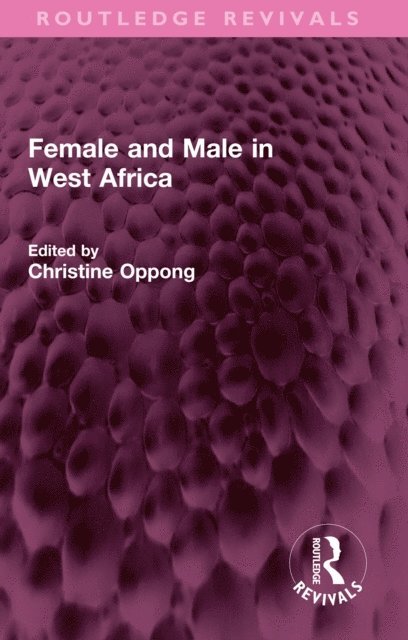
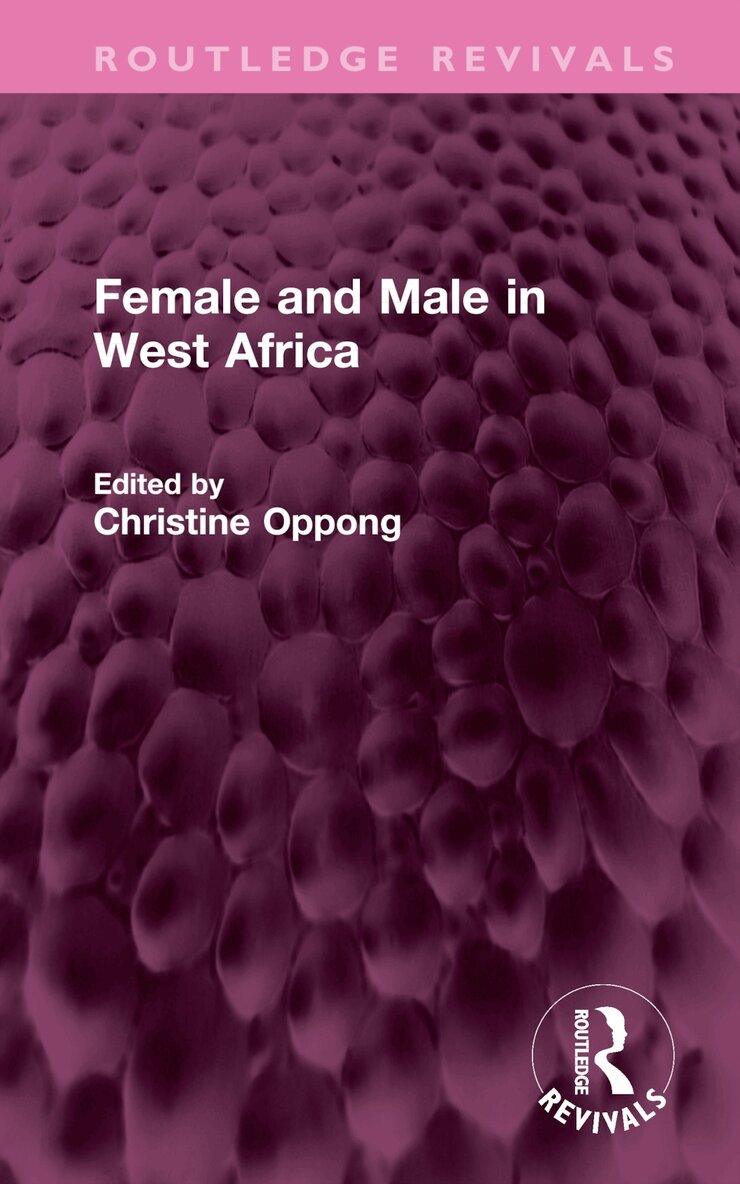
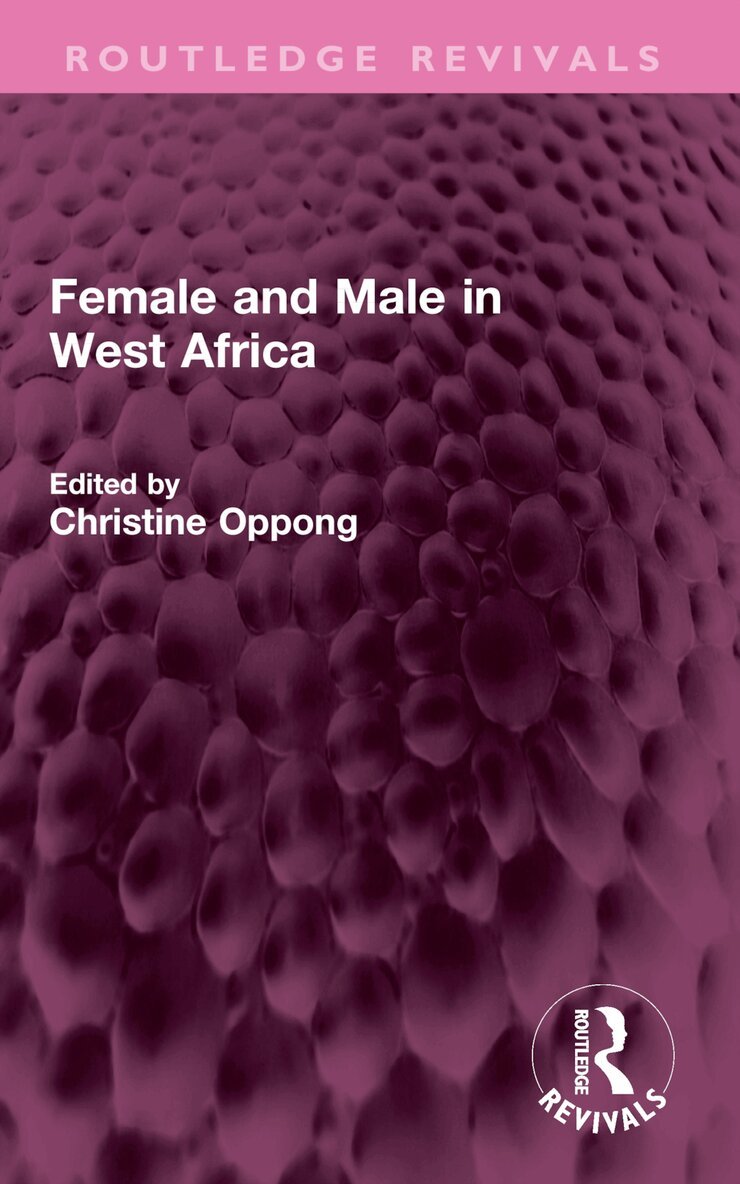
In the 1970s and early 1980s, there was a lack of contemporary, readily available studies of the informal relationships between the sexes; their day to day activities and expectations and how these were altering; especially in contexts in which there were radical demographic, political and economic changes taking place.Originally published in 1983, this volume documents the complexities and subtleties of the modes of interaction between women and men in one region of Africa. It seeks to provide insights and understanding of changing social contexts and relationships based upon ethnographic field work carried out in the previous decade.There are five sections. The first is comparative; presenting and analysing statistical data from the countries of the region; including demographic profiles of fertility, migration, mortality, as well as census and survey evidence on work patterns and education. It provides the broad framework within which the individual case studies are located. The theme of the first set of case studies is the traditional separation and interconnectedness apparent in the worlds of women and men in several culture areas in the spheres of arts and crafts, music, political roles, language, symbolism, ritual, domestic organization and resources and sexuality. The second set focuses on the theme of domestic cooperation and conflict, in production and consumption – in particular the conflicting claims and expectations of men and women, as spouses and kin. The third set of essays is concerned with the relative resources and opportunities of females and males in schools and employment contexts, in sexual encounters and in national community and domestic decision-making processes. The subjects of the final section include individualism, autonomy and dependence of the members of one sex upon the other. The increased individualism, resulting from migration and the scattering of kin, and the breakdown of cooperative work patterns between spouses and relatives is seen as leading to instances of both increased dependence on the one hand, especially of women on men, and increased opportunities for economic autonomy on the other. The case studies span a wide range of socio-economic conditions including studies of farmers, traders, fishermen and fishmongers, factory and office workers, the relatively rich and the relatively poor, from many different ethnic groups and six countries.The book was expected to be of interest to a wide range of readers in social science disciplines as well as to planners and administrators. It should still prove to be particularly relevant to the needs of university students in the fields of women’s studies, African studies, Black studies, sex roles, family relations, sociology and anthropology.
427 kr
Skickas inom 10-15 vardagar
In the 1970s and early 1980s, there was a lack of contemporary, readily available studies of the informal relationships between the sexes; their day to day activities and expectations and how these were altering; especially in contexts in which there were radical demographic, political and economic changes taking place.Originally published in 1983, this volume documents the complexities and subtleties of the modes of interaction between women and men in one region of Africa. It seeks to provide insights and understanding of changing social contexts and relationships based upon ethnographic field work carried out in the previous decade.There are five sections. The first is comparative; presenting and analysing statistical data from the countries of the region; including demographic profiles of fertility, migration, mortality, as well as census and survey evidence on work patterns and education. It provides the broad framework within which the individual case studies are located. The theme of the first set of case studies is the traditional separation and interconnectedness apparent in the worlds of women and men in several culture areas in the spheres of arts and crafts, music, political roles, language, symbolism, ritual, domestic organization and resources and sexuality. The second set focuses on the theme of domestic cooperation and conflict, in production and consumption – in particular the conflicting claims and expectations of men and women, as spouses and kin. The third set of essays is concerned with the relative resources and opportunities of females and males in schools and employment contexts, in sexual encounters and in national community and domestic decision-making processes. The subjects of the final section include individualism, autonomy and dependence of the members of one sex upon the other. The increased individualism, resulting from migration and the scattering of kin, and the breakdown of cooperative work patterns between spouses and relatives is seen as leading to instances of both increased dependence on the one hand, especially of women on men, and increased opportunities for economic autonomy on the other. The case studies span a wide range of socio-economic conditions including studies of farmers, traders, fishermen and fishmongers, factory and office workers, the relatively rich and the relatively poor, from many different ethnic groups and six countries.The book was expected to be of interest to a wide range of readers in social science disciplines as well as to planners and administrators. It should still prove to be particularly relevant to the needs of university students in the fields of women’s studies, African studies, Black studies, sex roles, family relations, sociology and anthropology.