Christine Plastow - Böcker
Visar alla böcker från författaren Christine Plastow. Handla med fri frakt och snabb leverans.
9 produkter
9 produkter
2 151 kr
Skickas inom 10-15 vardagar
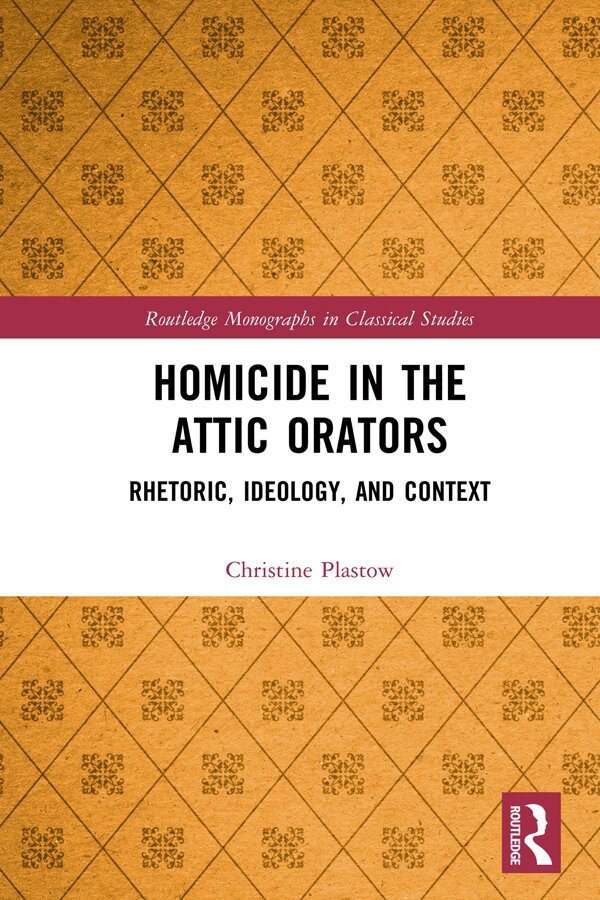
This study identifies specific features in the legal procedure and social perception of homicide in Athens in the time of the orators and examines how these features affected and were represented and utilised in forensic rhetoric.The socially transgressive nature of the crime in Athens resulted in homicide receiving a distinctive treatment in Athenian law, where it was ‘set apart’ from other crimes in a number of ways, including the courts in which it was tried, the procedures involved, and the fact that uniquely these laws were attributed to Drakon as mytho-historical lawgiver. Plastow explores how four distinctive features of homicide procedure and law at Athens played out in rhetoric: ideology, pollution, relevance, and the connected issues of motive and intent. Through exploration of these rhetorical themes, the volume also provides insight into the popular perceptions of homicide amongst the Athenians, since the orators’ speeches make extensive use of persuasive techniques that tap into the deeply held beliefs and ideologies of the jury members. A secondary aim is to explore the effects of the physical context of delivery on the rhetoric of homicide: the courtroom spaces themselves, whether homicide courts or popular courts, with the variable ideologies that their locations and physical attributes provoked, as well as the aspects of ritual that would have been performed physically during a homicide trial.Homicide in the Attic Orators offers insight into this complex subject, and is of interest to anyone with an interest in Athenian law, rhetoric, and society.
3 095 kr
Skickas inom 10-15 vardagar
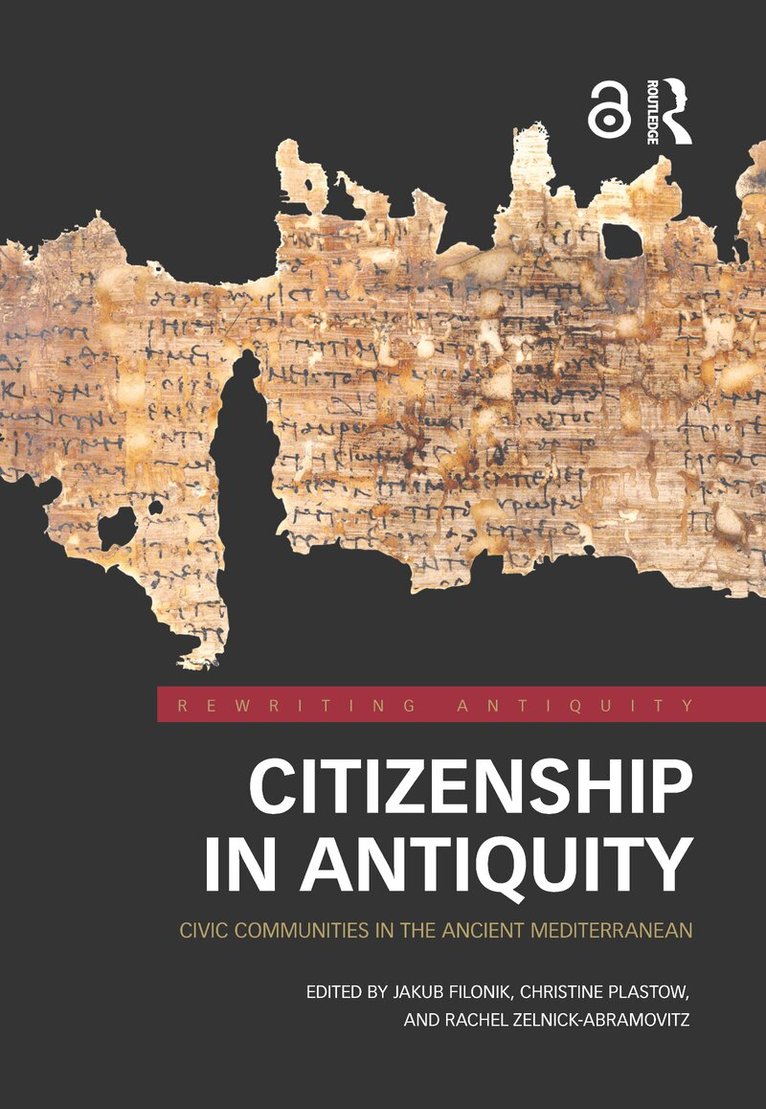
Citizenship in Antiquity brings together scholars working on the multifaceted and changing dimensions of citizenship in the ancient Mediterranean, from the second millennium BCE to the first millennium CE, adopting a multidisciplinary and comparative perspective.The chapters in this volume cover numerous periods and regions – from the Ancient Near East, through the Greek and Hellenistic worlds and pre-Roman North Africa, to the Roman Empire and its continuations, and with excursuses to modernity. The contributors to this book adopt various contemporary theories, demonstrating the manifold meanings and ways of defining the concept and practices of citizenship and belonging in ancient societies and, in turn, of non-citizenship and non-belonging. Whether citizenship was defined by territorial belonging or blood descent, by privileged or exclusive access to resources or participation in communal decision-making, or by a sense of group belonging, such identifications were also open to discursive redefinitions and manipulation. Citizenship and belonging, as well as non-citizenship and non-belonging, had many shades and degrees; citizenship could be bought or faked, or even removed. By casting light on different areas of the Mediterranean over the course of antiquity, the volume seeks to explore this multi-layered notion of citizenship and contribute to an ongoing and relevant discourse.Citizenship in Antiquity offers a wide-ranging, comprehensive collection suitable for students and scholars of citizenship, politics, and society in the ancient Mediterranean world, as well as those working on citizenship throughout history interested in taking a comparative approach.Chapters: Chapters 47 and 48 of this book arefreely available as a downloadable Open Access PDF at http://www.taylorfrancis.com under a Creative Commons Attribution-Non Commercial-No Derivatives (CC-BY-NC-ND) 4.0 license.
719 kr
Skickas inom 10-15 vardagar
Citizenship in Antiquity brings together scholars working on the multifaceted and changing dimensions of citizenship in the ancient Mediterranean, from the second millennium BCE to the first millennium CE, adopting a multidisciplinary and comparative perspective.The chapters in this volume cover numerous periods and regions – from the Ancient Near East, through the Greek and Hellenistic worlds and pre-Roman North Africa, to the Roman Empire and its continuations, and with excursuses to modernity. The contributors to this book adopt various contemporary theories, demonstrating the manifold meanings and ways of defining the concept and practices of citizenship and belonging in ancient societies and, in turn, of non-citizenship and non-belonging. Whether citizenship was defined by territorial belonging or blood descent, by privileged or exclusive access to resources or participation in communal decision-making, or by a sense of group belonging, such identifications were also open to discursive redefinitions and manipulation. Citizenship and belonging, as well as non-citizenship and non-belonging, had many shades and degrees; citizenship could be bought or faked, or even removed. By casting light on different areas of the Mediterranean over the course of antiquity, the volume seeks to explore this multi-layered notion of citizenship and contribute to an ongoing and relevant discourse.Citizenship in Antiquity offers a wide-ranging, comprehensive collection suitable for students and scholars of citizenship, politics, and society in the ancient Mediterranean world, as well as those working on citizenship throughout history interested in taking a comparative approach.Chapters: Chapters 47 and 48 of this book arefreely available as a downloadable Open Access PDF at http://www.taylorfrancis.com under a Creative Commons Attribution-Non Commercial-No Derivatives (CC-BY-NC-ND) 4.0 license.
897 kr
Skickas inom 10-15 vardagar
Through a series of case studies, this book explores the interrelations among Greek tragedy, theatre practices, and education in the United Kingdom. This is situated within what the volume proposes as ‘the Classics ecology’.The term ‘ecology’, frequently used in Theatre Studies, understands Classics as a field of cultural production dependent on shared knowledge circulated via formal and informal networks, which operate on the basis of mutually beneficial exchange. Productions of Greek tragedy may be influenced by members of the team studying Classics subjects at school or university, or reading popular works of Classical scholarship, or else by working with an academic consultant. All of these have some degree of connection to academic Classics, albeit filtered through different lenses, creating a network of mutual influence and benefit (the ecology). In this way, theatrical productions of Greek drama may, in the long term, influence Classics as an academic discipline, and certainly contribute to attesting to the relevance of Classics in the modern world. The chapters in this volume include contributions by both theatre makers and academics, whose backgrounds vary between Theatre Studies and Classics. They comprise a variety of case studies and approaches, exploring the dissemination of knowledge about the ancient world through projects that engage with Greek tragedy, theories and practices of theatre making through the chorus, and practical relationships between scholars and theatre makers. By understanding the staging of Greek tragedy in the United Kingdom today as being part of the Classics ecology, the book examines practices and processes as key areas in which the value of engaging with the ancient past is (re)negotiated.This book is primarily suitable for students and scholars working in Classical Reception and Theatre Studies who are interested in the reception history of Greek tragedy and the intersection of the two fields. It is also of use to more general Classics and Theatre Studies audiences, especially those engaged with current debates around ‘saving Classics’ and those interested in a structural, systemic approach to the intersection between theatre, culture, and class.
342 kr
Skickas inom 10-15 vardagar
Through a series of case studies, this book explores the interrelations among Greek tragedy, theatre practices, and education in the United Kingdom. This is situated within what the volume proposes as ‘the Classics ecology’.The term ‘ecology’, frequently used in Theatre Studies, understands Classics as a field of cultural production dependent on shared knowledge circulated via formal and informal networks, which operate on the basis of mutually beneficial exchange. Productions of Greek tragedy may be influenced by members of the team studying Classics subjects at school or university, or reading popular works of Classical scholarship, or else by working with an academic consultant. All of these have some degree of connection to academic Classics, albeit filtered through different lenses, creating a network of mutual influence and benefit (the ecology). In this way, theatrical productions of Greek drama may, in the long term, influence Classics as an academic discipline, and certainly contribute to attesting to the relevance of Classics in the modern world. The chapters in this volume include contributions by both theatre makers and academics, whose backgrounds vary between Theatre Studies and Classics. They comprise a variety of case studies and approaches, exploring the dissemination of knowledge about the ancient world through projects that engage with Greek tragedy, theories and practices of theatre making through the chorus, and practical relationships between scholars and theatre makers. By understanding the staging of Greek tragedy in the United Kingdom today as being part of the Classics ecology, the book examines practices and processes as key areas in which the value of engaging with the ancient past is (re)negotiated.This book is primarily suitable for students and scholars working in Classical Reception and Theatre Studies who are interested in the reception history of Greek tragedy and the intersection of the two fields. It is also of use to more general Classics and Theatre Studies audiences, especially those engaged with current debates around ‘saving Classics’ and those interested in a structural, systemic approach to the intersection between theatre, culture, and class.
594 kr
Skickas inom 10-15 vardagar
This study identifies specific features in the legal procedure and social perception of homicide in Athens in the time of the orators and examines how these features affected and were represented and utilised in forensic rhetoric.The socially transgressive nature of the crime in Athens resulted in homicide receiving a distinctive treatment in Athenian law, where it was ‘set apart’ from other crimes in a number of ways, including the courts in which it was tried, the procedures involved, and the fact that uniquely these laws were attributed to Drakon as mytho-historical lawgiver. Plastow explores how four distinctive features of homicide procedure and law at Athens played out in rhetoric: ideology, pollution, relevance, and the connected issues of motive and intent. Through exploration of these rhetorical themes, the volume also provides insight into the popular perceptions of homicide amongst the Athenians, since the orators’ speeches make extensive use of persuasive techniques that tap into the deeply held beliefs and ideologies of the jury members. A secondary aim is to explore the effects of the physical context of delivery on the rhetoric of homicide: the courtroom spaces themselves, whether homicide courts or popular courts, with the variable ideologies that their locations and physical attributes provoked, as well as the aspects of ritual that would have been performed physically during a homicide trial.Homicide in the Attic Orators offers insight into this complex subject, and is of interest to anyone with an interest in Athenian law, rhetoric, and society.
2 429 kr
Kommande
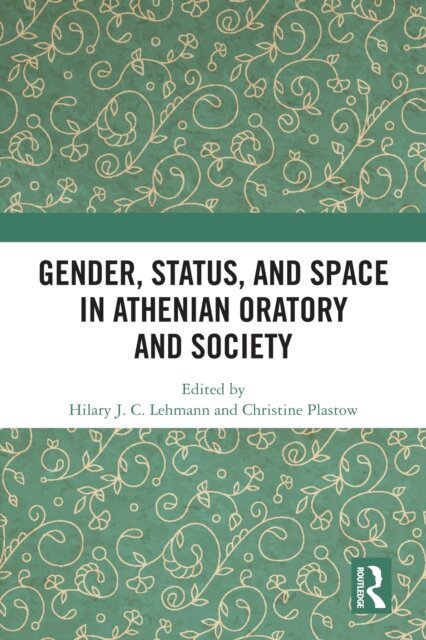
Intellectual shifts in the late 20th century led to profound change in the questions that could be asked about the ancient world; the chapters in this volume are inspired by the way these shifts have affected scholars’ attitude towards and use of Athenian oratory in the study of social history.Readers will encounter some of the most up-to-date directions of enquiry in the social-historical study of the Athenian orators. Case studies from across the corpus of the orators explore themes in gender, status, and space as well as their intersections. The contributors to this volume, primarily early-career researchers representing a range of nationalities and academic positions, combine philological and social-historical methodologies with disciplinarily diverse contemporary theoretical frameworks, including spatial analysis, queer theory, and disability theory.Gender, Status, and Space in Athenian Oratory and Society is intended for students and scholars of the Athenian orators and of Athenian social history and is designed to be accessible to readers without extensive knowledge of ancient Greek.
1 989 kr
Skickas inom 7-10 vardagar
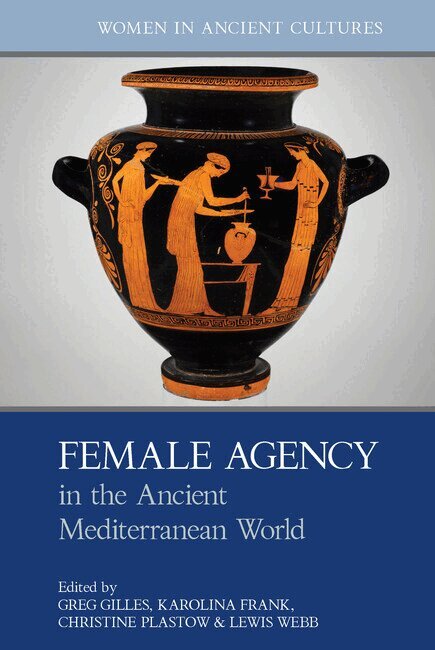
Ebook available to libraries exclusively as part of the JSTOR Path to Open initiative.Female agency in the ancient world has long been implicitly, and on a few occasions explicitly, examined in classical scholarship, but few of these studies begin with a unified theoretical framework or set of approaches (with some notable exceptions). Female Agency in the Ancient Mediterranean World departs from these important studies by beginning with a definition of the aforementioned concept of ‘female agency’ that acknowledges that all social agents, female and otherwise, were and are relational and multidimensional beings, and that agency was and is relational. This volume’s conceptual points of departure allow contributors to consider women as social agents in ancient cultures and as relationally embedded and integrated in various cultural systems, even under conditions of oppression, by providing contextualised examples of women acting on their varying degrees of agency.Contributions are organised broadly chronologically in order to trace the breadth and shifting patterns of female agency throughout the ancient Mediterranean world from the 7th century BCE to the 6th century CE. Case studies include Katherine McDonald on the dynamics of female agency in pre-Roman through a close examination of the epigraphic record; Karolina Frank on women’s oracular inquiries at Dodona and Brenda Longfellow on how Pompeian women, through their funerary inscriptions, can show, from different angles, the needs, desires, and agency of women from a range of social circumstances.
416 kr
Skickas inom 7-10 vardagar
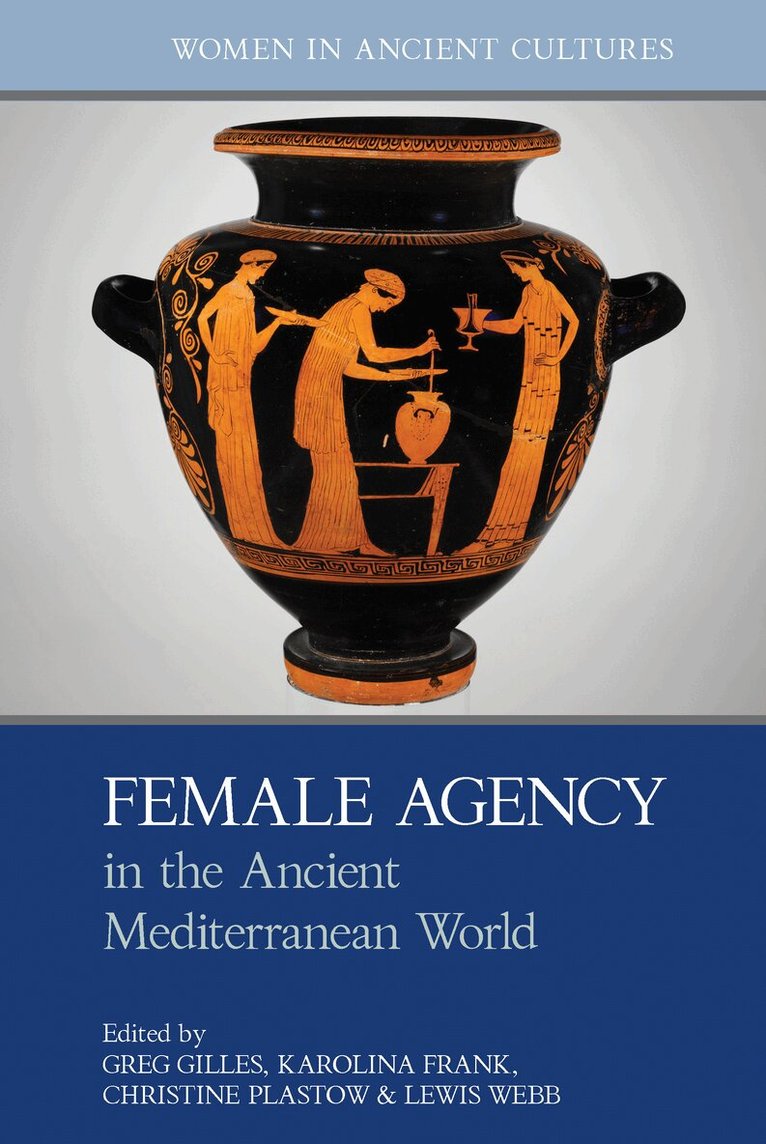
Ebook available to libraries exclusively as part of the JSTOR Path to Open initiative.Female agency in the ancient world has long been implicitly, and on a few occasions explicitly, examined in classical scholarship, but few of these studies begin with a unified theoretical framework or set of approaches (with some notable exceptions). Female Agency in the Ancient Mediterranean World departs from these important studies by beginning with a definition of the aforementioned concept of ‘female agency’ that acknowledges that all social agents, female and otherwise, were and are relational and multidimensional beings, and that agency was and is relational. This volume’s conceptual points of departure allow contributors to consider women as social agents in ancient cultures and as relationally embedded and integrated in various cultural systems, even under conditions of oppression, by providing contextualised examples of women acting on their varying degrees of agency.Contributions are organised broadly chronologically in order to trace the breadth and shifting patterns of female agency throughout the ancient Mediterranean world from the 7th century BCE to the 6th century CE. Case studies include Katherine McDonald on the dynamics of female agency in pre-Roman through a close examination of the epigraphic record; Karolina Frank on women’s oracular inquiries at Dodona and Brenda Longfellow on how Pompeian women, through their funerary inscriptions, can show, from different angles, the needs, desires, and agency of women from a range of social circumstances.