Christoph Gradmann - Böcker
Visar alla böcker från författaren Christoph Gradmann. Handla med fri frakt och snabb leverans.
6 produkter
6 produkter
403 kr
Tillfälligt slut
In the nineteenth century, the new field of medical bacteriology identified microorganisms and explained how they spread disease. This book interweaves the history of this discipline and the biography of one of its founders, Nobel Prize-winning German physician Robert Koch (1843-1910). Koch contributed to modern medicine by inventing or improving fundamental techniques such as bacterial staining, solid culture media, mass pure cultures, and the use of animal models. His discoveries, which dominated medical science at the turn of the last century, are epitomized in a set of rules named after him. "Koch's Postulates" are still invoked today in attempts to prove the causal involvement of pathogens in infectious diseases. In a double history, Christoph Gradmann narrates the development of a discipline and the biography of a scientist. Drawing on Koch's extensive laboratory notes, Gradmann details how Koch developed his scientific method and discovered the bacterial causes of anthrax, tuberculosis, and cholera. Koch tried to bring this knowledge to clinical medicine by developing medicines that would specifically target the bacterial pathogens he identified.And Koch's passion for personal travel developed into a career signature, as he became a pioneer in the study of tropical diseases. A fascinating look into Koch's personality and his experimental work in medical bacteriology, Laboratory Disease reveals both the biographical and the historical roots of our modern understanding of infectious diseases.
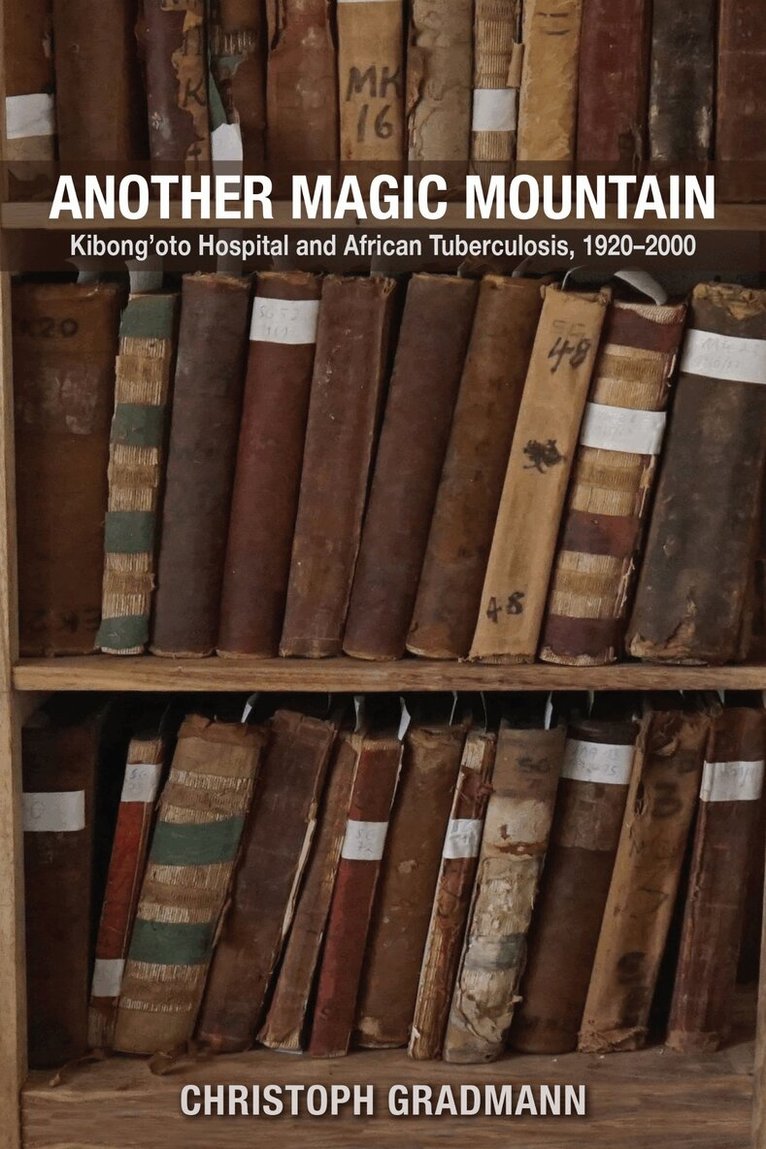
Another Magic Mountain
Kibong'oto Hospital and African Tuberculosis, 1920–2000
Inbunden, Engelska, 2025
1 199 kr
Skickas inom 7-10 vardagar
Kibong’oto Hospital, opened in 1926, is an East African tuberculosis treatment center located on the slopes of Mount Kilimanjaro. Its history is crucial to understanding tuberculosis in Tanzania and, more broadly, in Africa. With the hospital as a point of departure, Christoph Gradmann presents a history of this disease that engages with local and regional contexts rather than with international elite science and health policies.The book addresses key questions about the African experience with tuberculosis:-What did it mean to do clinical science on tuberculosis in colonial and postcolonial contexts?-Along which trajectories did medical practice and research evolve in a place where international advances in medical science were sometimes heard of only faintly and where resources could be scarce?-How did a large hospital with several hundred beds dedicated to the treatment of just one condition figure in the development of national and regional health systems?-How did Kibong’oto Hospital, a pride of colonial health governance, transition after Tanzania gained independence?-How did treating and researching tuberculosis change throughout the twentieth century in an African hospital dedicated to that condition?-How did research at the hospital contribute to tuberculosis-control strategies on national and international levels?The book is based on the hospital’s unique archive: its surviving library of thousands of case summaries. Since 1926, this library has documented an enormous number of patient lives, staff careers, diagnoses, treatments, clinical trials, and much more. For today’s readers, the library provides insight into a history of clinical medicine in Africa, for which very few comparable archives exist.Gradmann supplements this site-specific research with material from national and international archives, as well as interviews with former staff involved in that history. The book’s four chapters offer perspectives on colonial epidemiological research in the interwar years; on late colonial healthcare development plans and the arrival of modern drug therapies; on the role of a national tuberculosis hospital in a newly independent country; and on the history of tuberculosis control in an age of economic crisis, HIV, and emergent global health-treatment programs. Finally, Gradmann discusses what the history of a large hospital can add to today’s tuberculosis research, control policy, and historiography.
383 kr
Skickas
Kibong’oto Hospital, opened in 1926, is an East African tuberculosis treatment center located on the slopes of Mount Kilimanjaro. Its history is crucial to understanding tuberculosis in Tanzania and, more broadly, in Africa. With the hospital as a point of departure, Christoph Gradmann presents a history of this disease that engages with local and regional contexts rather than with international elite science and health policies.The book addresses key questions about the African experience with tuberculosis:-What did it mean to do clinical science on tuberculosis in colonial and postcolonial contexts?-Along which trajectories did medical practice and research evolve in a place where international advances in medical science were sometimes heard of only faintly and where resources could be scarce?-How did a large hospital with several hundred beds dedicated to the treatment of just one condition figure in the development of national and regional health systems?-How did Kibong’oto Hospital, a pride of colonial health governance, transition after Tanzania gained independence?-How did treating and researching tuberculosis change throughout the twentieth century in an African hospital dedicated to that condition?-How did research at the hospital contribute to tuberculosis-control strategies on national and international levels?The book is based on the hospital’s unique archive: its surviving library of thousands of case summaries. Since 1926, this library has documented an enormous number of patient lives, staff careers, diagnoses, treatments, clinical trials, and much more. For today’s readers, the library provides insight into a history of clinical medicine in Africa, for which very few comparable archives exist.Gradmann supplements this site-specific research with material from national and international archives, as well as interviews with former staff involved in that history. The book’s four chapters offer perspectives on colonial epidemiological research in the interwar years; on late colonial healthcare development plans and the arrival of modern drug therapies; on the role of a national tuberculosis hospital in a newly independent country; and on the history of tuberculosis control in an age of economic crisis, HIV, and emergent global health-treatment programs. Finally, Gradmann discusses what the history of a large hospital can add to today’s tuberculosis research, control policy, and historiography.
Del 36 - Social Histories of Medicine
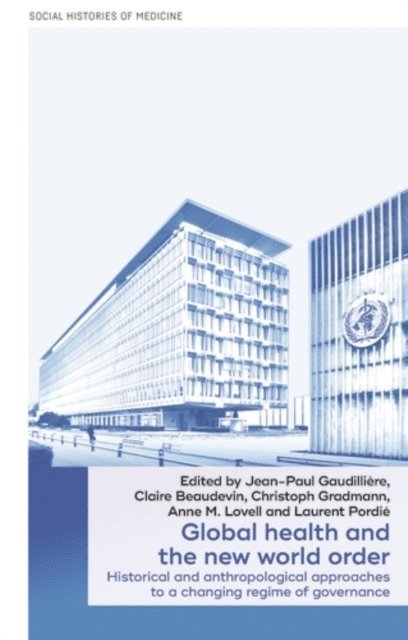
Global Health and the New World Order
Historical and Anthropological Approaches to a Changing Regime of Governance
Inbunden, Engelska, 2020
1 194 kr
Skickas
The phrase ‘global health’ appears ubiquitously in contemporary medical spheres, from academic research programs to websites of pharmaceutical companies. In its most visible manifestation, global health refers to strategies addressing major epidemics and endemic conditions through philanthropy, and multilateral, private-public partnerships. This book explores the origins of global health, a new regime of health intervention in countries of the global South born around 1990, examining its assemblages of knowledge, practices and policies.The volume proposes an encompassing view of the transition from international public health to global health, bringing together historians and anthropologists to analyse why new modes of “interventions on the life of others” recently appeared and how they blur the classical divides between North and South. The contributors argue that not only does the global health enterprise signal a significant departure from the postwar targets and modes of operations typical of international public health, but that new configurations of action have moved global health beyond concerns with infectious diseases and state-based programs.The book will appeal to academics, students and health professionals interested in new discussions about the transnational circulation of drugs, bugs, therapies, biomedical technologies and people in the context of the "neo-liberal turn" in development practices.This book is relevant to United Nations Sustainable Development Goal 3, Good health and well-being.
312 kr
Skickas inom 10-15 vardagar
Dieser Band möchte seine Leser mit dem Autor Koch vertraut machen und enthält, neben einer Einleitung, eine Reihe von Aufsätzen zu seinen wichtigsten Arbeitsgebieten: Ätiologie, Epidemiologie und die Technik und Methodik des Labors. Er verstand es, auch weitreichende Erkenntnisse in klarer und anschaulicher Weise zu Papier zu bringen.
Del 3 - Neuere Medizin- und Wissenschaftsgeschichte
Die Medizin und der Erste Weltkrieg
Häftad, Tyska, 2015
618 kr
Skickas inom 10-15 vardagar