Christoph von Fûrer-Haimendorf – Författare
Visar alla böcker från författaren Christoph von Fûrer-Haimendorf. Handla med fri frakt och snabb leverans.
5 produkter
5 produkter
3 879 kr
Skickas inom 10-15 vardagar
Inhabiting a secluded valley in the Eastern Himalayas, the Apa Tanis remained virtually unknown to the outside world until 1944-45 when the author spent several months in their villages, studying their internal social structure as well as their political and economic relations with neighbouring tribes.The economy of the Apa Tanis, who knew neither the principle of animal traction nor the wheel, resembled that of certain Neolithic societies, but the methods used in the exploitation of their natural environment were far from primitive, and a developed agriculture enabled a population of some 20,000 to live in one valley of 20 square miles.Originally published in 1962.
111 kr
Tillfälligt slut
The young ruler of Tibet donned the traditional garb of a Tibetan tribesman and fled on horesback to India to escape the Chinese occupation of his homeland. The 14th Dalai Lama arrived in Indiain the spring of 1959, the first and most illustrious refugee of the waves soon to pour out from the ancient ‘Forbidden Kingdom’. “The Renaissance of Tibetan Civilization” is an inspiring story of the power of courage and hope — the story of refugees who arrived destitute at the frontiers of India and Nepal, yet a mere forty years later have managed to rebuild the essential patterns of Tibetan culture in exile as a legacy for the future. The book documents the struggle for survival and the emerging way of life of individual refugees and families, as well as there construction of religious and artistic traditions. Per Kvaerne appends an essay on the Bon religion which augments the background material necessary for understanding the ingredients of the diaspora. The forced exodus of Tibetan culture is one of the most remarkable stories of our time: how an enclosed and highly conservative community assumed global significance, in the realm of politics as well as in the realm of culture. The tragedy of Tibet has enriched the world by giving it access to the high intellectual and artistic values which gave Tibetans their sense of meaning.
2 386 kr
Skickas inom 10-15 vardagar
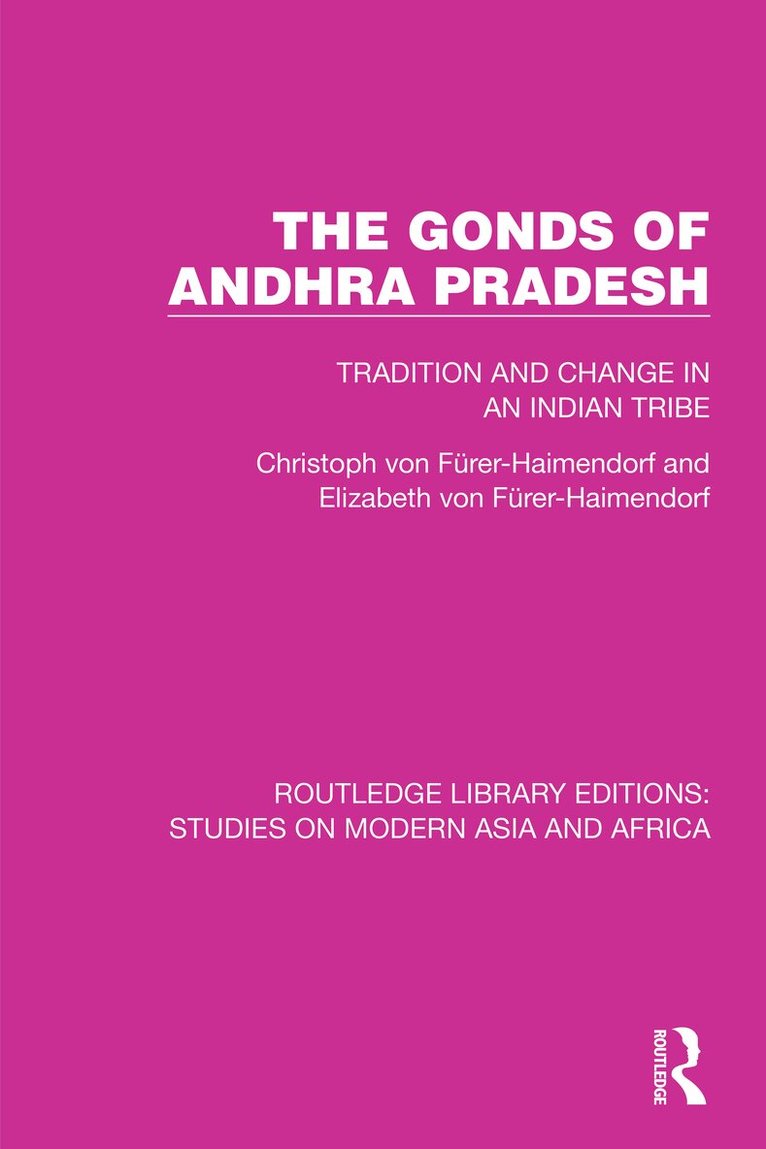
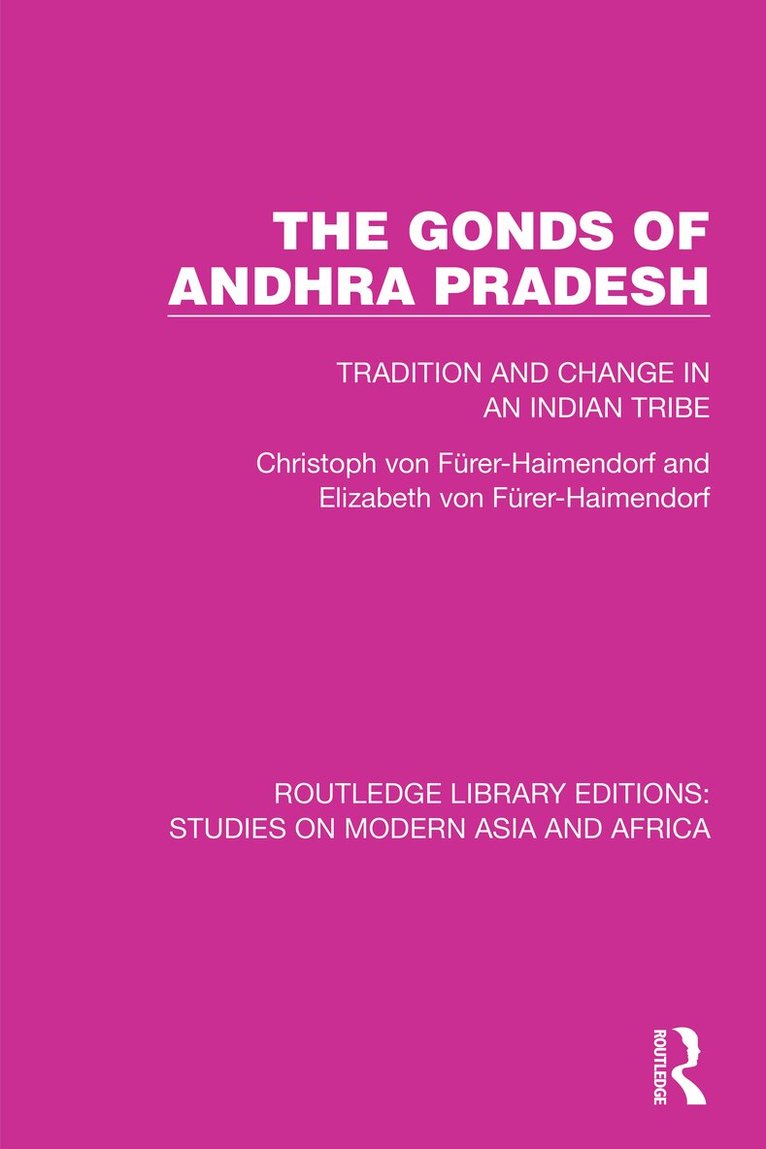
Among the tribal populations of India there is none which rivals in numerical strength and historical importance the group of tribes known as Gonds. In the late 1970s, numbering well over four million, Gonds extend over a large part of the Deccan and constitute a prominent element in the complex ethnic pattern of the zone where Dravidian and Indo-Aryan populations overlap and dovetail.In the highlands of the former Hyderabad State (now Andhra Pradesh) concentrations of Gonds persisted in their traditional lifestyle until the middle of the twentieth century: feudal chiefs continued to function as tribal heads and hereditary bards preserved a wealth of myths and epic tales. It was at that time that Christoph von Fürer-Haimendorf first began his study of this group of Gonds, spending the better part of three years in their villages. While observing their daily life and their elaborate ritual performances, he also saw the threat which more advanced Hindu populations, infiltrating into the Gonds’ habitat and competing for their ancestral land, were posing to their way of life.During the thirty years prior to publication the author had frequently revisited the Gond region and in 1976-7 he undertook a detailed re-study of social and economic developments in the villages he knew best. His long-standing familiarity with many individual Gonds has allowed him to draw in this book, originally published in 1979, an intimate picture of the life of a specific village community and to trace the fates of individual men and women over a long stretch of time. While his earlier book The Raj Gonds of Adilabad: Myth and Ritual concentrated mainly on the Gonds’ mythology and ritual practices, the present volume devotes more space to a detailed analysis of the operation of social forces and the traditional structure of a society characterised by a high degree of cohesion. In 1979 the Gonds were once again being subjected to the pressure of outside forces and Professor von Fürer-Haimendorf lays special emphasis on the analysis of the process of social change forced upon the Gonds by settlers from outside. The last part of the book thus represents a case history of the transformation of a tribal society under the impact of modernisation and relentless population growth.

693 kr
Skickas inom 10-15 vardagar
Among the tribal populations of India there is none which rivals in numerical strength and historical importance the group of tribes known as Gonds. In the late 1970s, numbering well over four million, Gonds extend over a large part of the Deccan and constitute a prominent element in the complex ethnic pattern of the zone where Dravidian and Indo-Aryan populations overlap and dovetail.In the highlands of the former Hyderabad State (now Andhra Pradesh) concentrations of Gonds persisted in their traditional lifestyle until the middle of the twentieth century: feudal chiefs continued to function as tribal heads and hereditary bards preserved a wealth of myths and epic tales. It was at that time that Christoph von Fürer-Haimendorf first began his study of this group of Gonds, spending the better part of three years in their villages. While observing their daily life and their elaborate ritual performances, he also saw the threat which more advanced Hindu populations, infiltrating into the Gonds’ habitat and competing for their ancestral land, were posing to their way of life.During the thirty years prior to publication the author had frequently revisited the Gond region and in 1976-7 he undertook a detailed re-study of social and economic developments in the villages he knew best. His long-standing familiarity with many individual Gonds has allowed him to draw in this book, originally published in 1979, an intimate picture of the life of a specific village community and to trace the fates of individual men and women over a long stretch of time. While his earlier book The Raj Gonds of Adilabad: Myth and Ritual concentrated mainly on the Gonds’ mythology and ritual practices, the present volume devotes more space to a detailed analysis of the operation of social forces and the traditional structure of a society characterised by a high degree of cohesion. In 1979 the Gonds were once again being subjected to the pressure of outside forces and Professor von Fürer-Haimendorf lays special emphasis on the analysis of the process of social change forced upon the Gonds by settlers from outside. The last part of the book thus represents a case history of the transformation of a tribal society under the impact of modernisation and relentless population growth.

673 kr
Skickas inom 10-15 vardagar
Inhabiting a secluded valley in the Eastern Himalayas, the Apa Tanis remained virtually unknown to the outside world until 1944-45 when the author spent several months in their villages, studying their internal social structure as well as their political and economic relations with neighbouring tribes.The economy of the Apa Tanis, who knew neither the principle of animal traction nor the wheel, resembled that of certain Neolithic societies, but the methods used in the exploitation of their natural environment were far from primitive, and a developed agriculture enabled a population of some 20,000 to live in one valley of 20 square miles.Originally published in 1962.