Christopher Bruner - Böcker
Visar alla böcker från författaren Christopher Bruner. Handla med fri frakt och snabb leverans.
8 produkter
8 produkter
1 174 kr
Skickas inom 10-15 vardagar
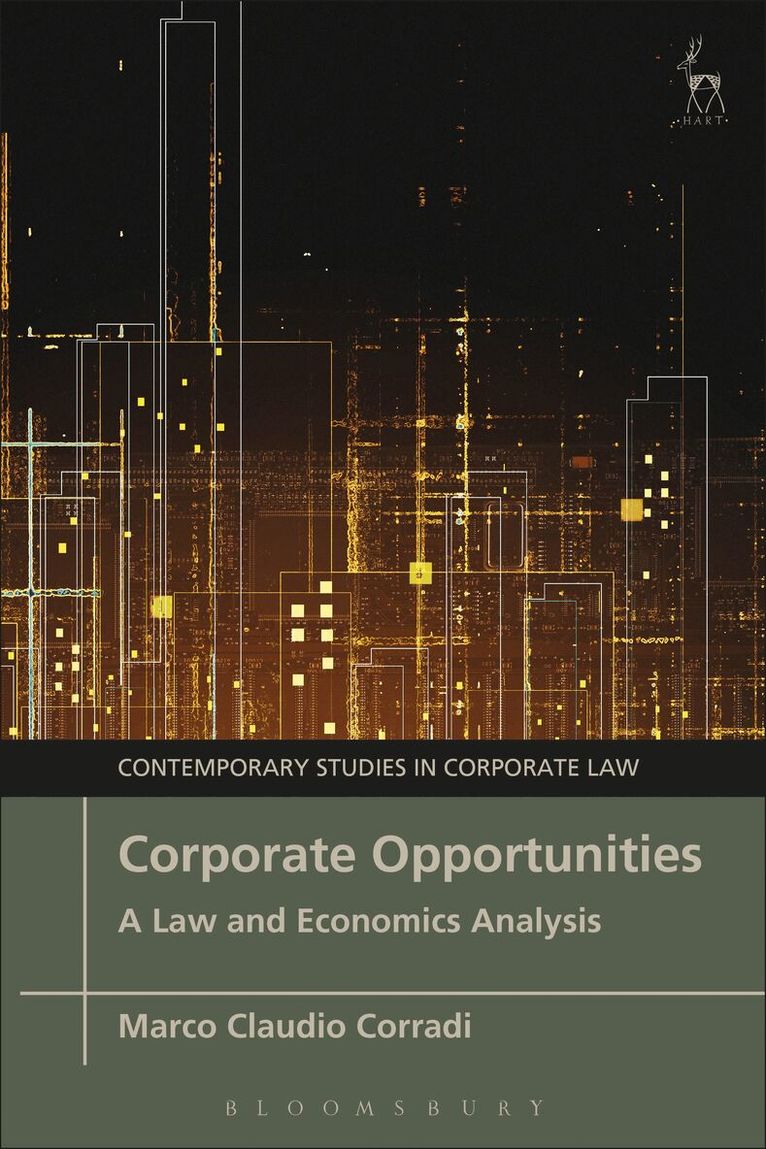
This monograph provides a comprehensive analysis of corporate opportunities doctrines from a comparative perspective. It looks at both common law and civil law rules and relies to a large extent on a law and economics approach. This book broadens the conventional view on corporate opportunities, a vital step in light of the adoption of corporate opportunities rules in civil law jurisdictions and in light of investors’ ever-changing strategies. This approach considers institutional complementarities and especially industrial complementarities. The book thus explores several jurisdictions and their economic and industrial environments, whilst also assessing the impact of globalisation onto legal reform. Furthermore, it analyses the problems related to the application of corporate opportunities rules to cross-border venture capital.In normative terms, the book advances one main stance, articulated in three points: first, it proposes different sanctions for undisclosed and disclosed misappropriations, supporting the core idea that sanctions should be set against disclosure and not authorisation. Secondly, it advances the idea that sanctions against undisclosed misappropriations should be more severe than the ones presently applied. Thirdly, it considers the possibility of a more flexible treatment of disclosed misappropriations.This study is positioned at the intersection of several fields, providing a lens into a much broader range of dynamics that will be of interest to a varied international readership, and offering a window into the broader institutional dynamics at work in centres of innovation (eg Silicon Valley and industrial districts in other jurisdictions). It is rooted in law and economics, but the emphasis is placed on how corporate opportunities rules fit within a broader set of institutional dynamics that affect innovation, industrial efficiency, and economic competitiveness.
1 235 kr
Skickas inom 10-15 vardagar
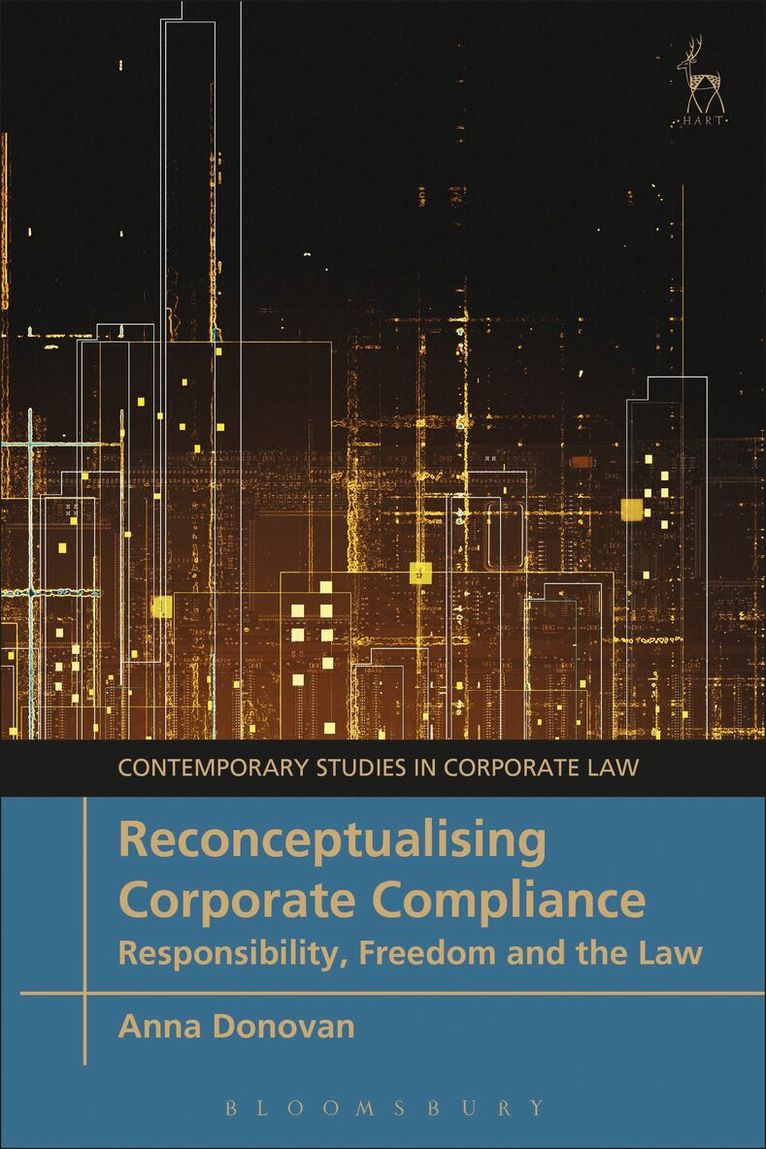
This book offers a comprehensive examination of the issues surrounding corporate compliance.Should corporations comply with the spirit or the letter of the law? What role does compliance play in a capitalist market economy? Why is it that otherwise law-abiding citizens are willing to implement corporate compliance strategies that are seemingly at odds with their personal values? Dr Donovan responds to these questions and more, providing a persuasive argument for the legitimate role of spirited compliance within a market economy. In doing so, she employs the lens of classical liberal ideology, challenging the widespread view that technical compliance is simply ‘capitalism.’ In an examination that has relevance beyond the compliance arena, the author also explores how the architecture of the firm facilitates the often atypical compliance decisions that individuals make when acting within a corporate setting. The book draws on social psychology to offer important insights into how the often-elusive goal of corporate behavioural change can be achieved, for the benefit of both the market and society as a whole.Joint runner-up of the 2021 SLS Peter Birks Prize for Outstanding Legal Scholarship.
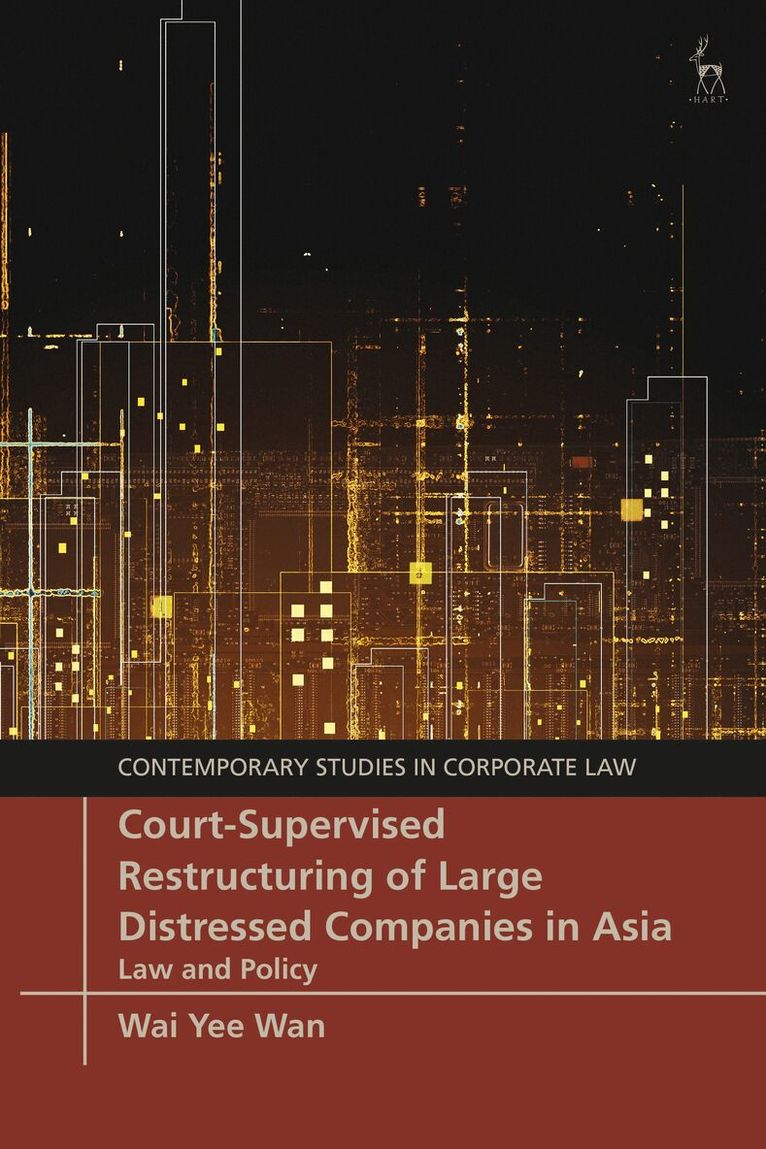
Court-Supervised Restructuring of Large Distressed Companies in Asia
Law and Policy
Inbunden, Engelska, 2022
1 358 kr
Skickas inom 10-15 vardagar
This book provides an in-depth analysis of 4 economically significant Asian jurisdictions: Mainland China, India, Hong Kong and Singapore. These jurisdictions have recently either reformed – or are considering reforming – their corporate restructuring laws to promote regimes conducive to restructuring financially distressed, but otherwise economically viable, companies. Mainland China, India, Hong Kong and Singapore continue to adhere to a framework that requires the court’s final approval but draw references from Chapter 11 of the Bankruptcy Code 1978 in the United States and/or the schemes of arrangement in the United Kingdom. However, the institutional and market structures are very different in Asia; in particular, Asia has a far higher concentration in shareholdings among listed firms, including holdings by families and the state, and a different composition of creditors. The book explains how, notwithstanding the legal transplantation, corporate restructuring laws in these Asian jurisdictions have adapted and evolved due to the frictions in shareholder-creditor and creditor-creditor relationships, and the role of the state in resolving non-performing loans and financial distress of state-owned enterprises which are listed, or which issue public debt. The study argues that any reforms must go beyond professionalising the insolvency professionals and the judiciary but must be designed to address fundamental issues of corporate governance, bank regulation and enforcing non-bankruptcy rules. It offers invaluable insights for academics and policy makers alike.
1 235 kr
Skickas inom 10-15 vardagar
This book surveys the main rules of Company Law governing the making of contracts with companies. It adopts an economic perspective, examining these rules in terms of the risks they apportion between companies and parties contracting with them. It reviews the use that has been made of economics in the analysis of Company Law and considers what guidance this can provide in analysing corporate contracting. The book then examines the relevant law and the issues raised by this law, covering the role of corporate constitutions as the source of the authority of corporate agents, the mechanisms of corporate activity and decision-making, the identification of corporate contracting parties, pre-incorporation contracts and other contracts with non-existent companies, the contractual power of a company's board, the protection of parties dealing with subordinate corporate agents and the regulation of contracts in which a director has a conflict of interest.
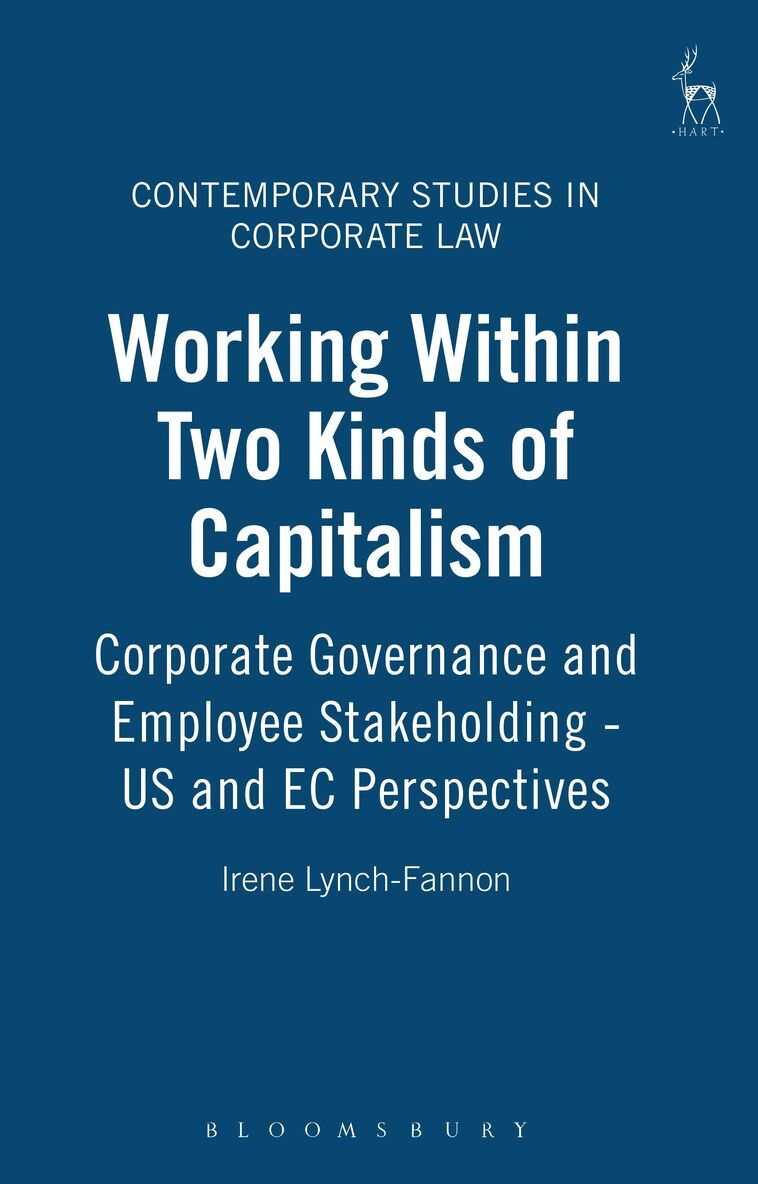
Working Within Two Kinds of Capitalism
Corporate Governance and Employee Stakeholding - US and EC Perspectives
Inbunden, Engelska, 2003
1 174 kr
Skickas inom 10-15 vardagar
This text compares the corporate governance structures of the US quoted company and its European equivalent and the role which employees as non-shareholding stakeholders hold within those structures. It focuses on the incidents of ownership normally exercised by stakeholders and raises questions regarding different responses to the issue of mandated labour market regulation on both sides of the Atlantic. The text considers theoretical and practical issues raised in this context.
1 174 kr
Skickas inom 10-15 vardagar
"The Foundations and Anatomy of Shareholder Activism" examines the landscape of contemporary shareholder activism in the UK. The book focuses on minority shareholder activism in publicly listed companies. It argues that contemporary shareholder activism in the UK is dominated by two groups; one, the institutional shareholders whose shareholder activism is largely seen as a driving force for good corporate governance, and two, the hedge funds whose shareholder activism is based on value extraction and exit. The book provides a detailed examination of both types of shareholder activism, and discusses critically the nature of, motivations for and consequences following both types of shareholder activism. The book then locates both types of shareholder activism in the theory of the company and the fabric of company law, and argues that institutional shareholder activism based on exercising a voice at general meetings is well supported in theory and law. The call for institutions to engage in more informal forms of activism in the name of 'stewardship' may bring about challenges to the current patterns of activism that institutions engage in.The book argues, however, that a more cautious view of hedge fund activism and the pattern of value extraction and exit should be taken. More empirical evidence is likely to be necessary, however, to weigh up the long terms benefits and costs of hedge fund activism.
1 235 kr
Skickas inom 10-15 vardagar
This book studies takeovers from the acquirer's perspective. More precisely the book focuses on the legal and regulatory treatment of the risks faced by the acquiring company shareholders in takeovers. The identified risks are categorised into two main groups: first, risks generated by managerial choices and second, regulatory or external risks. The analysis considers the legal context but also draws on the economic literature, seeking to map the area under consideration and to suggest measures to improve the present position from both a law and economics perspective. More specifically, the book examines various methods of protecting the acquiring shareholders against value-decreasing or self-interested acquisitions, such as the class transaction rules, fiduciary duties, the acquiring directors' responsibilities under the Takeover Code, the court scheme procedure, the role of institutional shareholders and reward strategies, and methods of making the acquiring directors more exposed to the discipline of the market. The effects of the choice of the medium of payment are also covered.In addition, it covers the Code's position with regard to auction situations and seeks to identify ways of addressing the acquiring shareholders' interests in auctions, including auctions where buyout teams or white Knights are involved. Moreover it identifies situations where deviations from horizontal equality rules, which increase takeover premia, are or should be recognised. To that effect the Code's rules on mandatory bids, the determination of the price and the form of payment offered, partial offers and squeeze outs are considered. In addition, it covers the Code's position with regards to auction situations and seeks to identify ways of addressing the acquiring shareholders' interests in auctions, including auctions where buyout teams or White Knights are involved. Moreover it identifies situations where deviations from horizontal equality rules, which increase takeover premia, are or should be recognised. To that effect the Code's rules on mandatory bids, the determination of the price and the form of payment offered, partial offers and squeeze outs are considered. The analysis covers both hostile and friendly situations.In relation to hostile takeovers, the legal and regulatory framework of toehold strategies is analysed (Code's requirements, Disclosure Rules and Companies Act disclosure requirements etc). Market Abuse issues in relation to stake building are also highlighted. In relation to friendly takeovers the operation of lock-up agreements and break fees (Code's requirements, fiduciary law, financial assistance and other contract law concerns), is also explored. Finally, the Panel's position on adverse changes, pre-conditions and conditions which the offer can be subject to and the bidder's exposure to Material Adverse Change risk are assessed. The book discusses developments in the area under consideration including the Takeover Code regime after the implementation of the Takeover Directive and the Companies Act 2006.
1 235 kr
Skickas inom 10-15 vardagar
Over recent decades corporate governance has developed an increasingly high profile in legal scholarship and practice, especially in the US and UK. But despite widespread interest, there remains considerable uncertainty about how exactly corporate governance should be defined and understood. In this important work, Marc Moore critically analyses the core dimensions of corporate governance law in these two countries, seeking to determine the fundamental nature of corporate governance as a subject of legal enquiry. In particular, Moore examines whether Anglo-American corporate governance is most appropriately understood as an aspect of 'private' (facilitative) law, or as a part of 'public' (regulatory) law. In contrast to the dominant contractarian understanding of the subject, which sees corporate governance as an institutional response to investors' market-driven private preferences, this book defines corporate governance as the manifestly public problem of securing the legitimacy – and, in turn, sustainability – of discretionary administrative power within large economic organisations. It emphasises the central importance of formal accountability norms in legitimating corporate managers' continuing possession and exercise of such power, and demonstrates the structural necessity of mandatory public regulation in this regard. In doing so it highlights the significant and conceptually irreducible role of the regulatory state in determining the key contours of the Anglo-American corporate governance framework. The normative effect is to extend the state's acceptable policy-making role in corporate governance, as an essential supplement to private ordering dynamics. Shortlisted for The Peter Birks Prize for Outstanding Legal Scholarship 2013.