Christopher Forth – författare
Visar alla böcker från författaren Christopher Forth. Handla med fri frakt och snabb leverans.
2 produkter
2 produkter
Inbunden, Engelska, 2001
535 kr
Skickas inom 10-15 vardagar
Friedrich Nietzsche's descent into madness prevented him from achieving his dream of seeing Paris, but his philosophical alter-ego Zarathustra took the City of Light by storm, raising sharp debates among the political and cultural avant-garde about the very foundations of modern philosophy, social thought and political life. This intellectual history reveals Nietzsche's impact upon the French life of the mind and clarifies the crisis in European thought that foreshadowed and helped bring about World War I. The author examines a broad range of intellectuals and opinion-makers, including artists, politicians, academics and journalists, demonstrating that social frameworks such as institutional affiliation, aesthetic allegiance and generational identity, even more than class or political sympathies, shaped responses to Nietzsche's writings. This discovery allows the author to broaden his inquiry into a general sociology of knowledge that explores the several ways a thinker becomes recognized as important by cultural and political leaders.In addition, he reveals the subtle linkages between the reception of Nietzsche and the shifting currents of social and political developments leading to World War I. In 1900 many represented Nietzsche as a "good European" who transcended national divisions, but by 1914 patriotic fervour led many French critics to repudiate Nietzsche and his disciples. During the Great War most intellectuals turned against Nietzsche, with Leon Daudet blaming him for laying the philosophical groundwork for German barbarities in Belgium and occupied France. Opening new avenues for understanding French and European intellectual life in the era before the Great War, this study should be useful to historians, political scientists, philosophers and sociologists, and anyone interested in the cultural politics and literary and political avant-garde of the early 20th century.
Inbunden, Engelska, 2005
559 kr
Skickas inom 10-15 vardagar
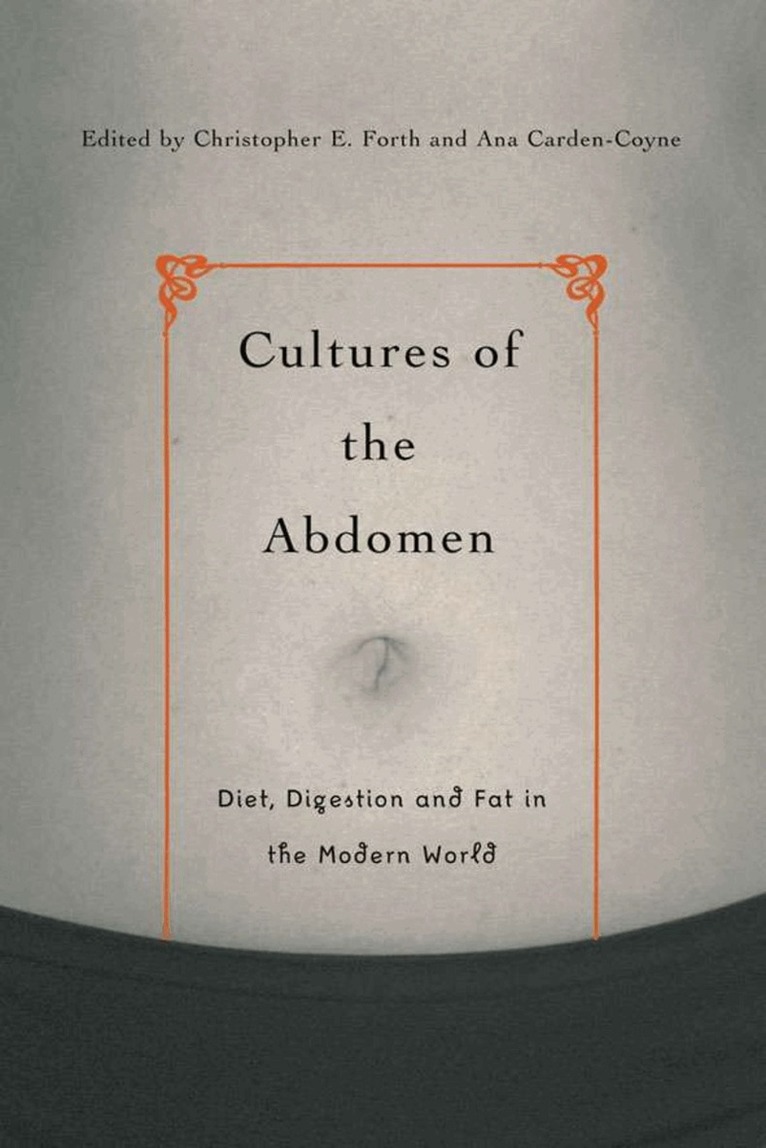
We live in a world obsessed with abdomens. Whether we call it the belly, tummy, or stomach, we take this area of the body for granted as an object of our gaze, the subject of our obsessions, and the location of deeply felt desires. Diet, nutrition, and exercise all play critical roles in the development of our body images and thus our sense of self, not least because how we are made to feel about bodies (both our own and those of others) is often grounded in dietary and lifestyle choices. Cultures of the Abdomen traces the history of social, cultural, and medical ideas about the stomach and related organs since the seventeenth century, and demonstrates that a focused study of the abdomen is necessary for understanding the deep historical meanings that underscore our contemporary obsessions with hunger, diet, fat, indigestion, and excretion. It locates that history from dietary ideals in early modern Europe to the vexing issue of American fat in the twenty-first century, surveying along the way developments in Britain, France, Germany, Italy, and Russia.