Christopher Fynsk - Böcker
Visar alla böcker från författaren Christopher Fynsk. Handla med fri frakt och snabb leverans.
14 produkter
14 produkter
673 kr
Skickas inom 10-15 vardagar
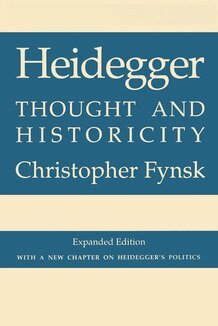
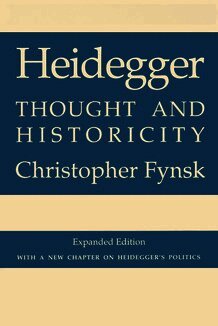
Christopher Fynsk here offers a sustained critical reading of texts written by Martin Heidegger in the period 1927-1947. His guiding concerns are Heidegger's notions of human finitude and difference, which he first addresses through an analysis of the role played by Mitsein in Being and Time. This analysis in turn affords a critical perspective on Heidegger's own interpretive encounters with Nietzsche and Hölderlin.In a reading of Heidegger's Nietzsche, Fynsk points to a far more ambivalent interpretation than the one commonly attributed to Heidegger. After further elaboration of the problematic of finitude in the context of Heidegger's writings of the 1930s on politics and art, Fynsk looks closely at Heidegger's commentary on Hölderlin. He calls into question Heidegger's claims for the gathering and founding character of poetry, and seeks to raise some basic questions in respect to the nature of the text and the act of interpretation.Presenting a critical confrontation with Heidegger that places itself within what Fynsk refers to as a contemporary "thought of difference," this book should be of interest not only to all students of Heidegger but also to anyone concerned with contemporary literary theory or modern Continental philosophy.
474 kr
Skickas inom 10-15 vardagar
Christopher Fynsk here offers a sustained critical reading of texts written by Martin Heidegger in the period 1927-1947. His guiding concerns are Heidegger's notions of human finitude and difference, which he first addresses through an analysis of the role played by Mitsein in Being and Time. This analysis in turn affords a critical perspective on Heidegger's own interpretive encounters with Nietzsche and Hölderlin.In a reading of Heidegger's Nietzsche, Fynsk points to a far more ambivalent interpretation than the one commonly attributed to Heidegger. After further elaboration of the problematic of finitude in the context of Heidegger's writings of the 1930s on politics and art, Fynsk looks closely at Heidegger's commentary on Hölderlin. He calls into question Heidegger's claims for the gathering and founding character of poetry, and seeks to raise some basic questions in respect to the nature of the text and the act of interpretation.Presenting a critical confrontation with Heidegger that places itself within what Fynsk refers to as a contemporary "thought of difference," this book should be of interest not only to all students of Heidegger but also to anyone concerned with contemporary literary theory or modern Continental philosophy.
1 510 kr
Skickas inom 10-15 vardagar
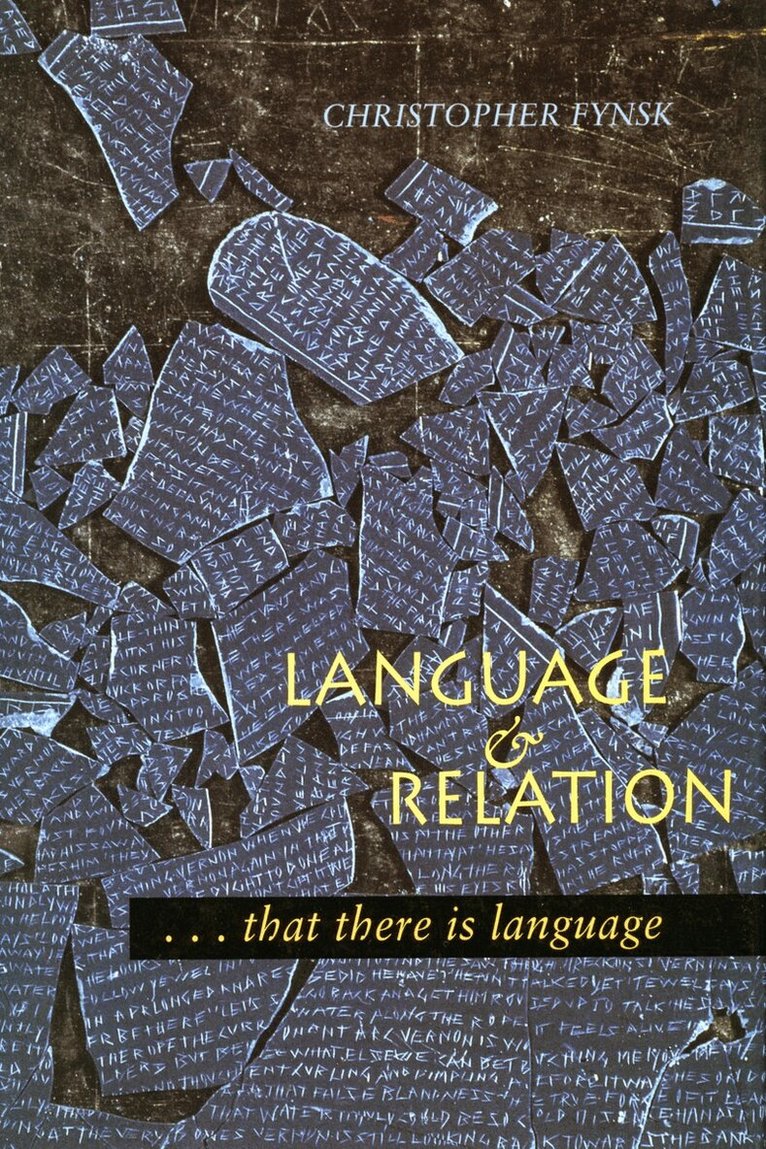
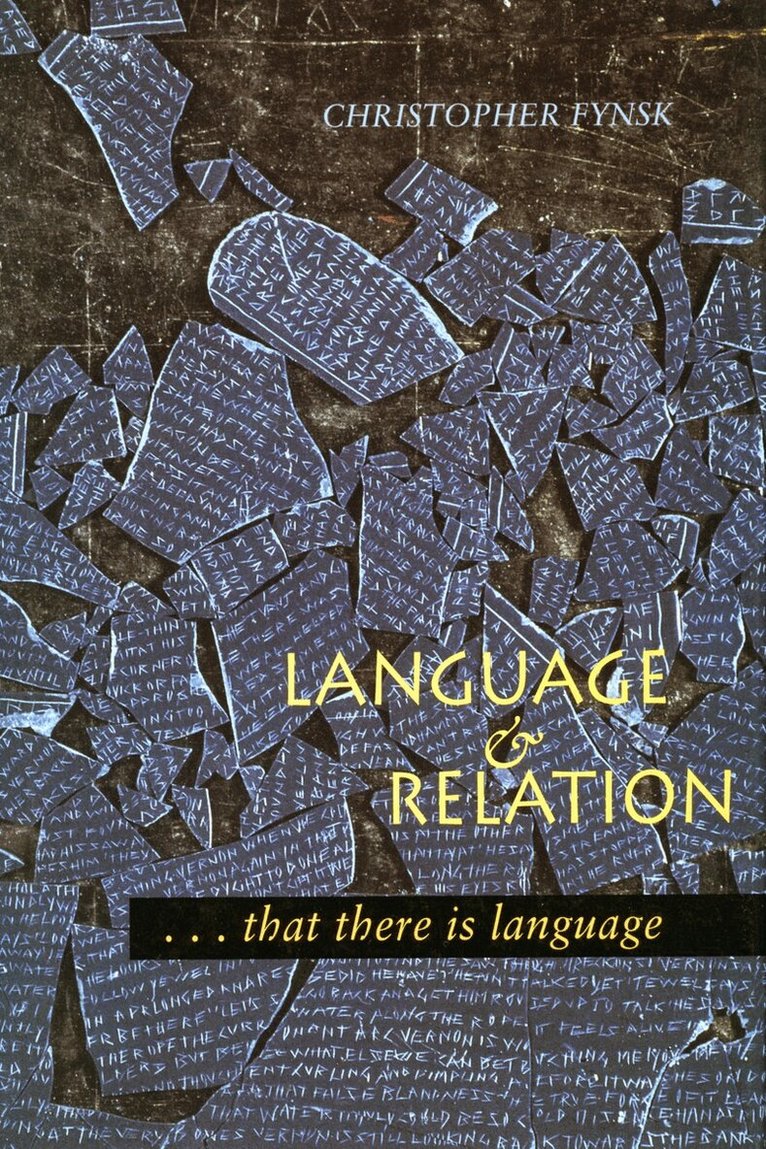
The most recent version of the "linguistic turn," the revolution in language theory shaped by Saussure's structural linguistics and realized in a sweeping revision of investigations throughout the humanities and social sciences, has rushed past the most basic "fact": that there is language. What has been lost? Almost everything of what Heidegger tried to approach under the name of "ontology" until the word proved too laden by common misapprehension to be of use. Most immediately, this is everything of language that exceeds the order of signification, together with the subject's engagement with this "excess" that is the (non)ground of history and the material site of all relationality, beginning with that unthought that is widely termed "culture."Language and Relation returns to this site in close readings of meditations on language by Martin Heidegger, Luce Irigaray, Paul Celan, Walter Benjamin, and Maurice Blanchot. It seeks to move with these authors beyond the order of signification and toward the an-archic grounds of relation (of all relations between self and other, and of relation in general), exploring the possibility for a strong link between issues in modern philosophy of language and contemporary socio-political concerns.
373 kr
Skickas inom 7-10 vardagar
The most recent version of the "linguistic turn," the revolution in language theory shaped by Saussure's structural linguistics and realized in a sweeping revision of investigations throughout the humanities and social sciences, has rushed past the most basic "fact": that there is language. What has been lost? Almost everything of what Heidegger tried to approach under the name of "ontology" until the word proved too laden by common misapprehension to be of use. Most immediately, this is everything of language that exceeds the order of signification, together with the subject's engagement with this "excess" that is the (non)ground of history and the material site of all relationality, beginning with that unthought that is widely termed "culture."Language and Relation returns to this site in close readings of meditations on language by Martin Heidegger, Luce Irigaray, Paul Celan, Walter Benjamin, and Maurice Blanchot. It seeks to move with these authors beyond the order of signification and toward the an-archic grounds of relation (of all relations between self and other, and of relation in general), exploring the possibility for a strong link between issues in modern philosophy of language and contemporary socio-political concerns.
1 686 kr
Skickas inom 7-10 vardagar
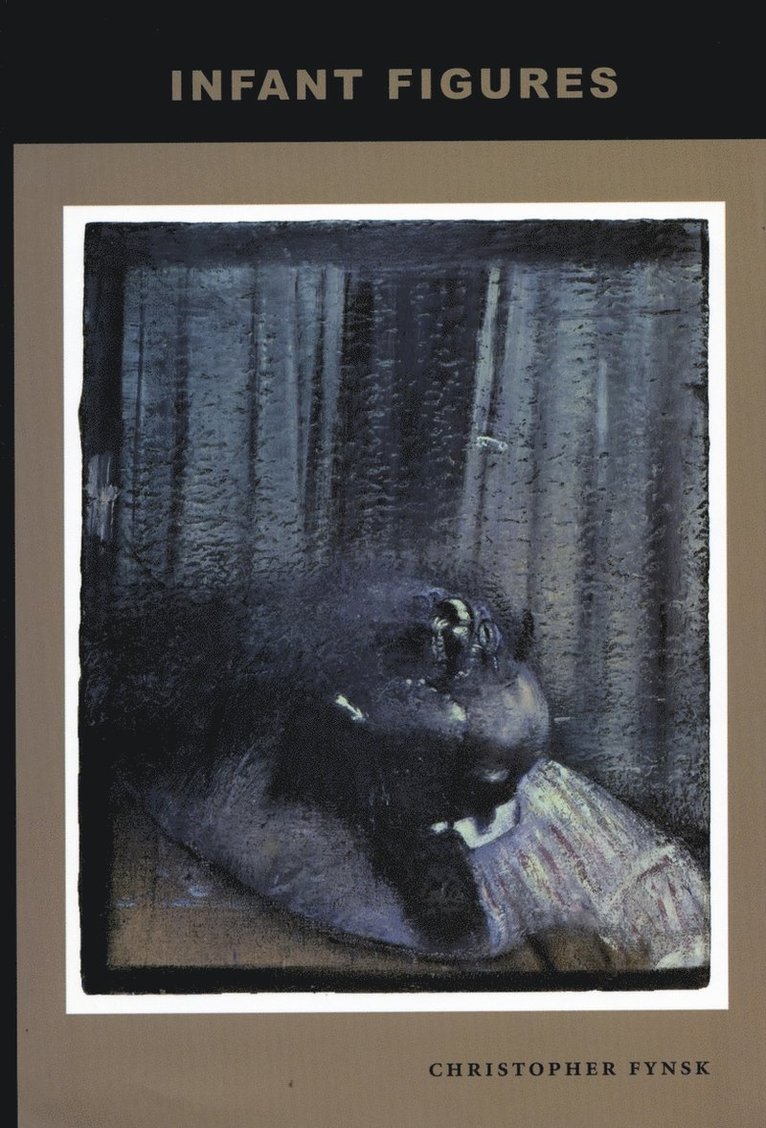
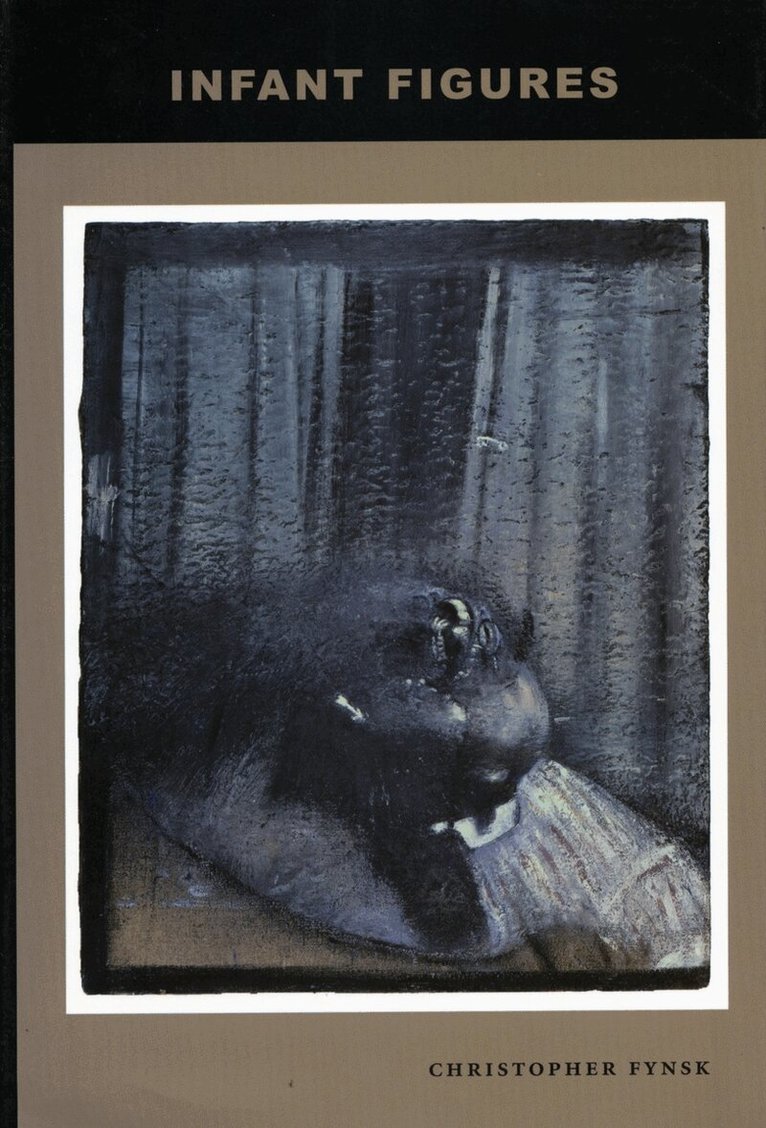
This volume juxtaposes philosophical and psychoanalytic speculation with literary and artistic commentary in order to approach a set of questions concerning the human relation to language, a relation that cannot be taken as an "object" of critical or philosophical reflection in the traditional manner. Exploring the exigencies of figuring this relation at the limits of language, the multifold writing of this volume takes the form of a "triptych" (following the model of works by Francis Bacon) rather than that of a thesis.The central (and organizing) section of the volume contains an extended dialogue on two textual passages portraying versions of what the author describes as "the death of the infans." With the strange resonance of the "primal" or the "originary," these two scenes from works by Maurice Blanchot and Jacques Lacan invite a reflection on the mortal exposure that marks the human share in the advent of language, an exposure whose figuration is necessary to any speech or conscious life. The dialogue explores the ethical and philosophical issues that surface in a practice of writing (a "pragmatics") that engages this necessary figuration, and thus the limits of language. The latter issues are also explored in a brief essay on Antigone that concludes the dialogical fiction.The first and third parts of the volume's triptych address artistic projects that realize in their respective ways a pragmatics like that of the central section. The first part focuses on the work of Francis Bacon, taking the motif of crucifixion as a path toward understanding his violent realism. This essay is prefaced by a consideration of the notion of cruelty to which Nietzsche appeals in The Genealogy of Morals. The third part, which juxtaposes a dialogue with a critical essay, concerns the work of Salvatore Puglia. Through Bacon and Puglia, the author seeks another approach to a figural imperative at the limits of language.
416 kr
Skickas inom 7-10 vardagar
This volume juxtaposes philosophical and psychoanalytic speculation with literary and artistic commentary in order to approach a set of questions concerning the human relation to language, a relation that cannot be taken as an "object" of critical or philosophical reflection in the traditional manner. Exploring the exigencies of figuring this relation at the limits of language, the multifold writing of this volume takes the form of a "triptych" (following the model of works by Francis Bacon) rather than that of a thesis.The central (and organizing) section of the volume contains an extended dialogue on two textual passages portraying versions of what the author describes as "the death of the infans." With the strange resonance of the "primal" or the "originary," these two scenes from works by Maurice Blanchot and Jacques Lacan invite a reflection on the mortal exposure that marks the human share in the advent of language, an exposure whose figuration is necessary to any speech or conscious life. The dialogue explores the ethical and philosophical issues that surface in a practice of writing (a "pragmatics") that engages this necessary figuration, and thus the limits of language. The latter issues are also explored in a brief essay on Antigone that concludes the dialogical fiction.The first and third parts of the volume's triptych address artistic projects that realize in their respective ways a pragmatics like that of the central section. The first part focuses on the work of Francis Bacon, taking the motif of crucifixion as a path toward understanding his violent realism. This essay is prefaced by a consideration of the notion of cruelty to which Nietzsche appeals in The Genealogy of Morals. The third part, which juxtaposes a dialogue with a critical essay, concerns the work of Salvatore Puglia. Through Bacon and Puglia, the author seeks another approach to a figural imperative at the limits of language.
617 kr
Skickas inom 7-10 vardagar
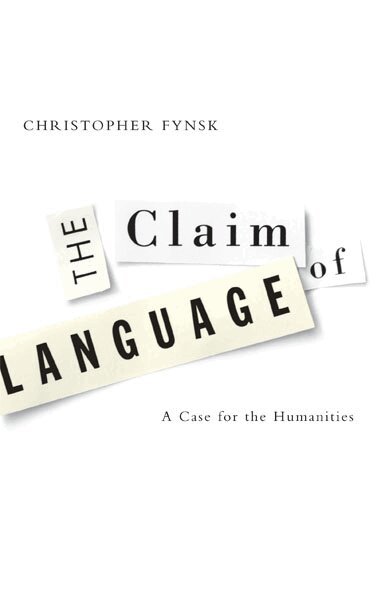
Argues for the importance of humanities research in an era of globalization and technical reasonThe humanities-in their conceptual and intellectual specificity, disciplinary rigor, and ethical, social, and political potential-are very much in need of defense and rearticulation in our time, particularly from a perspective that moves beyond the political and philosophical reductions of identity politics. In The Claim of Language, Christopher Fynsk clearly and eloquently does just that. Leaving aside polemics, Fynsk asserts that discourses in the humanities will find real ethical-political purchase when they engage with the material events in art, literature, and social life that call for humanistic reflection.Fynsk describes the collapse of the traditional terms of defense in the contemporary academy, and then sets out to establish that the humanities are more than a loose affiliation of academic disciplines and research projects. Showing how events in language raise questions fundamental to the humanities-questions about the nature of human experience in the modern era and the nature of the human itself-The Claim of Language proposes a renewed relationship to language as a way to rethink humanistic research. Fynsk extends his philosophical meditation with two essays on the university and the politics of philosophy. The first, devoted to the work of GÉrard Granel, explores the political implications of a quite radical project of fundamental critique. The second focuses on Jacques Derrida’s propositions for a reconception of the nature and task of critical thought in the new CollÈge International de Philosophie.
224 kr
Skickas inom 7-10 vardagar
Argues for the importance of humanities research in an era of globalization and technical reasonThe humanities-in their conceptual and intellectual specificity, disciplinary rigor, and ethical, social, and political potential-are very much in need of defense and rearticulation in our time, particularly from a perspective that moves beyond the political and philosophical reductions of identity politics. In The Claim of Language, Christopher Fynsk clearly and eloquently does just that. Leaving aside polemics, Fynsk asserts that discourses in the humanities will find real ethical-political purchase when they engage with the material events in art, literature, and social life that call for humanistic reflection.Fynsk describes the collapse of the traditional terms of defense in the contemporary academy, and then sets out to establish that the humanities are more than a loose affiliation of academic disciplines and research projects. Showing how events in language raise questions fundamental to the humanities-questions about the nature of human experience in the modern era and the nature of the human itself-The Claim of Language proposes a renewed relationship to language as a way to rethink humanistic research. Fynsk extends his philosophical meditation with two essays on the university and the politics of philosophy. The first, devoted to the work of GÉrard Granel, explores the political implications of a quite radical project of fundamental critique. The second focuses on Jacques Derrida’s propositions for a reconception of the nature and task of critical thought in the new CollÈge International de Philosophie.
1 235 kr
Skickas inom 10-15 vardagar
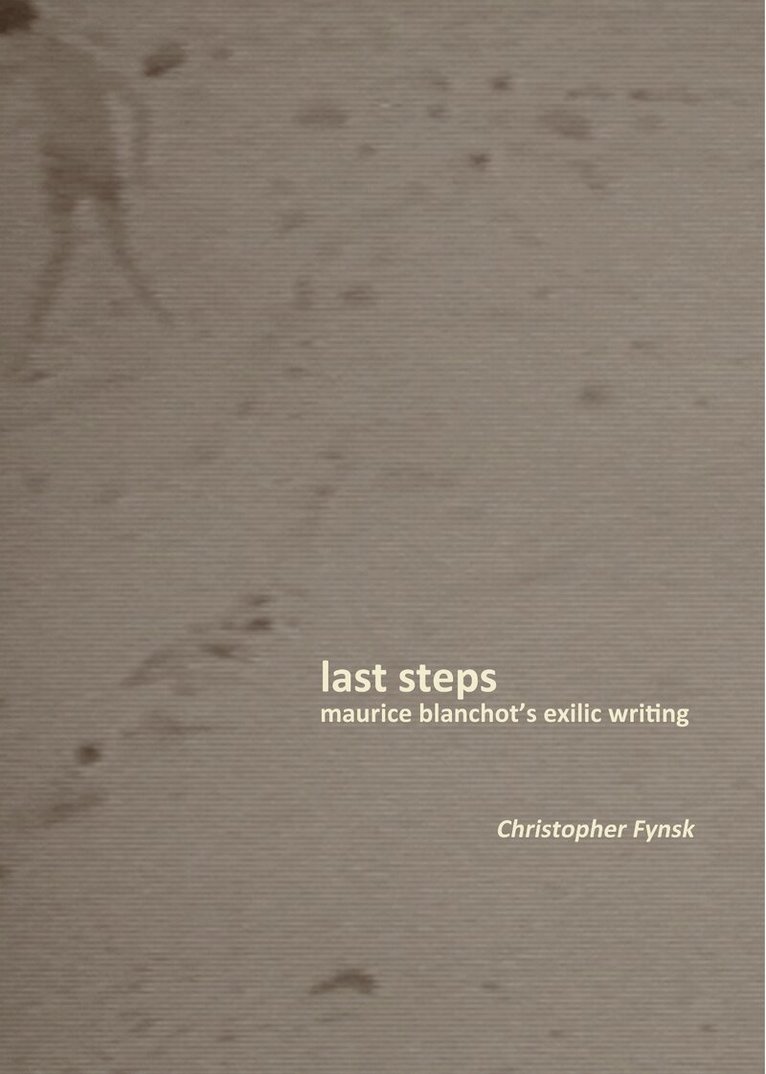
Writing, Maurice Blanchot taught us, is not something that is in one's power. It is, rather, a search for a nonpower that refuses mastery, order, and all established authority. For Blanchot, this search was guided by an enigmatic exigency, an arresting rupture, and a promise of justice that required endless contestation of every usurping authority, an endless going out toward the other."The step/not beyond" ("le pas au-delà") names this exilic passage as it took form in his influential later work, but not as a theme or concept, because its "step" requires a transgression of discursive limits and any grasp afforded by the labor of the negative. Thus, to follow "the step/not beyond" is to follow a kind of event in writing, to enter a movement that is never quite captured in any defining or narrating account.Last Steps attempts a practice of reading that honors the exilic exigency even as it risks drawing Blanchot's reflective writings and fragmentary narratives into the articulation of a reading. It brings to the fore Blanchot's exceptional contributions to contemporary thought on the ethico-political relation, language, and the experienceof human finitude. It offers the most sustained interpretation of The Step Not Beyond available, with attentive readings of a number of major texts, as well as chapters on Levinas's and Blanchot's relation to Judaism. Its trajectory of reading limns the meaning of a question from The Infinite Conversation that implies an opening and a singular affirmation rather than a closure: "How had he come to will the interruption of the discourse?"
422 kr
Skickas inom 10-15 vardagar
Writing, Maurice Blanchot taught us, is not something that is in one's power. It is, rather, a search for a nonpower that refuses mastery, order, and all established authority. For Blanchot, this search was guided by an enigmatic exigency, an arresting rupture, and a promise of justice that required endless contestation of every usurping authority, an endless going out toward the other."The step/not beyond" ("le pas au-delà") names this exilic passage as it took form in his influential later work, but not as a theme or concept, because its "step" requires a transgression of discursive limits and any grasp afforded by the labor of the negative. Thus, to follow "the step/not beyond" is to follow a kind of event in writing, to enter a movement that is never quite captured in any defining or narrating account.Last Steps attempts a practice of reading that honors the exilic exigency even as it risks drawing Blanchot's reflective writings and fragmentary narratives into the articulation of a reading. It brings to the fore Blanchot's exceptional contributions to contemporary thought on the ethico-political relation, language, and the experienceof human finitude. It offers the most sustained interpretation of The Step Not Beyond available, with attentive readings of a number of major texts, as well as chapters on Levinas's and Blanchot's relation to Judaism. Its trajectory of reading limns the meaning of a question from The Infinite Conversation that implies an opening and a singular affirmation rather than a closure: "How had he come to will the interruption of the discourse?"
1 142 kr
Skickas inom 10-15 vardagar
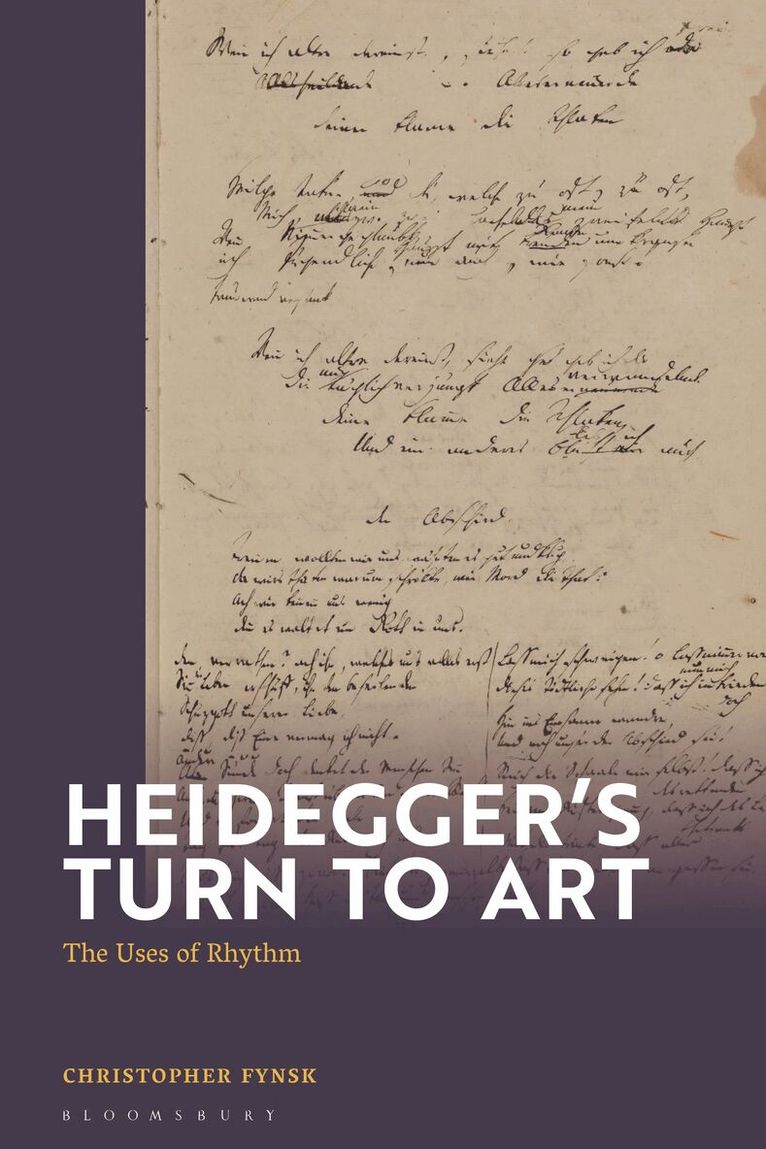
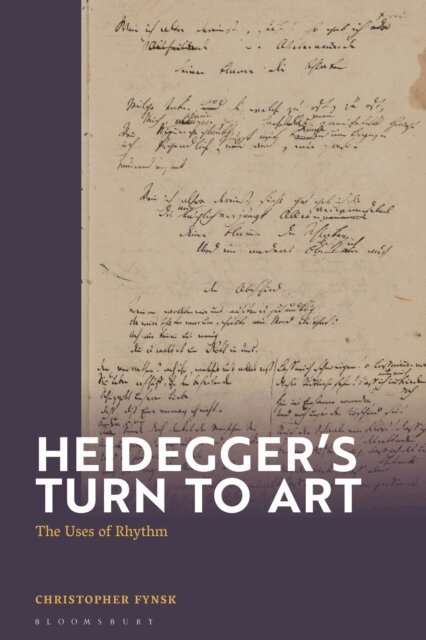
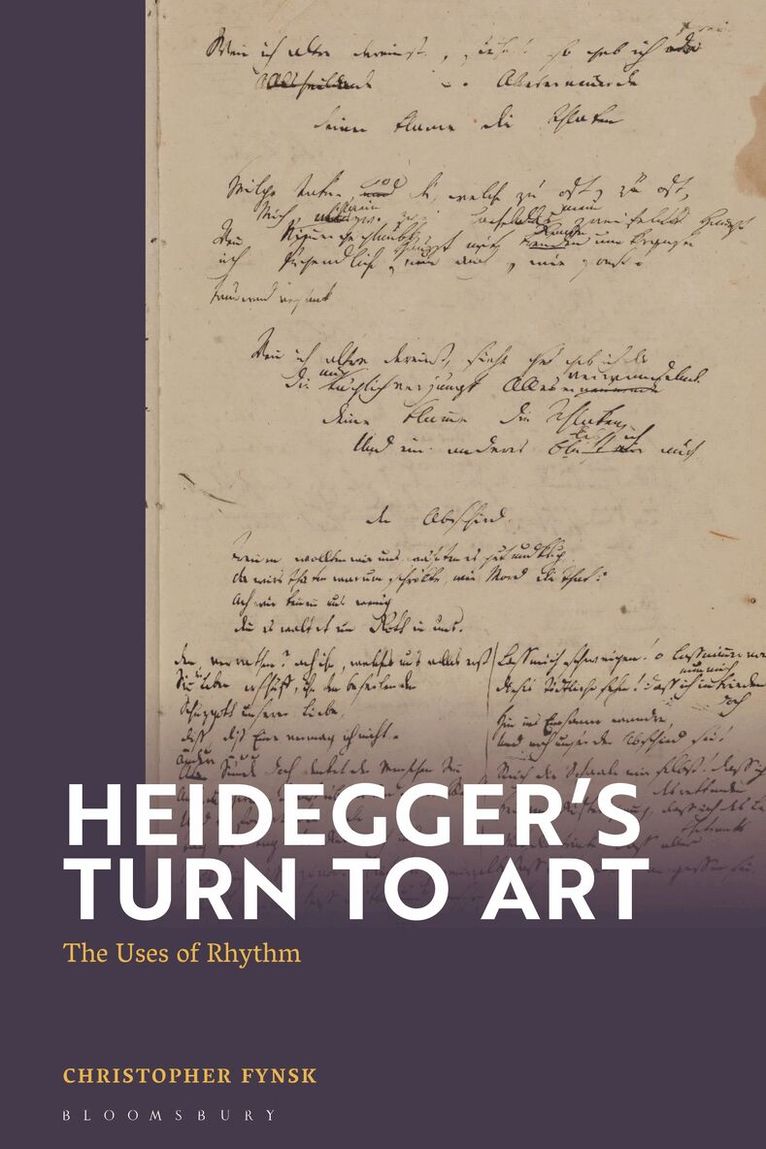
In this major new contribution to Heidegger studies, Christopher Fynsk provides an original account of Heidegger’s reflections on art, and in particular the poetic work of art, to explore the central yet overlooked Heideggerian idea that all art has a rhythmic character.Following the development of Heidegger’s thoughts on rhythm, this book focuses especially on the critical moment of Heidegger’s turn to art in the mid-1930s and his reading of Friedrich Hölderlin’s river hymns. This not only allows for a new reading of his monumental essay “The Origin of the Work of Art”, but also a sustained analysis of his engagement with Hölderlin and Aristotle. Importantly, it further reveals the centrality of rhythm to Heidegger’s thought and its relation to his other ideas. Indeed Fynsk connects rhythm to Heidegger’s theorization of usage, “der Brauch”, and in turn the role of usage to his reflections on the relation between being and human being.Drawing on a wide range of art, from cave paintings to Francis Bacon, this is a significant and insightful study of the ontology of rhythm in Heidegger and beyond.
484 kr
Kommande
In this major new contribution to Heidegger studies, Christopher Fynsk provides an original account of Heidegger’s reflections on art, and in particular the poetic work of art, to explore the central yet overlooked Heideggerian idea that all art has a rhythmic character.Following the development of Heidegger’s thoughts on rhythm, this book focuses especially on the critical moment of Heidegger’s turn to art in the mid-1930s and his reading of Friedrich Hölderlin’s river hymns. This not only allows for a new reading of his monumental essay “The Origin of the Work of Art”, but also a sustained analysis of his engagement with Hölderlin and Aristotle. Importantly, it further reveals the centrality of rhythm to Heidegger’s thought and its relation to his other ideas. Indeed Fynsk connects rhythm to Heidegger’s theorization of usage, “der Brauch”, and in turn the role of usage to his reflections on the relation between being and human being.Drawing on a wide range of art, from cave paintings to Francis Bacon, this is a significant and insightful study of the ontology of rhythm in Heidegger and beyond.
1 215 kr
Tillfälligt slut
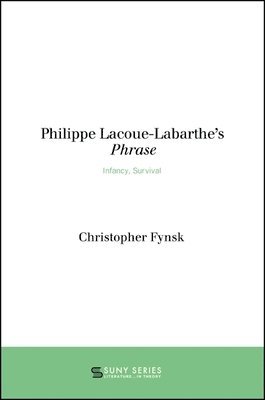
First sustained critical reading of Lacoue-Labarthe's Phrase, which provides insights into a philosophically inspired work of prose poetry.This book presents an interpretation of a volume of poetry and theoretical reflections (Phrase) by the late Philippe Lacoue-Labarthe, who is widely known as one of the major contributors to thinking about the relation between philosophy and literature in the continental tradition. His work has shaped the deconstructive approach to the question of the subject and has opened important paths of research relating to the topic of literary mimesis. Along with Jean-Luc Nancy, he made very important contributions in the areas of romantic literary theory and psychoanalytic theory.Christopher Fynsk's analysis of Phrase focuses principally on two of its key motifs. Fynsk first deals with the theme of infancy and draws forth the deep relation to Blanchot that is revealed in this text. The second motif which organizes the narrative of the autobiographical component of Phrase (which Lacoue-Labarthe entitles "a history of renunciation") names the condition of modern poetic speech. Thus, Fynsk interprets the history of renunciation and elucidates the meaning of what Lacoue-Labarthe terms "literature."
409 kr
Tillfälligt slut
First sustained critical reading of Lacoue-Labarthe's Phrase, which provides insights into a philosophically inspired work of prose poetry.This book presents an interpretation of a volume of poetry and theoretical reflections (Phrase) by the late Philippe Lacoue-Labarthe, who is widely known as one of the major contributors to thinking about the relation between philosophy and literature in the continental tradition. His work has shaped the deconstructive approach to the question of the subject and has opened important paths of research relating to the topic of literary mimesis. Along with Jean-Luc Nancy, he made very important contributions in the areas of romantic literary theory and psychoanalytic theory.Christopher Fynsk's analysis of Phrase focuses principally on two of its key motifs. Fynsk first deals with the theme of infancy and draws forth the deep relation to Blanchot that is revealed in this text. The second motif which organizes the narrative of the autobiographical component of Phrase (which Lacoue-Labarthe entitles "a history of renunciation") names the condition of modern poetic speech. Thus, Fynsk interprets the history of renunciation and elucidates the meaning of what Lacoue-Labarthe terms "literature."