Christopher Herbert - Böcker
Visar alla böcker från författaren Christopher Herbert. Handla med fri frakt och snabb leverans.
14 produkter
14 produkter
903 kr
Skickas inom 7-10 vardagar
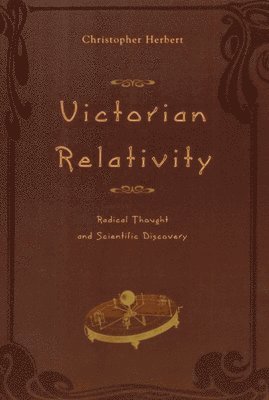
This text challenges the assumptions that the theory of relativity in physics sprang in its essence from the genius of Albert Einstein, and that scientific relativity is unconnected to ethical, cultural or epistemological relativisms. It unearths a forgotten tradition of avant-garde speculation that took as its guiding principle "the negation of the absolute" and set itself under the militant banner of "relativity". By drawing on the works of such thinkers as Charles Darwin, Karl Pearson, James Frazer and Einstein himself, Christopher Herbert shows that the idea of relativity produced changes in many fields during the 19th century and argues that the early relativity movement was closely bound to motives of political and cultural reform and to the radical critiques of the ideology of authoritarianism.
324 kr
Skickas inom 7-10 vardagar
This text challenges the assumptions that the theory of relativity in physics sprang in its essence from the genius of Albert Einstein, and that scientific relativity is unconnected to ethical, cultural or epistemological relativisms. It unearths a forgotten tradition of avant-garde speculation that took as its guiding principle "the negation of the absolute" and set itself under the militant banner of "relativity". By drawing on the works of such thinkers as Charles Darwin, Karl Pearson, James Frazer and Einstein himself, Christopher Herbert shows that the idea of relativity produced changes in many fields during the 19th century and argues that the early relativity movement was closely bound to motives of political and cultural reform and to the radical critiques of the ideology of authoritarianism.
1 065 kr
Skickas inom 7-10 vardagar
Few ideas are as important and pervasive in the discourse of the twentieth century as the idea of culture. Yet culture, Christopher Herbert contends, is an idea laden from its inception with ambiguity and contradiction. In Culture and Anomie, Christopher Herbert conducts an inquiry into the historical emergence of the modern idea of culture that is at the same time an extended critical analysis of the perplexities and suppressed associations underlying our own exploitation of this term. Making wide reference to twentieth-century anthropologists from Malinowski and Benedict to Evans-Pritchard, Geertz, and Lévi-Strauss as well as to nineteenth-century social theorists like Tylor, Spencer, Mill, and Arnold, Herbert stresses the philosophically dubious, unstable character that has clung to the "culture" idea and embarrassed its exponents even as it was developing into a central principle of interpretation. In a series of detailed studies ranging from political economy to missionary ethnography, Mayhew, and Trollope's fiction, Herbert then focuses on the intellectual and historical circumstances that gave to "culture" the appearance of a secure category of scientific analysis despite its apparent logical incoherence. What he describes is an intimate relationship between the idea of culture and its antithesis, the myth or fantasy of a state of boundless human desire—a conception that binds into a single tradition of thought such seemingly incompatible writers as John Wesley, who called this state original sin, and Durkheim, who gave it its technical name in sociology: anomie. Methodologically provocative and rich in unorthodox conclusions, Culture and Anomie will be of interest not only to specialists in nineteenth-century literature and intellectual history, but also to readers across the wide range of fields in which the concept of culture plays a determining role.
514 kr
Skickas inom 7-10 vardagar
Few ideas are as important and pervasive in the discourse of the twentieth century as the idea of culture. Yet culture, Christopher Herbert contends, is an idea laden from its inception with ambiguity and contradiction. In Culture and Anomie, Christopher Herbert conducts an inquiry into the historical emergence of the modern idea of culture that is at the same time an extended critical analysis of the perplexities and suppressed associations underlying our own exploitation of this term. Making wide reference to twentieth-century anthropologists from Malinowski and Benedict to Evans-Pritchard, Geertz, and Lévi-Strauss as well as to nineteenth-century social theorists like Tylor, Spencer, Mill, and Arnold, Herbert stresses the philosophically dubious, unstable character that has clung to the "culture" idea and embarrassed its exponents even as it was developing into a central principle of interpretation. In a series of detailed studies ranging from political economy to missionary ethnography, Mayhew, and Trollope's fiction, Herbert then focuses on the intellectual and historical circumstances that gave to "culture" the appearance of a secure category of scientific analysis despite its apparent logical incoherence. What he describes is an intimate relationship between the idea of culture and its antithesis, the myth or fantasy of a state of boundless human desire—a conception that binds into a single tradition of thought such seemingly incompatible writers as John Wesley, who called this state original sin, and Durkheim, who gave it its technical name in sociology: anomie. Methodologically provocative and rich in unorthodox conclusions, Culture and Anomie will be of interest not only to specialists in nineteenth-century literature and intellectual history, but also to readers across the wide range of fields in which the concept of culture plays a determining role.
443 kr
Skickas inom 7-10 vardagar
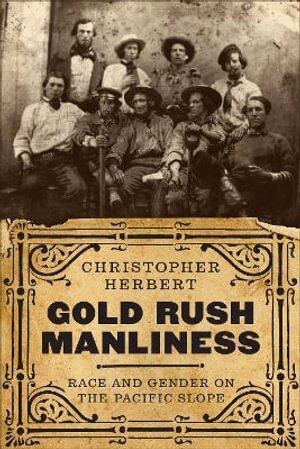
The mid-nineteenth-century gold rushes bring to mind raucous mining camps and slapped-together cities populated by carousing miners, gamblers, and prostitutes. Yet many of the white men who went to the gold fields were products of the Victorian era: educated men who valued morality and order. Examining the closely linked gold rushes in California and British Columbia, historian Christopher Herbert shows that these men worried about the meaning of their manhood in the near-anarchic, ethnically mixed societies that grew up around the mines. As white gold rushers emigrated west, they encountered a wide range of people they considered inferior and potentially dangerous to white dominance, including Latin American, Chinese, and Indigenous peoples.The way that white miners interacted with these groups reflected their conceptions of race and morality, as well as the distinct political principles and strategies of the US and British colonial governments. The white miners were accustomed to white male domination, and their anxiety to continue it played a central role in the construction of colonial regimes. In addition to renovating traditional understandings of the Pacific Slope gold rushes, Herbert argues that historians’ understanding of white manliness has been too fixated on the eastern United States and Britain. In the nineteenth century, popular attention largely focused on the West. It was in the gold fields and the cities they spawned that new ideas of white manliness emerged, prefiguring transformations elsewhere.
433 kr
Skickas inom 7-10 vardagar
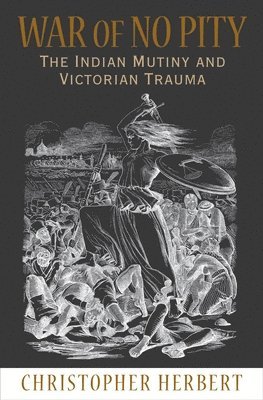
On May 11, 1857, Hindu and Muslim sepoys massacred British residents and native Christians in Delhi, setting off both the whirlwind of similar violence that engulfed Bengal in the following months and an answering wave of rhetorical violence in Britain, where the uprising against British rule in India was often portrayed as a clash of civilization and barbarity demanding merciless retribution. Although by twentieth-century standards the number of victims was small, the Victorian public saw "the Indian Mutiny" of 1857-59 as an epochal event. In this provocative book, Christopher Herbert seeks to discover why. He offers a view of this episode--and of Victorian imperialist culture more generally--sharply at odds with the standard formulations of postcolonial scholarship. Drawing on a wealth of largely overlooked and often mesmerizing nineteenth-century texts, including memoirs, histories, letters, works of journalism, and novels, War of No Pity shows that the startling ferocity of the conflict in India provoked a crisis of national conscience and a series of searing if often painfully ambivalent condemnations of British actions in India both prior to and during the war.Bringing to light the dissident, disillusioned, antipatriotic strain of Victorian "mutiny writing," Herbert locates in it key forerunners of modern-day antiwar literature and the modern critique of racism.
154 kr
Skickas inom 5-8 vardagar
Pocket Prayers has proved itself a classic that deserves a place in the pocket of every Christian. This original collection brings together Christian prayers that have stood the test of time, from the words of Jane Austen to those of a twentieth-century African girl.This rich treasury will help anyone who wishes to develop their prayer life and their relationship with God.The prayers in this book are grouped into themes, including:The Lord's Prayer The Jesus Prayer The Grace Adoration Confession Thanksgiving Requesting Self-offering Trusting
154 kr
Skickas inom 5-8 vardagar
Pocket Prayers for Children is an ideal present for anyone who prays with children, to give to children who are starting to pray by themselves or as a baptism or confirmation gift.Using the Lord's Prayer as a base, the book brings together traditional and modern prayers to help inspire children in their faith.
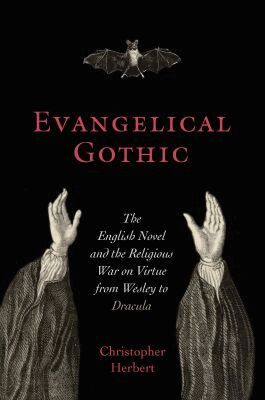
Evangelical Gothic
The English Novel and the Religious War on Virtue from Wesley to Dracula
Inbunden, Engelska, 2019
642 kr
Skickas inom 7-10 vardagar
Evangelical Gothic explores the bitter antagonism that prevailed between two defining institutions of nineteenth-century Britain: Evangelicalism and the popular novel. Christopher Herbert begins by retrieving from near oblivion a rich anti-Evangelical polemical literature in which the great religious revival, often lauded in later scholarship as a "moral revolution," is depicted as an evil conspiracy centered on the attempted dismantling of the humanitarian moral culture of the nation. Examining foundational Evangelical writings by John Wesley and William Wilberforce alongside novels by Charles Dickens, George Eliot, Bram Stoker, and others, Herbert contends that the realistic popular novel of the time was constitutionally alien to Evangelical ideology and even, to some Extent, took its opposition to that ideology as its core function. This provocative argument illuminates the frequent linkage of Evangelicalism in nineteenth-century fiction with the characteristic imagery of the Gothic–with black magic, with themes of demonic visitation and vampirism, and with a distinctive mood of hysteria and panic.
490 kr
Skickas inom 3-6 vardagar
Henry Austen, Jane Austen’s favourite brother, was born into a large and lively clergy family in Hampshire. Of her seven siblings, Henry most shared Jane’s mischievous wit and facility with words and his support enabled the publication of her novels.Henry’s own life was much more incident-packed than his sister’s. By turns he was an academic, magazine editor, soldier, financier and banker, bankrupt, and finally, clergyman. His career hit the heights of Regency society, becoming linked with the Prince Regent’s set, before plummeting to the social disgrace and economic disaster of bankruptcy. Many of his activities hovered on the brink of illegality and his marriage to the enigmatic French countess, Eliza de Feuillide, also raised questions and eyebrows. Nevertheless, his kindness, charm and his loyalty to Jane never wavered. He ensured her burial in Winchester Cathedral, and he ended his days as a hard-working curate in a Surrey market town and in Hampshire villages.His life sheds a fascinating light on the vagaries of early nineteenth century society and this new and important study examines both his relationships within the Austen family and the many social milieux in which he worked, which, through his recounting of his experiences, may have provided inspiration for some of Jane’s plots and characters. As Jane herself wrote to Cassandra, 'Oh, what a Henry!'
Foreshadowing the Reformation
Art and Religion in the 15th Century Burgundian Netherlands
Häftad, Engelska, 2018
683 kr
Skickas inom 10-15 vardagar
Foreshadowing the Reformation argues that paintings are the history of ideas in visual form. It follows, therefore, that if we are to fully understand and appreciate the late Medieval and Renaissance paintings of great Northern European artists such as Jan van Eyck and Rogier van der Weyden, we need to investigate the religious and spiritual beliefs and practices of the time. It has been quite fashionable in Medieval and Renaissance Art History over recent decades largely to ignore the contemporary religious context and to concentrate instead on the part played by economics in the creation of works of art. Much has been made, for example, of the costs of materials, the role of markets, international trade and the commissioning process—all of which are undoubtedly important. This book looks to redress this balance through its description and analysis of religious and spiritual ideas, and by offering new, exciting and radical insights about some of the paintings, altarpieces and sculptures that were created. This book argues that there was a symbiotic relationship between those artistic and spiritual worlds and that by bringing the insights from those worlds together we can get a much richer appreciation of medieval life.
Foreshadowing the Reformation
Art and Religion in the 15th Century Burgundian Netherlands
Inbunden, Engelska, 2016
2 238 kr
Skickas inom 10-15 vardagar
Foreshadowing the Reformation argues that paintings are the history of ideas in visual form. It follows, therefore, that if we are to fully understand and appreciate the late Medieval and Renaissance paintings of great Northern European artists such as Jan van Eyck and Rogier van der Weyden, we need to investigate the religious and spiritual beliefs and practices of the time. It has been quite fashionable in Medieval and Renaissance Art History over recent decades largely to ignore the contemporary religious context and to concentrate instead on the part played by economics in the creation of works of art. Much has been made, for example, of the costs of materials, the role of markets, international trade and the commissioning process—all of which are undoubtedly important. This book looks to redress this balance through its description and analysis of religious and spiritual ideas, and by offering new, exciting and radical insights about some of the paintings, altarpieces and sculptures that were created. This book argues that there was a symbiotic relationship between those artistic and spiritual worlds and that by bringing the insights from those worlds together we can get a much richer appreciation of medieval life.
195 kr
Skickas inom 5-8 vardagar
276 kr
Skickas inom 5-8 vardagar
Reflections for Daily Prayer has nourished thousands of Christians for a decade with its inspiring and informed weekday Bible reflections. Now, in response to demand, Reflections for Sundays combines material from over the years with new writing to provide high-quality reflections on the Principal Readings for Sundays and major Holy Days.Contributors include some of the very best writers from across the Anglican tradition who have helped to establish it as one of the leading daily devotional volumes today. For each Sunday and major Holy Day in Year B, Reflections for Sundays offers:• full lectionary details for the Principle Service • a reflection on the Old Testament reading• a reflection on the Epistle• a reflection on the Gospel It also contains a substantial introduction to the Gospels of Mark and John, written by renowned Bible teacher Paula Gooder.