Christopher M. Hutton - Böcker
Visar alla böcker från författaren Christopher M. Hutton. Handla med fri frakt och snabb leverans.
3 produkter
3 produkter
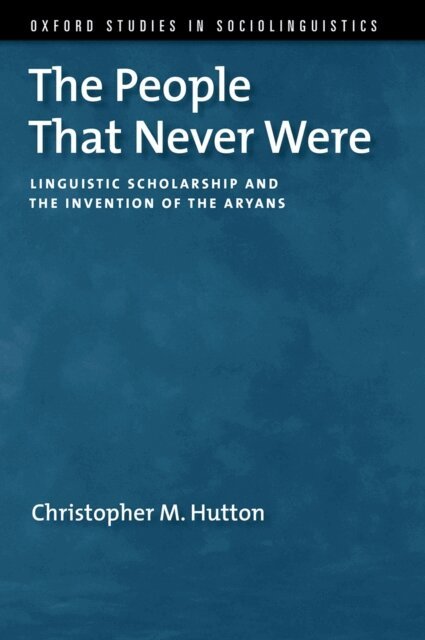
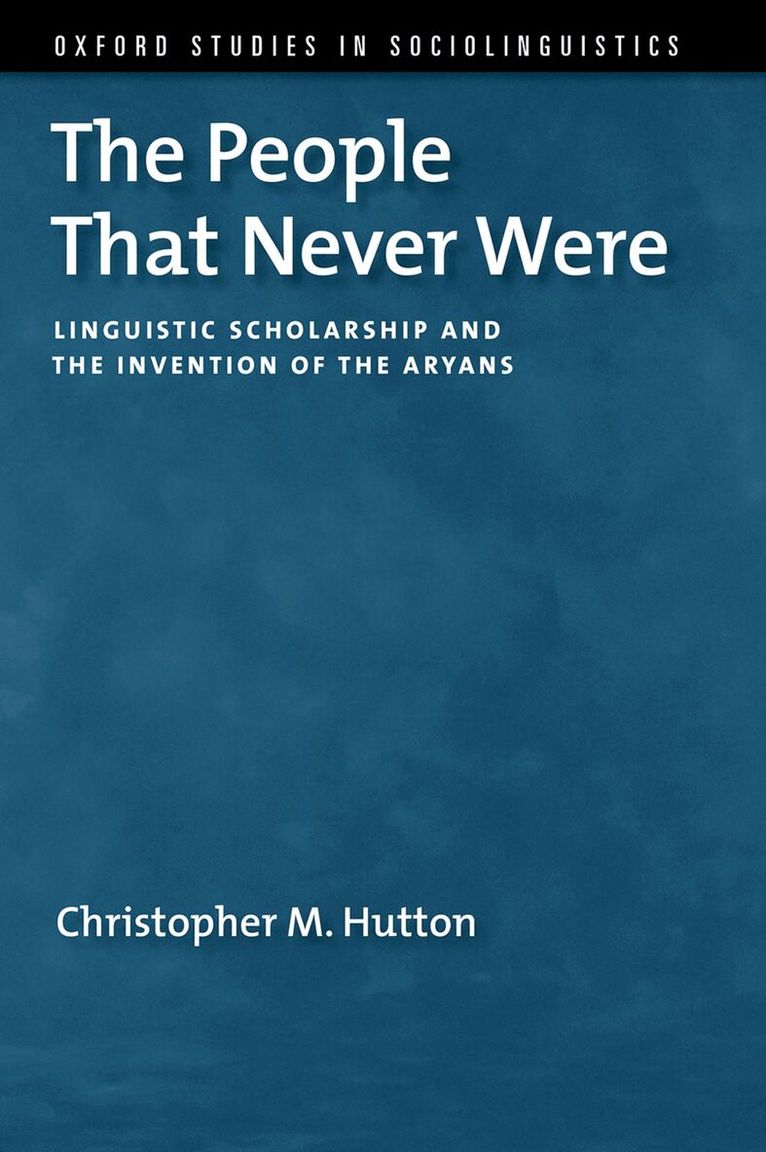
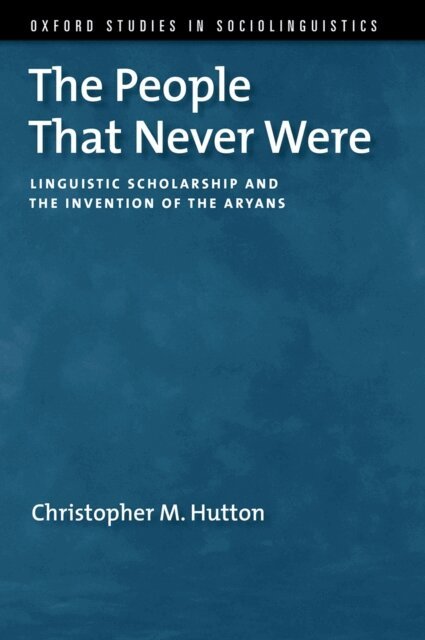
The People That Never Were
Linguistic Scholarship and the Invention of the Aryans
Inbunden, Engelska, 2025
875 kr
Skickas inom 5-8 vardagar
Though most recognize the term Aryan, few understand its extensive and complex history. Scholars continue to debate the location of the original Aryan homeland, but unlike with the civilizations of ancient Egypt, Greece, or Rome, there is no direct textual or archeological evidence of an ancient Aryan civilization. As Christopher M. Hutton argues in this book, Aryan, in essence, is a fictional category--the Frankenstein's monster of the western intellectual tradition.In The People That Never Were, Hutton takes a fresh look at the concept and asserts that much of the received wisdom is misleading or false. He begins by challenging the belief in the existence of an ancient Aryan race or people, making the case that the concept was brought into being by western philology and Indology. Hutton then takes the reader through the history of the Aryan concept, beginning with colonial scholarship in India around 1800, and ending in the first decades of the twentieth century. With a particular focus on the role of philologists' distorted readings of ancient Sanskrit texts, Hutton shows how Aryan came into English around 1840, promoted primarily by F. Max Müller, whose own conceptual confusions subsequently were projected back onto ancient India and at the same time read into contemporary Europe. As a result, Aryan emerged as a free-standing explanatory device and a key to historical narratives of superiority and inferiority, leading to bitter controversies and profound misunderstandings that continue to this day.A critical intellectual resource on the Aryan paradigm, The People That Never Were interrogates the conceptual errors that provide the basis for historical linguistics, raising a challenging set of questions for the discipline. This is an open access title available under the terms of a CC BY-NC-ND 4.0 International license. It is free to read on the Oxford Academic platform and offered as a free PDF download from OUP and selected open access locations.
Race and the Third Reich
Linguistics, Racial Anthropology and Genetics in the Dialectic of Volk
Inbunden, Engelska, 2005
893 kr
Skickas inom 5-8 vardagar
Race and the Third Reich aims to set out the key concepts, debates and controversies that marked the academic study of race in Nazi Germany. It looks in particular at the discipline of racial anthropology and its relationship to linguistics and human biology. Christopher Hutton identifies the central figures involved in the study of race during the Nazi regime, and traces continuities and discontinuities between Nazism and the study of human diversity in the Western tradition. Whilst Nazi race theory is commonly associated with the idea of a superior "Aryan race" and with the idealization of the Nordic ideal of blond hair, blue eyes and a "long-skull", Nazi race theorists, in common with their colleagues outside Germany, without exception denied the existence of an Aryan race. After 1935 official publications were at pains to stress that the term "Aryan" belonged to linguistics and was not a racial category at all. Under the influence of Mendelian genetics, racial anthropologists concluded that there was no necessary link between ideal physical appearance and ideal racial character. In the course of the Third Reich, racial anthropology was marginalized in favour of the rising science of human genetics. However, racial anthropologists played a key role in the crimes of the Nazi state by defining Jews and others as racial outsiders to be excluded at all costs from the body of the German Volk.Anyone studying the Third Reich or who is interested in race theory will find this a fascinating, informative and accessible study.
Race and the Third Reich
Linguistics, Racial Anthropology and Genetics in the Dialectic of Volk
Häftad, Engelska, 2005
318 kr
Skickas inom 5-8 vardagar
Race and the Third Reich aims to set out the key concepts, debates and controversies that marked the academic study of race in Nazi Germany. It looks in particular at the discipline of racial anthropology and its relationship to linguistics and human biology. Christopher Hutton identifies the central figures involved in the study of race during the Nazi regime, and traces continuities and discontinuities between Nazism and the study of human diversity in the Western tradition. Whilst Nazi race theory is commonly associated with the idea of a superior "Aryan race" and with the idealization of the Nordic ideal of blond hair, blue eyes and a "long-skull", Nazi race theorists, in common with their colleagues outside Germany, without exception denied the existence of an Aryan race. After 1935 official publications were at pains to stress that the term "Aryan" belonged to linguistics and was not a racial category at all. Under the influence of Mendelian genetics, racial anthropologists concluded that there was no necessary link between ideal physical appearance and ideal racial character. In the course of the Third Reich, racial anthropology was marginalized in favour of the rising science of human genetics. However, racial anthropologists played a key role in the crimes of the Nazi state by defining Jews and others as racial outsiders to be excluded at all costs from the body of the German Volk.Anyone studying the Third Reich or who is interested in race theory will find this a fascinating, informative and accessible study.