Christopher Mee - Böcker
Visar alla böcker från författaren Christopher Mee. Handla med fri frakt och snabb leverans.
4 produkter
4 produkter
817 kr
Skickas inom 7-10 vardagar
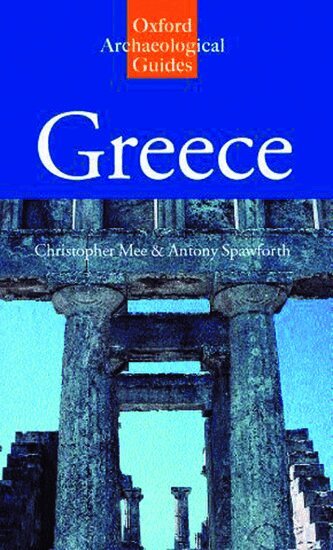
Greece, with all its temples, cities, and sanctuaries created by Europe's most formative ancient civilization, is a must-see for the archaeological traveller.This guide provides:* Coverage of all the main archaeological sites in Greece, ranging from prehistory to the sixth century AD* Sites arranged by region, and includingPhilip's Tomb at VerginaPalace complex at MycenaeTemples of the AcropolisHellenistic city of the MesseneRoman colony of Corinth* 'Partner factor' ratings including sites worth visiting during your stay for the scenic setting, including bathing* Up-to-date introduction surveying Greece's landscape, history, and archaeology from the Neolithic period to the end of antiquity, and placing the sites in their cultural context* A chronology for reference and a glossary of essential terms
2 855 kr
Skickas
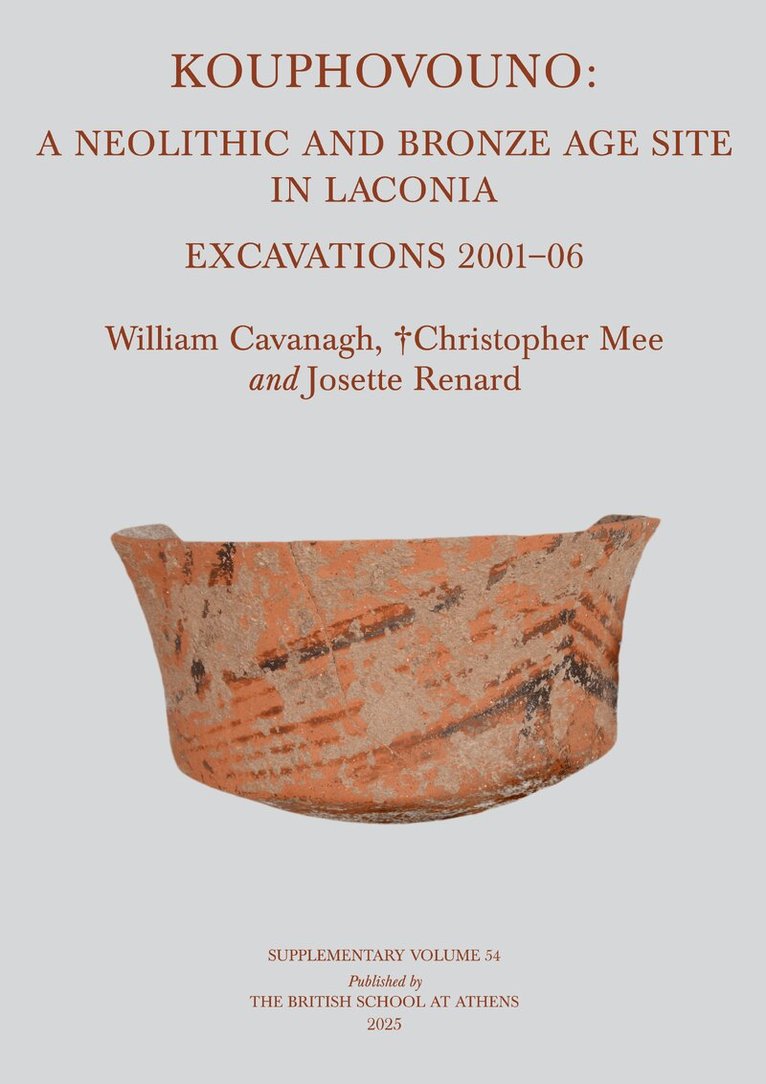
The excavations of 2001–06 at the site of Kouphovouno, near Sparta, have shed important new light on the prehistory of southern Greece. Finds span the Middle and Late Neolithic of the sixth millennium BC, the Greek Early Bronze Age (third millennium BC), an extended Middle Bronze Age cemetery (early-mid second millennium BC), as well as documenting Late Roman remains. The results from this open site provide a useful foil to those from cave sites, such as the Franchthi Cave and Alepotrypa, which hitherto have dominated the narrative for the Neolithic Peloponnese. Modern archaeological techniques focused on Kouphovouno’s oikistic structure, the village economy and material culture, its chronological sequence, the site’s geomorphological and ecological context, and the comparison of pre-excavation survey (artefact collection, coring, sedimentology, geophysical prospection) with the results of excavation. Innovative methods of analysis include isotopic characterisation of plant and animal remains to investigate the farming regime, and the site’s chronology has been clarified through a combination of stratigraphy, seriation, and Bayesian analysis of 14C dates. Indeed, a full battery of scientific studies inform the interpretation of the findings: micromorphology of sediments, ceramic petrography, archaeobotany, archaeozoology, micro- and macroscopic study of the macrolithics.The Volume presents a full account of the excavated areas and stratigraphic soundings. This feeds into an analysis of the site’s relative and absolute dating. There follow Chapters detailing ceramics, chipped stone artefacts, macrolithics, plus one on bone tools, figurines, metal objects and minerals, ornaments and other finds. These are contextualised with parallels in particular, but not solely, from southern Greece. Specialised overviews follow. The first covers the funerary and skeletal analyses (with an appendix on aDNA of human skeletal remains). Then the environmental evidence is presented with important conclusions on agriculture and animal husbandry. Next the architectural remains are discussed with reference to building materials, construction techniques, living spaces and site formation. The final Chapter presents a brief review of Kouphovouno in its chronological and geographic context. The archaeological detail which underwrites the analysis, including the full petrographic study of the ceramics, is available on the BSA website and it is intended that this should also be a quarry of data for future research.
453 kr
Skickas inom 7-10 vardagar
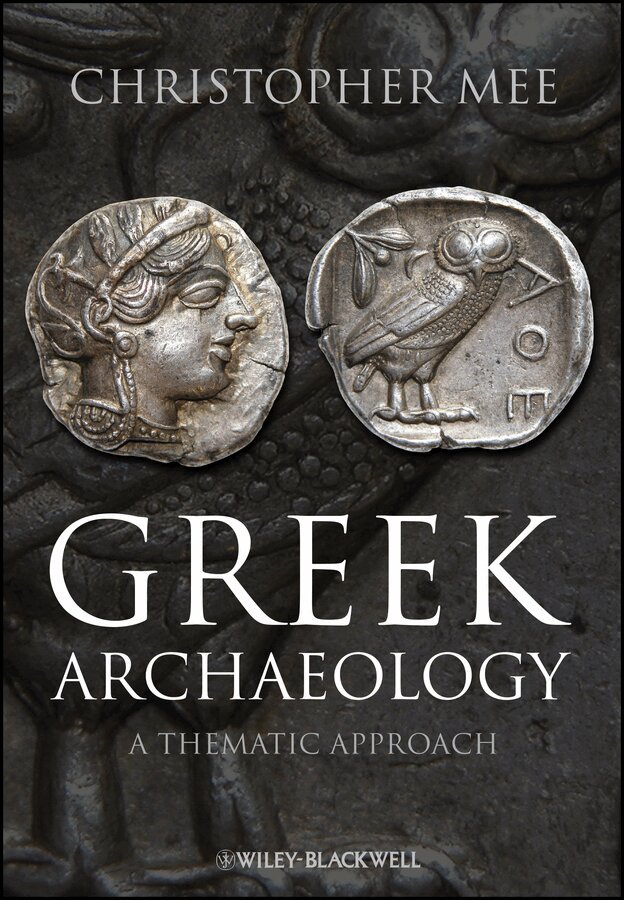
Christopher Mee presents an extensive examination of the material culture of the Greek world from its Neolithic roots in 7000 B.C. to the close of the Hellenistic period in 146 B.C. Features a unique thematic approach to the study of Greek archaeologyIncludes extensive use of illustrations, many of which are not commonly featuredAllows for the study of a particular period of time by its chronological arrangement within each chapter
1 185 kr
Skickas inom 7-10 vardagar
Christopher Mee presents an extensive examination of the material culture of the Greek world from its Neolithic roots in 7000 B.C. to the close of the Hellenistic period in 146 B.C. Features a unique thematic approach to the study of Greek archaeologyIncludes extensive use of illustrations, many of which are not commonly featuredAllows for the study of a particular period of time by its chronological arrangement within each chapter