Christopher Pye - Böcker
Visar alla böcker från författaren Christopher Pye. Handla med fri frakt och snabb leverans.
10 produkter
10 produkter
422 kr
Skickas inom 10-15 vardagar
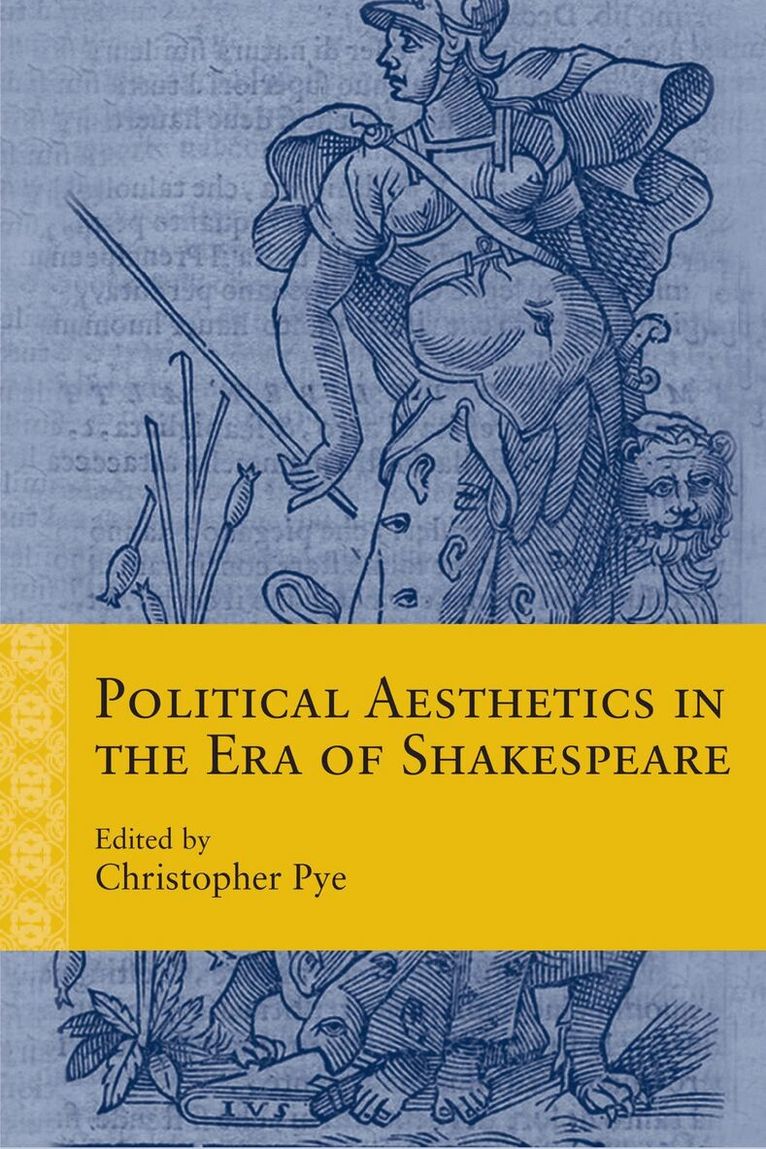
This book examines the relationship between art and politics in the work of William Shakespeare and others in the early modern era, with a focus on the relation between aesthetics and sensory experience. From the 1980s, the turn to political concerns in Renaissance studies was dictated by forms of cultural materialism that staked their claims against the aesthetic dimension of the work. Recently, however, the more robustly political conception of the aesthetic formulated by theorists such as Theodor Adorno and Jacques RanciÈre has revitalized political aesthetics generally and early modern studies in particular. For these theorists, aesthetics forms the crucial link between politics and the most fundamental phenomenological organization of the world, what RanciÈre terms the “distribution of the sensible.” Taking up this expansive conception of aesthetics, Political Aesthetics in the Era of Shakespeare suggests that the political stakes of the literary work - and Shakespeare's work in particular - extend from the most intimate dimensions of affective response to the problem of the grounds of political society as such. The approaches to aesthetic thought included in this volume explore the intersections between the literary work and the full range of concerns animating the field today: political philosophy, affect theory, and ecocritical analysis of environs and habitus. At the same time, political aesthetics holds its own distinctive promise for reopening the question of the relation between art and the political domain. This collection will be an important resource for students of Shakespeare and the Renaissance, and for those interested in the promise of current political and aesthetic theory.
1 235 kr
Skickas inom 10-15 vardagar
This book examines the relationship between art and politics in the work of William Shakespeare and others in the early modern era, with a focus on the relation between aesthetics and sensory experience. From the 1980s, the turn to political concerns in Renaissance studies was dictated by forms of cultural materialism that staked their claims against the aesthetic dimension of the work. Recently, however, the more robustly political conception of the aesthetic formulated by theorists such as Theodor Adorno and Jacques RanciÈre has revitalized political aesthetics generally and early modern studies in particular. For these theorists, aesthetics forms the crucial link between politics and the most fundamental phenomenological organization of the world, what RanciÈre terms the “distribution of the sensible.” Taking up this expansive conception of aesthetics, Political Aesthetics in the Era of Shakespeare suggests that the political stakes of the literary work - and Shakespeare's work in particular - extend from the most intimate dimensions of affective response to the problem of the grounds of political society as such. The approaches to aesthetic thought included in this volume explore the intersections between the literary work and the full range of concerns animating the field today: political philosophy, affect theory, and ecocritical analysis of environs and habitus. At the same time, political aesthetics holds its own distinctive promise for reopening the question of the relation between art and the political domain. This collection will be an important resource for students of Shakespeare and the Renaissance, and for those interested in the promise of current political and aesthetic theory.
1 339 kr
Skickas inom 7-10 vardagar
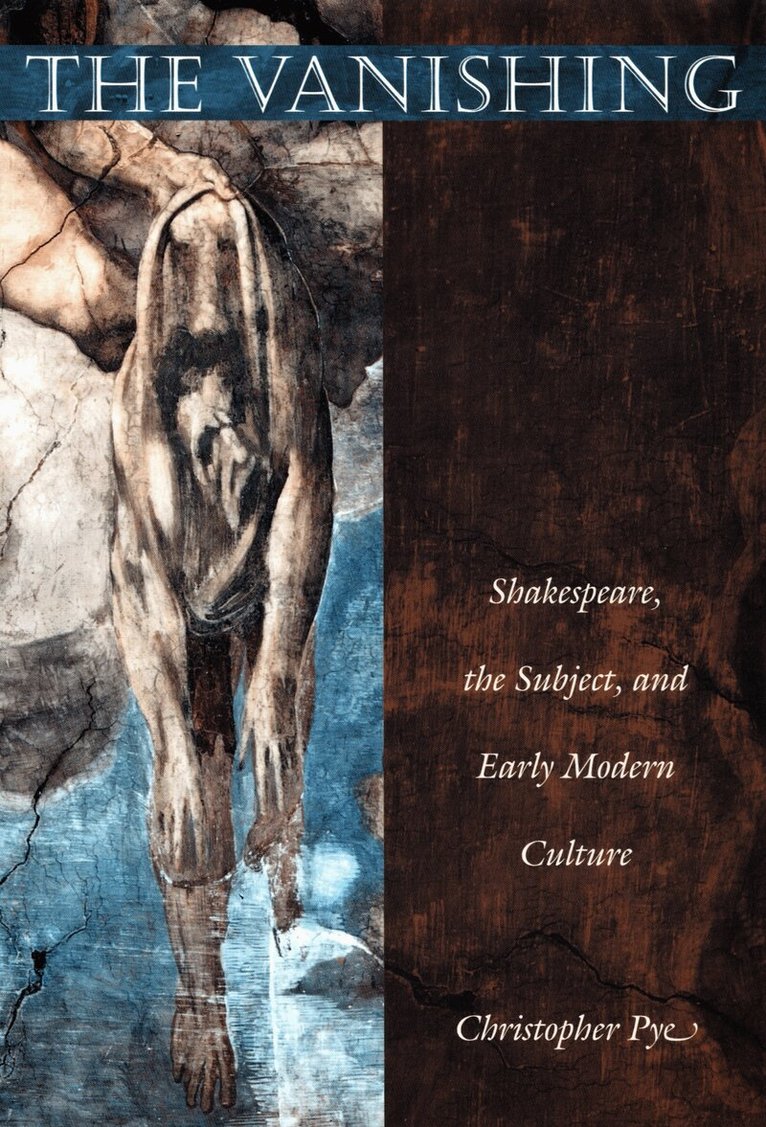
In The Vanishing Christopher Pye combines psychoanalytic and cultural theory to advance an innovative interpretation of Renaissance history and subjectivity. Locating the emergence of the modern subject in the era’s transition from feudalism to a modern societal state, Pye supports his argument with interpretations of diverse cultural and literary phenomena, including Shakespeare’s Hamlet and King Lear, witchcraft and demonism, anatomy theaters, and the paintings of Michelangelo.Pye explores the emergence of the early modern subject in terms of a range of subjectivizing mechanisms tied to the birth of a modern conception of history, one that is structured around a spatial and temporal horizon-a vanishing point. He also discusses the distinctly economic character of early modern subjectivity and how this, too, is implicated in our own modern modes of historical understanding. After explaining how the aims of New Historicist and Foucauldian approaches to the Renaissance are inseparably linked to such a historical conception, Pye demonstrates how the early modern subject can be understood in terms of a Lacanian and Zizekian account of the emerging social sphere. By focusing on the Renaissance as a period of remarkable artistic and cultural production, he is able to illustrate his points with discussions of a number of uniquely fascinating topics-for instance, how demonism was intimately related to a significant shift in law and symbolic order and how there existed at the time a “demonic” preoccupation with certain erotic dimensions of the emergent social subject.Highly sophisticated and elegantly crafted, The Vanishing will be of interest to students of Shakespeare and early modern culture, Renaissance visual art, and cultural and psychoanalytic theory.
371 kr
Skickas inom 7-10 vardagar
In The Vanishing Christopher Pye combines psychoanalytic and cultural theory to advance an innovative interpretation of Renaissance history and subjectivity. Locating the emergence of the modern subject in the era’s transition from feudalism to a modern societal state, Pye supports his argument with interpretations of diverse cultural and literary phenomena, including Shakespeare’s Hamlet and King Lear, witchcraft and demonism, anatomy theaters, and the paintings of Michelangelo.Pye explores the emergence of the early modern subject in terms of a range of subjectivizing mechanisms tied to the birth of a modern conception of history, one that is structured around a spatial and temporal horizon-a vanishing point. He also discusses the distinctly economic character of early modern subjectivity and how this, too, is implicated in our own modern modes of historical understanding. After explaining how the aims of New Historicist and Foucauldian approaches to the Renaissance are inseparably linked to such a historical conception, Pye demonstrates how the early modern subject can be understood in terms of a Lacanian and Zizekian account of the emerging social sphere. By focusing on the Renaissance as a period of remarkable artistic and cultural production, he is able to illustrate his points with discussions of a number of uniquely fascinating topics-for instance, how demonism was intimately related to a significant shift in law and symbolic order and how there existed at the time a “demonic” preoccupation with certain erotic dimensions of the emergent social subject.Highly sophisticated and elegantly crafted, The Vanishing will be of interest to students of Shakespeare and early modern culture, Renaissance visual art, and cultural and psychoanalytic theory.
1 174 kr
Skickas inom 10-15 vardagar
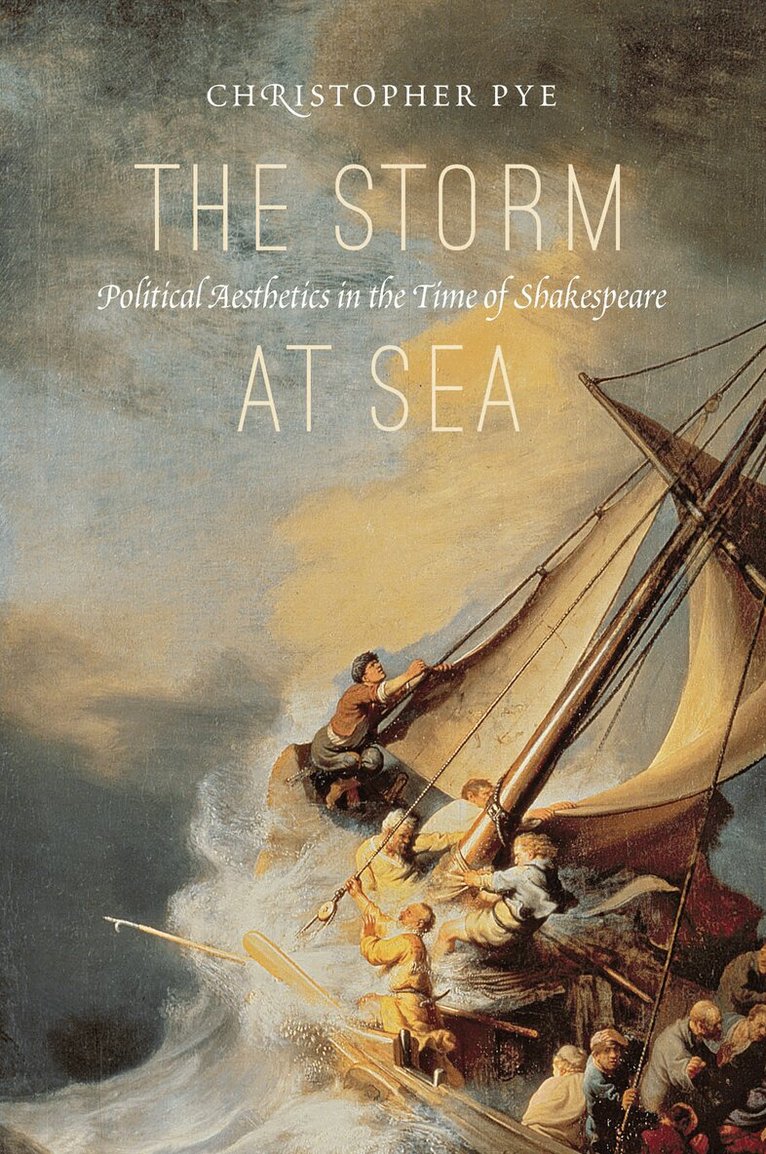
The Storm at Sea: Political Aesthetics in the Time of Shakespeare counters a tradition of cultural analysis that judges considerations of aesthetic autonomy in the early modern context to be either anachronistic or an index of political disengagement. Pye argues that for a post-theocratic era in which the mise-en-forme of the social domain itself was for the first time at stake, the problem of the aesthetic lay at the very core of the political; it is precisely through its engagement with the question of aesthetic autonomy that early modern works most profoundly explore their relation to matters of law, state, sovereignty, and political subjectivity.Pye establishes the significance of a "creationist" political aesthetic—at once a discrete historical category and a phenomenon that troubles our familiar forms of historical accounting—and suggests that the fate of such an aesthetic is intimately bound up with the emergence of modern conceptions of the political sphere.The Storm at Sea moves historically from Leonardo da Vinci to Thomas Hobbes; it focuses on Shakespeare and English drama, with chapters on Hamlet, Othello, A Winter's Tale, and The Tempest, as well as sustained readings of As You Like It, King Lear, Thomas Kyd's Spanish Tragedy, and Christopher Marlowe's Doctor Faustus. Engaging political thinkers such as Carl Schmitt, Giorgio Agamben, Claude Lefort, and Roberto Esposito, The Storm at Sea will be of interest to political theorists as well as to students of literary and visual theory.
325 kr
Skickas inom 7-10 vardagar
The Storm at Sea: Political Aesthetics in the Time of Shakespeare counters a tradition of cultural analysis that judges considerations of aesthetic autonomy in the early modern context to be either anachronistic or an index of political disengagement. Pye argues that for a post-theocratic era in which the mise-en-forme of the social domain itself was for the first time at stake, the problem of the aesthetic lay at the very core of the political; it is precisely through its engagement with the question of aesthetic autonomy that early modern works most profoundly explore their relation to matters of law, state, sovereignty, and political subjectivity.Pye establishes the significance of a "creationist" political aesthetic—at once a discrete historical category and a phenomenon that troubles our familiar forms of historical accounting—and suggests that the fate of such an aesthetic is intimately bound up with the emergence of modern conceptions of the political sphere.The Storm at Sea moves historically from Leonardo da Vinci to Thomas Hobbes; it focuses on Shakespeare and English drama, with chapters on Hamlet, Othello, A Winter's Tale, and The Tempest, as well as sustained readings of As You Like It, King Lear, Thomas Kyd's Spanish Tragedy, and Christopher Marlowe's Doctor Faustus. Engaging political thinkers such as Carl Schmitt, Giorgio Agamben, Claude Lefort, and Roberto Esposito, The Storm at Sea will be of interest to political theorists as well as to students of literary and visual theory.
Regal Phantasm (Routledge Revivals)
Shakespeare and the Politics of Spectacle
Inbunden, Engelska, 2014
2 478 kr
Skickas inom 10-15 vardagar
First published in 1989, this title explores the relationship between theater and power in the English Renaissance. Shakespeare’s Henry V, Richard II, and Macbeth are examined alongside a range of cultural materials, including philosophical and historical accounts of sovereignty, royal portraiture and representations of treason and punishment. Renaissance theater was far more than a vehicle for the expression of a political content: it played a constitutive role in forming the distinctive theory of sovereignty and the distinctive political subjectivity of the era. By reading Shakespeare’s plays in conjunction with other, ideologically charged forms of representation, the book continues new-historicist efforts to uncover the complex relations between literary texts and cultural contexts. Providing an interesting and detailed analysis, this reissue will be of value to students of Shakespeare and the English Renaissance, and those concerned with exploring the intersection between cultural analysis, post-structuralism, and psychoanalytic interpretation.
662 kr
Skickas inom 10-15 vardagar
First published in 1989, this title explores the relationship theater and power in the English Renaissance. Shakespeare’s Henry V, Richard II, and Macbeth are examined alongside a range of cultural materials, including philosophical and historical accounts of sovereignty, royal portraiture and representations of treason and punishment. Renaissance theater was far more than a vehicle for the expression of a political content: it played a constitutive role in forming the distinctive theory of sovereignty and the distinctive political subjectivity of the era. By reading Shakespeare’s plays conjunction with other, ideologically charged forms of representation, the book continues new-historicist efforts to uncover the complex relations between literary texts and cultural contexts. Providing an interesting and detailed analysis, this reissue will be of value to students of Shakespeare and the English Renaissance, and those concerned with exploring the intersection between cultural analysis, post-structuralism, and psychoanalytic interpretation.
1 358 kr
Skickas inom 10-15 vardagar
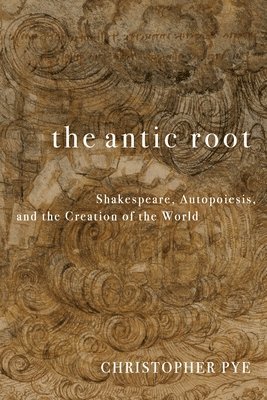
The Antic Root explores the relations among art, sense-experience, and the conception of the world in the early modern era. Against vitalist and posthumanist accounts that presume to grasp the world beyond its interpretive framing, Pye argues that any possibility of conceiving a world beyond us depends on acknowledging the fact of its mediated condition, a condition Shakespeare explored with particular acuity. Rather than either a subjective or objective phenomenon, Pye shows how the world should be understood as an autopoietic one, that is, as a function of the process through which the very distinction between self and environment is constituted, a formative mechanism extending from the creation of the world as a phenomenal domain to the most intimate dimensions of affective life.Coinciding with the separation of spheres during the era, autopoiesis lies at the heart of Shakespeare’s reflexive art, revealing the grounds of the works’ generic distinctions. Engaging plays from Twelfth Night to King Lear to the late romances, and concluding with an in-depth consideration of the painter Diego Velázquez, The Antic Root enlists autopoiesis to rethink the boundaries of the human in relation to affect, disability, animality, environment, and law.Ultimately, autopoietics lets us imagine community, human and otherwise, beyond economic notions of equivalency, and justice beyond the assignation of guilt and innocence, as a condition of indebtedness that amounts to the origin of being as such.
355 kr
Skickas
The Antic Root explores the relations among art, sense-experience, and the conception of the world in the early modern era. Against vitalist and posthumanist accounts that presume to grasp the world beyond its interpretive framing, Pye argues that any possibility of conceiving a world beyond us depends on acknowledging the fact of its mediated condition, a condition Shakespeare explored with particular acuity. Rather than either a subjective or objective phenomenon, Pye shows how the world should be understood as an autopoietic one, that is, as a function of the process through which the very distinction between self and environment is constituted, a formative mechanism extending from the creation of the world as a phenomenal domain to the most intimate dimensions of affective life.Coinciding with the separation of spheres during the era, autopoiesis lies at the heart of Shakespeare’s reflexive art, revealing the grounds of the works’ generic distinctions. Engaging plays from Twelfth Night to King Lear to the late romances, and concluding with an in-depth consideration of the painter Diego Velázquez, The Antic Root enlists autopoiesis to rethink the boundaries of the human in relation to affect, disability, animality, environment, and law.Ultimately, autopoietics lets us imagine community, human and otherwise, beyond economic notions of equivalency, and justice beyond the assignation of guilt and innocence, as a condition of indebtedness that amounts to the origin of being as such.