Christopher Reeve - Böcker
Visar alla böcker från författaren Christopher Reeve. Handla med fri frakt och snabb leverans.
7 produkter
7 produkter
134 kr
Skickas
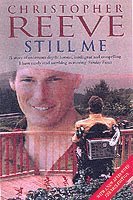
Through his leading role in the three Superman films, Christopher Reeve became so closely identified with the superhero that he wasn't just seen as the actor who played Superman, he was Superman. Which is why the tragic riding accident which left him paralysed from the neck down shocked the world. Superman was not superhuman. It is also why he is now the world's most recognisable person in a wheelchair. In true superhero style, Christopher Reeve refuses to resign himself to the life of a quadriplegic, and is actively campaigning to raise the profile of spinal-cord injury victims and research. Although he was initially told that he would only ever be able to move his head, he can now shrug his shoulders and breathe alone for increasing periods of time, and is determined that he will walk again. It is this extraordinary courage and determination that has made Christopher Reeve the internationally admired figure that he is, and it is this bravery which makes this autobiography about his paralysis and his journey to recovery such a powerful and moving story.
187 kr
Skickas
East Anglia has provided inspiration for writers for centuries. Whether the writers were natives of the region itself or came as visitors, the landscape, towns, cities and villages and people of East Anglia have helped to shape the imaginations of some of the most influential of authors.Medieval East Anglia provides fertile ground for mystic writers and those wanting to document everyday life such as Margery Kempe and Lady Julian. Some of Britain’s best-loved books were written in East Anglia, including Anna Sewell’s Black Beauty, and Norfolk and Suffolk feature in Charles Dickens’s novels. The radical writer George Orwell lived in Suffolk and poets W. H. Auden and Rupert Brooke spent their formative years in East Anglia. Cambridge University and the University of East Anglia have fostered many writers, the latter being influential in Norwich becoming a UNESCO City of Literature in 2012. The recent legacy of writers with links to East Anglia includes such names as Malcolm Bradbury, Rose Tremain, Ian McEwan and many others.This book explores the fascinating history of East Anglia’s remarkable literary heritage as well as being a guide to the locations where that heritage can still be found.
146 kr
Skickas
'If only stones could speak.' Often, when we visit historic towns, churches, castles, or old family mansions, we wish that the people who were once connected with those places could step out of the shadowy walls and tell us stories about their distant past. This book aims to do just that, combining the history of the great city of Norwich with revelations concerning the lives and labours, the lamentations and loves, of rich and poor, the great and the ungodly, throughout the last 1,000 years. Drawing on information derived from historic documents, tomb inscriptions, parish records, diaries and newspapers, Norwich: The Biography conjures up a vivid panorama of life in one of Britain's most warm-hearted and fascinating cities.
173 kr
Skickas
The small market town of Bungay, situated close to the River Waveney on the Norfolk-Suffolk border, has been continuously settled by Iron Age, Roman and Saxon communities. The town achieved considerable prominence and prosperity when the wealthy Bigod family, Earls of Norfolk, established a castle fortress here in c. 1165. By the eighteenth century it had grown into a thriving market town and became known as ‘Little London’. The river navigation increased with the supply of timber, coals, malt, and dairy products to British troops during the Napoleonic Wars. Brewing became an increasingly important trade and in the nineteenth century a local printing business flourished, benefitting from innovations in technology and the production of affordable Bibles. In 1877 it was taken over by the London firm of Clay’s, and continues today as one of the world’s largest producers of books. A silk factory provided work for 300 employees. Rail goods and passenger transport commenced in 1860, but had partly an adverse effect, encouraging locals to shop in the larger towns, and by the early twentieth century agricultural depression brought economic decline. With the outbreak of war and conscription, pubs also suffered and many closed – only eleven of the original thirty-three survived at the end of the century. The Waveney silted up, so navigation and contact with the Broads and local ports ceased.In a fascinating series of contemporary photographs and illustrations, Bungay At Work explores the life of this East Anglian town and its people, from its pre-industrial beginnings, through two world wars and into the twenty-first century as Bungay reinvents itself as a tourist destination.
178 kr
Skickas inom 11-20 vardagar
The jewel in Waveney’s crown, Bungay is a small market town in Suffolk that owes its sparkling title to both its rich heritage of historic buildings and its superb setting poised above the lovely water meadows of the River Waveney. Chosen by Roman and then Saxon invaders as an ideal strategic centre, it was dominated after the Norman Conquest by Earl Hugh Bigod, who firmly established its importance by building one of the most powerful castles in the kingdom. The town continued to prosper throughout the medieval period with its extensive river trade, agriculture, and cloth and leather industries. Despite suffering the Black Death, an attack by the notorious Black Dog, and the ‘Great Fire’ of 1688, Bungay bounced back and became such a popular and fashionable resort in the Georgian period that it was nicknamed ‘Little London’.Secret Bungay delves into the town’s hidden past in this interesting approach to its history, exploring the town’s secret and forgotten events.
178 kr
Skickas
A fabulous collection of ghost hauntings in Suffolk, from the infamous Black Dog of Bungay to the headless Anne Boleyn stalking visitors at Blickling Hall. The serene, low-lying countryside of Suffolk, with its scattered farms, water-meadows and extensive coastline, seems an unlikely area to be associated with ghosts and demons. Yet, a motley array are said to haunt the region. The most famous is the Black Dog, a spectral hound, which in the year 1577 terrorised and killed parishioners in the churches of Bungay and Blythburgh, and continues to exert a strong presence today. Other strange phenomena include phantom coaches, rattling through the countryside at night, drawn by spectral horses and driven by a headless coachman, and the freshwater mermaids who lure young children to their deaths in pools and rivers. Tobias Gill the black drummer haunts the crossroads near Blythburgh where he was hanged for the murder of a servant girl, and Mrs. Short, the 'Queen of Hell', can still raise the hairs on your neck if you wander in the region of Boulge Hall near Woodbridge. Famous characters such as Anne Boleyn, Earl Hugh Bigod, and St. Edmund add an additional lustre to folk tales of the area, and strange happenings occur in many of the churchyards, Suffolk having more churches per acre than almost any other county. This fascinating account of local 'sightings' deals with all the traditional historical legends as well as modern day sightings, and investigates their relevance and significance for the modern age.
172 kr
Skickas
'The jewel in Waveney's crown'. Bungay, a small market town in Suffolk, owes its sparkling title both to its rich heritage of historic buildings, and its superb setting poised above the lovely water meadows of the river Waveney. Chosen by Roman and then Saxon invaders as an ideal strategic centre, it was dominated after the Norman Conquest by Earl Hugh Bigod who firmly established its importance by building one of the most powerful castles in the kingdom. The town continued to prosper throughout the mediaeval period with its extensive river trade, agriculture, and cloth and leather industries. Despite suffering the Black Death, an attack by the notorious Black Dog, and the 'Great Fire' of 1688, Bungay bounced back, and became such a popular and fashionable resort in the Georgian period that it was nicknamed 'Little London'. Bungay Through Time features images depicting some of the glories of its architectural heritage - its Castle, Benedictine Priory, mediaeval churches and elegant domed Butter Cross - together with bustling street scenes, market trade, and celebrations. Although affected by a changing economic climate, it continues to thrive with a variety of new shops and businesses. But 'it's the people who make the place', and this book illustrates how the townsfolk have always contributed to the popularity of 'Bootiful Bungay'.