Christopher Robert Reed - Böcker
Visar alla böcker från författaren Christopher Robert Reed. Handla med fri frakt och snabb leverans.
7 produkter
7 produkter
1 236 kr
Skickas inom 11-20 vardagar
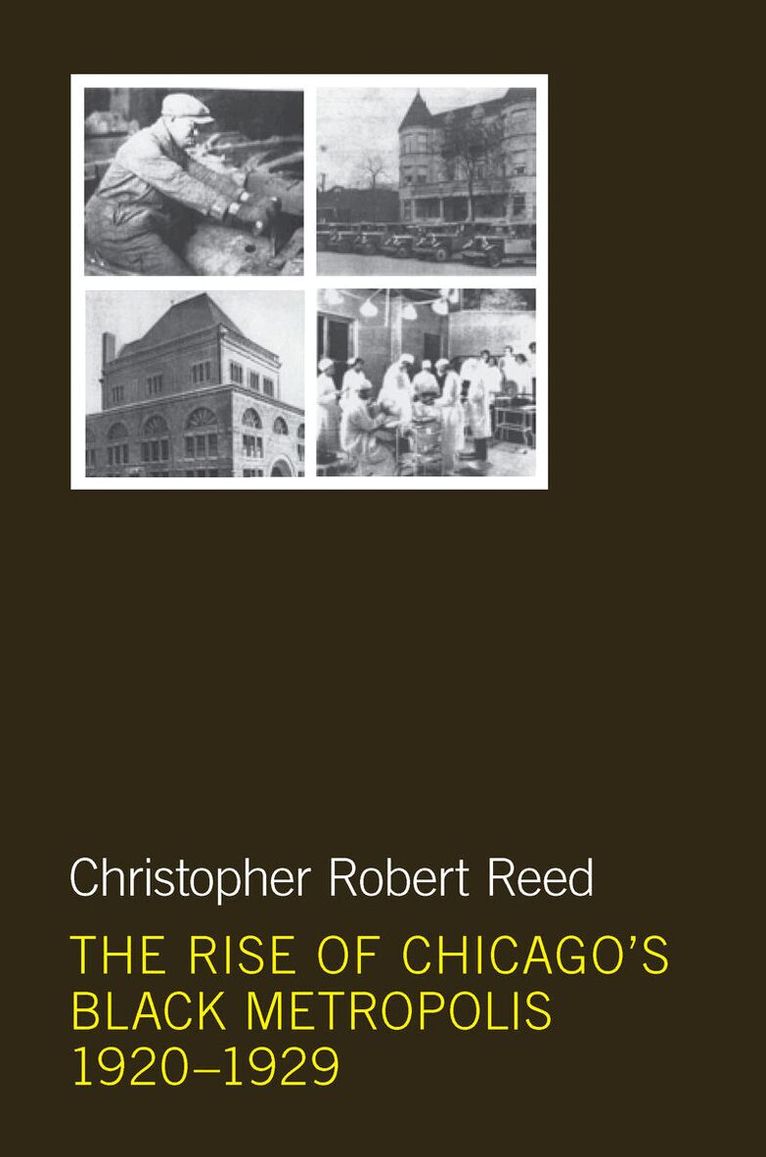
During the Roaring '20s, African Americans rapidly transformed their Chicago into a "black metropolis." In this book, Christopher Robert Reed describes the rise of African Americans in Chicago's political economy, bringing to life the fleeting vibrancy of this dynamic period of racial consciousness and solidarity. Reed shows how African Americans rapidly transformed Chicago and achieved political and economic recognition by building on the massive population growth after the Great Migration from the South, the entry of a significant working class into the city's industrial work force, and the proliferation of black churches. Mapping out the labor issues and the struggle for control of black politics and black business, Reed offers an unromanticized view of the entrepreneurial efforts of black migrants, reassessing previous accounts such as St. Clair Drake and Horace R. Cayton's 1945 study Black Metropolis. Utilizing a wide range of historical data, The Rise of Chicago's Black Metropolis, 1920–1929 delineates a web of dynamic social forces to shed light on black businesses and the establishment of a black professional class. The exquisitely researched volume draws on fictional and nonfictional accounts of the era, black community guides, mainstream and community newspapers, contemporary scholars and activists, and personal interviews.
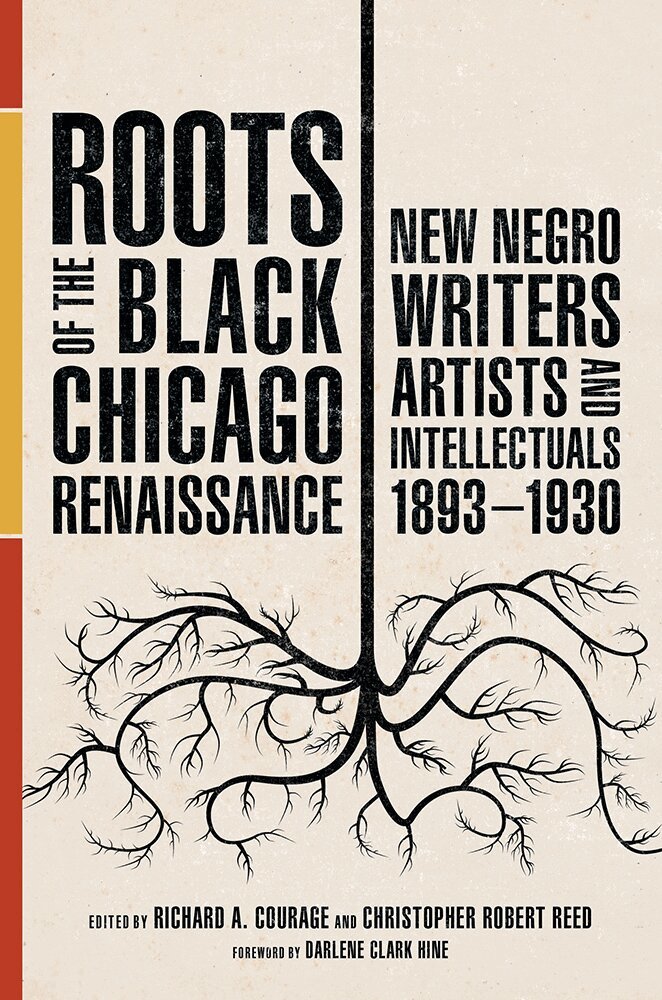
Roots of the Black Chicago Renaissance
New Negro Writers, Artists, and Intellectuals, 1893-1930
Inbunden, Engelska, 2020
1 361 kr
Skickas inom 7-10 vardagar
The Black Chicago Renaissance emerged from a foundational stage that stretched from the 1893 World's Columbian Exposition to the start of the Great Depression. During this time, African American innovators working across the landscape of the arts set the stage for an intellectual flowering that redefined black cultural life.Richard A. Courage and Christopher Robert Reed have brought together essays that explore the intersections in the backgrounds, education, professional affiliations, and public lives and achievements of black writers, journalists, visual artists, dance instructors, and other creators working in the late nineteenth and early twentieth centuries. Organized chronologically, the chapters unearth transformative forces that supported the emergence of individuals and social networks dedicated to work in arts and letters. The result is an illuminating scholarly collaboration that remaps African American intellectual and cultural geography and reframes the concept of urban black renaissance.Contributors: Richard A. Courage, Mary Jo Deegan, Brenda Ellis Fredericks, James C. Hall, Bonnie Claudia Harrison, Darlene Clark Hine, John McCluskey Jr., Amy M. Mooney, Christopher Robert Reed, Clovis E. Semmes, Margaret Rose Vendryes, and Richard Yarborough
318 kr
Skickas
During the Roaring '20s, African Americans rapidly transformed their Chicago into a "black metropolis." In this book, Christopher Robert Reed describes the rise of African Americans in Chicago's political economy, bringing to life the fleeting vibrancy of this dynamic period of racial consciousness and solidarity. Reed shows how African Americans rapidly transformed Chicago and achieved political and economic recognition by building on the massive population growth after the Great Migration from the South, the entry of a significant working class into the city's industrial work force, and the proliferation of black churches. Mapping out the labor issues and the struggle for control of black politics and black business, Reed offers an unromanticized view of the entrepreneurial efforts of black migrants, reassessing previous accounts such as St. Clair Drake and Horace R. Cayton's 1945 study Black Metropolis. Utilizing a wide range of historical data, The Rise of Chicago's Black Metropolis, 1920–1929 delineates a web of dynamic social forces to shed light on black businesses and the establishment of a black professional class. The exquisitely researched volume draws on fictional and nonfictional accounts of the era, black community guides, mainstream and community newspapers, contemporary scholars and activists, and personal interviews.
Roots of the Black Chicago Renaissance
New Negro Writers, Artists, and Intellectuals, 1893-1930
Häftad, Engelska, 2020
291 kr
Skickas inom 7-10 vardagar
The Black Chicago Renaissance emerged from a foundational stage that stretched from the 1893 World's Columbian Exposition to the start of the Great Depression. During this time, African American innovators working across the landscape of the arts set the stage for an intellectual flowering that redefined black cultural life.Richard A. Courage and Christopher Robert Reed have brought together essays that explore the intersections in the backgrounds, education, professional affiliations, and public lives and achievements of black writers, journalists, visual artists, dance instructors, and other creators working in the late nineteenth and early twentieth centuries. Organized chronologically, the chapters unearth transformative forces that supported the emergence of individuals and social networks dedicated to work in arts and letters. The result is an illuminating scholarly collaboration that remaps African American intellectual and cultural geography and reframes the concept of urban black renaissance.Contributors: Richard A. Courage, Mary Jo Deegan, Brenda Ellis Fredericks, James C. Hall, Bonnie Claudia Harrison, Darlene Clark Hine, John McCluskey Jr., Amy M. Mooney, Christopher Robert Reed, Clovis E. Semmes, Margaret Rose Vendryes, and Richard Yarborough
254 kr
Skickas inom 10-15 vardagar
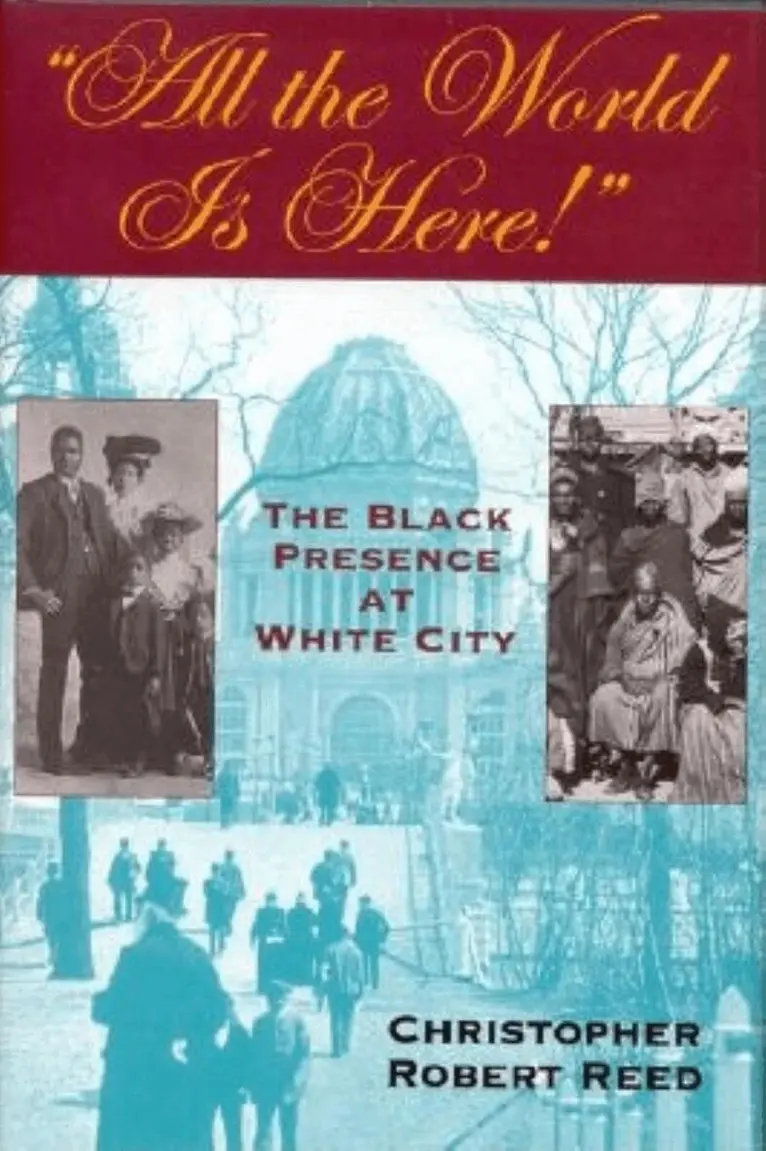
"This entrancing book looks at [the clash of class and caste within the black community] . . . . An important reexamination of African American history."—ChoiceThe 1893 World's Columbian Exposition in Chicago showed the world that America had come of age. Dreaming that they could participate fully as citizens, African Americans flocked to the fair by the thousands. "All the World Is Here!" examines why they came and the ways in which they took part in the Exposition. Their expectations varied. Well-educated, highly assimilated African Americans sought not just representation but also membership at the highest level of decision making and planning. They wanted to participate fully in all intellectual and cultural events. Instead, they were given only token roles and used as window dressing. Their stories of pathos and joy, disappointment and hope, are part of the lost history of "White City." Frederick Douglass, who embodied the dream that inclusion within the American mainstream was possible, would never forget America's World's Fair snub.
541 kr
Skickas inom 10-15 vardagar
" . . . the definitive history not only of the Chicago National Association for the Advancement of Colored People (NAACP) but of the city's black middle class as well." —Journal of American History" . . . a candid portrait of the Chicago branch of the NAACP, one of the association's most important chapters. . . . It also offers a revealing window onto a half-century of race relations in Chicago." —Chicago TribuneEvolving through six decades of white resistance, black indifference and internal group struggle, the Chicago NAACP was affected both adversely and positively by two world wars, national depression, the Cold War conflict and growing class differentiation among African Americans.
Depression Comes to the South Side
Protest and Politics in the Black Metropolis, 1930-1933
Inbunden, Engelska, 2011
337 kr
Skickas inom 10-15 vardagar
In the 1920s, the South Side was looked on as the new Black Metropolis, but by the turn of the decade that vision was already in decline—a victim of the Depression. In this timely book, Christopher Robert Reed explores early Depression-era politics on Chicago's South Side. The economic crisis caused diverse responses from groups in the black community, distinguished by their political ideologies and stated goals. Some favored government intervention, others reform of social services. Some found expression in mass street demonstrations, militant advocacy of expanded civil rights, or revolutionary calls for a complete overhaul of the capitalist economic system. Reed examines the complex interactions among these various groups as they played out within the community as it sought to find common ground to address the economic stresses that threatened to tear the Black Metropolis apart.