Christopher Sten – författare
1 159 kr
Skickas inom 10-15 vardagar
360 kr
Skickas inom 10-15 vardagar
470 kr
Läs direkt efter köp
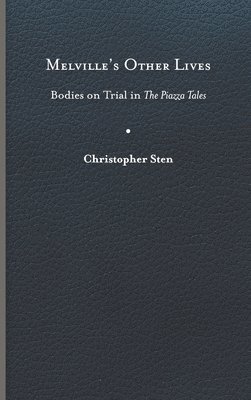
Melville’s Other Lives is the first book-length study on The Piazza Tales—Herman Melville’s only authorized collection of short fiction published in his lifetime—and the first book to explore the rich and varied subject of embodiment in any published collection of Melville’s stories.
As Christopher Sten shows, all of the stories in The Piazza Tales present encounters between established white male figures: a writer, a lawyer, a ship captain, a homeowner, an architect, a world traveler, and characters who are outsiders, minorities, outcasts, or "others": a seamstress, an office drudge, enslaved Africans, a traveling salesman, island castaways, the poor. In each, Melville concentrates on the trials of the human body, its pain and trauma, its struggles and frustrations. Some tales concern common trials such as illness or invalidism ("The Piazza"), the tedium of office work ("Bartleby"), or the aggravation of door-to-door salesmen ("The Lightning-Rod Man"). Others concern extraordinary trials: the traumatic violence of a rebellion on a slave ship ("Benito Cereno"), the hardships of surviving on a wasteland archipelago ("The Encantadas"), the perils of creating a monstrous "man-machine" ("The Bell-Tower"). In their concern for the cultural meanings of such trials, Melville’s stories look forward to the work of Michel Foucault, Raymond Williams, and other cultural materialists who have shown how cultures define, control, and oppress bodies based on their otherness. As a storyteller, Melville understood how such cultural dynamics operate and seized on our collective obsession with the human body as subject, symbol, and vehicle to dramatize his tales.
481 kr
Skickas inom 3-6 vardagar
1 099 kr
Skickas inom 3-6 vardagar
724 kr
Skickas inom 5-8 vardagar
444 kr
Läs direkt efter köp
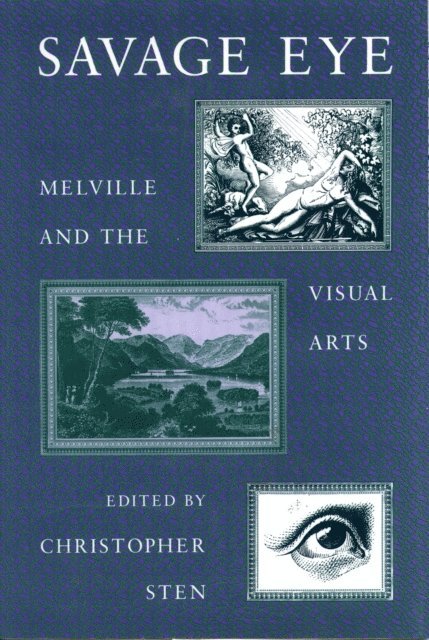
Mellville’s interest in the visual arts and the translation of that interest into his writings is at the center of this new interdisciplinary study of one of America’s most celebrated writers. Melville’s lifelong engagement with the visual arts has been noted in other works, but only Savage Eye suggest the extraordinary depth and range of the author’s multifaceted interest in the subject. Editor Christopher Sten has collected 13 essays from 12 specialists in the field to produce this groundbreaking study which connects Melville’s writings with topics relating to the arts of painting, printmaking, sculpture, architecture and landscape design, as well as art history. Sten’s comprehensive introduction provides readers with a historical overview of the subject, detailing the many works of art Melville knew and commented upon at each stage of his career. He explains when and where in Melville’s wanderings throughout America, Europe, and the Near East he saw these works, then describes how Melville made use of the life and work of these artists in his own fiction and poetry. Savage Eye argues persuasively that the visual arts sources are comparable in importance to the literary arts in the formation of Melville’s work and vision. The contributors thus lead the reader to an appreciation of the rich array of artistic images that were available to Americans of the previous century, and thereby extend not only our understanding of Melville, but of ourselves and our collective history.
444 kr
Läs direkt efter köp
Mellville’s interest in the visual arts and the translation of that interest into his writings is at the center of this new interdisciplinary study of one of America’s most celebrated writers. Melville’s lifelong engagement with the visual arts has been noted in other works, but only Savage Eye suggest the extraordinary depth and range of the author’s multifaceted interest in the subject. Editor Christopher Sten has collected 13 essays from 12 specialists in the field to produce this groundbreaking study which connects Melville’s writings with topics relating to the arts of painting, printmaking, sculpture, architecture and landscape design, as well as art history. Sten’s comprehensive introduction provides readers with a historical overview of the subject, detailing the many works of art Melville knew and commented upon at each stage of his career. He explains when and where in Melville’s wanderings throughout America, Europe, and the Near East he saw these works, then describes how Melville made use of the life and work of these artists in his own fiction and poetry. Savage Eye argues persuasively that the visual arts sources are comparable in importance to the literary arts in the formation of Melville’s work and vision. The contributors thus lead the reader to an appreciation of the rich array of artistic images that were available to Americans of the previous century, and thereby extend not only our understanding of Melville, but of ourselves and our collective history.
488 kr
Läs direkt efter köp
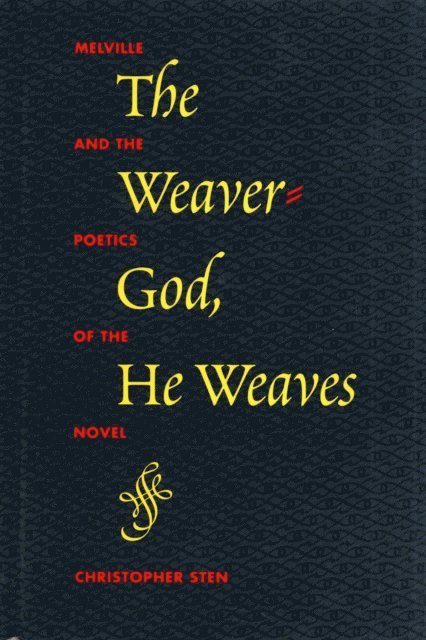
Melville has long been regarded as an author of raw genius who knew, or cared, little about the art of the novel, and even harbored hostility toward its conventions. In The Weaver-God, He Weaves, Christopher Sten sets out to correct this widespread view, showing not only what Melville knew about the novelist’s craft but how he appropriated and transformed a whole series of distinct genres: Typee is presented in the context of the popular romance, with its paired themes of sex and violence; Omoo is viewed in the framework of early Spanish and later French examples of the picaresque novel; and Mardi is seen as an instance of the once widely popular genre of the imaginary voyage. Sten also reveals how Melville radically transformed certain existing genres—the epic novel in Moby-Dick and the historical novel in Israel Potter—or forged profound new directions for genres still in their early stages—the psychological novel in Pierre and the experimental novel in the Confidence-Man. Sten speculates that it is because Melville was so idiosyncratic and inventive that so few critics have understood his close relationship tot eh various novelistic forms. While individual chapters provide discussions of the genre principles Melville employed, Sten’s introduction offers valuable theoretical isnight into the importance of genre study (encompassing recent work by Todorov, Hirsch, Hernadi, Jauss, Culler, Scholes, Fowler, Rosmarin, and others), both in the evaluation of literary texts and in the still more fundamental enterprise of determining their meaning. The Weaver-God, He Weaves thus exposes for the first time the extent of Melville’s contribution to the novel. This work will be of interest to readers of Melville, 19th-century American literature, literature of the sea, experimental fiction, and to those who work in the field of genre studies.
488 kr
Läs direkt efter köp
Melville has long been regarded as an author of raw genius who knew, or cared, little about the art of the novel, and even harbored hostility toward its conventions. In The Weaver-God, He Weaves, Christopher Sten sets out to correct this widespread view, showing not only what Melville knew about the novelist’s craft but how he appropriated and transformed a whole series of distinct genres: Typee is presented in the context of the popular romance, with its paired themes of sex and violence; Omoo is viewed in the framework of early Spanish and later French examples of the picaresque novel; and Mardi is seen as an instance of the once widely popular genre of the imaginary voyage. Sten also reveals how Melville radically transformed certain existing genres—the epic novel in Moby-Dick and the historical novel in Israel Potter—or forged profound new directions for genres still in their early stages—the psychological novel in Pierre and the experimental novel in the Confidence-Man. Sten speculates that it is because Melville was so idiosyncratic and inventive that so few critics have understood his close relationship tot eh various novelistic forms. While individual chapters provide discussions of the genre principles Melville employed, Sten’s introduction offers valuable theoretical isnight into the importance of genre study (encompassing recent work by Todorov, Hirsch, Hernadi, Jauss, Culler, Scholes, Fowler, Rosmarin, and others), both in the evaluation of literary texts and in the still more fundamental enterprise of determining their meaning. The Weaver-God, He Weaves thus exposes for the first time the extent of Melville’s contribution to the novel. This work will be of interest to readers of Melville, 19th-century American literature, literature of the sea, experimental fiction, and to those who work in the field of genre studies.
207 kr
Läs direkt efter köp
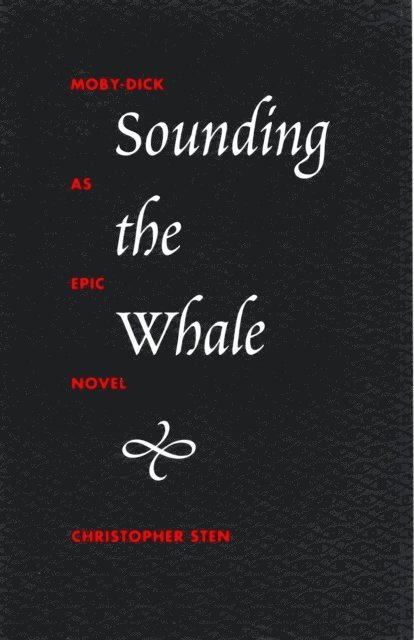
Sounding the Whale is Christopher Sten’s comprehensive account of his own close encounter with Moby-Dick. Originally a long, self-contained chapter in The Weaver-God, He Weaves: Melville and the Poetics of the Novel, just published by Kent State University Press, this chapter-by-chapter study of Moby-Dick evolved as a book within a book. Sten argues that Melville not only was familiar with the traditional forms of narrative but that he refined them and appropriated them to his own original purposes. For Moby-Dick, he fused the heroic qualities of the ancient Homeric epic with the spiritual qualities of the early modern form found in Dante and Milton, then cast the whole enterprise in an unprecedented poetic prose form. Thus he formulated the first prose epic of its kind, and the only religious epic on the subject of whaling anyone is likely to write. As Melville’s most ambitious novel, Moby-Dick requires careful and responsive reading. For a clear understanding of the intricacy and depth of Melville’s story, of the subtleties of the quest, one is likely to need a guide. This book is that guide.
207 kr
Läs direkt efter köp
Sounding the Whale is Christopher Sten’s comprehensive account of his own close encounter with Moby-Dick. Originally a long, self-contained chapter in The Weaver-God, He Weaves: Melville and the Poetics of the Novel, just published by Kent State University Press, this chapter-by-chapter study of Moby-Dick evolved as a book within a book. Sten argues that Melville not only was familiar with the traditional forms of narrative but that he refined them and appropriated them to his own original purposes. For Moby-Dick, he fused the heroic qualities of the ancient Homeric epic with the spiritual qualities of the early modern form found in Dante and Milton, then cast the whole enterprise in an unprecedented poetic prose form. Thus he formulated the first prose epic of its kind, and the only religious epic on the subject of whaling anyone is likely to write. As Melville’s most ambitious novel, Moby-Dick requires careful and responsive reading. For a clear understanding of the intricacy and depth of Melville’s story, of the subtleties of the quest, one is likely to need a guide. This book is that guide.
813 kr
Läs direkt efter köp
Essays on Melville and the culture of the Pacific
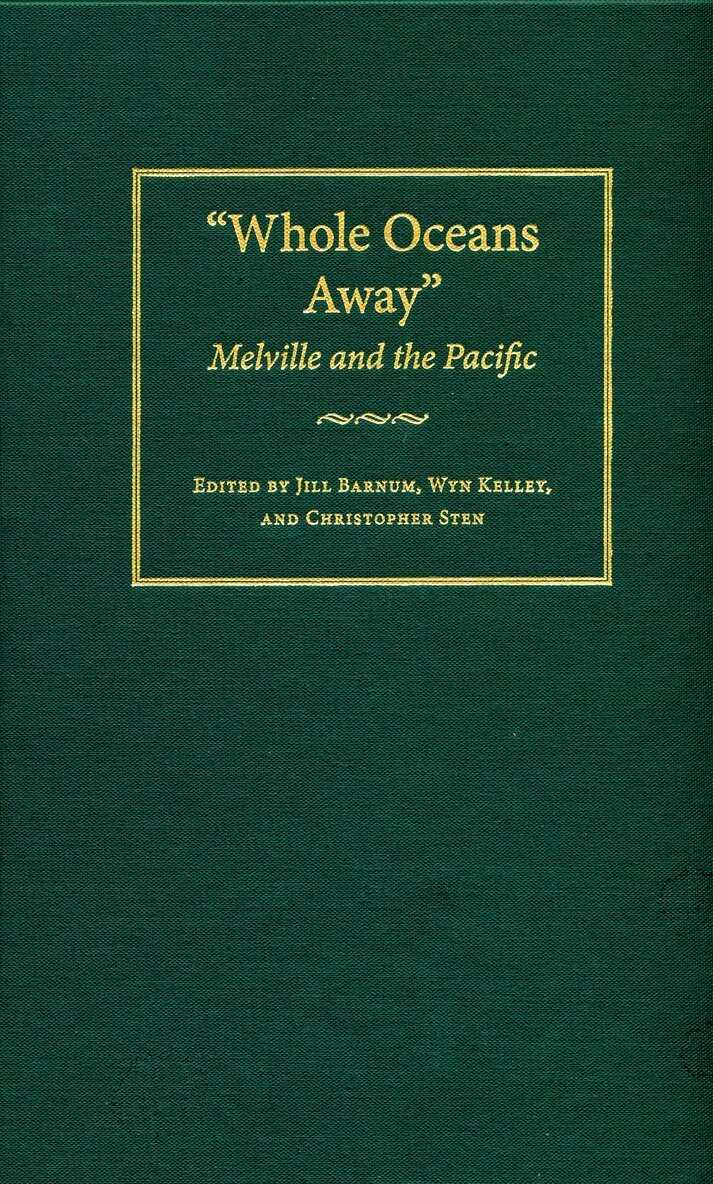
“Like the young Melville, those who imagine Polynesia from the perspective of Europe or North America tend to envision a tropical garden set in a shining sea. But the Pacific experienced by a runaway American sailor in an earlier century presents a different picture, and the Pacifi c experienced by indigenous peoples of today a different one yet.”— from the Introduction
Herman Melville had a lifelong fascination with the Pacific and with the diverse island cultures that dotted this vast ocean. The essays in this collection articulate the intersection of Western and Pacific perspectives in Melville’s work, from his early writings based on ocean voyages and encounters in the Pacific to Western modes of thought in relation to race and national identity. These essays interrogate familiar themes of Western colonialism while introducing fresh insights, including Melville’s use of Pacific cartography, the art of tattooing, and his interest in evolutionary science.
Using a variety of methodologies and approaches—postcolonial theory, cultural studies, linguistics, performance theory—“Whole Oceans Away” offers a valuable body of criticism for students of nineteenth-century American literature and history, cultural studies, and Pacific Rim studies.
813 kr
Läs direkt efter köp
Essays on Melville and the culture of the Pacific
“Like the young Melville, those who imagine Polynesia from the perspective of Europe or North America tend to envision a tropical garden set in a shining sea. But the Pacific experienced by a runaway American sailor in an earlier century presents a different picture, and the Pacifi c experienced by indigenous peoples of today a different one yet.”— from the Introduction
Herman Melville had a lifelong fascination with the Pacific and with the diverse island cultures that dotted this vast ocean. The essays in this collection articulate the intersection of Western and Pacific perspectives in Melville’s work, from his early writings based on ocean voyages and encounters in the Pacific to Western modes of thought in relation to race and national identity. These essays interrogate familiar themes of Western colonialism while introducing fresh insights, including Melville’s use of Pacific cartography, the art of tattooing, and his interest in evolutionary science.
Using a variety of methodologies and approaches—postcolonial theory, cultural studies, linguistics, performance theory—“Whole Oceans Away” offers a valuable body of criticism for students of nineteenth-century American literature and history, cultural studies, and Pacific Rim studies.