Christopher Storrs – författare
Visar alla böcker från författaren Christopher Storrs. Handla med fri frakt och snabb leverans.
10 produkter
Resilience of the Spanish Monarchy 1665-1700
E-bok, 2006
2051 kr
Lägg i varukorg
Christopher Storrs presents a fresh new appraisal of the reasons for the survival of Spain and its European and overseas empire under the last Spanish Habsburg, Carlos II (1665-1700). Hitherto it has been largely assumed that in the ''Age of Louis XIV'' Spain collapsed as a military, naval and …
The Resilience of the Spanish Monarchy 1665-1700
Inbunden, 2006
3744 kr
Lägg i varukorg
Christopher Storrs presents a fresh new appraisal of the reasons for the survival of Spain and its European and overseas empire under the last Spanish Habsburg, Carlos II (1665-1700). Hitherto it has been largely assumed that in the 'Age of Louis XIV' Spain collapsed as a military, naval and …
War, Diplomacy and the Rise of Savoy, 1690-1720
Häftad, 2007
502 kr
Lägg i varukorg
This book deals with the crucial relationship between war and state formation in early modern Europe by considering the role of the Duchy of Savoy and the rise of this hitherto weak state into one of the regular members of the anti-French coalitions of the eighteenth century. Through his …
War, Diplomacy and the Rise of Savoy, 1690-1720
Inbunden, 2000
1928 kr
Lägg i varukorg
This book deals with the crucial relationship between war and state formation in early modern Europe by considering the role of the Duchy of Savoy and the rise of this hitherto weak state into one of the regular members of the anti-French coalitions of the eighteenth century. Through his …
Fiscal-Military State in Eighteenth-Century Europe
Essays in honour of P.G.M. Dickson
Inbunden, 2009
3262 kr
Lägg i varukorg
In recent decades, historians of early-modern Europe, and above all those who study the eighteenth century, have elaborated the concept of what has been called the 'fiscal-military state'. This is a state whose international effectiveness was founded upon the development of large armed forces, …
Fiscal-Military State in Eighteenth-Century Europe
Essays in honour of P.G.M. Dickson
E-bok, 2016
856 kr
Lägg i varukorg
In recent decades, historians of early-modern Europe, and above all those who study the eighteenth century, have elaborated the concept of what has been called the ''fiscal-military state''. This is a state whose international effectiveness was founded upon the development of large armed forces, …
Fiscal-Military State in Eighteenth-Century Europe
Essays in honour of P.G.M. Dickson
E-bok, 2016
838 kr
Lägg i varukorg
In recent decades, historians of early-modern Europe, and above all those who study the eighteenth century, have elaborated the concept of what has been called the ''fiscal-military state''. This is a state whose international effectiveness was founded upon the development of large armed forces, …
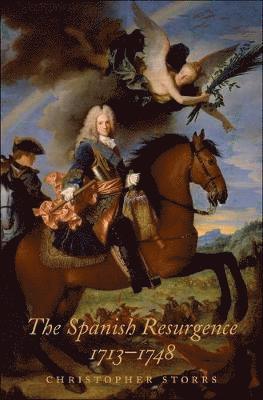
El resurgir español 1713-1748
E-bok, 2022
125 kr
Lägg i varukorg
La historiografía no ha sido clemente con Felipe V, el primer Borbón en reinar en España, de 1700 a 1746. Motejado de incapaz, indolente y de estar dominado por su segunda esposa, Isabel de Farnesio, lo cierto es que bajo su cetro la Monarquía Hispánica volvió a ser una potencia dinámica y …