Christopher T. Whelan - Böcker
Visar alla böcker från författaren Christopher T. Whelan. Handla med fri frakt och snabb leverans.
4 produkter
4 produkter
2 193 kr
Skickas inom 5-8 vardagar
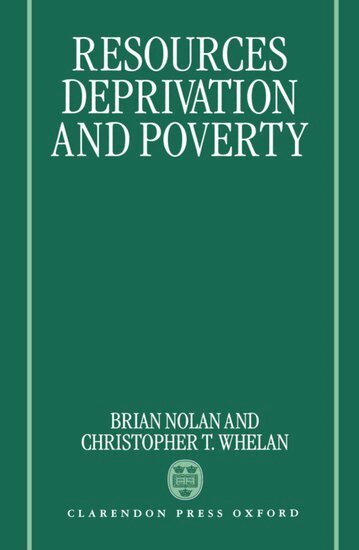
Poverty alleviation is a central aim of economic and social policy, and yet there is no consensus about what poverty means or how it is best measured. Often, the households below an income poverty line are counted as poor, but there may be no firm basis for concentrating on that particular income level. There may also be wide variations among the households below any income poverty line in terms of their actual living standards. This book explores what poverty means in developed countries, and shows that understanding and measuring it requires widening the focus beyond curent income. By using broader measures of resources and information on living patterns and concrete indicators of deprivation, it shows how those who are effectively excluded from participation in society due to a lack of resources can be more accurately identified, and the processes producing such exclusion better understood. The core issue of this book is how to define and measure poverty in relatively rich countries in a way which is valid, meaningful in the context, and valuable for policy-making. Extensive tables of data from a specially designed survey of a large representative sample of Irish households are used to illustrate this issue.
1 461 kr
Skickas inom 5-8 vardagar
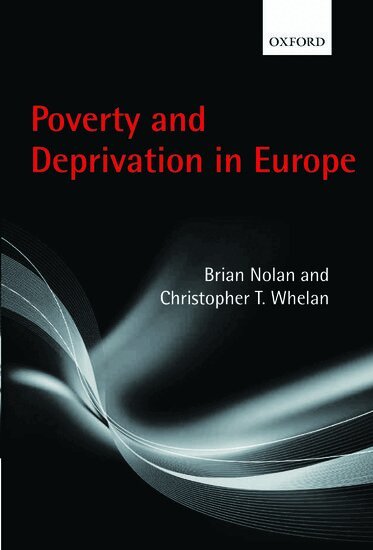
Research on poverty in rich countries relies primarily on household income to capture living standards and distinguish those in poverty, and this is also true of official poverty measurement and monitoring. However, awareness of the limitations of income has been heightening interest in the role that non-monetary measures of deprivation can play. This book takes as its starting-point that research on poverty and social exclusion has been undergoing a fundamental shift towards a multidimensional approach; that researchers and policy-makers alike have struggled to develop concepts and indicators that do this approach justice; and that this is highly salient not only within individual countries (including both Britain and the USA) but also for the European Union post-enlargement. The difficulties encountered in applying a multidimensional approach reflect limitations in the information available but also in the conceptual and empirical underpinnings provided by existing research. The central aim of this book is to contribute to the development of those underpinnings and to productive ways of employing non-monetary indicators of deprivation. It will appeal to readers from diverse disciplinary perspectives, especially those concerned with substantive issues and policy implications. In addressing this audience it also provides a non-technical account of recent developments in the rapidly expanding academic literature, serving as a guide to those who wish to explore it in greater depth. The book maps out the current landscape and the best way forward, concluding by offering a critical evaluation of the EU's 2020 poverty reduction target.
2 110 kr
Skickas inom 10-15 vardagar
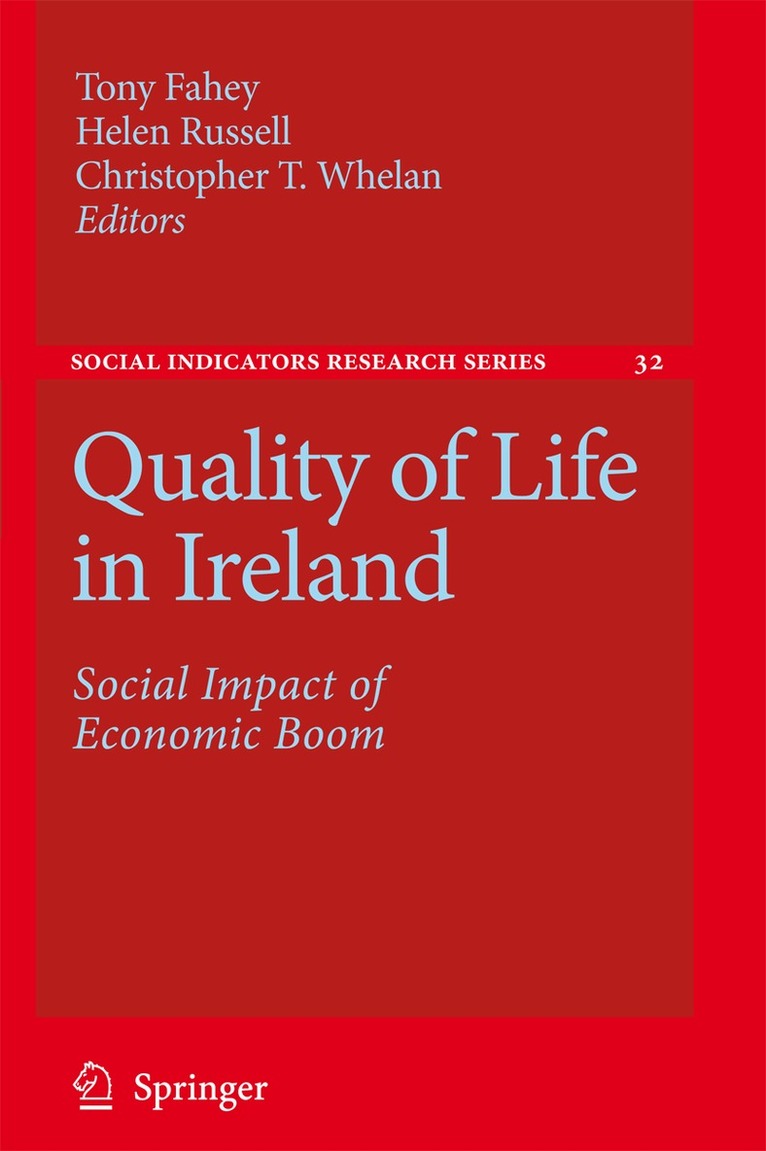
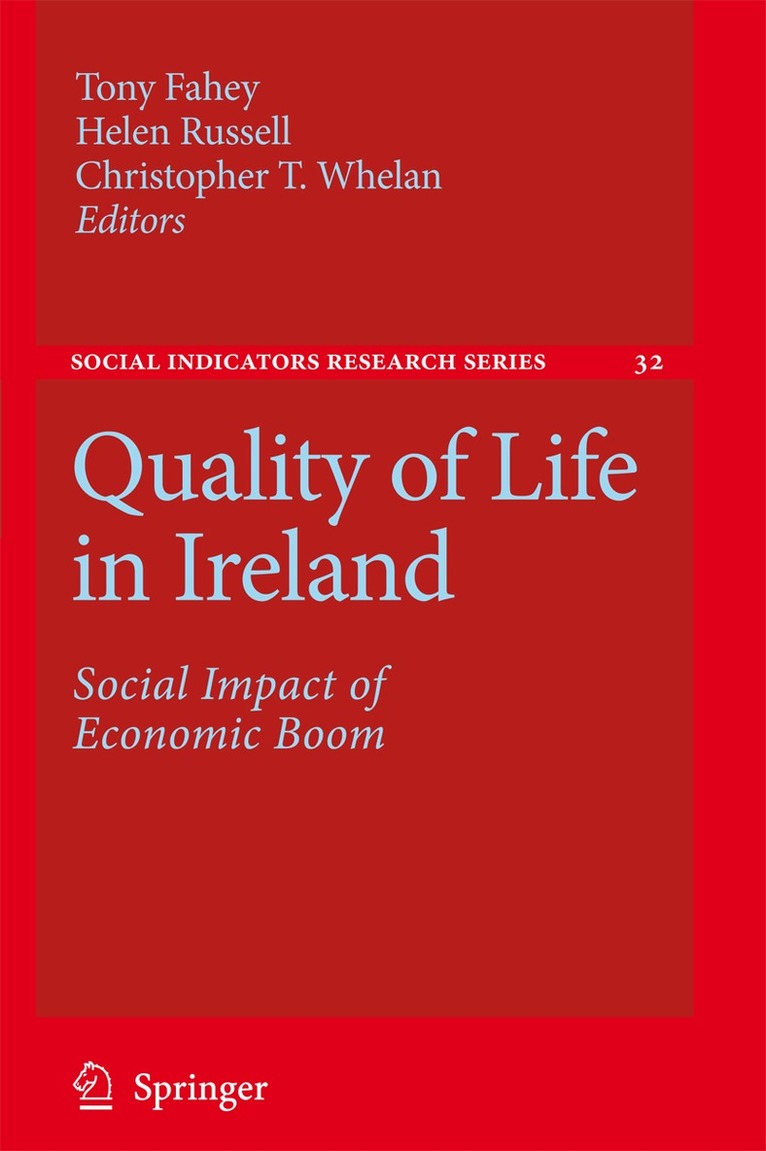
Frances Ruane, Director, Economic and Social Research Institute Irish and international scholars continue to be curious about Ireland’s exceptional economic success since the early 1990s. While growth rates peaked at the turn of the millennium, they have since continued at levels that are high by any current international or historical Irish measures. Despite differences of view among Irish economists and policymakers on the relative importance of the factors that have driven growth, there is widespread agreement that the process of globalisation has contributed to Ireland’s economic development. In this context, it is helpful to recognise that globalisation has created huge changes in most developed and developing countries and has been associated, inter alia, with reductions in global income disparity but increased income disparity within individual countries. This book reflects on how, from a social perspective, Ireland has prospered over the past decade. In that period we have effectively moved from being a semi-developed to being a developed economy. While the book’s main focus is on the social changes induced by economic growth, there is also recognition that social change has facilitated economic growth. Although many would regard the past decade as a period when economic and social elements have combined in a virtuous cycle, there is a lingering question as to the extent to which we have better lives now that we are economically ‘better off’.
2 163 kr
Skickas inom 10-15 vardagar
Frances Ruane, Director, Economic and Social Research Institute Irish and international scholars continue to be curious about Ireland’s exceptional economic success since the early 1990s. While growth rates peaked at the turn of the millennium, they have since continued at levels that are high by any current international or historical Irish measures. Despite differences of view among Irish economists and policymakers on the relative importance of the factors that have driven growth, there is widespread agreement that the process of globalisation has contributed to Ireland’s economic development. In this context, it is helpful to recognise that globalisation has created huge changes in most developed and developing countries and has been associated, inter alia, with reductions in global income disparity but increased income disparity within individual countries. This book reflects on how, from a social perspective, Ireland has prospered over the past decade. In that period we have effectively moved from being a semi-developed to being a developed economy. While the book’s main focus is on the social changes induced by economic growth, there is also recognition that social change has facilitated economic growth. Although many would regard the past decade as a period when economic and social elements have combined in a virtuous cycle, there is a lingering question as to the extent to which we have better lives now that we are economically ‘better off’.