Ciara Breathnach – författare
Visar alla böcker från författaren Ciara Breathnach. Handla med fri frakt och snabb leverans.
5 produkter
5 produkter
Ordinary Lives, Death, and Social Class
Dublin City Coroner's Court, 1876-1902
Inbunden, Engelska, 2022
1 430 kr
Skickas inom 5-8 vardagar
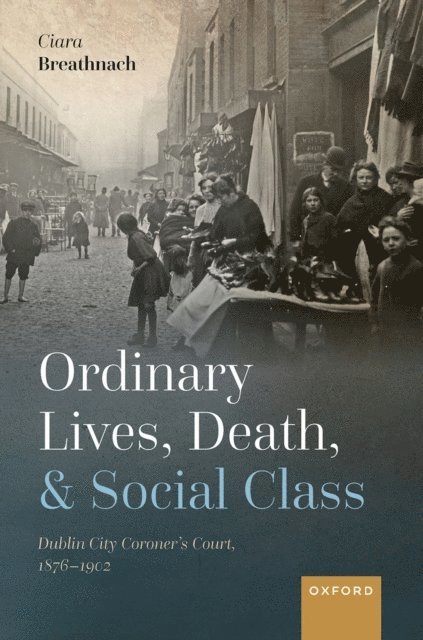
Ordinary Lives, Death, and Social Class focuses on the evolution of the Dublin City Coroner's Court and on Dr Louis A. Bryne's first two years in office. Wrapping itself around the 1901 census, the study uses gender, power, and blame as analytical frameworks to examine what inquests can tell us about the impact of urban living from lifecycle and class perspectives. Coroners' inquests are a combination of eyewitness testimony, expert medico-legal language, detailed minutiae of people, places, and occupational identities pinned to a moment in time. Thus they have a simultaneous capacity to reveal histories from both above and below. Rich in geographical, socio-economic, cultural, class, and medical detail, these records collated in a liminal setting about the hour of death bear incredible witness to what has often been termed 'ordinary lives'. The subjects of Dr Byrne's court were among the poorest in Ireland and, apart from common medical causes problems linked to lower socio-economic groups, this volume covers preventable cases of workplace accidents, neglect, domestic abuse, and homicide.
2 200 kr
Skickas inom 10-15 vardagar
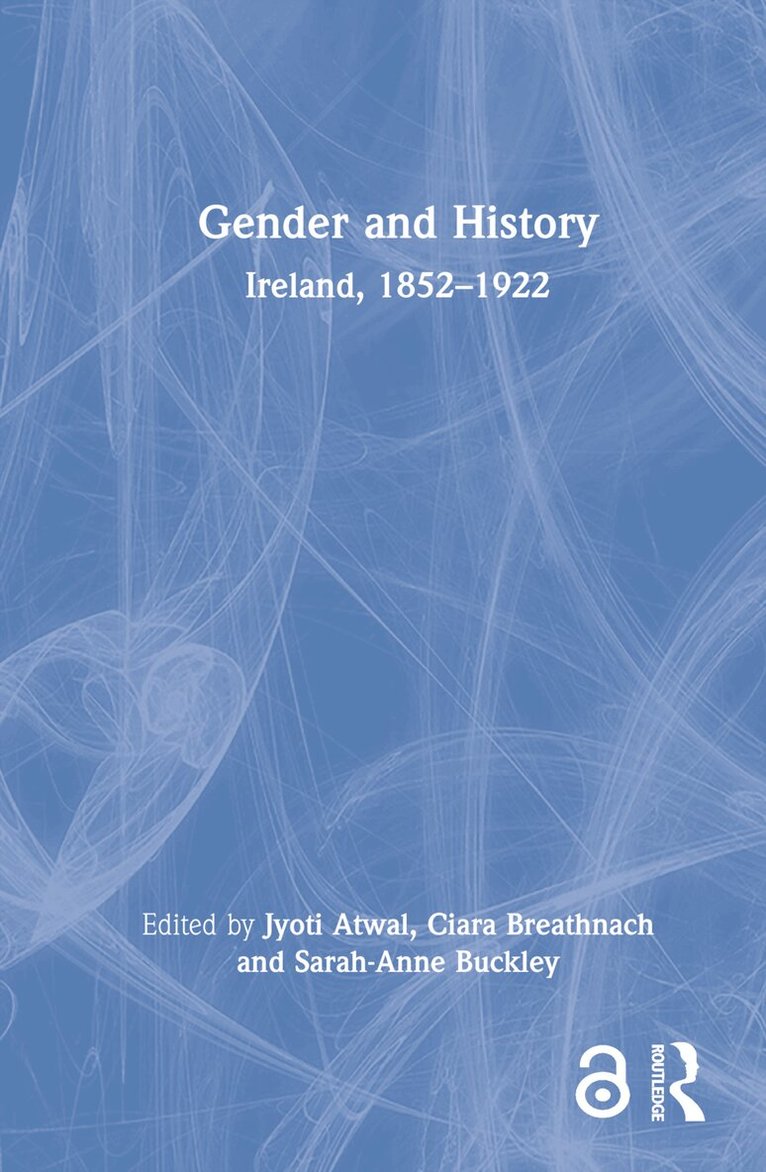
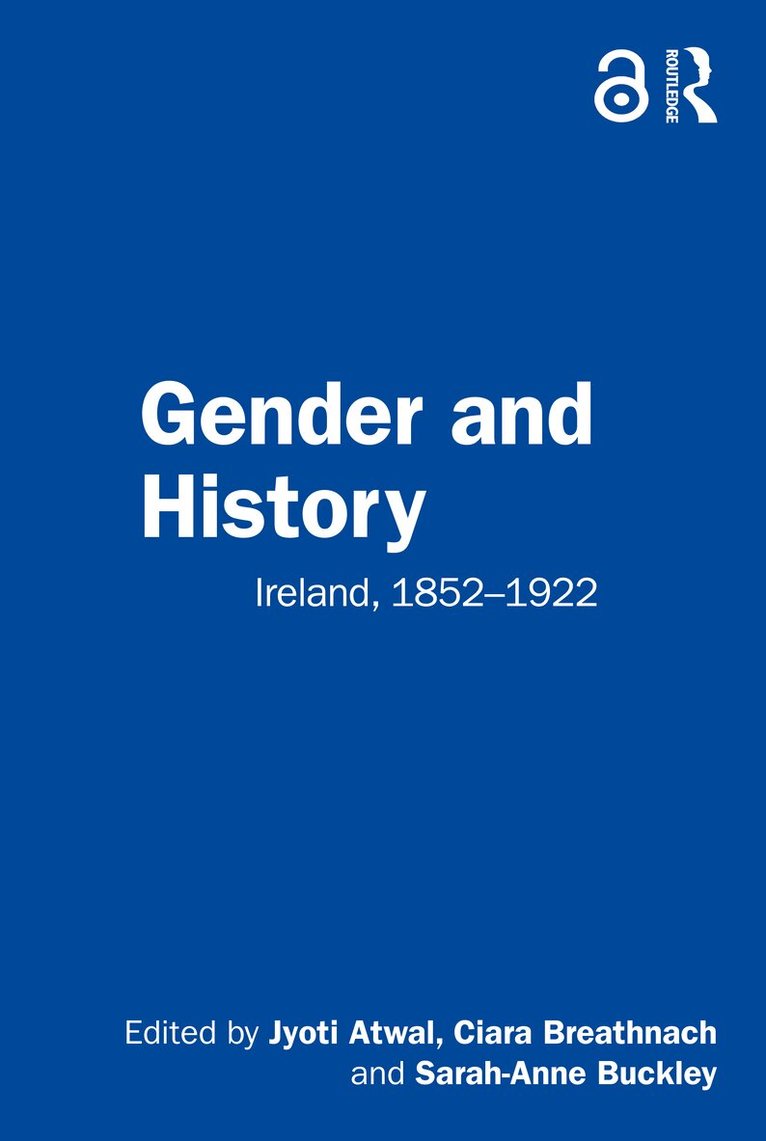
This book provides an overview of Irish gender history from the end of the Great Famine in 1852 until the foundation of the Irish Free State in 1922. It builds on the work that scholars of women’s history pioneered and brings together internationally regarded experts to offer a synthesis of the current historiography and existing debates within the field. The authors place emphasis on highlighting new and exciting sources, methodologies, and suggested areas for future research. They address a variety of critical themes such as the family, reproduction and sexuality, the medical and prison systems, masculinities and femininities, institutions, charity, the missions, migration, ‘elite women’, and the involvement of women in the Irish nationalist/revolutionary period. Envisioned to be both thematic and chronological, the book provides insight into the comparative, transnational, and connected histories of Ireland, India, and the British empire.An important contribution to the study of Irish gender history, the volume offers opportunities for students and researchers to learn from the methods and historiography of Irish studies. It will be useful for scholars and teachers of history, gender studies, colonialism, post-colonialism, European history, Irish history, Irish studies, and political history.The Open Access version of this book, available at www.taylorfrancis.com, has been made available under a Creative Commons Attribution-Non Commercial-No Derivatives 4.0 license.
658 kr
Skickas inom 10-15 vardagar
This book provides an overview of Irish gender history from the end of the Great Famine in 1852 until the foundation of the Irish Free State in 1922. It builds on the work that scholars of women’s history pioneered and brings together internationally regarded experts to offer a synthesis of the current historiography and existing debates within the field. The authors place emphasis on highlighting new and exciting sources, methodologies, and suggested areas for future research. They address a variety of critical themes such as the family, reproduction and sexuality, the medical and prison systems, masculinities and femininities, institutions, charity, the missions, migration, ‘elite women’, and the involvement of women in the Irish nationalist/revolutionary period. Envisioned to be both thematic and chronological, the book provides insight into the comparative, transnational, and connected histories of Ireland, India, and the British empire.An important contribution to the study of Irish gender history, the volume offers opportunities for students and researchers to learn from the methods and historiography of Irish studies. It will be useful for scholars and teachers of history, gender studies, colonialism, post-colonialism, European history, Irish history, Irish studies, and political history.The Open Access version of this book, available at www.taylorfrancis.com, has been made available under a Creative Commons Attribution-Non Commercial-No Derivatives 4.0 license.
771 kr
Kommande
Absence in official records can have profound implications for social memory, civil rights, restorative and transitional justice, citizenship, social welfare, and redress for historical abuse. Scholars of archivistics and early modern New World imperial contexts have uncovered the epistemological problems that archival silences pose for historical research, and I contend that absence deserves separate conceptual treatment. Archival absences, both permanent and temporary, have particular resonances for post-colonial countries, and is an ongoing threat under totalitarian regimes. Using Britain and Ireland as primary examples, this Element traces how absence took root in the domestic and subsequently the colonial archive, and how through legal mechanisms it became an accepted part of archival praxis. The aim of this Element is to raise awareness of archival absence in order to prevent more losses, particularly in the abundance of the digital age. This title is also available as Open Access on Cambridge Core.
239 kr
Kommande
Absence in official records can have profound implications for social memory, civil rights, restorative and transitional justice, citizenship, social welfare, and redress for historical abuse. Scholars of archivistics and early modern New World imperial contexts have uncovered the epistemological problems that archival silences pose for historical research, and I contend that absence deserves separate conceptual treatment. Archival absences, both permanent and temporary, have particular resonances for post-colonial countries, and is an ongoing threat under totalitarian regimes. Using Britain and Ireland as primary examples, this Element traces how absence took root in the domestic and subsequently the colonial archive, and how through legal mechanisms it became an accepted part of archival praxis. The aim of this Element is to raise awareness of archival absence in order to prevent more losses, particularly in the abundance of the digital age. This title is also available as Open Access on Cambridge Core.