Cindy Zeiher - Böcker
Visar alla böcker från författaren Cindy Zeiher. Handla med fri frakt och snabb leverans.
5 produkter
5 produkter
1 572 kr
Skickas inom 10-15 vardagar
How can we articulate a philosophy of love? This volume stages encounters between contemporary understandings of love and philosophy. It considers particular continental philosophers who think about love and its relation to desire and sexuality. The essays in this collection contend with philosophy and psychoanalysis as lines of thought that expose love’s role in all knowledge. Drawing on the work of key thinkers such as Žižek, Badiou, Lacan, Hegel, Vattimo, Caygill, Levinas, Menshikov and Marx, this book puts love to work as a way of understanding the subject of desire as a figure of knowledge shaped by the event of love.
541 kr
Skickas inom 10-15 vardagar
How can we articulate a philosophy of love? This volume stages encounters between contemporary understandings of love and philosophy. It considers particular continental philosophers who think about love and its relation to desire and sexuality. The essays in this collection contend with philosophy and psychoanalysis as lines of thought that expose love’s role in all knowledge. Drawing on the work of key thinkers such as Žižek, Badiou, Lacan, Hegel, Vattimo, Caygill, Levinas, Menshikov and Marx, this book puts love to work as a way of understanding the subject of desire as a figure of knowledge shaped by the event of love.
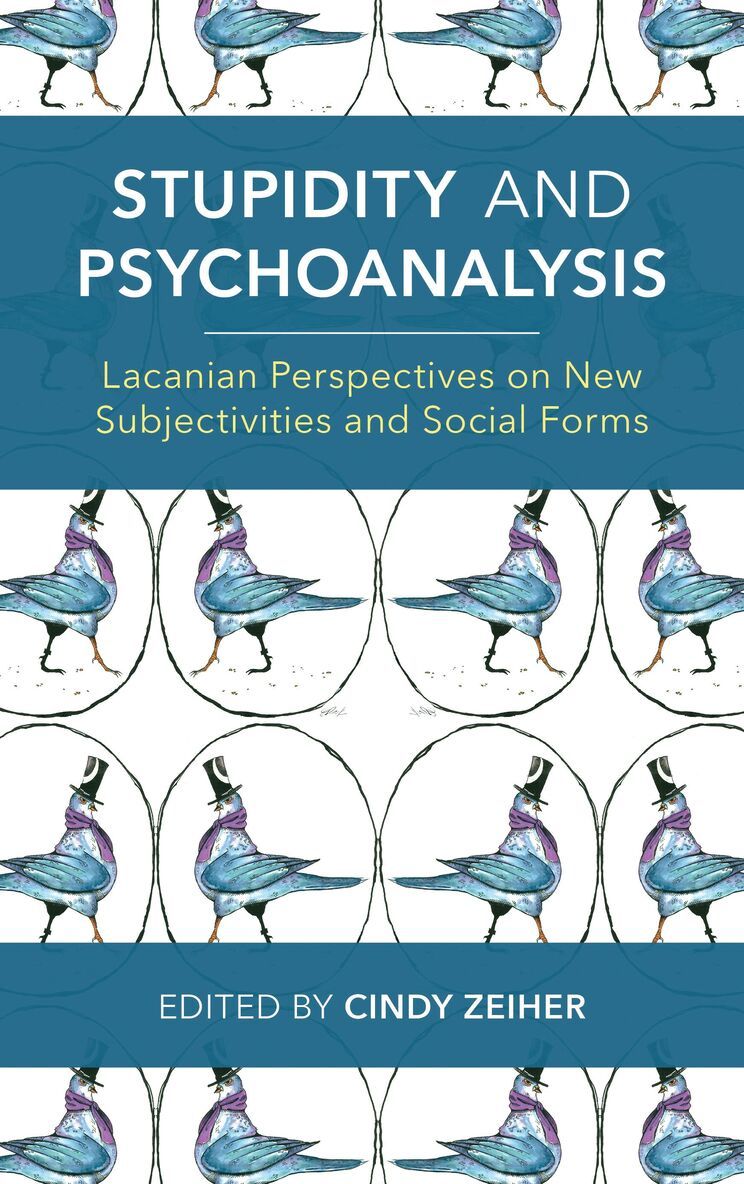
Stupidity and Psychoanalysis
Lacanian Perspectives on New Subjectivities and Social Forms
Inbunden, Engelska, 2025
1 236 kr
Skickas inom 10-15 vardagar
There is nothing new in thinking that we live in stupid times. Many past thinkers thought about stupidity as a symptom, however, Lacan considered stupidity as immune to the influence of psychoanalysis, saying about himself, “I am only relatively stupid?that is to say, I am as stupid as all people?perhaps because I got a little bit enlightened." Here it seems that stupidity signifies (and is signified by) the absence of any coherent foundation in desire and lack, but instead emanate from the will to jouissance. Here stupidity is inescapable whether it be individual, communal, or ideological.In Stupidity and Psychoanalysis, chapters by internationally respected Lacanian analysts and theoreticians think about how we can understand stupidity as a specific psychoanalytic encounter. This collection draws critical Lacanian attention to considering new ways to approach stupidity and stupor as new contemporary subjective and social forms. Contributors provide various insights into how stupidity might be rethought as contemporary signifiers whose importance lies (for better or worse) more in producing effect than in transmitting meaning.Contributors: Giole P. Cima, Christian Ingo Lenz Dunker, David Ferraro, Luis Izcovich, Adrian Johnston, James Martell, Jean-Michel Rabate, Samo Tomsic, Antonio Viselli, and Cindy Zeiher.
700 kr
Skickas inom 10-15 vardagar
This book promotes a Lacanian approach to silence, arguing that Lacanian psychoanalysis is distinctive for putting a high value on both silence and language. Rather than treating silence with awe and wonder, this book puts silence to work, and it does so in order to deal with the inevitable alienation that comes with becoming speaking-beings.
Stupidity and Psychoanalysis
Lacanian Perspectives on New Subjectivities and Social Forms
Häftad, Engelska, 2026
635 kr
Kommande
There is nothing new in thinking that we live in stupid times. Many past thinkers thought about stupidity as a symptom, however, Lacan considered stupidity as immune to the influence of psychoanalysis, saying about himself, “I am only relatively stupid?that is to say, I am as stupid as all people?perhaps because I got a little bit enlightened." Here it seems that stupidity signifies (and is signified by) the absence of any coherent foundation in desire and lack, but instead emanate from the will to jouissance. Here stupidity is inescapable whether it be individual, communal, or ideological.In Stupidity and Psychoanalysis, chapters by internationally respected Lacanian analysts and theoreticians think about how we can understand stupidity as a specific psychoanalytic encounter. This collection draws critical Lacanian attention to considering new ways to approach stupidity and stupor as new contemporary subjective and social forms. Contributors provide various insights into how stupidity might be rethought as contemporary signifiers whose importance lies (for better or worse) more in producing effect than in transmitting meaning.Contributors: Giole P. Cima, Christian Ingo Lenz Dunker, David Ferraro, Luis Izcovich, Adrian Johnston, James Martell, Jean-Michel Rabate, Samo Tomsic, Antonio Viselli, and Cindy Zeiher.