Ciydem Catak - Böcker
Visar alla böcker från författaren Ciydem Catak. Handla med fri frakt och snabb leverans.
3 produkter
3 produkter
477 kr
Skickas inom 5-8 vardagar
This book investigates the determinants of bank capital structure and procyclical behavior of leverage. A panel data analysis is developed to find out the relation between different types of leverage ratios and asset growth of banks. Furthermore, possible impacts of bank specific and macroeconomic variables on the bank capital structure are discussed. The book concludes that the leverage of Turkish banks is procyclical, which is the outcome of a positive relation between asset growth and leverage. The procyclical leverage could contribute to higher instability in the financial sector and the overall economy. Therefore, further regulations are assumed to be necessary. Size, profit, number of banks, inflation, exchange rate, and gross domestic product are the factors that affect Turkish banks’ capital structure.
703 kr
Skickas inom 5-8 vardagar
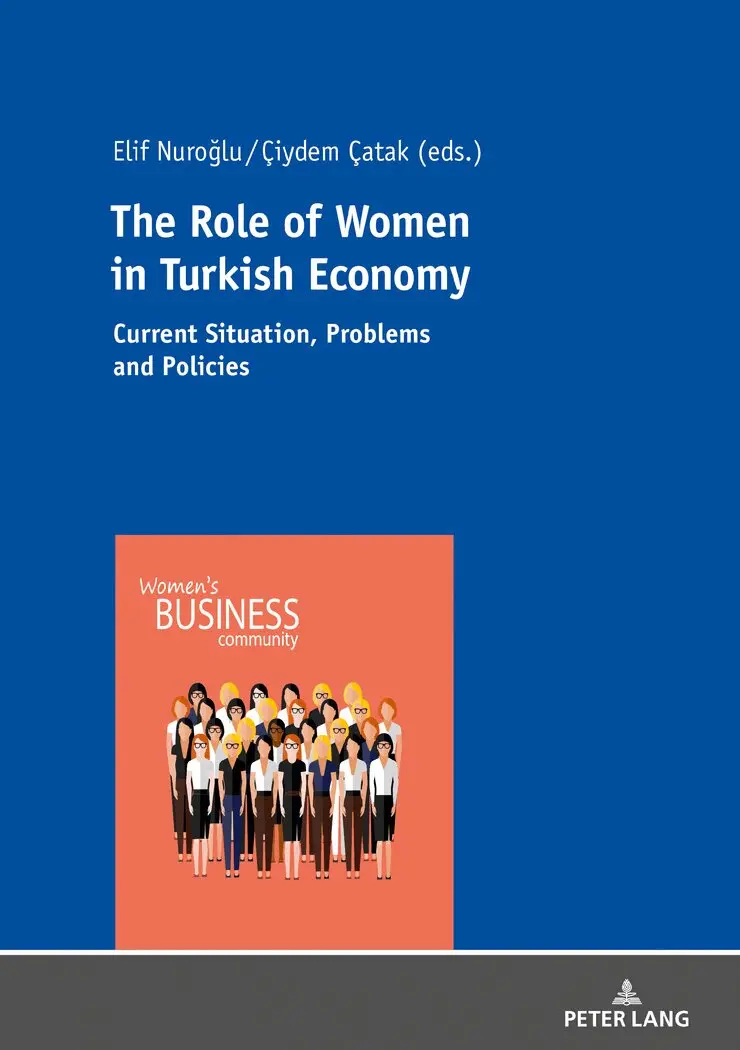
The contributing authors in this book emphasize that in Turkey the female labor force participation rate is distinctly lower than in advanced economies despite a significant improvement in the last decade. The indicated data evoke several simple questions. Firstly, what's holding women back? What are the impediments to female labor force participation that cause the gender gap in employment? Secondly, what are the costs of lower economic participation of women for themselves, their families and the economy as a whole? We hope that identifying and assessing factors that enhance or mute labor force participation of women can open important policy insights.
584 kr
Skickas inom 5-8 vardagar
The world is undergoing a global transformation that affects every individual as well as businesses and economies. Climate change, rising poverty and inequality, scarcity of resources, global warming and corporate governance failures have raised awareness of more sustainable systems and made sustainability a major concern in today’s world. Sustainable finance, which requires the integration of environmental, social and governance (ESG) factors into financial decision-making processes, is just one of these concerns. While activities in the traditional view of finance have been profit-driven, this new approach does not only aim at financial success, but seeks to align financial markets with the broader goals of society by acting responsibly for the environment. Moreover, it is crucial to take into account not only the environment and climate, but also social, ethical and governance dimensions to transforming the entire financial system into a more sustainable one, especially to attract more investments in sustainable industries, companies or start-ups, thus diverting attention from destructive areas. This book aims to explore the challenges, opportunities and future prospects of sustainable finance by highlighting the role of key players in financial systems such as financial intermediaries, investors and governments in shaping the future of finance, as well as the importance of sustainable financial products such as ESG-oriented instruments and green bonds/loans. With this book, we hope to contribute to and shed light on the ongoing discussions on building a more sustainable global financial system.