Claire Lindsay - Böcker
Visar alla böcker från författaren Claire Lindsay. Handla med fri frakt och snabb leverans.
8 produkter
8 produkter
1 641 kr
Skickas inom 10-15 vardagar
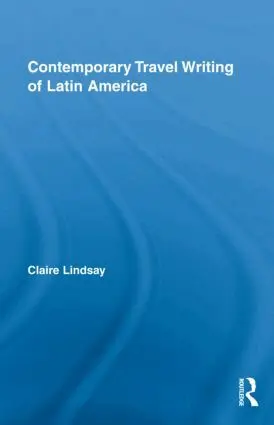
This book considers how contemporary travelers from Latin America write their journeys at and about home. How do Latin American writers of the late twentieth-century negotiate the hybrid and volatile category of travel writing, which has been shaped in large part by myriad Euro-American travelers? How do they engage with the enduring myths about the region perpetuated by their imperial/ist predecessors? And, if not journeys of expansion or exploration, on precisely what kinds of ‘travel’ do their own journeys rest? Drawing on ideas from many disciplines, including anthropology, philosophy, sociology, literary and cultural studies, this book considers contemporary journey narratives from Latin America through a series of case studies concerning four key sites of travel, each of which engenders particular forms of travel and travel narrative: Patagonia, the Andes, Mexico and the Mexico-US border. This book thus explores the complex practice and representation of journeys in the region by writers including Luis Sepúlveda, Mempo Giardinelli, Andrés Ruggeri, Ana García Bergua, Silvia Molina, María Luisa Puga, Rubén Martínez and Luis Alberto Urrea. In doing so, it explores questions relating to mobility, representation, and globalization that are of widespread concern across the world today.
Del 121 - Currents in Comparative Romance Languages & Literatures
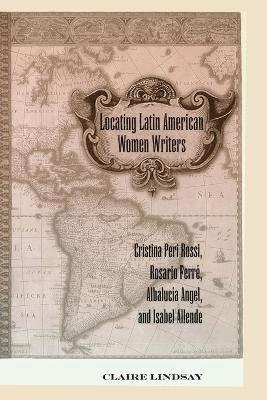
Locating Latin American Women Writers
Cristina Peri Rossi, Rosario Ferre, Albalucia Angel, and Isabel Allende
Häftad, Engelska, 2003
396 kr
Skickas inom 5-8 vardagar
498 kr
Skickas inom 5-8 vardagar
545 kr
Skickas inom 5-8 vardagar
615 kr
Skickas inom 5-8 vardagar
536 kr
Skickas inom 10-15 vardagar
This book considers how contemporary travelers from Latin America write their journeys at and about home. How do Latin American writers of the late twentieth-century negotiate the hybrid and volatile category of travel writing, which has been shaped in large part by myriad Euro-American travelers? How do they engage with the enduring myths about the region perpetuated by their imperial/ist predecessors? And, if not journeys of expansion or exploration, on precisely what kinds of ‘travel’ do their own journeys rest? Drawing on ideas from many disciplines, including anthropology, philosophy, sociology, literary and cultural studies, this book considers contemporary journey narratives from Latin America through a series of case studies concerning four key sites of travel, each of which engenders particular forms of travel and travel narrative: Patagonia, the Andes, Mexico and the Mexico-US border. This book thus explores the complex practice and representation of journeys in the region by writers including Luis Sepúlveda, Mempo Giardinelli, Andrés Ruggeri, Ana García Bergua, Silvia Molina, María Luisa Puga, Rubén Martínez and Luis Alberto Urrea. In doing so, it explores questions relating to mobility, representation, and globalization that are of widespread concern across the world today.
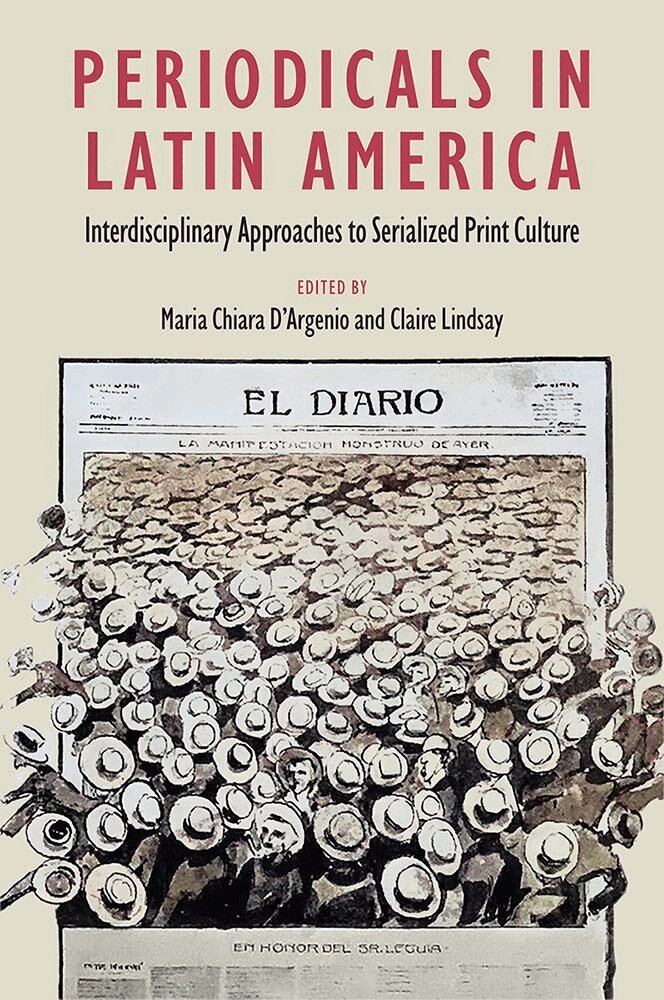
Periodicals in Latin America
Interdisciplinary Approaches to Serialized Print Culture
Inbunden, Engelska, 2025
1 110 kr
Skickas inom 10-15 vardagar
Exploring how Latin American print culture has informed global exchange The first volume in English to focus on Latin American serialized print culture, Periodicals in Latin America assembles research on a diverse range of publications, including avant-garde reviews, comics, specialized journals, mass-market magazines, and political periodicals, from the late nineteenth century to the present day. In this book, scholars from a variety of disciplines examine both celebrated and little-known periodicals to demonstrate how publications supported emerging movements such as Indigenismo and feminism; undermined hegemonic conceptions of statehood and national identity; and questioned ideas about the relationship between the visual, literary, and political. Bringing Latin American print culture together with research and theories from the largely Anglophone field of periodical studies, this volume contests readings that discount the region’s periodicals, situating Latin America as a contributor to—not just a recipient of—global exchanges. Contributors also challenge the idea that periodicals are only useful for the insights they can offer into history, championing close attention to their material and materiality. The writers in this book reflect on the unique qualities and divergences of the region’s periodicals from those of other parts of the world and the need for different approaches to studying them. The volume bridges and brings into dialogue new research on print serials and their readers in the Spanish-, Portuguese-, and English-speaking worlds. Contributors: Joanna Crow | María del Pilar Blanco | Héctor Fernández L'Hoeste | José Chávarry | Jorge Catalá | Isabella Cosse | M. Paula Bontempo | Sandra Szir | Camilla Sutherland | Luis Rebaza-Soraluz | Claire Lindsay | Valentino Gianuzzi | Juan Carlos Rodríguez | Sofía Mercader | Rielle Navitski | Luz Ainaí Morales Pino | Maria Chiara D’Argenio A volume in the series Reframing Media, Technology, and Culture in Latin/o America, edited by Héctor Fernández L’Hoeste and Juan Carlos Rodríguez
303 kr
Skickas inom 10-15 vardagar
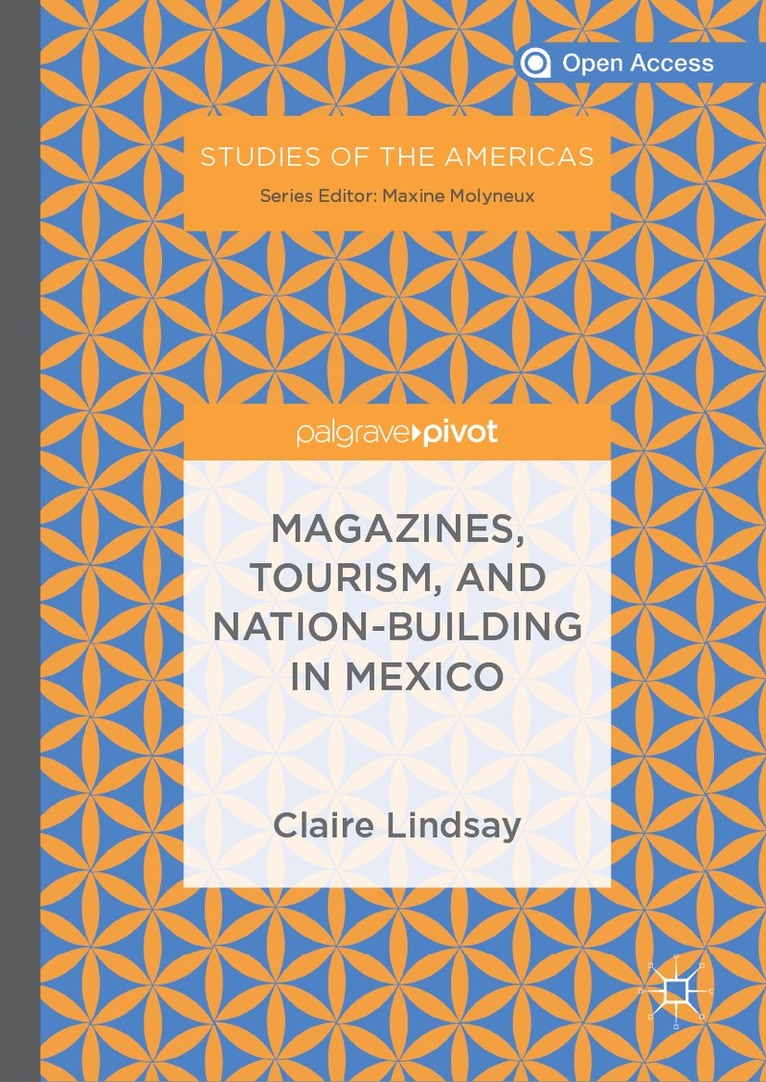
This open access book discusses the relationship between periodicals, tourism, and nation-building in Mexico. It enquires into how magazines, a staple form of the promotional apparatus of tourism since its inception, articulated an imaginative geography of Mexico at a time when that industry became a critical means of economic recovery and political stability after the Revolution. Notwithstanding their vogue, popularity, reach, and close affiliations to commerce and state over several decades, magazines have not received any sustained critical attention in the scholarship on that period. This book aims to redress that oversight. It argues that illustrated magazines like Mexican Folkways (1925–1937) and Mexico This Month (1955–1971) offer rich and compelling materials in that regard, not only as unique tools for interrogating the ramifications of tourism on the country’s reconstruction, but as autonomous objects of study that form a vital if complex part of Mexico’s visual culture.