Claire Mitchell - Böcker
Visar alla böcker från författaren Claire Mitchell. Handla med fri frakt och snabb leverans.
9 produkter
9 produkter
159 kr
Skickas
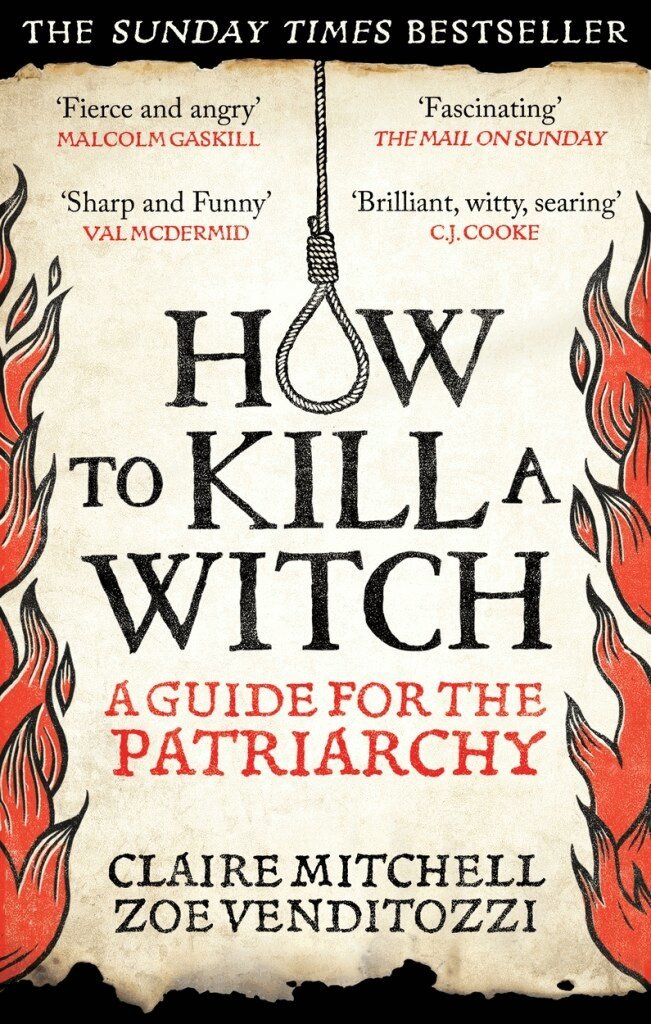
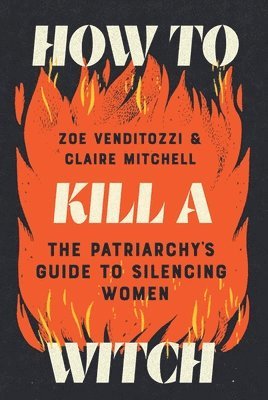
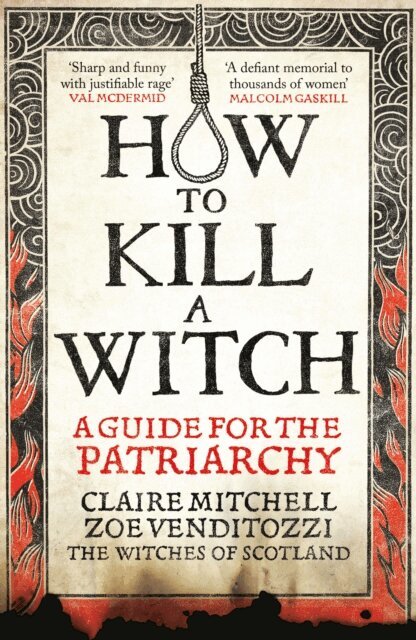
**** THE SUNDAY TIMES BESTSELLER ****WINNER 2025 Goodreads Choice AwardsBlackwell's Scottish Book of the Year'Fascinating and illuminating, this book tempers the justifiable rage with sharp and funny pinpricks to the pompous.' VAL MCDERMID, author of Past Lying'As well as highly entertaining read, How To Kill A Witch is a tour de force of research, understanding and compassion.' PROFESSOR SUE BLACK, author of All That Remains.'Serious and angry, but so completely accessible, How To Kill A Witch is a work of real historical investigation and a fierce warning for our times.' MALCOLM GASKILL, author of The Ruin Of All Witches'At a time when women's rights are once again being threatened across the globe, this book could not be a more timely read if it tried.' SHIRLEY MANSON, Garbage'Two of Scotland's most vivid storytellers.' THE TIMES'Fascinating, angering' THE MAIL ON SUNDAY As a woman, if you lived in Scotland in the 1500s, there was a very good chance that you, or someone you knew, would be tried as a witch. Witch hunts ripped through the country for over 150 years, with at least 4,000 accused, and with many women's fates sealed by a grizzly execution of strangulation, followed by burning.Inspired to correct this historic injustice, campaigners and writers Claire Mitchell, KC, and Zoe Venditozzi, have delved deeply into just why the trials exploded in Scotland to such a degree. In order to understand why it happened, they have broken down the entire horrifying process, step-by-step, from identification of individuals, to their accusation, 'pricking', torture, confessions, execution and beyond. With characteristically sharp wit and a sense of outrage, they attempt to inhabit the minds of the persecutors, often men, revealing the inner workings of exactly why the Patriarchy went to such extraordinary lengths to silence women, and how this legally sanctioned victimisation proliferated in Scotland and around the world. With testimony from a small army of experts, pen portraits of the women accused, trial transcripts, witness accounts and the documents that set the legal grounds for the hunts, How to Kill A Witch builds to form a rich patchwork of tragic stories, helping us comprehend the underlying reasons for this terrible injustice, and raises the serious question - could it ever happen again?
178 kr
Skickas inom 7-10 vardagar
**** THE SUNDAY TIMES BESTSELLER ****WINNER 2025 Goodreads Choice AwardsBlackwell's Scottish Book of the Year'Fascinating and illuminating, this book tempers the justifiable rage with sharp and funny pinpricks to the pompous.' VAL MCDERMID, author of Past Lying'As well as highly entertaining read, How To Kill A Witch is a tour de force of research, understanding and compassion.' PROFESSOR SUE BLACK, author of All That Remains. 'Serious and angry, but so completely accessible, How To Kill A Witch is a work of real historical investigation and a fierce warning for our times.' MALCOLM GASKILL, author of The Ruin Of All Witches'At a time when women's rights are once again being threatened across the globe, this book could not be a more timely read if it tried.' SHIRLEY MANSON, Garbage 'Two of Scotland's most vivid storytellers.' THE TIMES 'Fascinating, angering' THE MAIL ON SUNDAY As a woman, if you lived in Scotland in the 1500s, there was a very good chance that you, or someone you knew, would be tried as a witch. Witch hunts ripped through the country for over 150 years, with at least 4,000 accused, and with many women's fates sealed by a grizzly execution of strangulation, followed by burning.Inspired to correct this historic injustice, campaigners and writers Claire Mitchell, KC, and Zoe Venditozzi, have delved deeply into just why the trials exploded in Scotland to such a degree. In order to understand why it happened, they have broken down the entire horrifying process, step-by-step, from identification of individuals, to their accusation, 'pricking', torture, confessions, execution and beyond. With characteristically sharp wit and a sense of outrage, they attempt to inhabit the minds of the persecutors, often men, revealing the inner workings of exactly why the Patriarchy went to such extraordinary lengths to silence women, and how this legally sanctioned victimisation proliferated in Scotland and around the world. With testimony from a small army of experts, pen portraits of the women accused, trial transcripts, witness accounts and the documents that set the legal grounds for the hunts, How to Kill A Witch builds to form a rich patchwork of tragic stories, helping us comprehend the underlying reasons for this terrible injustice, and raises the serious question - could it ever happen again?
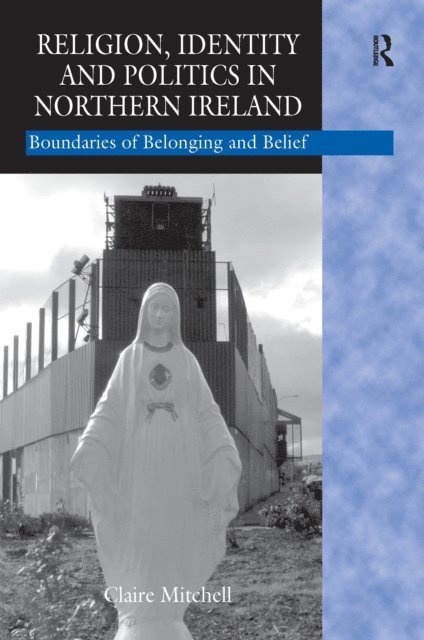
Religion, Identity and Politics in Northern Ireland
Boundaries of Belonging and Belief
Häftad, Engelska, 2005
631 kr
Skickas inom 10-15 vardagar
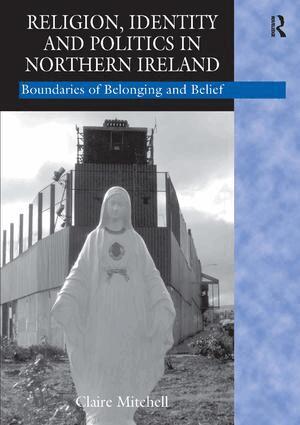
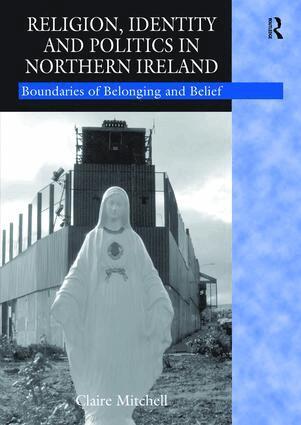
Has conflict in Northern Ireland kept political dimensions of religion alive, and has religion played a role in fuelling conflict? Conflict in Northern Ireland is not and never will be a holy war. Yet religion is more socially and politically significant than many commentators presume. In fact, religion has remained a central feature of social identity and politics throughout conflict as well as recent change. There has been an acceleration of interest in the relationship between religion, identity and politics in modern societies. Building on this debate, Claire Mitchell presents a challenging analysis of religion in contemporary Northern Ireland, arguing that religion is not merely a marker of ethnicity and that it continues to provide many of the meanings of identity, community and politics. In light of the multifaceted nature of the conflict in Northern Ireland, Mitchell explains that, for Catholics, religion is primarily important in its social and institutional forms, whereas for many Protestants its theological and ideological dimensions are more pressing. Even those who no longer go to church tend to reproduce religious stereotypes of 'them and us'. Drawing on a range of unique interview material, this book traces how individuals and groups in Northern Ireland have absorbed religious types of cultural knowledge, belonging and morality, and how they reproduce these as they go about their daily lives. Despite recent religious and political changes, the author concludes that perceptions of religious difference help keep communities in Northern Ireland socially separate and often in conflict with one another.
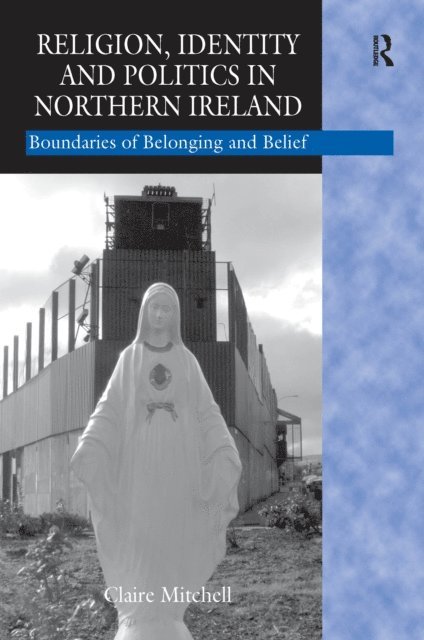
Religion, Identity and Politics in Northern Ireland
Boundaries of Belonging and Belief
Inbunden, Engelska, 2017
2 711 kr
Skickas inom 10-15 vardagar
Has conflict in Northern Ireland kept political dimensions of religion alive, and has religion played a role in fuelling conflict? Conflict in Northern Ireland is not and never will be a holy war. Yet religion is more socially and politically significant than many commentators presume. In fact, religion has remained a central feature of social identity and politics throughout conflict as well as recent change. There has been an acceleration of interest in the relationship between religion, identity and politics in modern societies. Building on this debate, Claire Mitchell presents a challenging analysis of religion in contemporary Northern Ireland, arguing that religion is not merely a marker of ethnicity and that it continues to provide many of the meanings of identity, community and politics. In light of the multifaceted nature of the conflict in Northern Ireland, Mitchell explains that, for Catholics, religion is primarily important in its social and institutional forms, whereas for many Protestants its theological and ideological dimensions are more pressing. Even those who no longer go to church tend to reproduce religious stereotypes of 'them and us'. Drawing on a range of unique interview material, this book traces how individuals and groups in Northern Ireland have absorbed religious types of cultural knowledge, belonging and morality, and how they reproduce these as they go about their daily lives. Despite recent religious and political changes, the author concludes that perceptions of religious difference help keep communities in Northern Ireland socially separate and often in conflict with one another.
327 kr
Skickas inom 3-6 vardagar
249 kr
Kommande
137 kr
Skickas inom 5-8 vardagar
206 kr
Skickas inom 7-10 vardagar
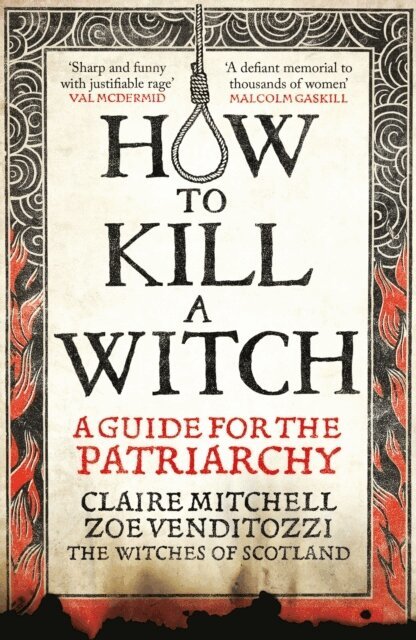
**** THE SUNDAY TIMES BESTSELLER ****WINNER 2025 Goodreads Choice AwardsBlackwell's Scottish Book of the Year'Fascinating and illuminating, this book tempers the justifiable rage with sharp and funny pinpricks to the pompous.' VAL MCDERMID, author of Past Lying'As well as highly entertaining read, How To Kill A Witch is a tour de force of research, understanding and compassion.' PROFESSOR SUE BLACK, author of All That Remains. 'Serious and angry, but so completely accessible, How To Kill A Witch is a work of real historical investigation and a fierce warning for our times.' MALCOLM GASKILL, author of The Ruin Of All Witches'At a time when women's rights are once again being threatened across the globe, this book could not be a more timely read if it tried.' SHIRLEY MANSON, Garbage 'Two of Scotland's most vivid storytellers.' THE TIMES 'Fascinating, angering' THE MAIL ON SUNDAY As a woman, if you lived in Scotland in the 1500s, there was a very good chance that you, or someone you knew, would be tried as a witch. Witch hunts ripped through the country for over 150 years, with at least 4,000 accused, and with many women's fates sealed by a grizzly execution of strangulation, followed by burning.Inspired to correct this historic injustice, campaigners and writers Claire Mitchell, KC, and Zoe Venditozzi, have delved deeply into just why the trials exploded in Scotland to such a degree. In order to understand why it happened, they have broken down the entire horrifying process, step-by-step, from identification of individuals, to their accusation, 'pricking', torture, confessions, execution and beyond. With characteristically sharp wit and a sense of outrage, they attempt to inhabit the minds of the persecutors, often men, revealing the inner workings of exactly why the Patriarchy went to such extraordinary lengths to silence women, and how this legally sanctioned victimisation proliferated in Scotland and around the world. With testimony from a small army of experts, pen portraits of the women accused, trial transcripts, witness accounts and the documents that set the legal grounds for the hunts, How to Kill A Witch builds to form a rich patchwork of tragic stories, helping us comprehend the underlying reasons for this terrible injustice, and raises the serious question - could it ever happen again?
Evangelical Journeys
Choice and Change in a Northern Irish Religious Subculture
Häftad, Engelska, 2011
332 kr
Tillfälligt slut
Why do some people become more religiously conservative over time, whilst others moderate their views or abandon faith altogether? Drawing on 95 interviews with evangelicals and ex-evangelicals in Northern Ireland, this book explores how religious journeys are shaped by social structures and by individual choices. It tells the stories of pro-life picketers, liberal peace-campaigning ministers, housewives afraid of the devil, students deconstructing their faith and atheists mortified by their religious past. Through hearing everyday stories about love, family, work and health, as well as politics, this book explores the many different worlds of ordinary evangelicals in Northern Ireland and the surprising ways in which their beliefs and practices can change over time. "Evangelical Journeys" is a well written book in a jargon-free style that will make it of interest to general as well as specialist readers.