Clancy Martin – författare
Visar alla böcker från författaren Clancy Martin. Handla med fri frakt och snabb leverans.
20 produkter
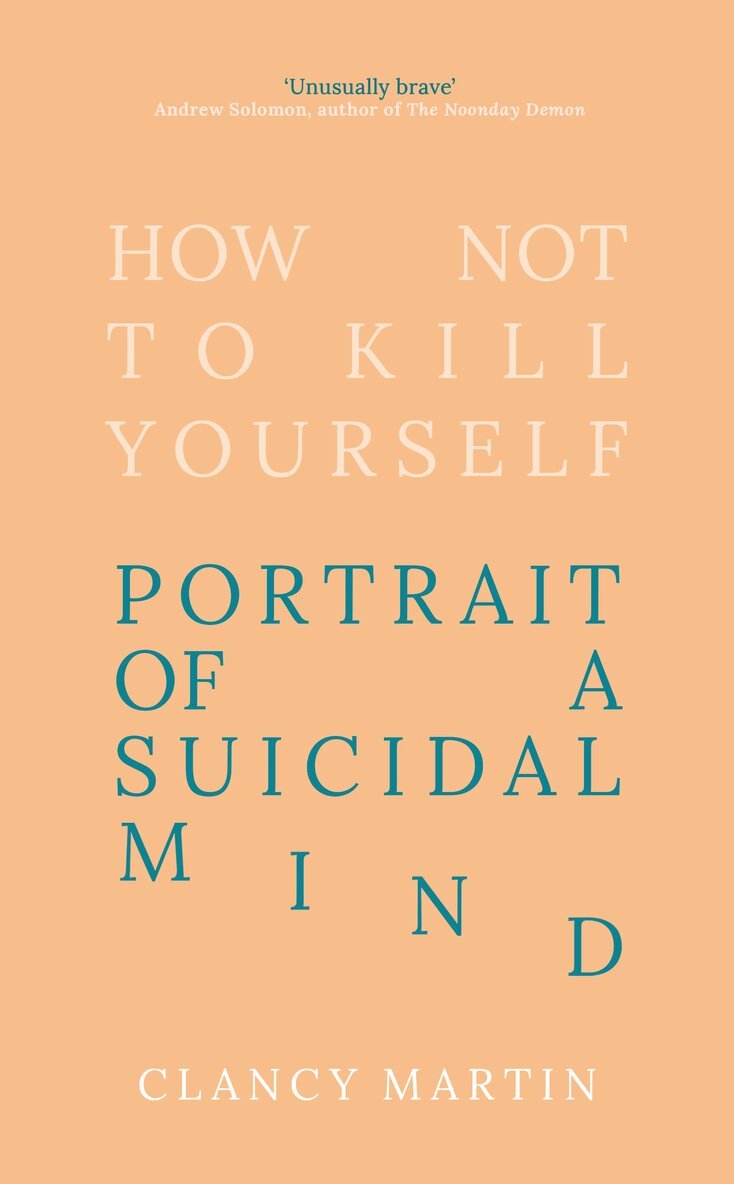
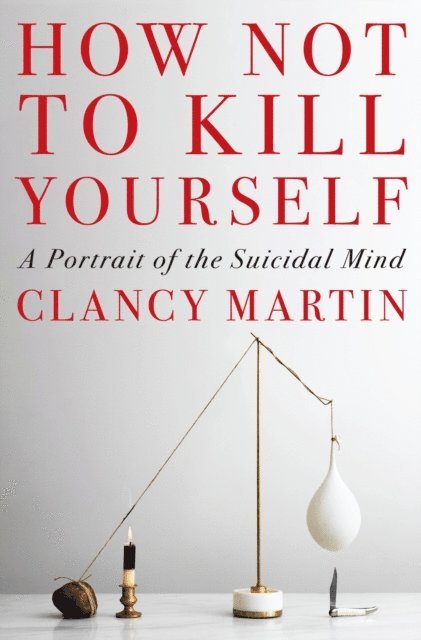
How Not to Kill Yourself
Portrait of a Suicidal Mind
Inbunden, 2023
207 kr
Lägg i varukorg
'Illuminating, riveting, and – for those of us who are suffering, or know people who are – potentially life-savingly helpful.' Scott StosselThe last time Clancy Martin tried to kill himself was in his basement with a dog leash. He didn’t write a note.How Not to Kill Yourself is an affirmation of …
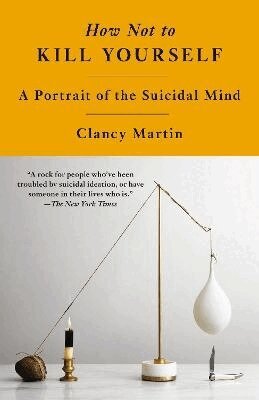
How Not to Kill Yourself: A Portrait of the Suicidal Mind
Häftad, 2024
258 kr
Lägg i varukorg
A MOST ANTICIPATED BOOK An intimate, insightful, at times even humorous blend of memoir and philosophy that examines why the thought of death is so compulsive for some while demonstrating that theres always another solutionfrom the acclaimed writer and philosophy professor, based on his viral …
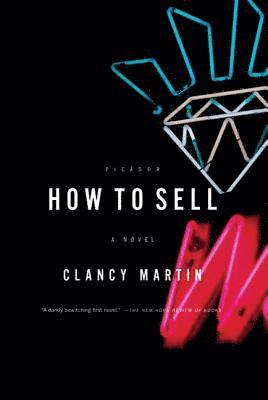
How to Sell
Häftad, 2010
126 kr
Lägg i varukorg
Sixteen-year-old high-school drop-out Bobby moves to Dallas to join his big brother Jim in the jewellery trade. Jim's glamorous girlfriend Lisa is the best saleswoman in the business and from the moment Bobby meets her he falls under her spell. Bobby discovers a new world - glitzy, trashy and …
Ethics Across the Professions: A Reader for Professional Ethics
Av Clancy Martin, Wayne Vaught
Häftad
2257 kr
Lägg i varukorg
The Philosophy of Love and Sex
Häftad, 2024
1138 kr
Lägg i varukorg
A new, annotated reader, The Philosophy of Love and Sex, presents not only classic readings on love and sex from a diverse selection of philosophical perspectives, but also groundbreaking work in this rapidly changing field. Unlike existing readers, this comprehensive reader takes an …
Philosophy of Love and Sex
E-bok, 2020
652 kr
Lägg i varukorg
A new, annotated reader, The Philosophy of Love and Sex presents not only classic readings on love and sex from a diverse selection of philosophical perspectives, but also groundbreaking work in this rapidly changing field. Unlike existing readers, this comprehensive reader takes an …
The Philosophy of Deception
Av MARTIN, Clancy Martin
Inbunden, 2009
2031 kr
Lägg i varukorg
This volume gathers together new essays on deception and self-deception by leading thinkers on the subject. The contributors discuss topics including the nature and the definition of deception; whether deception is morally blameworthy or not; attacks against and defenses of self-deception; and the …
Ethics Across the Professions
A Reader for Professional Ethics
Av Robert C. Solomon, Wayne Vaught m. fl.
E-bok, 2024
1229 kr
Lägg i varukorg
What does it mean to be an ethical professional? A professional career can be so demanding that it permeates every aspect of a person's life and personality. In light of this fact, it is especially important for students who are planning to enter a chosen profession to understand its moral status, …
Introducing Philosophy
A Text with Integrated Readings
Av Robert C. Solomon, Kathleen M. Higgins m. fl.
Häftad, 2024
776 kr
Kommande
Introducing Philosophy: A Text with Integrated Readings, Thirteenth Edition, is an exciting, accessible, and thorough introduction to the core questions of philosophy and the many ways in which they are, and have been, answered. The authors combine substantial selections from significant works in …
Introducing Philosophy
A Text with Integrated Readings
Av Clancy Martin, Kathleen M. Higgins m. fl.
E-bok, 2024
802 kr
Lägg i varukorg
Winner of the Textbook & Academic Authors Association's McGuffey Longevity AwardIntroducing Philosophy: A Text with Integrated Readings, Thirteenth Edition, is an exciting, accessible, and thorough introduction to the core questions of philosophy and the many ways in which they are, and have been, …
How Not to Kill Yourself
Portrait of a Suicidal Mind
E-bok, 2023
156 kr
Lägg i varukorg
''Illuminating, riveting, and – for those of us who are suffering, or know people who are – potentially life-savingly helpful.'' Scott Stossel The last time Clancy Martin tried to kill himself was in his basement with a dog leash. He didn’t write a note. How Not to Kill Yourself is an affirmation …
Bad Sex
E-bok, 2015
179 kr
Lägg i varukorg
“I drink, I hurt myself and the people around me, and then I write.” Brett is in Central America, away from her husband, when she begins a love affair with his friend, Eduard. Tragedy and comedy are properly joined at the hip in this loosely autobiographical book about infidelity, drinking, and the …
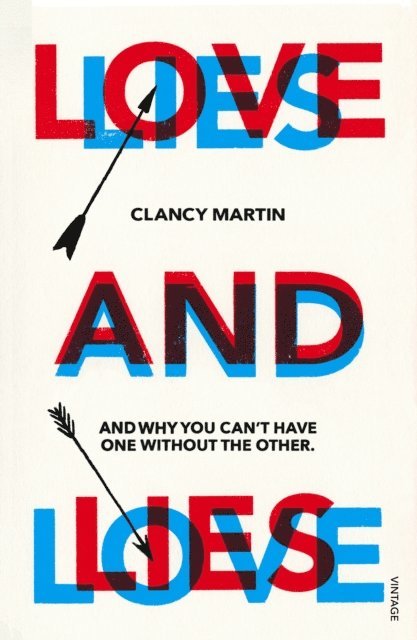
Love and Lies
And Why You Can’t Have One Without the Other
E-bok, 2015
96 kr
Lägg i varukorg
For better or for worse, for richer or for poorer: love and lies have always been the most intimate of bedfellows. And Clancy Martin – divorced twice, married three times – is no stranger to either. With help from Plato, Machiavelli, Raymond Carver and Pinocchio, here he explores the entanglements …
Love in Central America
E-bok, 2016
100 kr
Lägg i varukorg
Brett is in Central America, away from her husband, Paul, when she meets his friend Eduard. Though unimpressed with him at first, the two soon launch into a passionate affair. Unlike stable Paul, Eduard encourages Brett’s dark side. Her sobriety soon slips out of her grasp, and she finds herself on …
How to Sell
Ljudbok, 2009
328 kr
Lägg i varukorg
Bobby Clark is just sixteen when he drops out of school to follow his big brother, Jim, into the jewelry business. Bobby idolizes Jim and is in awe of Jim’s girlfriend, Lisa, the best saleswoman at the Fort Worth Deluxe Diamond Exchange. What follows is the story of a young man’s education in two …
Happy Burden of History
From Sovereign Impunity to Responsible Selfhood
Av Andrew S. Bergerson, K. Scott Baker m. fl.
Inbunden, 2011
2255 kr
Lägg i varukorg
Germans are often accused of failing to take responsibility for Nazi crimes, but what precisely should ordinary people do differently? Indeed, scholars have yet to outline viable alternatives for how any of us should respond to terror and genocide. And because of the way they compartmentalize …
Happy Burden of History
From Sovereign Impunity to Responsible Selfhood
Av Steve Ostovich, Clancy Martin m. fl.
E-bok, 2011
1941 kr
Lägg i varukorg
Germans are often accused of failing to take responsibility for Nazi crimes, but what precisely should ordinary people do differently? Indeed, scholars have yet to outline viable alternatives for how any of us should respond to terror and genocide. And because of the way they compartmentalize …
Happy Burden of History
From Sovereign Impunity to Responsible Selfhood
Av Andrew S. Bergerson, K. Scott Baker m. fl.
Häftad, 2016
282 kr
Lägg i varukorg
Germans are often accused of failing to take responsibility for Nazi crimes, but what precisely should ordinary people do differently? Indeed, scholars have yet to outline viable alternatives for how any of us should respond to terror and genocide. And because of the way they compartmentalize …