Clara Sue Kidwell - Böcker
Visar alla böcker från författaren Clara Sue Kidwell. Handla med fri frakt och snabb leverans.
5 produkter
5 produkter
362 kr
Tillfälligt slut
This guide to Native American history and culture outlines new ways of understanding American Indian cultures in contemporary contexts. The book covers the key issues of:* The intimate relationship of culture to land. * The nature of cultural contact and conflict in the period after European contact. * The unique relationship that Native communities have with the United States government.* The significance of language.* The vitality of contemporary cultures and the variety of artistic styles, from literature and poetry to painting and sculpture to performance arts. This thematic approach places history, culture and intellectual production in the contexts of politics and power. Using specific examples throughout, the culture of Native Americans is seen from the point of views of Native people as well as from the points of view of Europe and the United States.Features* New approach to the subject.* Argument shaped by interaction with Native scholars and members of Native communities.* Draws on work of historians, anthropologists, ethnographers, literary critics and art historians.* Literature survey with assessment of sources and detailed bibliography.* Includes 18 colour plates.Why not subscribe to the Journal of Transatlantic Studies? http://www.eup.ed.ac.uk/journals/content.aspx?pageId=1&journalId=12157" for details.
180 kr
Skickas inom 5-8 vardagar
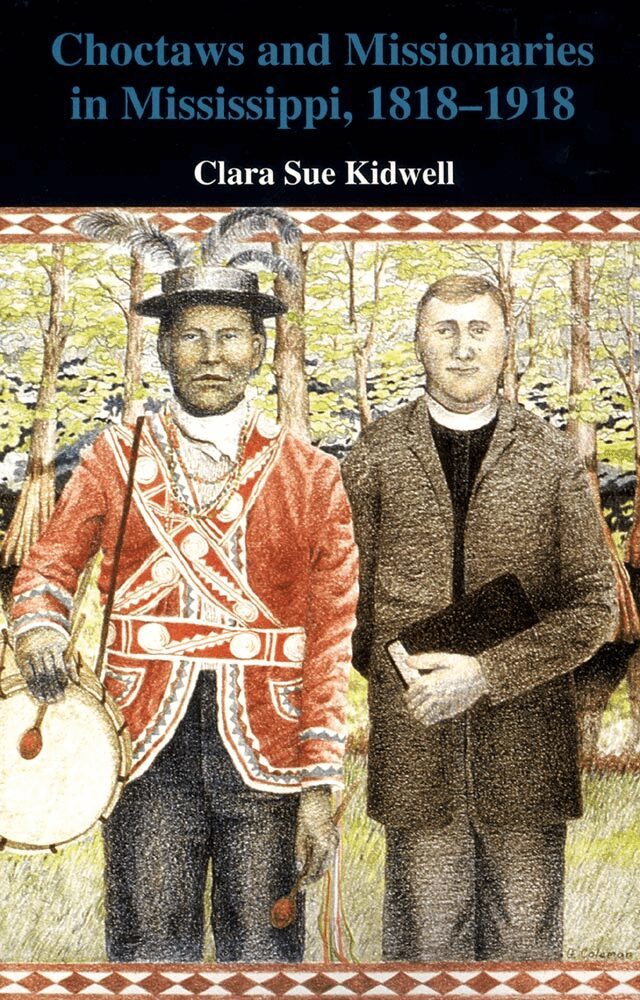
The present-day Choctaw communities in central Mississippi are a tribute to the ability of the Indian people both to adapt to new situations and to find refuge against the outside world through their uniqueness. Clara Sue Kidwell, whose great-great-grandparents migrated from Mississippi to Indian Territory along the Trail of Tears in 1830, here tells the story of those Choctaws who chose not to move but to stay behind in Mississippi.As Kidwell shows, their story is closely interwoven with that of the missionaries who established the first missions in the area in 1818. While the U.S. government sought to ""civilize"" Indians through the agency of Christianity, many Choctaw tribal leaders in turn demanded education from Christian missionaries. The missionaries allied themselves with these leaders, mostly mixed-bloods; in so doing, the alienated themselves from the full-blood elements of the tribe and thus failed to achieve widespread Christian conversion and education. Their failure contributed to the growing arguments in Congress and by Mississippi citizens that the Choctaws should be move to the West and their territory opened to white settlement.The missionaries did establish literacy among the Choctaws, however, with ironic consequences. Although the Treaty of Dancing Rabbit Creek in 1830 compelled the Choctaws to move west, its fourteenth article provided that those who wanted to remain in Mississippi could claim land as individuals and stay in the state as private citizens. The claims were largely denied, and those who remained were often driven from their lands by white buyers, yet the Choctaws maintained their communities by clustering around the few men who did get title to lands, by maintaining traditional customs, and by continuing to speak the Choctaw language. Now Christian missionaries offered the Indian communities a vehicle for survival rather than assimilation.
241 kr
Skickas inom 10-15 vardagar
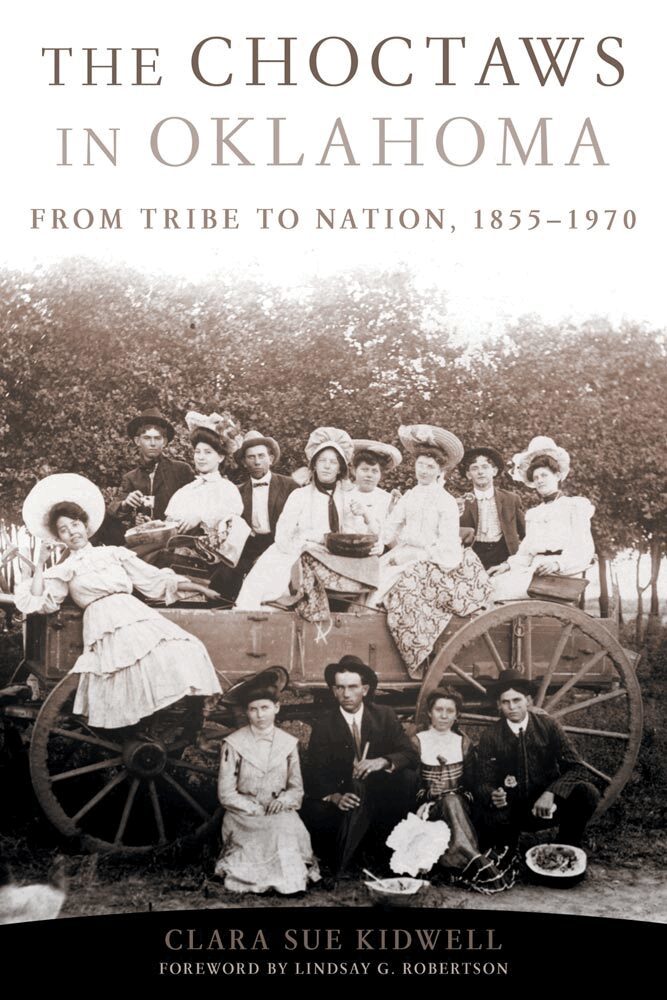
Volume 2 in the American Indian Law and Policy SeriesThe Choctaws in Oklahoma begins with the Choctaws' removal from Mississippi to Indian Territory in the 1830s and then traces the history of the tribe's subsequent efforts to retain and expand its rights and to reassert tribal sovereignty in the late twentieth century.As Clara Sue Kidwell tells it, the Choctaws' story illuminates a key point in contemporary scholarship on the history of American Indians: that they were not passive victims of colonization and did not assimilate quietly into American society. Adapting to the very structures imposed on them by their colonizers, tribal politicians quickly learned to use the rhetoric of dependency on the government, but they also demanded justice in the form of fulfillment of their treaty rights. Adroitly negotiating with the United States, the Choctaws have created the Choctaw Nation that exists today.
301 kr
Skickas inom 3-6 vardagar
191 kr
Skickas inom 5-8 vardagar