Clare Hutton - Böcker
Visar alla böcker från författaren Clare Hutton. Handla med fri frakt och snabb leverans.
4 produkter
4 produkter
405 kr
Skickas inom 5-8 vardagar
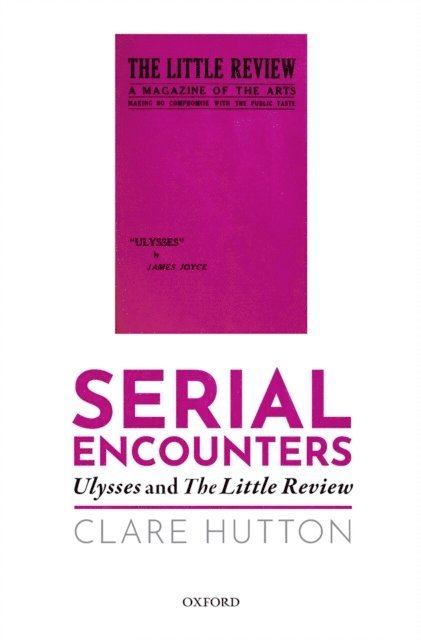
James Joyce's Ulysses was first published in New York in the Little Review between 1918 and 1920. What kind of reception did it have and how does the serial version of the text differ from the version most readers know, the iconic volume edition published in Paris in 1922 by Shakespeare and Company? Joyce prepared much of Ulysses for serial publication while resident in Zurich between 1915 and 1919. This original study, based on sustained archival research, goes behind the scenes in Zurich and New York in order to recover long forgotten facts that are pertinent to the writing, reception, and interpretation of Ulysses. The Little Review serialization of Ulysses proved controversial from the outset and was ultimately stopped before Joyce had completed the work. The New York Society for the Suppression of Vice had taken successful legal action against the journal's editors, on the grounds that the final instalment of the thirteenth chapter of Ulysses was obscene. This triumph of the social purity movement had far reaching repercussions for Joyce's subsequent publishing history, and for his ongoing efforts with the composition of Ulysses. After chapters of contextual literary history (on the cultural world of the Little Review; the early production history of Ulysses; and the New York trial of 1921), the study moves to a consideration of the textual significance of the serialization. It breaks new ground in Joycean scholarship by paying critical attention to Ulysses as a serial text. The study concludes by examining the myriad ways in which Joyce revised and augmented Ulysses while resident in Paris; it shows how Joyce made Ulysses more sexually suggestive and overt, in explicit response to the work's legal reception in New York.
1 536 kr
Skickas inom 5-8 vardagar
James Joyce's Ulysses was first published in New York in the Little Review between 1918 and 1920. What kind of reception did it have and how does the serial version of the text differ from the version most readers know, the iconic volume edition published in Paris in 1922 by Shakespeare and Company? Joyce prepared much of Ulysses for serial publication while resident in Zurich between 1915 and 1919. This original study, based on sustained archival research, goes behind the scenes in Zurich and New York in order to recover long forgotten facts that are pertinent to the writing, reception, and interpretation of Ulysses. The Little Review serialization of Ulysses proved controversial from the outset and was ultimately stopped before Joyce had completed the work. The New York Society for the Suppression of Vice had taken successful legal action against the journal's editors, on the grounds that the final instalment of the thirteenth chapter of Ulysses was obscene. This triumph of the social purity movement had far reaching repercussions for Joyce's subsequent publishing history, and for his ongoing efforts with the composition of Ulysses. After chapters of contextual literary history (on the cultural world of the Little Review; the early production history of Ulysses; and the New York trial of 1921), the study moves to a consideration of the textual significance of the serialization. It breaks new ground in Joycean scholarship by paying critical attention to Ulysses as a serial text. The study concludes by examining the myriad ways in which Joyce revised and augmented Ulysses while resident in Paris; it shows how Joyce made Ulysses more sexually suggestive and overt, in explicit response to the work's legal reception in New York.
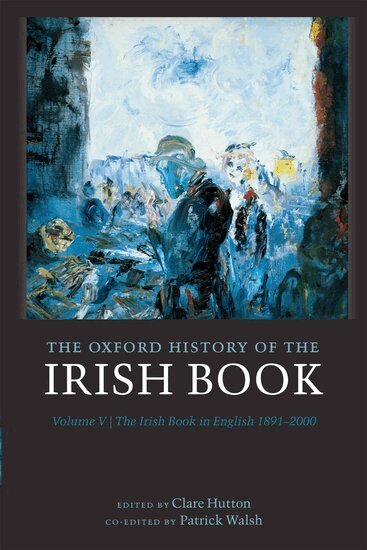
The Oxford History of the Irish Book, Volume V
The Irish Book in English, 1891-2000
Inbunden, Engelska, 2011
3 926 kr
Skickas inom 3-6 vardagar
The Oxford History of the Irish Book is a major new series that charts one of the most venerable book cultures in Europe, from the earliest manuscript compilations to the flourishing book industries of the late twentieth century. For the first time, it offers a history of the Irish book as a created object situated in a world of communications, trade, transport, power, and money, and examines the ways in which books have both reflected and influenced social, political, and intellectual formations in Ireland. It is an important project for the understanding of Ireland's written and printed heritage, and is by its nature of profound cross-cultural significance, embracing as it does all the written and printed traditions and heritages of Ireland and placing them in the global context of a worldwide interest in book histories. Books have played a role of key importance in shaping Ireland's twentieth century cultural and political heritage. Volume V: The Irish Book in English 1891-2000 charts that heritage from the beginnings of the Literary Revival in the 1890s to the end of the twentieth century. Part One consists of general survey chapters which examine developments in the cultures of Irish reading and publishing during the twentieth century. These chapters cover four specific periods, divided as follows: 1891-1921 covering the Literary Revival, and the often turbulent developments which led to the partition of the island; 1922-1939 looking at the social, economic and political machinations of print culture amidst an atmosphere of intense cultural conservatism, and during the so called economic 'war'; 1939-1969 examining the difficulties which Irish publishers continued to face, as well as the popular trends of reading 'Westerns'; 1969-2000 looking at the renewal of the Irish publishing industry, and the growth of cultural self-confidence which came about as literary censorship receded into the past. Part Two examines some of the thematic issues raised in these survey chapters, including the financial and market factors governing the Irish book trade; the concerns of Irish regional publishing; the creation and reception of Irish books in the US and Australia; censorship; the Irish book in the informatics age; and publishing for Catholic Ireland. Part Three is concerned with assessing the specific achievements of some of Ireland's most culturally significant publishing houses, and includes chapters on Gill and Macmillan; the Cuala Press; Maunsel and Company; the Dolmen Press; the Gallery Press and Blackstaff Press. This section also includes chapters on two British firms which have done much to support Irish writers: Macmillan and Faber. The book concludes with a bibliographical chapter outlining 'Sources for Irish Book History, 1891-2000'. This is the first attempt to comprehensively outline the history of twentieth century Irish book culture, and will be the standard guide for many years to come.
165 kr
Skickas inom 3-6 vardagar