Claude E. Welch, Jr. - Böcker
Visar alla böcker från författaren Claude E. Welch, Jr.. Handla med fri frakt och snabb leverans.
4 produkter
4 produkter
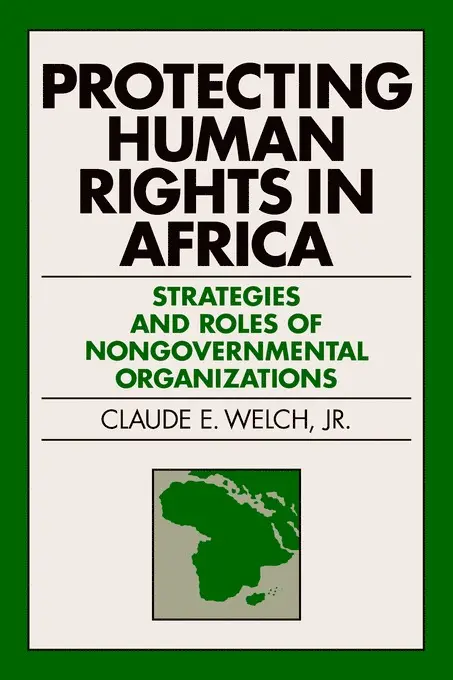
Protecting Human Rights in Africa
Roles and Strategies of Nongovernmental Organizations
Häftad, Engelska, 2001
367 kr
Skickas inom 10-15 vardagar
Selected by Choice magazine as an Outstanding Academic Book for 1996Since the 1950s, sub-Saharan Africa has been the site of profound political changes initiated by ascendant nationalism and rapid decolonization. With this new beginning came fresh challenges involving many crucial aspects of human rights: self-determination; civil and political rights, including government legitimacy; military involvement in African politics; and unfulfilled basic needs that have cried out for economic and social development.Protecting Human Rights in Africa is the first major comparative study of the way human rights NGOs have brought revolutionary change south of the Sahara. Governments are both the most important protectors and abusers of human rights, while NGOs have become the most effective detectives in discovering abuses and the most active advocates in seeking solutions.
314 kr
Skickas inom 10-15 vardagar
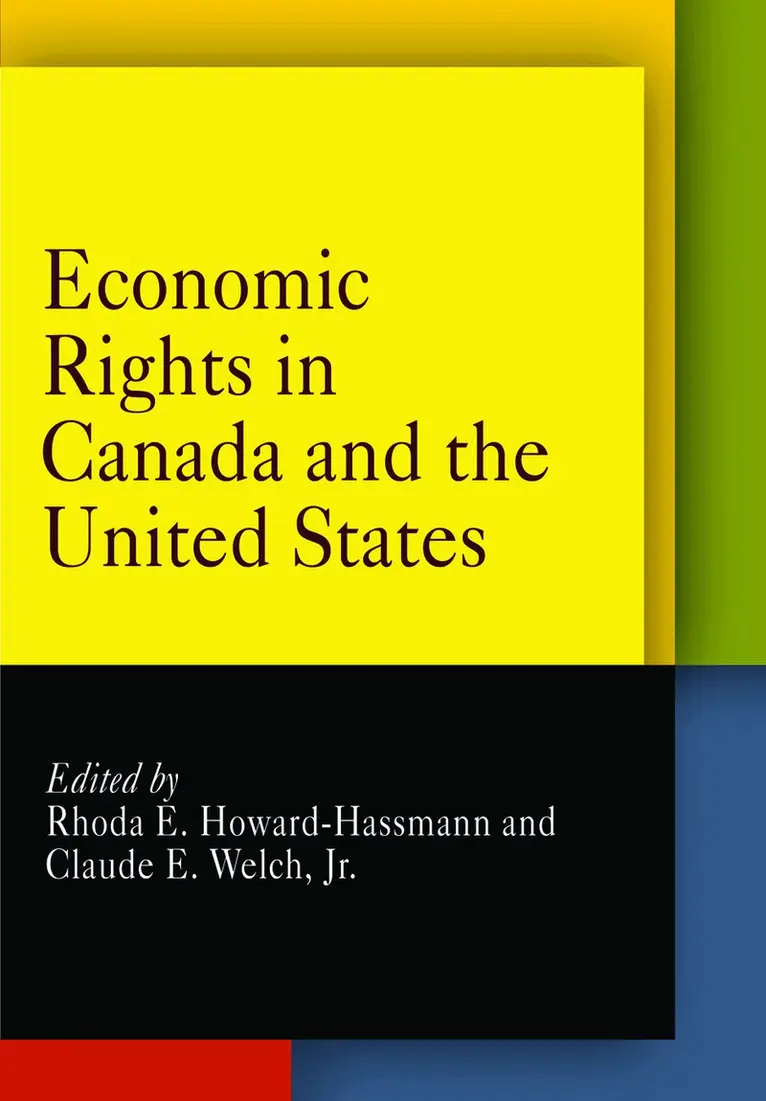
Readers in Western developed countries are most familiar with abuses of political and civil rights, but the international human rights regime also embraces a set of laws regarding economic rights. These rights include the right to work and to just and favorable working conditions; the right to join and form trade unions; the right to social security; specific rights for the family; the right to an adequate standard of living, including food, clothing, housing, and "the continuous improvement of living conditions"; and the right to "the highest attainable standard of physical and mental health."In original essays by scholars senior and junior, this volume explains how these rights are realized-or violated-in Canada and the United States. Contributors analyze the philosophy, law, and politics of economic rights and discuss specific issues such as poverty, health care, and the rights of people with disabilities. Central to the problems of both countries are the human rights abuses evident in all contemporary capitalist societies. When the inequalities among citizens are not cushioned by a national commitment to economic rights, or when governments fail to maintain social safety nets for all citizens, economic rights are at risk.Contributors consider the problem from the perspective of their own countries: Canada, the United States, and, for contrast, the Netherlands. They do so in order to explore whether their own countries fall short of meeting international standards of economic rights. They also address the criticism often made by non-Western scholars of human rights-that their Western colleagues preach human rights abroad without regard to the human rights flaws at home.
914 kr
Skickas inom 10-15 vardagar
The proliferation of nongovernmental organizations, or NGOs, is one of the most striking features of contemporary international politics. While states remain the major protectors-and abusers-of human rights, NGOs such as Amnesty International have emerged as central players in the promotion of human rights around the world.As advocacy organizations, human rights NGOs work with or against governments in developing agendas for action. Through treaty negotiations with governments, they seek to establish international standards for state behavior. To mobilize public opinion, they investigate and report human rights abuses and offer direct assistance to victims of those abuses. They lobby political officials, corporations, international financial institutions, intergovernmental organizations, and the media. As their numbers increase, so their range of activities continues to expand. Today, NGOs are increasingly involved in providing services, such as holding training programs for upholding the rule of law and providing humanitarian assistance in disaster areas.There is little doubt that NGOs have influenced the human rights practices of governments and popular perceptions of human rights. Agreement on what NGOs do best remains an area of continuing scholarly debate. The authors of NGOs and Human Rights-all respected scholars and activists-assess the performance of NGOs by examining a number of significant organizations, including Amnesty International, Human Rights Watch, and the International Commission of Jurists. They identify the goals of such organizations, analyze their strategies, and consider the resources necessary to implement those strategies effectively. They also take a look at some of the major financial supporters of NGOs, such as the Ford Foundation. Throughout the chapters, the authors reveal promising evidence that transnational networks of organizations can both exert pressure on states and influence public opinion, resulting in the improved protection of human rights around the world.
1 057 kr
Tillfälligt slut
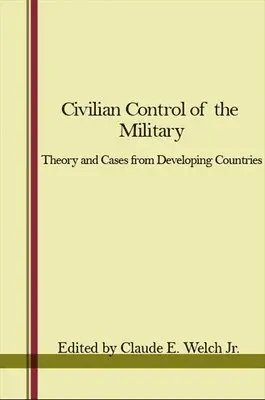
What makes civilian leaders truly in charge of their armed forces? Why do some governments manage to establish durable democratic oversight of the military while others struggle—or fail? This compelling volume brings together leading scholars of civil–military relations to answer these crucial questions through a wide-ranging comparative lens.Covering ten diverse nations—India, Guyana, Malaysia, the Philippines, China, Japan, Finland, Mexico, Lebanon, and Chile—the contributors explore the historical, political, and cultural conditions that have allowed civilian authority to take root. Rather than focusing on breakdowns and coups, they illuminate the strategies, institutions, and partnerships that enable civilian regimes to succeed.Framed by incisive opening and closing essays from Claude E. Welch, Jr., the book offers both a conceptual foundation and a set of grounded case studies that challenge assumptions and reveal patterns across vastly different societies. From party–military dynamics in China to legislative oversight in Lebanon and the evolution of military professionalism in Finland, these chapters provide fresh insights into one of the most vital elements of stable governance.