Claudia Breger - Böcker
Visar alla böcker från författaren Claudia Breger. Handla med fri frakt och snabb leverans.
6 produkter
6 produkter
2 258 kr
Skickas inom 3-6 vardagar
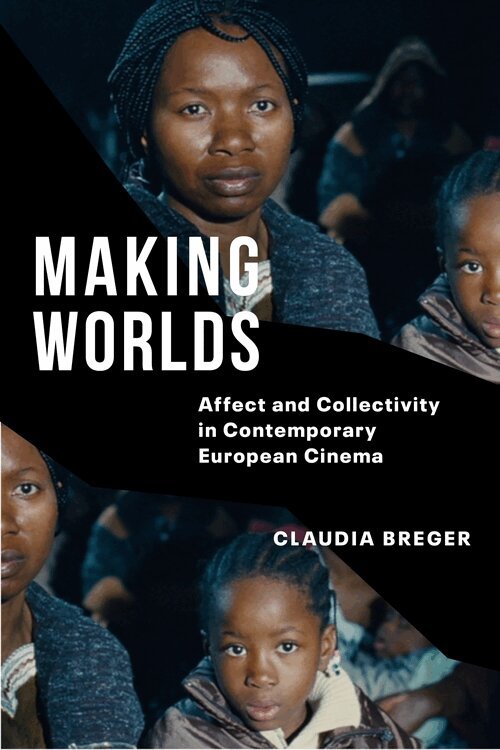
The twenty-first century has witnessed a resurgence of economic inequality, racial exclusion, and political hatred, causing questions of collective identity and belonging to assume new urgency. In Making Worlds, Claudia Breger argues that contemporary European cinema provides ways of thinking about and feeling collectivity that can challenge these political trends.Breger offers nuanced readings of major contemporary films such as Michael Haneke’s The White Ribbon, Alejandro González Iñárritu’s Biutiful, Fatih Akın’s The Edge of Heaven, Asghar Farhadi’s A Separation, and Aki Kaurismäki’s refugee trilogy, as well as works by Jean-Luc Godard and Rainer Werner Fassbinder. Through a new model of cinematic worldmaking, Breger examines the ways in which these works produce unexpected and destabilizing affects that invite viewers to imagine new connections among individuals or groups. These films and their depictions of refugees, immigrants, and communities do not simply counter dominant political imaginaries of hate and fear with calls for empathy or solidarity. Instead, they produce layered sensibilities that offer the potential for greater openness to others’ present, past, and future claims. Drawing on the work of Latour, Deleuze, and Rancière, Breger engages questions of genre and realism along with the legacies of cinematic modernism. Offering a rich account of contemporary film, Making Worlds theorizes the cinematic creation of imaginative spaces in order to find new ways of responding to political hatred.
301 kr
Skickas inom 7-10 vardagar
The twenty-first century has witnessed a resurgence of economic inequality, racial exclusion, and political hatred, causing questions of collective identity and belonging to assume new urgency. In Making Worlds, Claudia Breger argues that contemporary European cinema provides ways of thinking about and feeling collectivity that can challenge these political trends.Breger offers nuanced readings of major contemporary films such as Michael Haneke’s The White Ribbon, Alejandro González Iñárritu’s Biutiful, Fatih Akın’s The Edge of Heaven, Asghar Farhadi’s A Separation, and Aki Kaurismäki’s refugee trilogy, as well as works by Jean-Luc Godard and Rainer Werner Fassbinder. Through a new model of cinematic worldmaking, Breger examines the ways in which these works produce unexpected and destabilizing affects that invite viewers to imagine new connections among individuals or groups. These films and their depictions of refugees, immigrants, and communities do not simply counter dominant political imaginaries of hate and fear with calls for empathy or solidarity. Instead, they produce layered sensibilities that offer the potential for greater openness to others’ present, past, and future claims. Drawing on the work of Latour, Deleuze, and Rancière, Breger engages questions of genre and realism along with the legacies of cinematic modernism. Offering a rich account of contemporary film, Making Worlds theorizes the cinematic creation of imaginative spaces in order to find new ways of responding to political hatred.
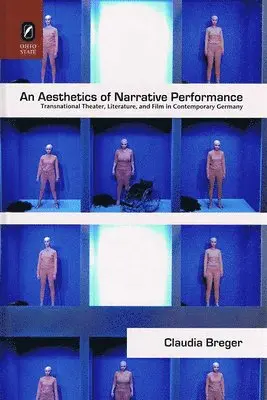
Aesthetics of Narrative Performance
Transnational Theater, Literature, and Film in Contemporary Germany
Häftad, Engelska, 2016
657 kr
Skickas inom 5-8 vardagar
2 025 kr
Kommande
Art's Assemblies presents a new political aesthetics for the present. Claudia Breger makes a case for art's power to act politically in significant, manifold ways by reconnecting twenty-first-century philosophical frameworks to the more boldly political aesthetics of European modernisms, particularly as developed in response to historical fascism. Thus, the book develops dialogues between recent work in actor-network-theory, radical Black thought, neo-marxism, affect, and queer studies, and the twentieth-century tradition of critical theory, with literature, film, TV, and art installation examples included. As acts of political alignment as well as imaginative prefiguration, "art's assemblies" bring together heterogeneous elements and actions in (polyphonic) "political concert." This includes how artworks "track" and "trace" pieces of real-world materials even in fantastic contexts; how they work through unfinished histories of violence and dehumanization by "animating" archival documents; how they "fabulate" different historical accounts without engaging in the "forging" actions of fake news; and how they counter the accumulated nightmares surrounding us through practices of "dreaming" interwoven with actions of "drafting" or "demanding." In this challenging political moment, Breger's work speaks across disciplines to articulate a new vision of how art can engage with the world—and imagine different futures.
567 kr
Kommande
Art's Assemblies presents a new political aesthetics for the present. Claudia Breger makes a case for art's power to act politically in significant, manifold ways by reconnecting twenty-first-century philosophical frameworks to the more boldly political aesthetics of European modernisms, particularly as developed in response to historical fascism. Thus, the book develops dialogues between recent work in actor-network-theory, radical Black thought, neo-marxism, affect, and queer studies, and the twentieth-century tradition of critical theory, with literature, film, TV, and art installation examples included. As acts of political alignment as well as imaginative prefiguration, "art's assemblies" bring together heterogeneous elements and actions in (polyphonic) "political concert." This includes how artworks "track" and "trace" pieces of real-world materials even in fantastic contexts; how they work through unfinished histories of violence and dehumanization by "animating" archival documents; how they "fabulate" different historical accounts without engaging in the "forging" actions of fake news; and how they counter the accumulated nightmares surrounding us through practices of "dreaming" interwoven with actions of "drafting" or "demanding." In this challenging political moment, Breger's work speaks across disciplines to articulate a new vision of how art can engage with the world—and imagine different futures.
Del 24 - Screen Cultures: German Film and the Visual
Transnational German Film at the End of Neoliberalism
Radical Aesthetics, Radical Politics
Inbunden, Engelska, 2024
1 105 kr
Skickas inom 7-10 vardagar
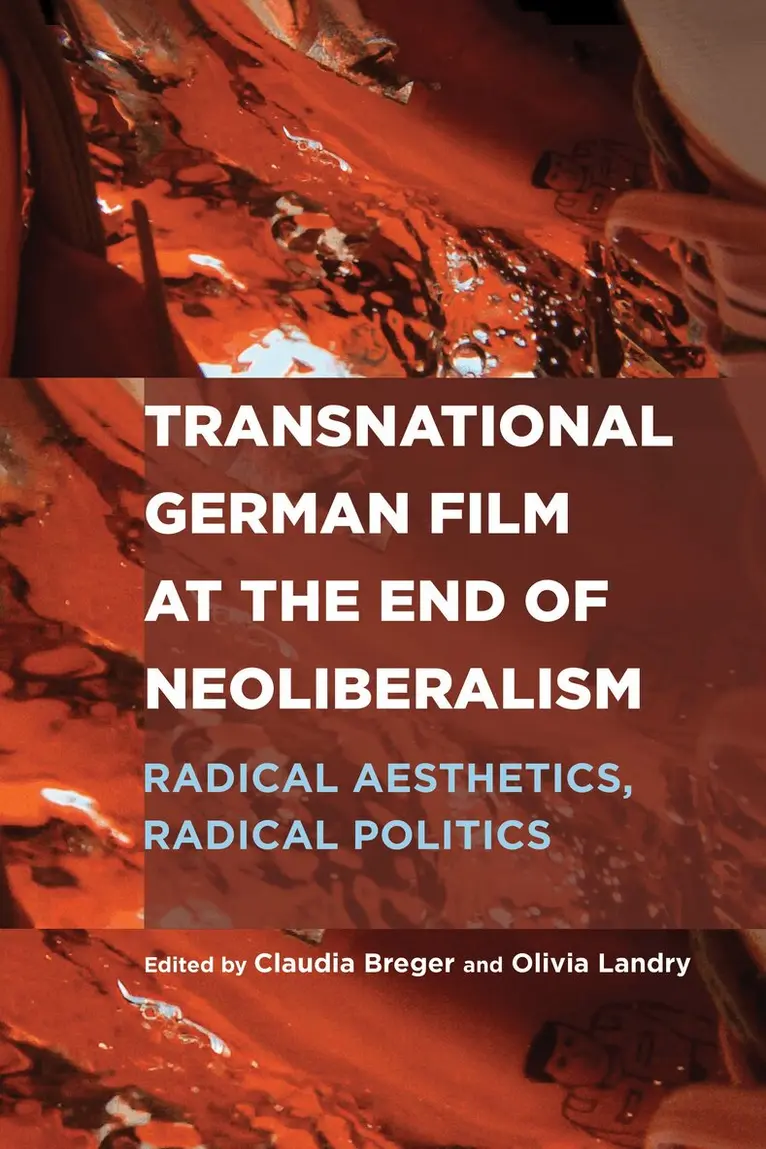
Posits a new, aesthetically and politically radical, transnational German cinema - "transnational" also in the sense of concerns with migration, the movement of capital across borders, and globalization.This book makes a bold claim that, since around 2015, a new, transnational German cinema has arisen that is aesthetically and politically radical. "Transnational" here denotes not merely international co-productions but extends to theme and form in the films' concerns with movements of people and capital across borders and with globalization. The volume analyzes key films ranging in genre and mode from dramas and comedies, including the "New German Discourse Comedy," to documentaries and installations. The essays illuminate a shift beyond neoliberal stasis and a renewed embrace of political filmmaking that confronts realities of the present.Analyzing works by a diverse array of filmmakers - including Fatih Akın, Irene von Alberti, Amel Alzakout and Khaled Abdulwahed, Forensic Architecture, Ruth Beckermann, Nils Bökamp, Susanne Heinrich, Gerd Kroske, Burhan Qurbani, Christian Petzold, Mario Pfeifer, Julian Radlmaier, Maria Speth, Tatjana Turanskyj, and Monika Treut - the contributions provide a broad yet in-depth look at contemporary German film. Through formal innovation as well as explicitly political storytelling, this cinema, the essays argue, points beyond political crises, social precarity, and the impasses of the present, sometimes with imagination and fantasy and often by embracing collectivity and resistance.Edited by Claudia Breger and Olivia Landry. Contributors: Hester Baer, Angelica Fenner, Randall Halle, Lutz Koepnick, Angelos Koutsourakis, Richard Langston, Priscilla Layne, Ervin Malakaj, Gozde Naiboglu, and Fatima Naqvi.