Claudia Sadowski-Smith - Böcker
Visar alla böcker från författaren Claudia Sadowski-Smith. Handla med fri frakt och snabb leverans.
3 produkter
3 produkter
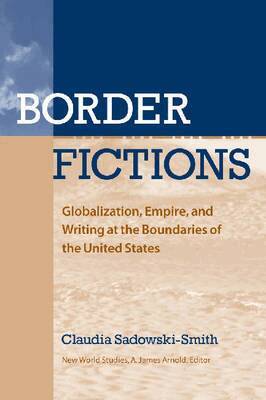
BORDER FICTIONS
Globalization, Empire, and Writing at the Boundaries of the United States
Häftad, Engelska, 2008
474 kr
Skickas inom 10-15 vardagar
Border Fictions offers the first comparative analysis of multiethnic and transnational cultural representations about the United States' borders with Mexico and Canada. Blending textual analysis with theories of globalization and empire, Claudia Sadowski-Smith forges a new model of inter-American studies.Border Fictions places into dialogue a variety of hemispheric perspectives from Chicana/o, Asian American, American Indian, Latin American, and Canadian studies. Each chapter examines fiction that ranges widely, from celebrated authors such as Carlos Fuentes, Leslie Marmon Silko, and Alberto Ríos to writers whose contributions to border literature have not yet been fully appreciated, including Karen Tei Yamashita, Thomas King, Janette Turner Hospital, and emerging Chicana/o writers of the U.S.-Mexico border.Proposing a diverse and geographically expansive view of border and inter-American studies, Border Fictions links the work of these and numerous other authors to civil rights movements, environmental justice activism, struggles for land and border-crossing rights, as well as to anti-imperialist forms of nationalism in the United States’ neighboring countries. The book forces us to take into account the ways in which shifts in the nature of global relations affect literary production, especially in its hemispheric manifestations.
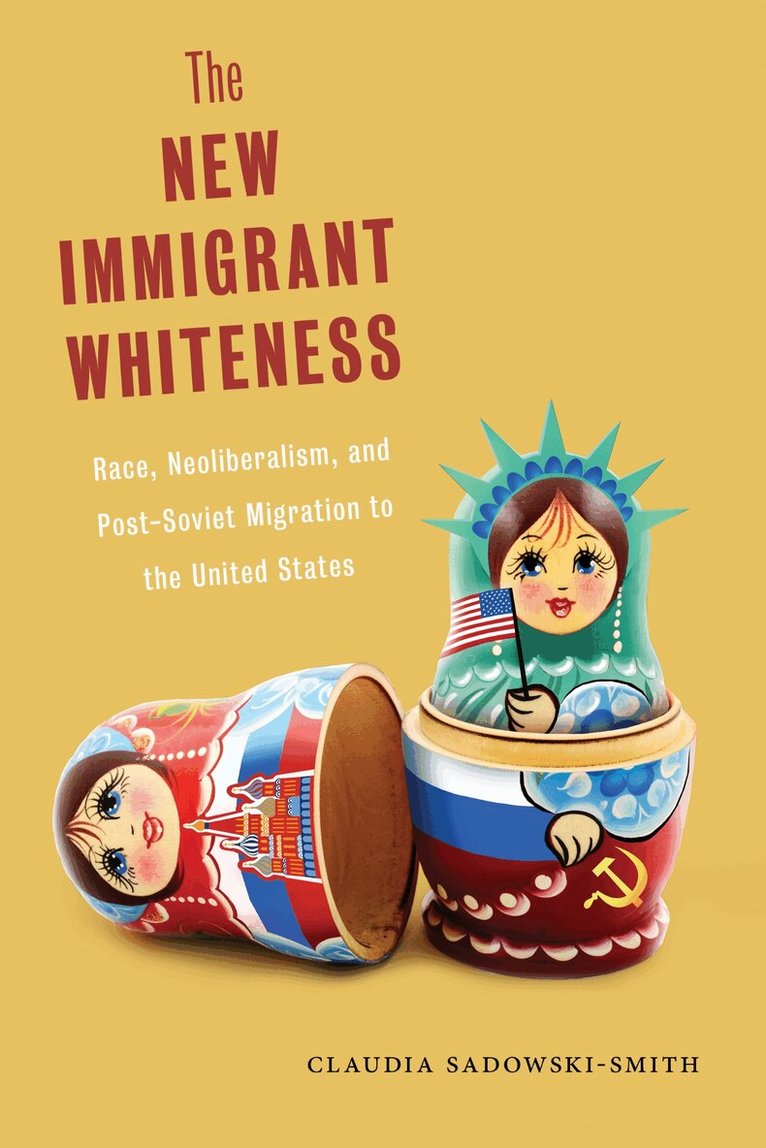
New Immigrant Whiteness
Race, Neoliberalism, and Post-Soviet Migration to the United States
Häftad, Engelska, 2018
336 kr
Skickas inom 7-10 vardagar
Explores the racialization of immigrants from post-Soviet states and the nuances of citizenship for this new diaspora. Mapping representations of post-1980s immigration from the former Soviet Union to the United States in interviews, reality TV shows, fiction, and memoirs, Claudia Sadowski-Smith shows how this nationally and ethnically diverse group is associated with idealized accounts of the assimilation and upward mobility of early twentieth-century arrivals from Europe. As it traces the contributions of historical Eastern European migration to the emergence of a white racial identity that continues to provide privileges to many post-Soviet migrants, the book places the post-USSR diaspora into larger discussions about the racialization of contemporary US immigrants under neoliberal conditions. The New Immigrant Whiteness argues that legal status on arrival––as participants in refugee, marriage, labor, and adoptive migration–– impacts post-Soviet immigrants' encounters with growing socioeconomic inequalities and tightened immigration restrictions, as well as their attempts to construct transnational identities. The book examines how their perceived whiteness exposes post-Soviet family migrants to heightened expectations of assimilation, explores undocumented migration from the former Soviet Union, analyzes post-USSR immigrants' attitudes toward anti-immigration laws that target Latina/os, and considers similarities between post-Soviet and Asian immigrants in their association with notions of upward immigrant mobility. A compelling and timely volume, The New Immigrant Whiteness offers a fresh perspective on race and immigration in the United States today.
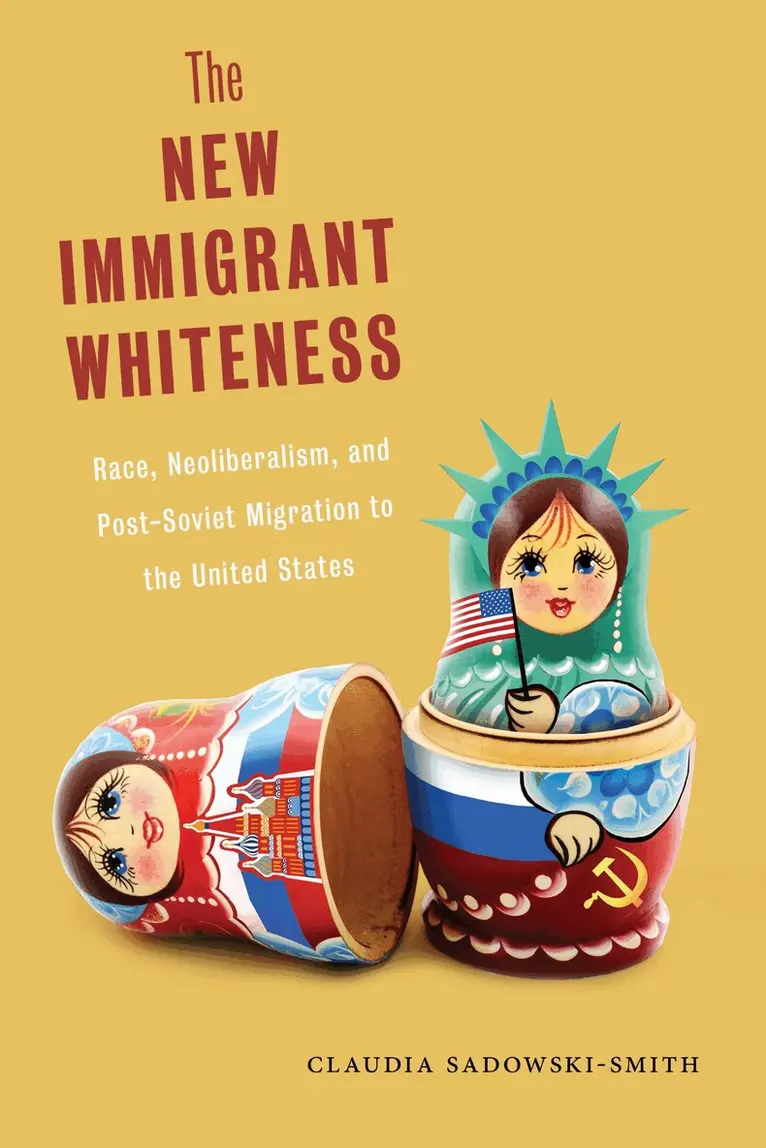
New Immigrant Whiteness
Race, Neoliberalism, and Post-Soviet Migration to the United States
Inbunden, Engelska, 2018
1 061 kr
Skickas inom 10-15 vardagar
Explores the racialization of immigrants from post-Soviet states and the nuances of citizenship for this new diaspora. Mapping representations of post-1980s immigration from the former Soviet Union to the United States in interviews, reality TV shows, fiction, and memoirs, Claudia Sadowski-Smith shows how this nationally and ethnically diverse group is associated with idealized accounts of the assimilation and upward mobility of early twentieth-century arrivals from Europe. As it traces the contributions of historical Eastern European migration to the emergence of a white racial identity that continues to provide privileges to many post-Soviet migrants, the book places the post-USSR diaspora into larger discussions about the racialization of contemporary US immigrants under neoliberal conditions. The New Immigrant Whiteness argues that legal status on arrival––as participants in refugee, marriage, labor, and adoptive migration–– impacts post-Soviet immigrants' encounters with growing socioeconomic inequalities and tightened immigration restrictions, as well as their attempts to construct transnational identities. The book examines how their perceived whiteness exposes post-Soviet family migrants to heightened expectations of assimilation, explores undocumented migration from the former Soviet Union, analyzes post-USSR immigrants' attitudes toward anti-immigration laws that target Latina/os, and considers similarities between post-Soviet and Asian immigrants in their association with notions of upward immigrant mobility. A compelling and timely volume, The New Immigrant Whiteness offers a fresh perspective on race and immigration in the United States today.