Cláudio Carvalhaes – författare
Visar alla böcker från författaren Cláudio Carvalhaes. Handla med fri frakt och snabb leverans.
17 produkter
17 produkter
Häftad, Engelska, 2017
214 kr
Skickas inom 10-15 vardagar
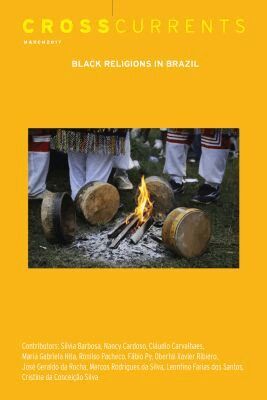
CrossCurrents connects the wisdom of the heart with the life of the mind and the experiences of the body. The journal is operated through its parent organization, the Association for Public Religion and Intellectual Life (APRIL), an interreligious network of academics, activists, artists, and community leaders seeking to engage the many ways religion meets the public. Contributions to the journal exist at the nexus of religion, education, the arts, and social justice. In the March issue of CrossCurrents: "Introduction" by Claudio Carvalhaes and Marcos Rodrigues da Silva "An Afro-American History: Paths for a Theological and Epistemological Afro Reflection" by Marcos Rodrigues da Silva "Toward a Black Theology in Brazil" by Leontino Faria dos Santos "Black Theology in Brazil: Decolonial and Marginal" by Ronilso Pacheco "Being a Black Pastoral Agent in the Context of Brazilian Reality" by Jose Geraldo da Rocha and Cristina da Conceicao Silva "Black Pastoral Agents and The Bible in the Afro Context: A Hermeneutic of Years of Enchantment" by Obertal Xavier Ribeiro "African-Indigenous Jurema: The Greatest Common Divisor of the Brazilian Minimum Religion" by Nancy Cardoso and Claudio Carvalhaes "Christians and Yoruba People Eating Together: Eucharist and Food Offerings" by Claudio Carvalhaes "The Importance of the Intersectionality in the Studies of Gender and Religion: A Short Analysis of the Ogum Omimkaye in Salvador, Brazil" by Silvia Barbosa "Liberation Theology in Brazil: Some History, Names and Themes" by Claudio Carvalhaes and Fabio Py
Inbunden, Engelska, 2013
635 kr
Skickas inom 5-8 vardagar
Inbunden, Engelska, 2018
493 kr
Skickas inom 5-8 vardagar
E-bok
Engelska, 2018536 kr
Läs direkt efter köp
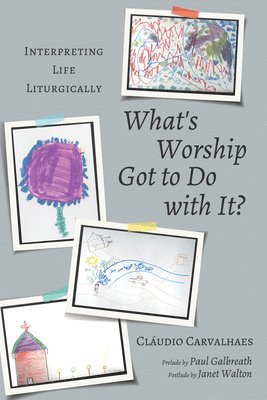
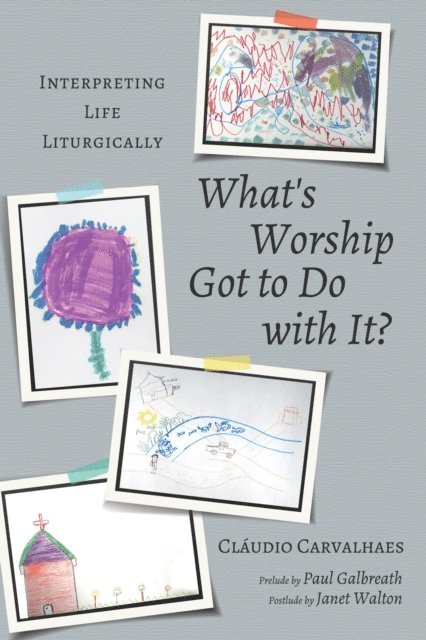
This book connects the living realms of the church, the self, the neighbor and the world. It envisions our daily local and global life from liturgical spaces, places where Christians worship God. Through these relations, we can connect worship with economy, preaching with raising a village, baptism with forms of citizenship, ecology and the market, Easter with immigration, liturgical knees with colonization, spirituality with minority voices, all uttering prayers that name racism, poverty and a liberation theology of glory. In these pages Claudio Carvalhaes issues a call to the churches to move from captive and colonized spaces into where the Spirit lives: among the poor, the needy, the forgotten. With a variety of relations between the Christian faith and our cultural ways of living, Carvalhaes offers new liturgical and theological imaginings to be engaged with the most vulnerable in our societies and the earth. A creative liturgical theology of liberation that makes sense of God between the world and the table/altar, between the pulpit and local communities, the worship space and our multiple lived experiences. For liturgy is an endless song of liberation. This book is a call to life!
Häftad, Engelska, 2013
409 kr
Skickas inom 5-8 vardagar
Häftad, Engelska, 2018
319 kr
Skickas inom 5-8 vardagar
E-bok
Engelska, 2013633 kr
Läs direkt efter köp
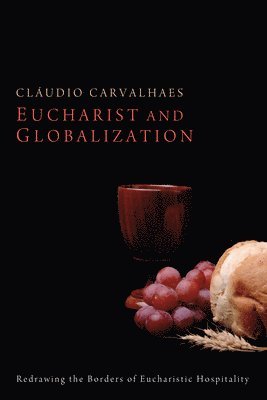
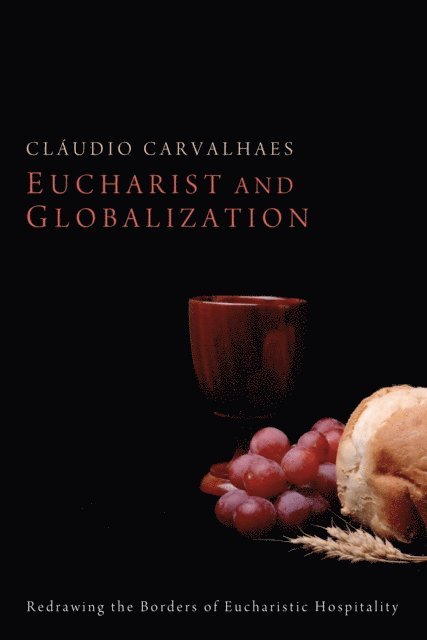
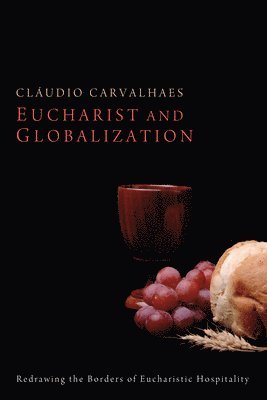
The ritual of eating and drinking together is one of the most important Christian events. Often called Eucharist, Lord''s Supper, or Communion, this sacrament is about the presence of Christ transforming not only those who participate in it but also the world. In this book, the author engages this Christian liturgical act with movements of people around our globalized world and checks the sacramental borders of hospitality. The author calls our attention to the sacramental practices of Reformed churches and, from this liturgical practice, challenges Christian churches to expand the borders of hospitality. Engaging several critical lenses around the notion of the sacrament--namely, Greco-Roman meals, Calvin''s theology, and feminist and Latin American theologies--the author challenges theological and liturgical understandings of the Eucharist. He fosters an interreligious dialogue around the table and ends up using ritual theory to expand the circles of traditions, vocabularies, and practices around the sacrament. Proposing a borderless border eucharistic hospitality, the author encourages readers to ask who and where we are when we get together to eat and drink, and how this liturgical act around Jesus'' table/meal can transform the lives of the poor, our communities, societies, and the world.
Inbunden, Engelska, 2021
472 kr
Skickas inom 5-8 vardagar
E-bok
Engelska, 2021568 kr
Läs direkt efter köp
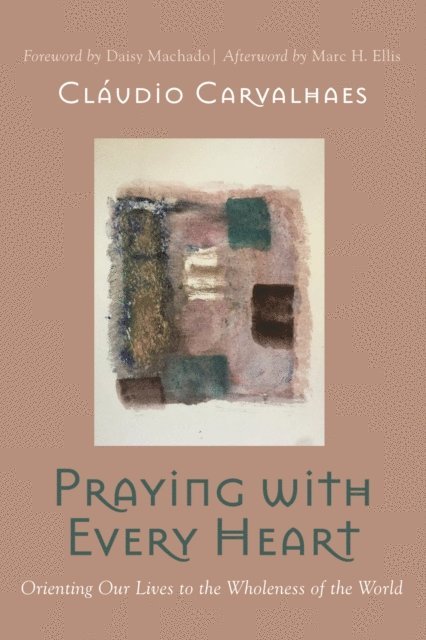
This book develops an understanding of prayer from a liberation-theological perspective. "Praying with" offers a distinctive way of praying that can help orient our prayers around the "where" we pray and "with whom" we pray as the locus of the body''s and heart''s theological praxis. The book helps create language to pray with people and in situations we are not used to praying with; it insists on praying amidst racism, poverty, violence, and suffering; it calls us to pray at night and at the end of the world when we are overcome by fear, hurt, climate disaster, or economic impoverishment; it ventures into interfaith prayer settings; and it claims a sense of "self" that is not discrete, encapsulated in its own thinking or feeling--rather, it understands the notion of the self as entangled with the whole earth and each sentient and nonsentient being. Thus, to "pray with" in this book is to take the location of one''s prayer more seriously and, individually and collectively, to gain an awareness of our grounding and positionality, therefore creating a theological structure that assumes both the listening of our own heart and the voices of everything around us.
Häftad, Engelska, 2021
341 kr
Skickas inom 5-8 vardagar
Inbunden, Engelska, 2021
1 217 kr
Skickas inom 3-6 vardagar
Häftad, Engelska, 2021
683 kr
Skickas inom 5-8 vardagar
Häftad, Engelska, 2022
402 kr
Skickas inom 5-8 vardagar
Häftad, Engelska, 2020
358 kr
Skickas inom 3-6 vardagar
E-bok
Engelska, 2020385 kr
Läs direkt efter köp
It’s been said that prayer is the vocabulary of faith. This book offers a wealth of resources from forgotten places to help us create a new vocabulary for worship and prayer, one that is located amidst the poor and the major issues of violence and destruction around the world today. It is a collection of prayers, songs, rituals, rites of healing, Eucharistic and baptismal prayers, meditations and art from four continents: Asia-Pacific Islands, Africa, Americas, and Europe. Liturgies from Below is the culmination of a project organized by the Council for World Mission (CWM) during 2018-2019. Approximately 100 people from four continents worked with CWM, collaborating to create indigenous prayers and liturgies expressing their own contexts, for sharing with their communities and the rest of the world. The project was called “Re-Imagining Worship as Acts of Defiance and Alternatives in the Context of Empire”. The author and others spent weeks living in each of four communities for several weeks/months, getting to know the people, and then facilitating the people’s own creation of prayers and liturgies. The author, other scholars, pastors, artists, activists and students all came from radically different ethnicities, races, sexualities, churches and Christian theologies. The people in each location were poor, living in very challenging communities, living in oppressive and seemingly hopeless situations. After some time, they wrote prayers and stories of their experience trying to live the Christian faith in utterly abandoned places. What we have here is an immensely rich and varied collection of liturgical sources from various communities dealing with issues of violence, immigration/refugees, drugs, land grabbing, war on the poor, attack on women, militarization, climate change, and so on.
Inbunden, Engelska, 2026
928 kr
Kommande
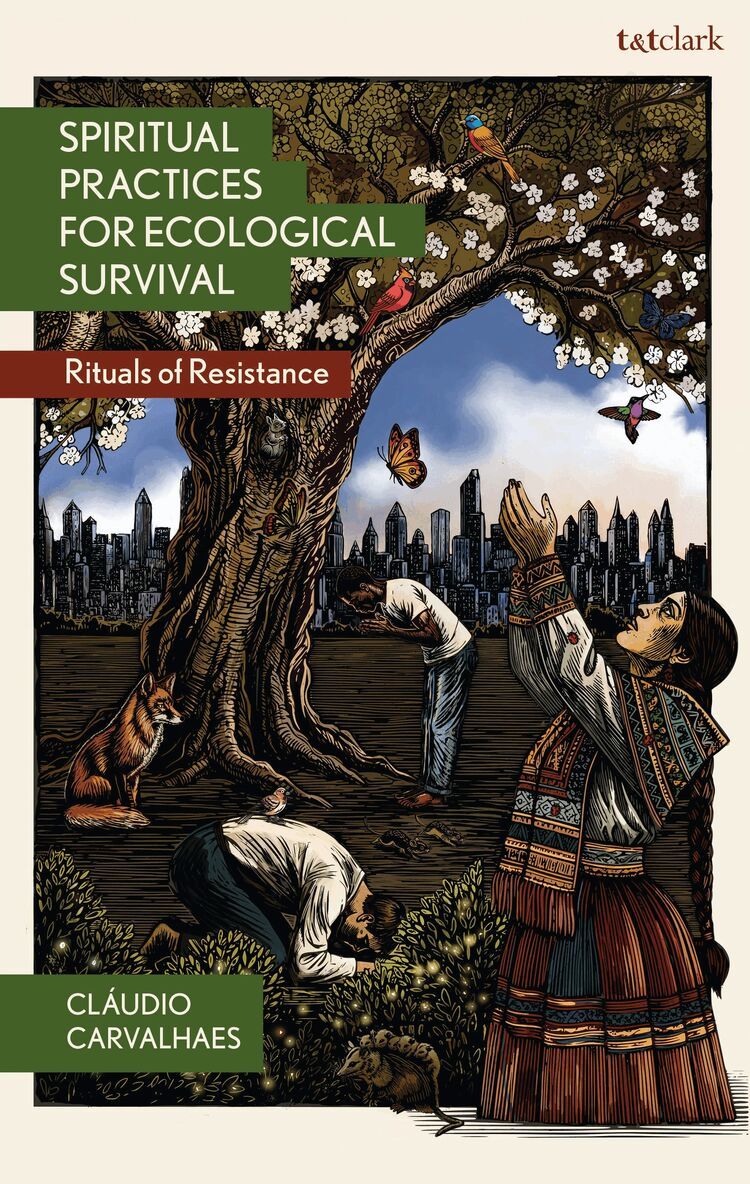
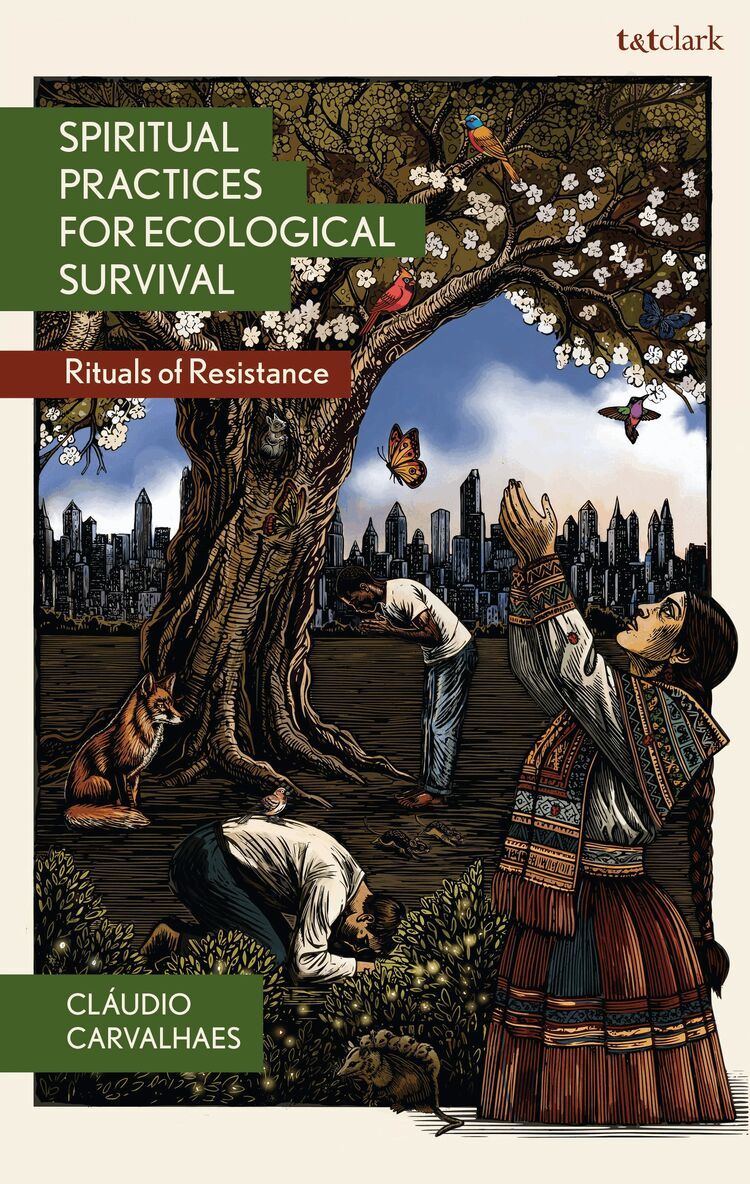
Carvalhaes invites readers into a spiritual practice of resistance and renewal for our climate-challenged world. At its heart lies a simple yet profound ritual of three gestures—rising, bowing, and prostrating—performed within one’s own bioregion as a way to reconnect body, spirit, and land. These embodied actions ground us in our places, teaching us to attend to the skies and trees above, to honor human and nonhuman neighbors around us, and to remember the histories beneath our feet.Carvalhaes situates this practice within a sweeping analysis of our global crises. He shows how ecological destruction, political violence, economic injustice, and social fragmentation all stem from a deeper spiritual crisis: our captivity to the spirit of capitalism. By tracing the colonial roots of our broken relationship with the earth and naming the ongoing struggles between destructive global forces and local lifegiving spirits, he exposes the urgent need for new forms of ritual and spirituality.Drawing on theology, philosophy, indigenous wisdom, and ecology, the book develops key concepts such as bioregion, relationality, and “molecular revolutions”—small acts that can spark wide transformation. Alongside theory, Carvalhaes provides practical tools: reflective exercises, a bioregional quiz, and ritual guidance that make the work accessible for both classrooms and communities.Weaving scholarship and practice, critique and hope, Carvalhaes redefines what it means to live faithfully in our time. With poetic vision and prophetic urgency, he calls us to decolonize ourselves, reorient our desires, and embody gestures that generate new forms of communal life.This book offers students, professors, clergy, and general readers alike a path toward reconnection with the earth—and with one another—through ritualized practices of care, resistance, and hope.
Häftad, Engelska, 2026
259 kr
Kommande
Carvalhaes invites readers into a spiritual practice of resistance and renewal for our climate-challenged world. At its heart lies a simple yet profound ritual of three gestures—rising, bowing, and prostrating—performed within one’s own bioregion as a way to reconnect body, spirit, and land. These embodied actions ground us in our places, teaching us to attend to the skies and trees above, to honor human and nonhuman neighbors around us, and to remember the histories beneath our feet.Carvalhaes situates this practice within a sweeping analysis of our global crises. He shows how ecological destruction, political violence, economic injustice, and social fragmentation all stem from a deeper spiritual crisis: our captivity to the spirit of capitalism. By tracing the colonial roots of our broken relationship with the earth and naming the ongoing struggles between destructive global forces and local lifegiving spirits, he exposes the urgent need for new forms of ritual and spirituality.Drawing on theology, philosophy, indigenous wisdom, and ecology, the book develops key concepts such as bioregion, relationality, and “molecular revolutions”—small acts that can spark wide transformation. Alongside theory, Carvalhaes provides practical tools: reflective exercises, a bioregional quiz, and ritual guidance that make the work accessible for both classrooms and communities.Weaving scholarship and practice, critique and hope, Carvalhaes redefines what it means to live faithfully in our time. With poetic vision and prophetic urgency, he calls us to decolonize ourselves, reorient our desires, and embody gestures that generate new forms of communal life.This book offers students, professors, clergy, and general readers alike a path toward reconnection with the earth—and with one another—through ritualized practices of care, resistance, and hope.