Clay Sanskrit Library - Böcker
Visar alla böcker från författaren Clay Sanskrit Library. Handla med fri frakt och snabb leverans.
6 produkter
6 produkter
12 367 kr
Skickas inom 11-20 vardagar
Finally, the ancient gems of classical Sanskrit literature are available to a wide audience. This literature combines great beauty, enormous variety, and more than 3,000 years of continuous history and development. The Clay Sanskrit Library makes everything easier for any reader: the Sanskrit text, written in familiar Roman letters, faces a fresh English translation, and the convenient pocket size is both elegant and practical. This exciting collection includes many volumes from the two beloved Indian epics, the Ramayana and the Maha*bharata, in addition to other classics of Sanskrit literature. Each book is published in a jacketed hardcover edition, in a compact 4.5" x 6.5" format, designed to bring the literature of India to the general public, scholars, and students. For many interested readers, access to this vast treasure store has been hindered by an unfamiliar language and a difficult script. The new Clay Sanskrit Library makes everything easier: the Sanskrit text, written in familiar Roman letters, faces the English translation, and the convenient pocket size is both elegant and practical.Twenty-eight leading scholars from eight countries cooperated to produce fresh new translations that combine readability and accuracy. The first twelve titles appeared in February 2005, and by 2009 the library was completed with 56 published volumes. The selection includes drama, poetry and novels, together with the famous epics. The Library is now also available as a 56-volume complete set, as well as in six thematic mini-sets, grouped for readers interested in specific areas of the world of classical Sanskrit literature. The mini sets, available at discounts, are as follows: 1. Epic: Mahabharata (15 volumes); 2. Epic: Ramayana (5 volumes); 3. Religion (10 volumes); 4. Poetry (9 volumes); 5. Plays (8 volumes); and 6. Story Collections, Tales, Narratives, and Fables (9 volumes). Introduction to the Clay Sanskrit Library By John Clay The great national epics of India, the Maha*bharata and the Ramayana, reached their definitive form around the beginning of the common era. By their authority and comprehensive character they dominated Hindu literature for several centuries, as familiar episodes and themes were reworked. But Buddhism and Jainism developed their own literary traditions.From early in the common era, a vast creative literature of novels, short stories, plays and poetry began to develop. Some took their subject matter from the national epics or the Buddhist scriptures, but many other sources also provided inspiration. This new literary culture was vibrant and vivid. The dramatists wrote plays about palaces full of dancing girls, and gardens where peacocks screeched at the approach of the monsoon and elephants trumpeted in the stables, eager for combat or mating. Courtiers intrigued for influence and promotion. Merchants set off on their voyages with sadness at separation, and returned with joy and vast profits. The six seasons spun by at breakneck speed. Lovers kept their trysts in the cane groves down by the river. Holy men preached that worldly pleasures were worthless, and often were exposed as hypocrites. This second flowering of a classical Sanskrit literature lasted for more than a millenium. We shall bring to a worldwide audience the entire text of the two national epics, and fifty or more titles from the heyday. We hope that readers will find much to enjoy.
3 168 kr
Skickas inom 7-10 vardagar
Epic: Maha·bhárata The Maha·bhárata tells the tale of the epic battle between the Pándavas and the Káuravas for the thrown. It begins with the famous game of dice between the Pándavas and the Káuravas, which sets the scene for the war that will lie at the center of the Maha·bhárata epic. But even after the war is ostensibly over when the heroic but flawed king of the Káuravas is dishonorably defeated in battle by his arch enemy, the extended family is still wracked in conflict leaving survivors, victors and vanquished struggling to comprehend their loss. Perhaps the most enigmatic philosophical text from ancient India, the final book in the set, "The Book of Liberation" is presented as the teachings of Bhishma as he lies dying on the battlefield in the aftermath of war.Included in this set:Maha·bhárata Book II: The Great HallTranslated by Paul Wilmot.588 pages / 978-0-8147-9406-7Maha·bhárata Book III: The ForestVolume 4Translated by William Johnson.374 pages / 978-0-8147-4278-5Maha·bhárata Book IV: VirátaTranslated by Kathleen Garbutt.516 pages / 978-0-8147-3183-3Maha·bhárata Book V: Preparations for WarVolume 1Translated by Kathleen Garbutt. Foreword by Gurcharan Das.720 pages / 978-0-8147-3191-8Maha·bhárata Book V: Preparations for WarVolume 2Translated by Kathleen Garbutt.760 pages / 978-0-8147-3202-1Maha·bhárata Book VI: BhishmaTranslated by Alex Cherniak. Foreword by Ranajit Guha.Volume 1 (Including the "Bhagavad Gita" in Context)615 pages / 978-0-8147-1696-0Maha·bhárata Book VI: BhishmaVolume 2Translated by Alex Cherniak.550 pages / 978-0-8147-1705-9Maha·bhárata Book VII: DronaVolume 1Translated by Vaughan Pilikian.473 pages / 978-0-8147-6723-8Maha·bhárata Book VII: DronaVolume 2Translated by Vaughan Pilikian.470 pages / 978-0-8147-6776-4Maha·bhárata Book VIII: KarnaVolume 1Translated by Adam Bowles604 pages / 978-0-8147-9981-9Maha·bhárata Book VIII: KarnaVolume 2Translated by Adam Bowles.684 pages / 978-0-8147-9995-6Maha·bhárata Book IX: ShalyaVolume 1Translated by Justin Meiland.371 pages / 978-0-8147-5706-2Maha·bhárata Book IX: ShalyaVolume 2Translated by Justin Meiland.470 pages / 978-0-8147-5737-6Maha·bhárata Books X & XI: "Dead of the Night" and "The Women"Translated by Kate Crosby.350 pages / 978-0-8147-1727-1Maha·bhárata Book XII: Peace (Part 2: The Book of Liberation)Volume 3Translated by Alex Wynne.540 pages / 978-0-8147-9453-1
969 kr
Skickas
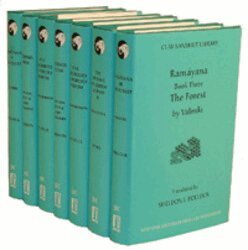
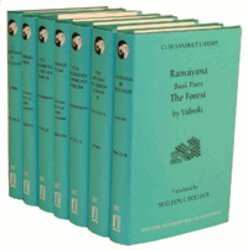
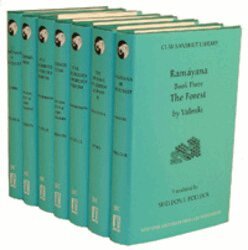
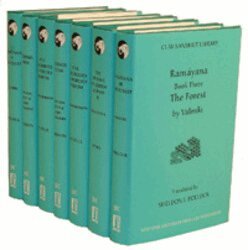
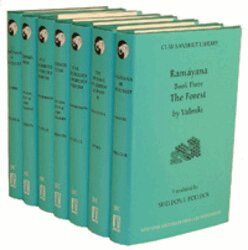
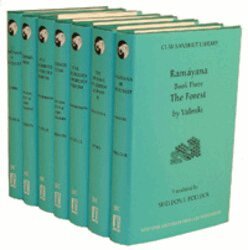
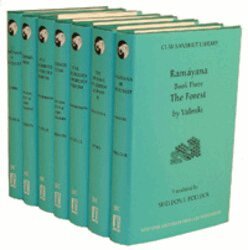
The Ramáyana epic centers around Rama, the crown prince of the city of Ayódhya, providing a profound meditation on the paradox of the hero as both human and divine. After rescuing a sage from persecution by demons. Rama attends a tournament in the neighboring city of Míthila where he wins the prize and the hand of Sita, the princess of Míthila. But a court intrigue involving one of the king's junior wives and a maidservant forces Rama into a fourteen-year banishment to the jungle with his wife, Sita, and his loyal brother Lákshmana. When Sita is abducted by the demon king Rávana, Rama goes to the monkey capital of Kishkíndha to seek help in finding her. It is there that he meets Hánuman, the greatest of the monkey heroes. In exchange for the assistance of the monkey troops in discovering where Sita is held captive, Rama has to help Sugríva win the monkey throne over his brother, Valin. In the final book of the set, Hánuman leaps across the ocean to the island citadel of Lanka, where he scours the city for the abducted Princess Sita. But when Hánuman reveals himself to the princess and offers to carry her back to Rama, she nevertheless insists that Rama must come himself to avenge the abduction. Included in this set:Ramáyana Book I: BoyhoodBy Valmíki. Translated by Robert Goldman.424 pages / 978-0-8147-3163-5Ramáyana Book II: AyódhyaBy Valmíki. Translated by Sheldon I. Pollock.652 pages / 978-0-8147-6716-0Ramáyana Book III: The ForestBy Valmíki. Translated by Sheldon I. Pollock.436 pages / 978-0-8147-6722-1Ramáyana Book IV: KishkíndhaBy Valmíki. Translated by Rosalind Lefeber.415 pages / 978-0-8147-5207-4Ramáyana Book V: SúndaraBy Valmíki. Translated by Robert Goldman and Sally Sutherland Goldman.538 pages / 978-0-8147-3178-9
1 843 kr
Skickas inom 7-10 vardagar
ReligionA diverse set, the religion set includes works from the biographical narratives of Buddha and stories of his past rebirths, to the lyrical account of love affair between gods, to a play that satirized religions to make a laughingstock of their followers and their tenets. Included in this set:The Epitome of Queen LilávatiBy Jina·ratna. Edited and translated by Richard Fynes.Volume 1543 pages / 978-0-8147-2741-6The Epitome of Queen LilávatiVolume 2By Jina·ratna. Edited and translated by Richard Fynes.650 pages / 978-0-8147-2742-3Garland of the Buddha's Past LivesVolume 1By Arya·shura. Translated by Justin Meiland.550 pages / 978-0-8147-9581-1Garland of the Buddha's Past LivesVolume 2By Arya·shura. Translated by Justin Meiland.543 pages / 978-0-8147-9583-5Gita·govínda: Love Songs of Radha and KrishnaBy Jaya·deva. Translated by Lee Siegel.200 pages / 978-0-8147-4078-1Handsome NandaBy Ashva·ghosha. Translated by Linda Covill.392 pages / 978-0-8147-1683-0Heavenly Exploits: Buddhist Biographies from the DívyavadánaEdited and translated by Joel Tatelman.444 pages / 978-0-8147-8288-0"How the Nagas Were Pleased" & "The Shattered Thighs"By Harsha and Bhasa. Translated by Andrew Skilton.350 pages / 978-0-8147-4066-8Life of the BuddhaBy Ashva·ghosha. Translated by Patrick Olivelle 561 pages / 978-0-8147-6216-5Much Ado about ReligionBy Bhatta Jayánta. Edited and translated by Csaba Dezsö.320 pages / 978-0-8147-1979-4
1 700 kr
Skickas inom 7-10 vardagar
This set of plays provides an array of Sanskrit drama and satire, with plots that vary from the "strikingly Shakespearian" (as H. H. Wilson described it ) "Little Clay Cart" to a dramatization of and amendment to the "Ramáyana" in "Rama's Last Act." In addition to its scope of genre, the set covers a large period of time (the "Three Satires" by Bhállata, Ksheméndra, and Nila·kan alone were written over a period of nearly a thousand years) and also includes several works traditionally given less modern attention, such as "Málavika and Agni·mitra" by Kali·dasa, in order to provide a multifaceted view of Sankskrit theater. Included in this set:"The Lady of the Jewel Necklace" & "The Lady who Shows her Love"By Harsha. Translated by Wendy Doniger.514 pages / 978-0-8147-1996-1Little Clay CartBy Shúdraka. Translated by Diwakar Acharya. Foreword by Partha Chatterjee.640 pages / 978-0-8147-0729-6Málavika and Agni·mitraKali·dasa. Translated by Dániel Balogh and Eszter Somogyi.350 pages / 978-0-8147-8702-1 Rákshasa's RingBy Vishákha·datta. Translated by Michael Coulson385 pages / 978-0-8147-1661-8Rama Beyond PriceBy Murári. Edited and translated by Judit Törzsök.638 pages / 978-0-8147-8295-8Rama's Last ActBy Bhava·bhuti. Translated by Sheldon Pollock. Foreword by Girish Karnad.458 pages / 978-0-8147-6733-7The Recognition of Shakúntala (Kashmir Recension)By Kali·dasa. Edited and translated by Somadeva Vasudeva.419 pages / 978-0-8147-8815-8Three SatiresBy Bhállata, Ksheméndra, and Nila·kantha. Edited and translated by Somadeva Vasudeva.403 pages / 978-0-8147-8814-1
1 910 kr
Skickas inom 7-10 vardagar
Adventure, conquest, romance, comedy, suspense, and tragedy are just a few of the themes woven together by the range of styles represented in this set of classical Sanskrit literature. The set brings together classics like the Aesop's fables which originated in Vishnu·sharman's "Five Discourses on Worldly Wisdom" with the less traditional, such as the adventures of Dandin's "What Ten Young Men Did," written uncharacteristically in prose rather than verse. Included in this set:The Emperor of the SorcerersVolume 1By Budha·svamin. Edited and translated by Sir James Mallinson.452 pages / 978-0-8147-5701-7The Emperor of the SorcerersVolume 2By Budha·svamin. Edited and translated by Sir James Mallinson.467 pages / 978-0-8147-5707-9Five Discourses on Worldly WisdomBy Vishnu·sharman. Edited and translated by Patrick Olivelle.562 pages / 978-0-8147-6208-0"Friendly Advice" by Naráyana & "King Víkrama's Adventures"Translated by Judit Törzsök.742 pages / 978-0-8147-8305-4How Úrvashi Was WonKali·dasa. Translated by Velcheru Narayana Rao and David Shulman.300 pages / 978-0-8147-4111-5 The Ocean of the Rivers of StoryVolume 1By Soma·deva. Translated by Sir James Mallinson.556 pages / 978-0-8147-8816-5The Ocean of the Rivers of StoryVolume 2By Soma·deva. Translated by Sir James Mallinson.580 pages / 978-0-8147-9558-3The Quartet of CauseriesBy Shúdraka, Shyamílaka, Vara·ruchi, and Íshvara·datta. Edited and translated by Csaba Dezsö and Somadeva Vasudeva.450 pages / 978-0-8147-1978-7What Ten Young Men DidBy Dandin. Translated by Isabelle Onians.651 pages / 978-0-8147-6206-6