Clayton Eshleman - Böcker
Visar alla böcker från författaren Clayton Eshleman. Handla med fri frakt och snabb leverans.
14 produkter
14 produkter
432 kr
Skickas inom 7-10 vardagar
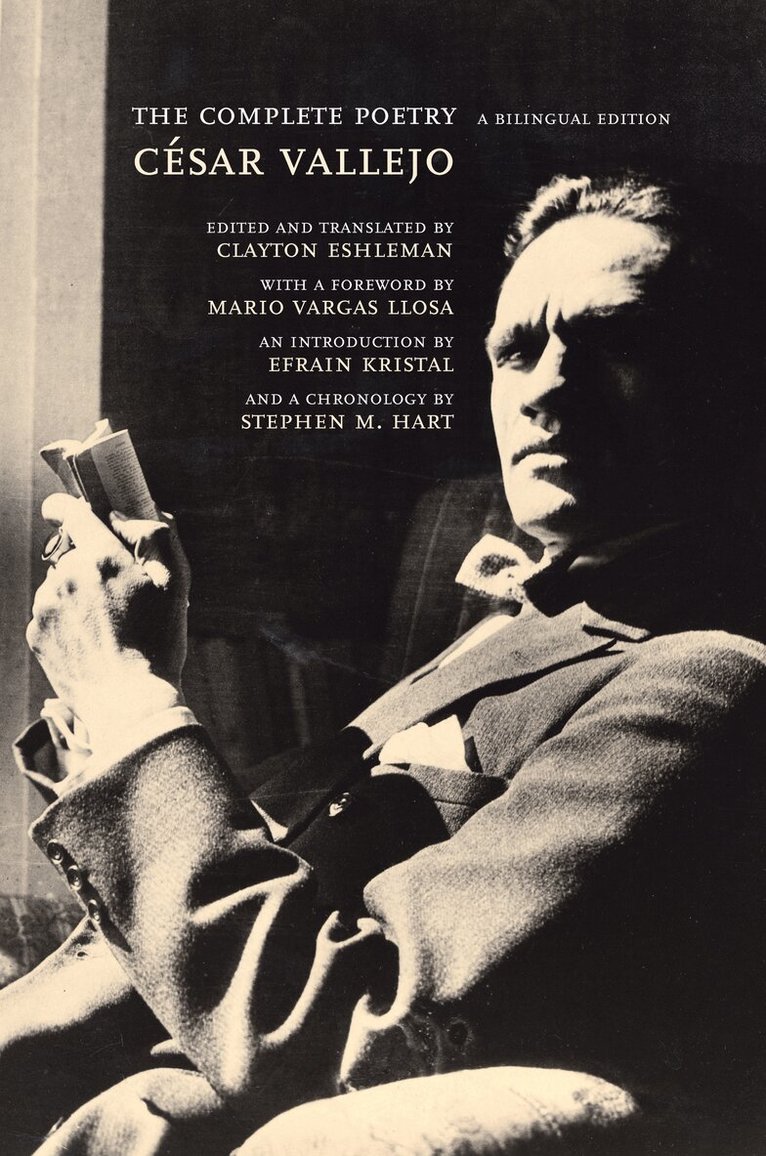
This first translation of the complete poetry of Peruvian Cesar Vallejo (1892-1938) makes available to English speakers one of the greatest achievements of twentieth-century world poetry. Handsomely presented in facing-page Spanish and English, this volume, translated by National Book Award winner Clayton Eshleman, includes the groundbreaking collections "The Black Heralds" (1918), "Trilce" (1922), "Human Poems" (1939), and "Spain, Take This Cup from Me" (1939). Vallejo's poetry takes the Spanish language to an unprecedented level of emotional rawness and stretches its grammatical possibilities. Striking against theology with the very rhetoric of the Christian faith, Vallejo's is a tragic vision - perhaps the only one in the canon of Spanish-language literature - in which salvation and sin are one and the same. This edition includes notes on the translation and a fascinating translation memoir that traces Eshleman's long relationship with Vallejo's poetry. An introduction and chronology provide further insights into Vallejo's life and work.
268 kr
Skickas inom 3-6 vardagar
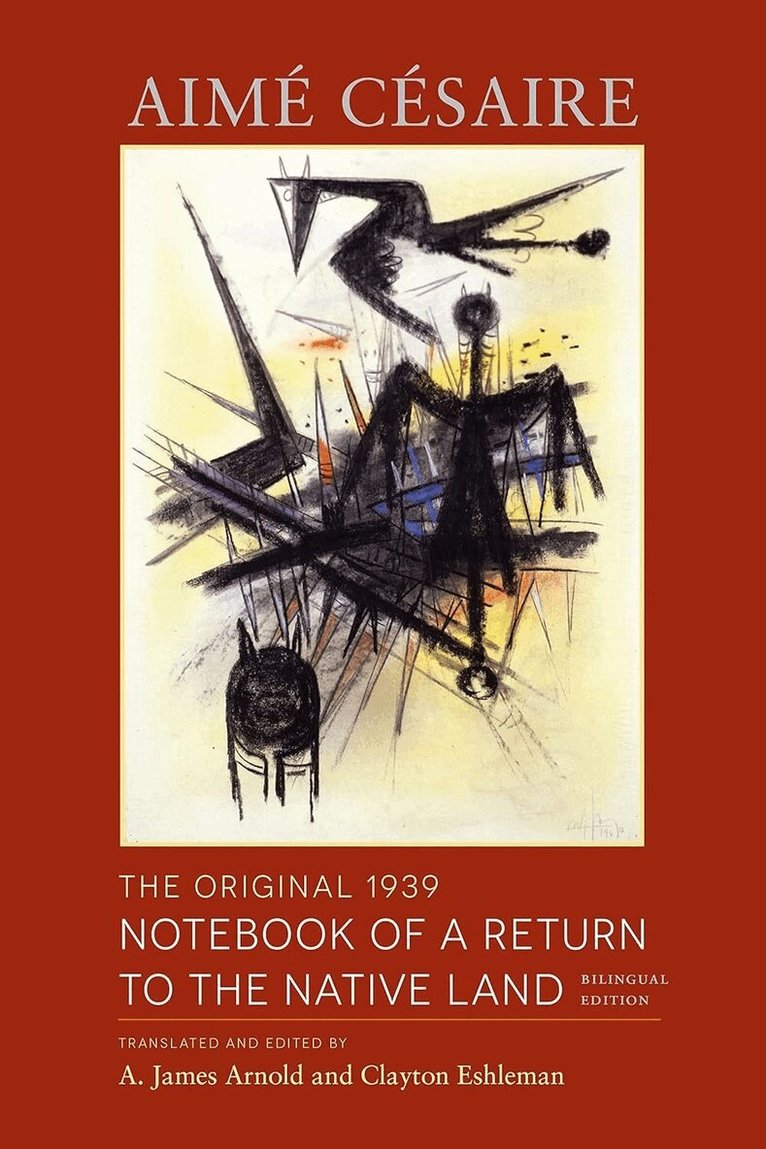
The first bilingual edition of this radically original work Aimé Césaire's masterpiece, Notebook of a Return to the Native Land, is a work of immense cultural significance and beauty. This long poem was the beginning of Césaire's quest for négritude, and it became an anthem of Blacks around the world. Commentary on Césaire's work has often focused on its Cold War and anticolonialist rhetoric—material that Césaire only added in 1956. The original 1939 version of the poem, given here in French, and in its first English translation, reveals a work that is both spiritual and cultural in structure, tone, and thrust. This Wesleyan edition includes the original illustrations by Wifredo Lam, and an introduction, notes, and chronology by A. James Arnold.
681 kr
Skickas inom 3-6 vardagar
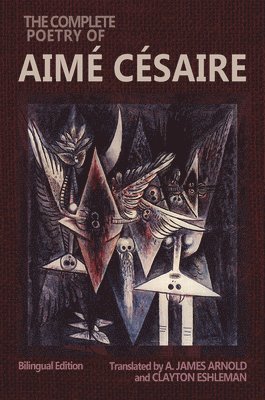
The definitive edition of the complete work of a master Caribbean poet The Complete Poetry of Aimé Césaire gathers all of Cesaire's celebrated verse into one bilingual edition. The French portion is comprised of newly established first editions of Césaire's poetic ouvre made available in French in 2014 under the title Poésie, Théâtre, Essais et Discours, edited by A. J. Arnold and an international team of specialists. To prepare the English translations, the translators started afresh from this French edition. Included here are translations of first editions of the poet's early work, prior to political interventions in the texts after 1955, revealing a new understanding of Cesaire's aesthetic and political trajectory. A truly comprehensive picture of Cesaire's poetry and poetics is made possible thanks to a thorough set of notes covering variants, historical and cultural references, and recurring figures and structures, a scholarly introduction and a glossary. This book provides a new cornerstone for readers and scholars in 20th century poetry, African diasporic literature, and postcolonial studies.
393 kr
Skickas inom 3-6 vardagar
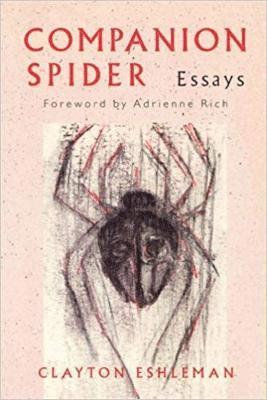
Companion Spider is the accumulated work of a poet and translator who goes more deeply into the art and its process and demands than anyone since Robert Duncan. Clayton Eshleman is one of our most admired and controversial poets, the translator of such great international poets as César Vallejo, Aimé Césaire and Antonin Artaud, and founder and editor of two important literary magazines, Sulfur and Caterpillar. As such, Eshleman writes about the vocation of poet and of the poet as translator as no one else in America today; he believes adamantly that art must concern itself with vision, and that poets learn best by an apprenticeship that is a kind of immersion in the work of other poets. Companion Spider opens with a unique eighty page essay called "Novices: A Study of Poetic Apprenticeship" addressed to the poet who is just starting out. Subsequent sections take up the art of translation, poets and their work, and literary magazine editing. The title is drawn from an extraordinary visionary experience which the author had, which becomes a potent metaphor for the creative process. Through the variety of poets and artists to whom he pays homage, Eshleman suggests a community which is not of a single place or time; rather, there is mutual recognition and responsiveness, so that the reader becomes aware of a range of artistic practices s/he might explore
355 kr
Skickas inom 3-6 vardagar
Soleil cou coupé (Solar Throat Slashed) is Aimé Césaire's most explosive collection of poetry. Animistically dense, charged with eroticism and blasphemy, and imbued with an African and Vodun spirituality, this book takes the French surrealist adventure to new heights and depths. A Césaire poem is an intersection at which metaphoric traceries create historically aware nexuses of thought and experience, jagged solidarity, apocalyptic surgery, and solar dynamite. The original 1948 French edition of Soleil cou coupé has a dense magico-religious frame of reference. In the late 1950s, Césaire was increasingly politically focused and seeking a wider audience, when he, in effect, gelded the 1948 text-eliminating 31 of the 72 poems, and editing another 29. Until now, only the revised 1961 edition, called Cadastre, has been translated. The revised text lacks the radical originality of Soleil cou coupé. This Wesleyan edition presents all the original poems en face with the new English translations. Includes an introduction by A. James Arnold and notes by Clayton Eshleman.
164 kr
Tillfälligt slut
191 kr
Tillfälligt slut
283 kr
Tillfälligt slut
181 kr
Skickas inom 11-20 vardagar
176 kr
Tillfälligt slut
176 kr
Tillfälligt slut
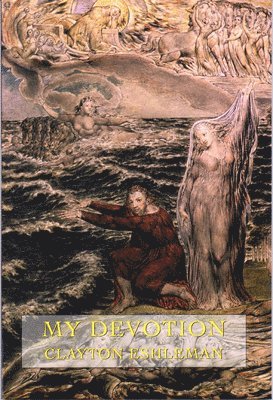
The poems in this collection range from deeply-moving elegies to friends, love poems to his wife, poems concerning Ice Age art, and poems that incorporate a vision of poetry that attempts to make the poet responsible for all he knows about his world. Altogether, it reveals the poet's life-long devotion to a many-faceted art.
147 kr
Skickas inom 7-10 vardagar
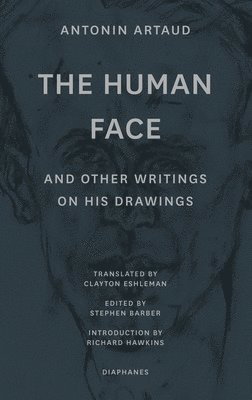
The first comprehensive collection in English of Antonin Artaud’s writings on his artworks.The many major exhibitions of Antonin Artaud’s drawings and drawn notebook pages in recent years—at New York’s Museum of Modern Art, Vienna’s Museum Moderner Kunst, and Paris’s Centre Georges Pompidou—have entirely transformed our perception of his work, reorienting it toward the artworks of his final years. This volume collects all three of Artaud’s major writings on his artworks. “The Human Face” (1947) was written as the catalog text for Artaud’s only gallery exhibition of his drawings during his lifetime, focusing on his approach to making portraits of his friends at the decrepit pavilion in the Paris suburbs where he spent the final year of his life. “Ten years that language is gone” (1947) examines the drawings Artaud made in his notebooks—his main creative medium at the end of his life—and their capacity to electrify his creativity when language failed him. “50 Drawings to assassinate magic” (1948), the residue of an abandoned book of Artaud’s drawings, approaches the act of drawing as part of the weaponry deployed by Artaud at the very end of his life to combat malevolent assaults and attempted acts of assassination. Together, these three extraordinary texts—pitched between writing and image—project Artaud’s ferocious engagement with the act of drawing.
147 kr
Skickas inom 7-10 vardagar
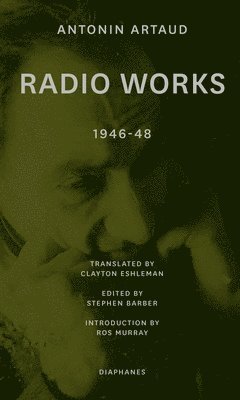
Following his release from the Rodez asylum, Antonin Artaud decided he wanted his new work to connect with a vast public audience, and he chose to record radio broadcasts in order to carry through that aim. That determination led him to his most experimental and incendiary project, To Have Done with the Judgement of God, 1947-48, in which he attempted to create a new language of texts, screams, and cacophonies: a language designed to be heard by millions, aimed, as Artaud said, for “road-menders.” In the broadcast, he interrogated corporeality and introduced the idea of the “body without organs,” crucial to the later work of Deleuze and Guattari. The broadcast, commissioned by the French national radio station, was banned shortly before its planned transmission, much to Artaud’s fury. This volume collects all of the texts for To Have Done with the Judgement of God, together with several of the letters Artaud wrote to friends and enemies in the short period between his work’s censorship and his death. Also included is the text of an earlier broadcast from 1946, Madness and Black Magic, written as a manifesto prefiguring his subsequent broadcast. Clayton Eshleman’s extraordinary translations of the broadcasts activate these works in their extreme provocation.
124 kr
Skickas inom 7-10 vardagar
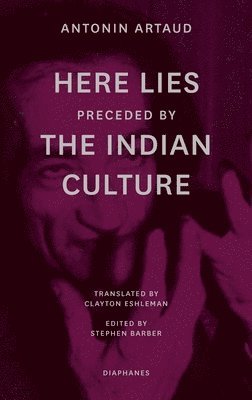
“Here Lies” preceded by “The Indian Culture” collects two of Antonin Artaud’s foremost poetic works from the last period of his life. He wrote both works soon after his release from the psychiatric hospital of Rodez and his return to Paris, and they were published during the flurry of intensive activity and protests against his work’s censorship. The Indian Culture is the first and most ambitious work of Artaud’s last period. It deals with his travels in Mexico in 1936 where Artaud sets aside his usual preoccupations with peyote and the Tarahumara people’s sorcerers to directly anatomize his obsessions with gods, corporeality, and sexuality. Here Lies is Artaud’s final declaration of autonomy for his own body from its birth to its imminent death, won at the cost of multiple battles against the infiltrating powers amassed to steal that birth and death away from him. Both works demonstrate Artaud’s final poetry as a unique amalgam of delicate linguistic invention and ferociously obscene invective. “Here Lies” preceded by “The Indian Culture” was translated by the award-winning translator Clayton Eshleman, widely seen as the preeminent translator into English of Artaud’s work, with its profound intensity and multiply nuanced language. For the first time since its first publication, this bilingual edition presents the two works in one volume, as Artaud originally intended. This edition also features a contextual afterword by Stephen Barber as well as new material, previously untranslated into English.