Clemena Antonova - Böcker
Visar alla böcker från författaren Clemena Antonova. Handla med fri frakt och snabb leverans.
5 produkter
5 produkter
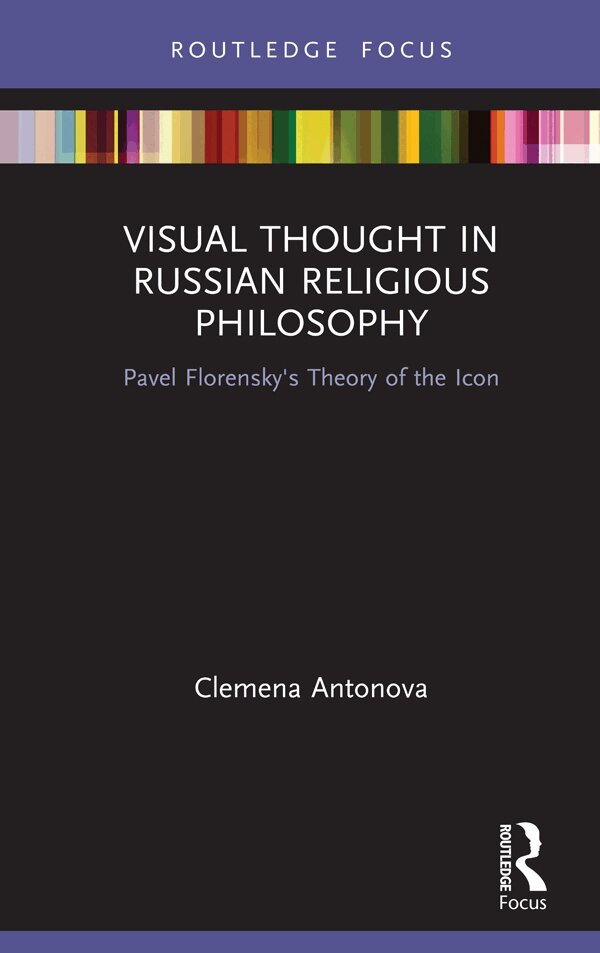
Visual Thought in Russian Religious Philosophy
Pavel Florensky's Theory of the Icon
Inbunden, Engelska, 2019
756 kr
Skickas inom 10-15 vardagar
This book considers a movement within Russian religious philosophy known as "full unity" (vseedinstvo), with a focus on one of its main representatives, Pavel Florensky (1882–1937). Often referred to as "the Russian Leonardo," Florensky was an important figure of the Russian religious renaissance around the beginning of the twentieth century. This book shows that his philosophy, conceptualized in his theory of the icon, brings together the problem of the "religious turn" and the "pictorial turn" in modern culture, as well as contributing to contemporary debates on religion and secularism.Organized around the themes of full unity and visuality, the book examines Florensky’s definition of the icon as "energetic symbol," drawing on St. Gregory Palamas, before offering a theological reading of Florensky’s theory of the pictorial space of the icon. It then turns to Florensky’s idea of space in the icon as Non-Euclidean. Finally, the icon is placed within wider debates provoked by Bolshevik cultural policy, which extend to current discussions concerning religion, modernity, and art.Offering an important contribution from Russian religious philosophy to issues of contemporary modernity, this book will be of interest to scholars of religious philosophy, Russian studies, theology and the arts, and the medieval icon.
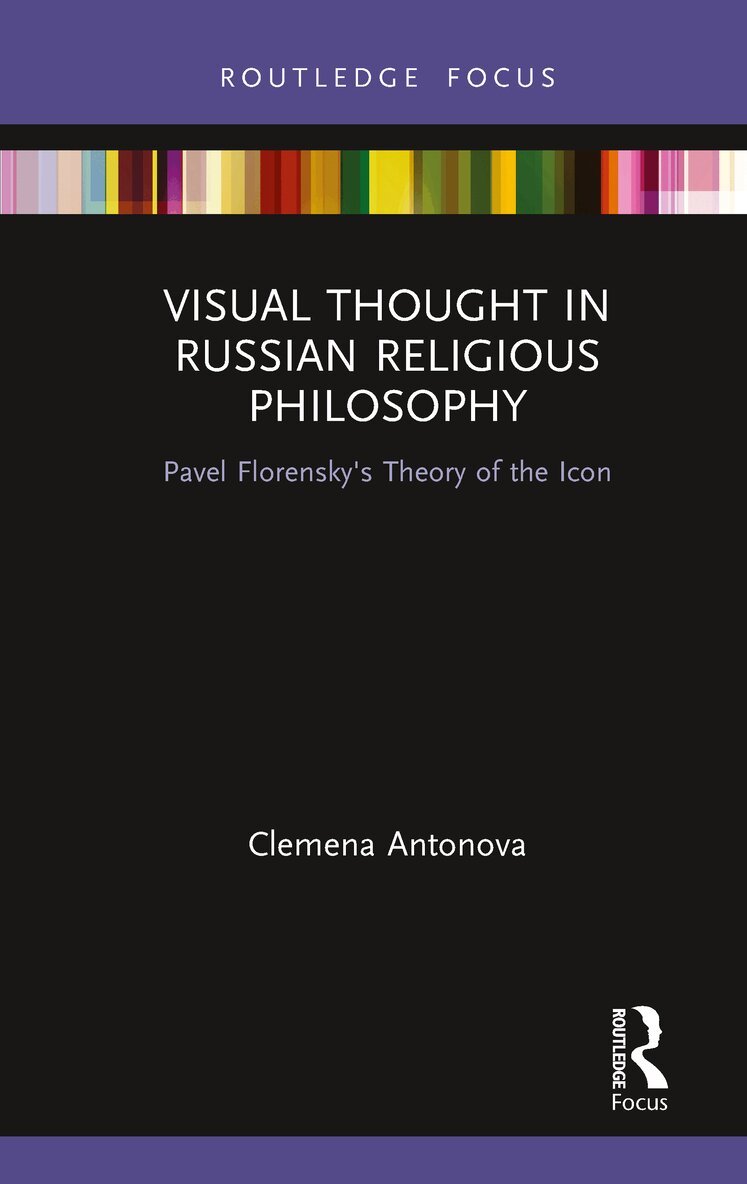
Visual Thought in Russian Religious Philosophy
Pavel Florensky's Theory of the Icon
Häftad, Engelska, 2021
347 kr
Skickas inom 10-15 vardagar
This book considers a movement within Russian religious philosophy known as "full unity" (vseedinstvo), with a focus on one of its main representatives, Pavel Florensky (1882–1937). Often referred to as "the Russian Leonardo," Florensky was an important figure of the Russian religious renaissance around the beginning of the twentieth century. This book shows that his philosophy, conceptualized in his theory of the icon, brings together the problem of the "religious turn" and the "pictorial turn" in modern culture, as well as contributing to contemporary debates on religion and secularism.Organized around the themes of full unity and visuality, the book examines Florensky’s definition of the icon as "energetic symbol," drawing on St. Gregory Palamas, before offering a theological reading of Florensky’s theory of the pictorial space of the icon. It then turns to Florensky’s idea of space in the icon as Non-Euclidean. Finally, the icon is placed within wider debates provoked by Bolshevik cultural policy, which extend to current discussions concerning religion, modernity, and art.Offering an important contribution from Russian religious philosophy to issues of contemporary modernity, this book will be of interest to scholars of religious philosophy, Russian studies, theology and the arts, and the medieval icon.
2 165 kr
Skickas inom 10-15 vardagar
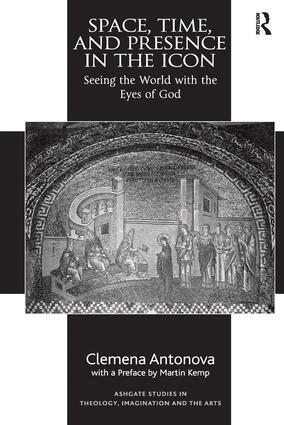
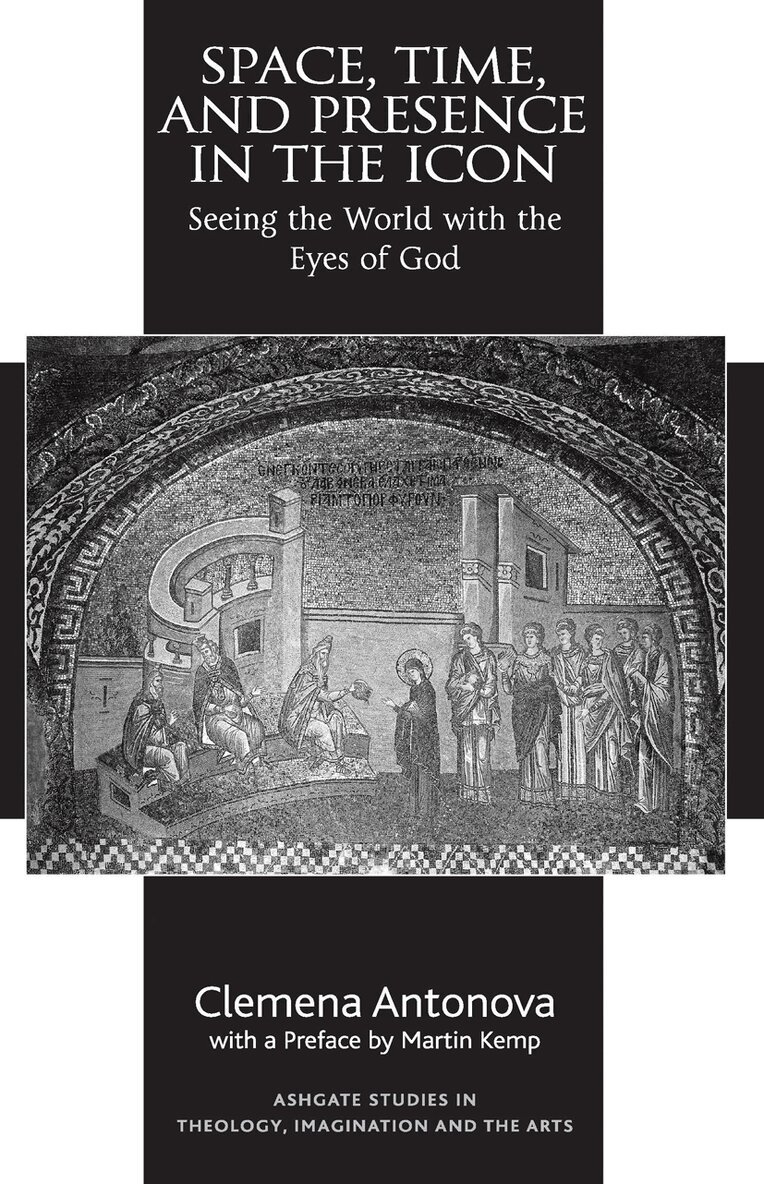
This book contributes to the re-emerging field of 'theology through the arts' by proposing a way of approaching one of the most challenging theological concepts - divine timelessness - through the principle of construction of space in the icon. One of the main objectives of this book is to discuss critically the implications of 'reverse perspective', which is especially characteristic of Byzantine and Byzantining art. Drawing on the work of Pavel Florensky, one of the foremost Russian religious philosophers at the beginning of the 20th century, Antonova shows that Florensky's concept of 'supplementary planes' can be used productively within a new approach to the question. Antonova works up new criteria for the understanding of how space and time can be handled in a way that does not reverse standard linear perspective (as conventionally claimed) but acts in its own way to create eternalised images which are not involved with perspective at all. Arguing that the structure of the icon is determined by a conception of God who exits in past, present, and future, simultaneously, Antonova develops an iconography of images done in the Byzantine style both in the East and in the West which is truer to their own cultural context than is generally provided for by western interpretations. This book draws upon philosophy, theology and liturgy to see how relatively abstract notions of a deity beyond time and space enter images made by painters.
633 kr
Skickas inom 10-15 vardagar
This book contributes to the re-emerging field of 'theology through the arts' by proposing a way of approaching one of the most challenging theological concepts - divine timelessness - through the principle of construction of space in the icon. One of the main objectives of this book is to discuss critically the implications of 'reverse perspective', which is especially characteristic of Byzantine and Byzantining art. Drawing on the work of Pavel Florensky, one of the foremost Russian religious philosophers at the beginning of the 20th century, Antonova shows that Florensky's concept of 'supplementary planes' can be used productively within a new approach to the question. Antonova works up new criteria for the understanding of how space and time can be handled in a way that does not reverse standard linear perspective (as conventionally claimed) but acts in its own way to create eternalised images which are not involved with perspective at all. Arguing that the structure of the icon is determined by a conception of God who exits in past, present, and future, simultaneously, Antonova develops an iconography of images done in the Byzantine style both in the East and in the West which is truer to their own cultural context than is generally provided for by western interpretations. This book draws upon philosophy, theology and liturgy to see how relatively abstract notions of a deity beyond time and space enter images made by painters.
IKONA - The Modernist Invention of the Icon in the Russian Art World, 1900s-1920s
Inbunden, Engelska, 2026
770 kr
Kommande
This book argues that ikona, the Russian word for ‘icon’, is a modernist concept invented by Russian avant-garde artists and art critics at the turn of the 20th century. Clemena Antonova argues that the very notion of ikona is modernist in the sense that it grew naturally out of the evolution of Russian avant-garde art and art criticism. Quite literally then, the Russian icon was not ‘discovered’ at the beginning of the 20th century, as we are often told; it was invented. Further, this invention was not the work of backward-looking, religious mystics and Orthodox conservatives – an all too frequent implication – but, as Antonova convincingly contends, the creation of some of the most trailblazing figures among the avant-garde and circles associated with the avant-garde.IKONA - The Modernist Invention of the Icon in the Russian Art World, 1900s-1920s casts a fresh look at the much misunderstood idea of the Russian icon. Rather than accepting the conventional view that the icon is a remnant of medieval art which continues to cast its spell over modern image-making, it approaches ikona as a concept that was developed at the crossroad of ideas that were central to the emergence of Russian modernism.