Clive Webb - Böcker
Visar alla böcker från författaren Clive Webb. Handla med fri frakt och snabb leverans.
9 produkter
9 produkter
383 kr
Skickas inom 5-8 vardagar
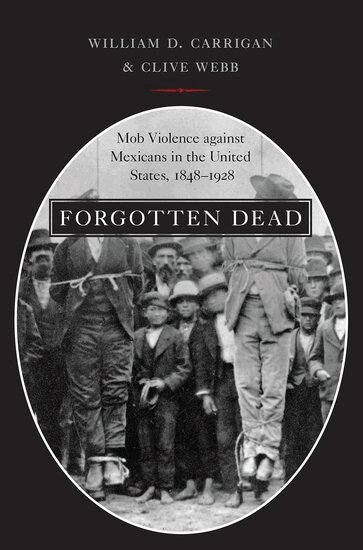
Mob violence in the United States is usually associated with the southern lynch mobs who terrorized African Americans during the Jim Crow era. In Forgotten Dead, William D. Carrigan and Clive Webb uncover a comparatively neglected chapter in the story of American racial violence, the lynching of persons of Mexican origin or descent. Over eight decades lynch mobs murdered hundreds of Mexicans, mostly in the American Southwest. Racial prejudice, a lack of respect for local courts, and economic competition all fueled the actions of the mob. Sometimes ordinary citizens committed these acts because of the alleged failure of the criminal justice system; other times the culprits were law enforcement officers themselves. Violence also occurred against the backdrop of continuing tensions along the border between the United States and Mexico aggravated by criminal raids, military escalation, and political revolution. Based on Spanish and English archival documents from both sides of the border, Forgotten Dead explores through detailed case studies the characteristics and causes of mob violence against Mexicans across time and place. It also relates the numerous acts of resistance by Mexicans, including armed self-defense, crusading journalism, and lobbying by diplomats who pressured the United States to honor its rhetorical commitment to democracy. Finally, it contains the first-ever inventory of Mexican victims of mob violence in the United States. Carrigan and Webb assess how Mexican lynching victims came in the minds of many Americans to be the "forgotten dead" and provide a timely account of Latinos' historical struggle for recognition of civil and human rights.
430 kr
Skickas inom 7-10 vardagar
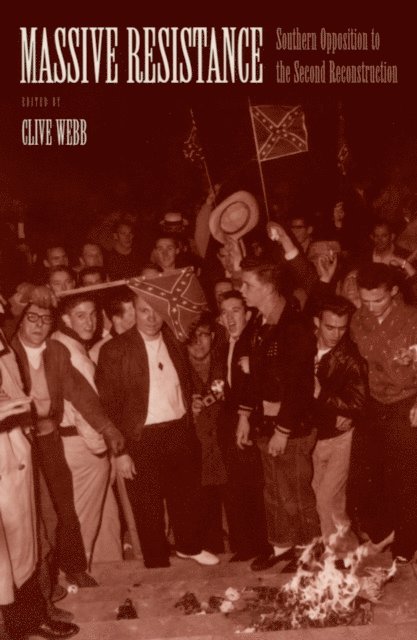
Massive Resistance brings together ten essays that critically assess southern white resistance to school desegregation. The collection examines in close detail the practice of massive resistance, revealing the ideological and tactical divisions that characterized the southern white response to civil rights protest as well as the illusion of the union of racial moderates and extremists in what has been called a solid white South. The essays also look at white resistance through gender issues, the wider context of international Cold War politics, the critical backlash against Brown, religious and theological bases of resistance, the events of Little Rock, private education as an alternative to desegregation, and the intellectual foundations of massive resistance.
643 kr
Skickas inom 5-8 vardagar
Mob violence in the United States is usually associated with the southern lynch mobs who terrorized African Americans during the Jim Crow era. This book uncovers what is by contrast a neglected chapter in the story of American racial violence, the lynching of persons of Mexican origin or descent. Over eight decades lynch mobs murdered hundreds of Mexicans, mostly in the American Southwest. Racial prejudice, a lack of respect for local courts, and economic competition all fueled the actions of the mob. Sometimes it was ordinary citizens who committed these acts because of the alleged failure of the criminal justice system; other times the culprits were law enforcement officers themselves. Violence also occurred against the backdrop of continuing tensions along the border between the United States and Mexico aggravated by criminal raids, military escalation, and political revolution. Based on exhaustive research on both sides of the border, the first half of Forgotten Dead explores the characteristics and causes of mob violence against Mexicans across time and place. The second half of the book relates the numerous acts of resistance by Mexicans including armed self-defense, crusading journalism, and lobbying by diplomats who pressured the United States to honor its rhetorical commitment to democracy. In reconstructing these stories, the authors provide detailed case studies and assess how Mexican lynching victims came in the minds of many Americans to be the "forgotten dead." The conclusion of the book also contains the first-ever inventory of Mexican victims of mob violence in the United States. With Latinos having an increasingly powerful influence on American public life, this book provides a timely account of their historical struggle for recognition of civil and human rights.
448 kr
Skickas inom 7-10 vardagar
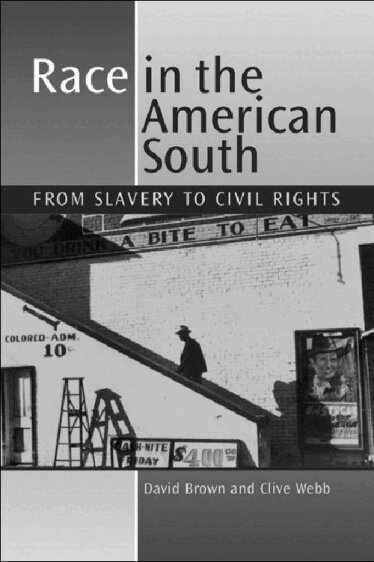
The issue of race has indelibly shaped the history of the United States. Nowhere has the drama of race relations been more powerfully staged than in the American South. This book charts the turbulent course of southern race relations from the colonial origins of the plantation system to the maturation of slavery in the nineteenth century, through the rise of a new racial order during the Civil War and Reconstruction, to the civil rights revolution of the twentieth century.While the history of race in the southern states has been shaped by a basic struggle between black and white, the authors show how other forces such as class and gender have complicated the colour line. They distinguish clearly between ideas about race, mostly written and disseminated by intellectuals and politicians, and their reception by ordinary southerners, both black and white. As a result, readers are presented with a broad, over-arching view of race in the American South throughout its chequered history.Key Features:*racial issues are the key area of interest for those who study the American South*race is the driving engine of Southern history*unique in its focus on race*broad coverage – origins of the plantation system to the situation in the South today
1 498 kr
Skickas inom 7-10 vardagar
The issue of race has indelibly shaped the history of the United States. Nowhere has the drama of race relations been more powerfully staged than in the American South. This book charts the turbulent course of southern race relations from the colonial origins of the plantation system to the maturation of slavery in the nineteenth century, through the rise of a new racial order during the Civil War and Reconstruction, to the civil rights revolution of the twentieth century.While the history of race in the southern states has been shaped by a basic struggle between black and white, the authors show how other forces such as class and gender have complicated the colour line. They distinguish clearly between ideas about race, mostly written and disseminated by intellectuals and politicians, and their reception by ordinary southerners, both black and white. As a result, readers are presented with a broad, over-arching view of race in the American South throughout its chequered history.Key Features:*racial issues are the key area of interest for those who study the American South*race is the driving engine of Southern history*unique in its focus on race*broad coverage – origins of the plantation system to the situation in the South today
1 236 kr
Skickas inom 5-8 vardagar
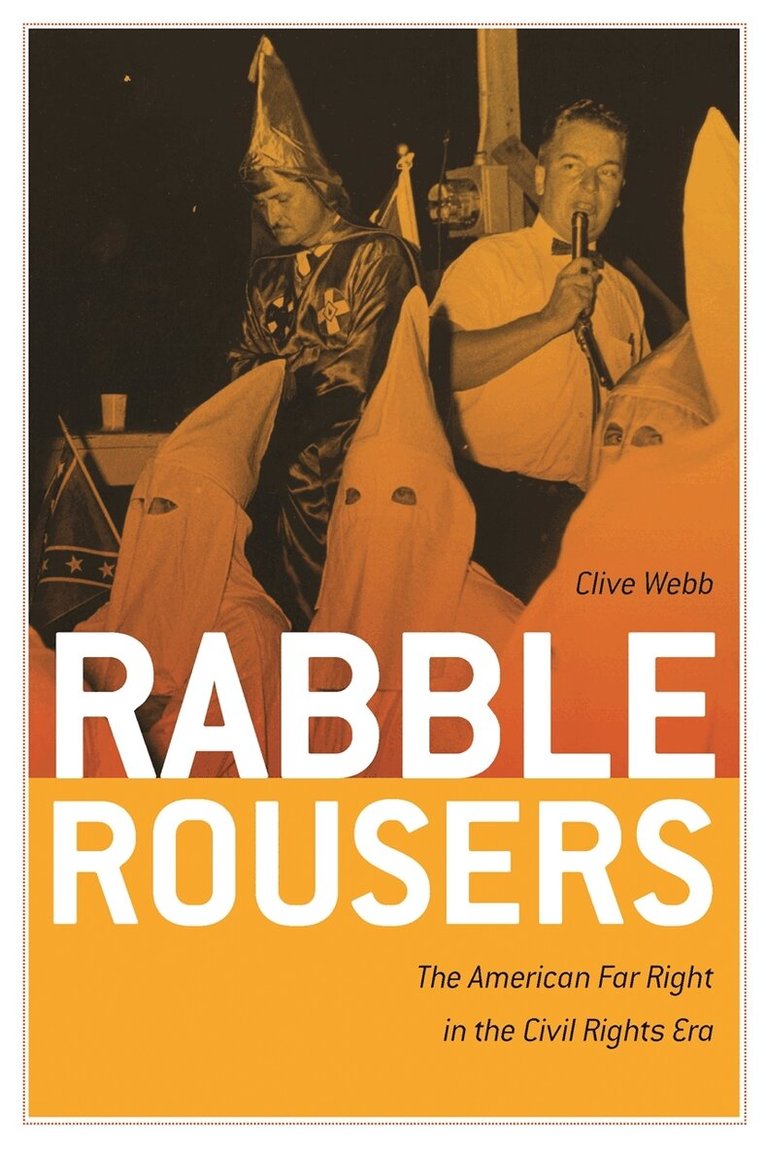
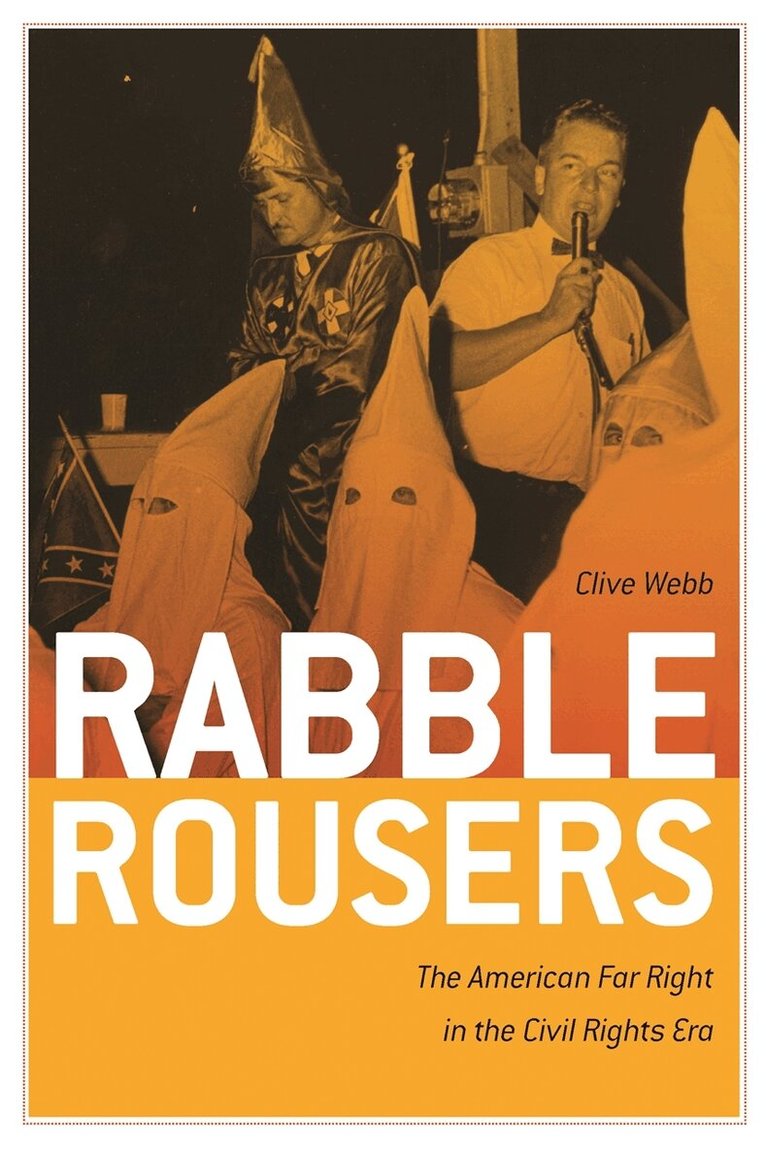
The decade following the 1954 Brown v. Board of Education decision saw white southerners mobilize in massive resistance to racial integration. Most segregationists conceded that ultimately they could only postpone the demise of Jim Crow. Some militant whites, however, believed it possible to win the civil rights struggle. Histories of the black freedom struggle, when they mention these racist zealots at all, confine them to the margin of the story.These extremist whites are caricatured as ineffectual members of the lunatic fringe. Civil rights activists, however, saw them for what they really were: calculating, dangerous opponents prepared to use terrorism in their stand against reform. To dismiss white militants is to underestimate the challenge they posed to the movement and, in turn, the magnitude of civil rights activists’ accomplishments. The extremists helped turn massive resistance into a powerful political phenomenon. While white southern elites struggled to mobilize mass opposition to racial reform, the militants led entire communities in revolt.Rabble Rousers turns traditional top-down models of massive resistance on their head by telling the story of five far-right activists—Bryant Bowles, John Kasper, Rear Admiral John Crommelin, Major General Edwin Walker, and J. B. Stoner—who led grassroots rebellions. It casts new light on such contentious issues as the role of white churches in defending segregation, the influence of anti-Semitism in southern racial politics, and the divisive impact of class on white unity. The flame of the far right burned brilliantly but briefly. In the final analysis, violent extremism weakened the cause of white southerners. Tactical and ideological tensions among massive resisters, as well as the strength and unity of civil rights activists, accelerated the destruction of Jim Crow.
502 kr
Skickas inom 5-8 vardagar
The decade following the 1954 Brown v. Board of Education decision saw white southerners mobilize in massive resistance to racial integration. Most segregationists conceded that ultimately they could only postpone the demise of Jim Crow. Some militant whites, however, believed it possible to win the civil rights struggle. Histories of the black freedom struggle, when they mention these racist zealots at all, confine them to the margin of the story.These extremist whites are caricatured as ineffectual members of the lunatic fringe. Civil rights activists, however, saw them for what they really were: calculating, dangerous opponents prepared to use terrorism in their stand against reform. To dismiss white militants is to underestimate the challenge they posed to the movement and, in turn, the magnitude of civil rights activists’ accomplishments. The extremists helped turn massive resistance into a powerful political phenomenon. While white southern elites struggled to mobilize mass opposition to racial reform, the militants led entire communities in revolt.Rabble Rousers turns traditional top-down models of massive resistance on their head by telling the story of five far-right activists—Bryant Bowles, John Kasper, Rear Admiral John Crommelin, Major General Edwin Walker, and J. B. Stoner—who led grassroots rebellions. It casts new light on such contentious issues as the role of white churches in defending segregation, the influence of anti-Semitism in southern racial politics, and the divisive impact of class on white unity. The flame of the far right burned brilliantly but briefly. In the final analysis, violent extremism weakened the cause of white southerners. Tactical and ideological tensions among massive resisters, as well as the strength and unity of civil rights activists, accelerated the destruction of Jim Crow.
242 kr
Skickas
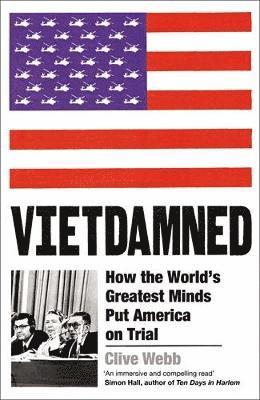
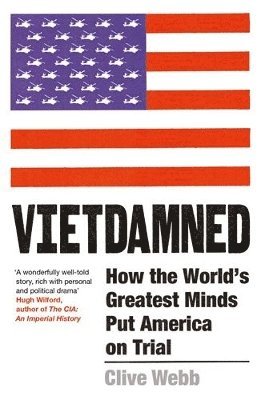
Guilty: the conclusion of many trials. But this verdict was unusual, delivered by a jury of the greatest minds of the twentieth century, among them Jean-Paul Sartre and Simone de Beauvoir, James Baldwin and Stokely Carmichael; and in the chair, legendary philosopher-mathematician Bertrand Russell. The defendant was unusual, too: the United States government.Award-winning historian Clive Webb lays bare the extraordinary true story of the 1967 Russell Tribunal and its attempt to hold the US government to account for atrocities in the Vietnam War. The revelations that came out of the tribunal shocked the world. Vietdamned is an eye-opening account of the anti-war movement, of cover-ups and abuses of government, and of the power (and limits) of celebrity.
121 kr
Kommande
Guilty: the conclusion of many trials. But this verdict was unusual, delivered by jury comprising of the greatest minds of the twentieth century: Jean-Paul Sartre and Simone de Beauvoir, James Baldwin and Stokely Carmichael, and over a dozen international luminaries - all presided over by the legendary philosopher-mathematician Bertrand Russell. The defendant was unusual as well: the United States government.In Vietdamned, award-winning historian Clive Webb reveals the extraordinary, little-known history of the 1967 Russell Tribunal and its attempt to hold the US government to account for the atrocities it committed during the Vietnam War. What they revealed shocked the world. In a revolutionary decade where public intellectuals wielded a celebrity since unheard of, these writers and philosophers put their careers and reputations at stake - and faced fierce opposition from the media, governments, and the even the CIA.Both a vivid group biography and a compendious account of this unprecedented event, Vietdamned is a story of the power (and limits) of celebrity, government abuse and cover-ups, and is the first global history of the anti-war movement.