Clyde W. Barrow - Böcker
Visar alla böcker från författaren Clyde W. Barrow. Handla med fri frakt och snabb leverans.
9 produkter
9 produkter
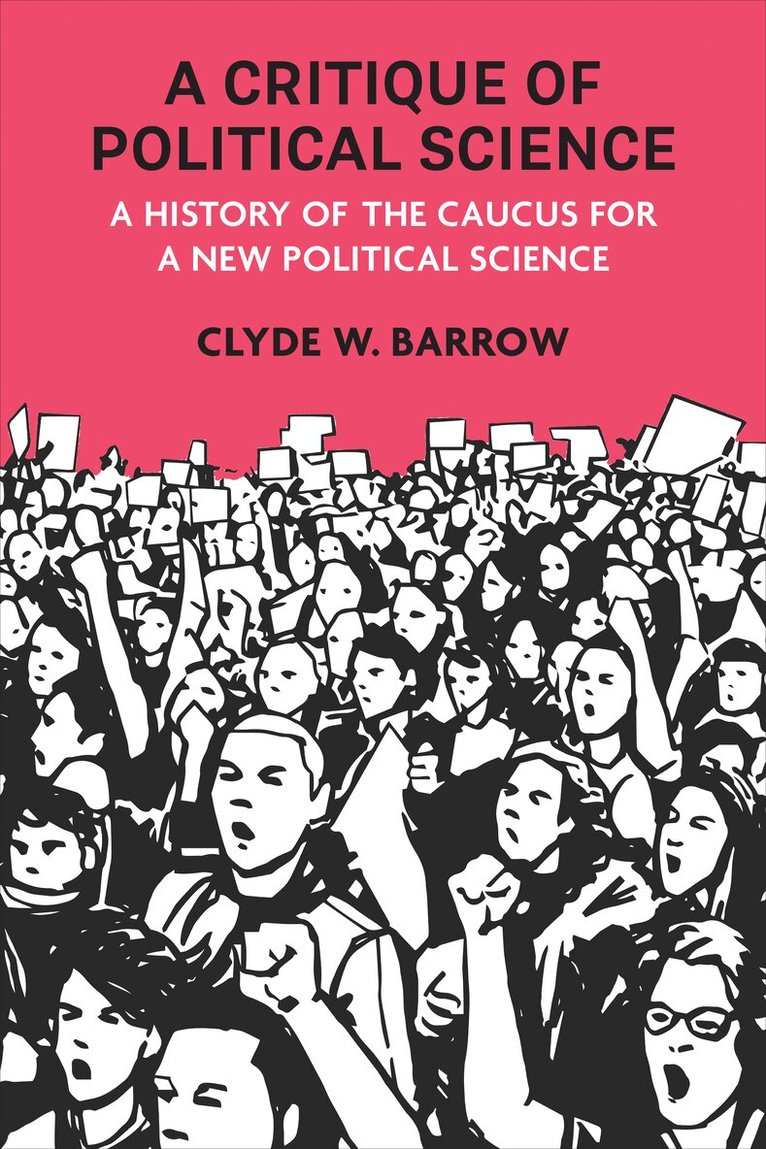
Critique of Political Science
A History of the Caucus for a New Political Science
Häftad, Engelska, 2026
703 kr
Kommande
The Caucus for a New Political Science (CNPS) was created in 1967, when several hundred dissident political scientists walked out of the annual meeting of the American Political Science Association (APSA) to protest the Association’s refusal to take an official position against the Vietnam War. The CNPS soon expanded its mission to challenge the APSA’s behavioral and pluralist orthodoxy, protest a lack of democratic procedure and transparency in the organization, and oppose ties between the leadership and government agencies involved in covert activities. It remains unique among the more than 50 Organized Sections of APSA as the only section that defines itself ideologically and politically, rather than by research topic, methodology, subfield, or identity status.A Critique of Political Science distinguishes between the discipline of political science (methods and concepts) and the profession of political science (persons and institutions) to move disciplinary history beyond its current form as intellectual history toward a politics of political science. The book argues that understanding the development of a discipline requires the same type of theoretical analysis that political scientists apply to other political institutions. By examining universities and professional associations as political institutions, this approach puts political struggles and ideological conflict at the very core of disciplinary history. In reviewing 50 years of debate, controversy, and in-fighting in the political science profession, the book serves as a critique of the profession and the discipline of political science, which remains woefully disengaged from the concerns of ordinary citizens, particularly the working class and the poor throughout the world.
Critique of Political Science
A History of the Caucus for a New Political Science
Inbunden, Engelska, 2026
2 148 kr
Skickas inom 7-10 vardagar
The Caucus for a New Political Science (CNPS) was created in 1967, when several hundred dissident political scientists walked out of the annual meeting of the American Political Science Association (APSA) to protest the Association’s refusal to take an official position against the Vietnam War. The CNPS soon expanded its mission to challenge the APSA’s behavioral and pluralist orthodoxy, protest a lack of democratic procedure and transparency in the organization, and oppose ties between the leadership and government agencies involved in covert activities. It remains unique among the more than 50 Organized Sections of APSA as the only section that defines itself ideologically and politically, rather than by research topic, methodology, subfield, or identity status.A Critique of Political Science distinguishes between the discipline of political science (methods and concepts) and the profession of political science (persons and institutions) to move disciplinary history beyond its current form as intellectual history toward a politics of political science. The book argues that understanding the development of a discipline requires the same type of theoretical analysis that political scientists apply to other political institutions. By examining universities and professional associations as political institutions, this approach puts political struggles and ideological conflict at the very core of disciplinary history. In reviewing 50 years of debate, controversy, and in-fighting in the political science profession, the book serves as a critique of the profession and the discipline of political science, which remains woefully disengaged from the concerns of ordinary citizens, particularly the working class and the poor throughout the world.
1 115 kr
Tillfälligt slut
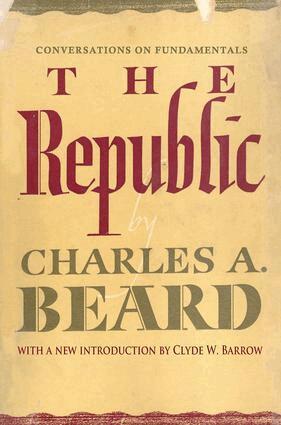
Charles A. Beard (1874-1948) was one of America's most influential historians and political scientists. He played a major role in founding the disciplines of history and political science, helped shape the teaching of social studies in the nation's public schools, and was one the nation's most popular public intellectuals. Yet in the second half of the twentieth century, Beard's reputation has been eroded by relentless criticism. Clyde W. Barrow argues that Beard's work has renewed relevance in light of recent theoretical debates about the new institutionalism, the crisis of the welfare state, and American foreign policy messianism. Barrow's takes Beard seriously as a political theorist, while challenging many misconceptions. For example, Beard's method of economic interpretation has been dismissed as Marxist, but Barrow carefully reconstructs the sources of Beard's thinking to demonstrate that his method owes more to historical and institutional economics and that his concept of state-society relations was in fact derived from Madison's Tenth Federalist. Barrow reconstructs Beard's theory of American political development using his concept of realistic dialectics, which viewed the clash between democracy (Jeffersonianism) and capitalism (Hamiltonianism) as the engine of American political development. During the 1930s, Beard suggested that the United States was making the transition to a higher form of social and industrial democracy that would supersede the contradiction of American political development. Notably, Beard was a critic of the New Deal and the liberal welfare state, because they failed to reconstruct the economic relations that reproduce inequalities of income, status, and power.Beard went on to voice his concern that at crucial junctures in American history, class struggle is diverted into international conflicts as popular leaders back down from a direct confrontation with the dominant capitalist elite. He analyzes American foreign policy as an extension of domestic economic policy and, in particular, a result of the failures of domestic economic policy. Beard's conception of American history plays itself out in a tragic cycle of imperialism and diversion that left him a disenchanted realist. This incisive study will be of interest to those intrested in the evolution of historical thinking.
688 kr
Skickas inom 10-15 vardagar
Charles A. Beard (1874-1948) was one of America's most influential historians and political scientists. He played a major role in founding the disciplines of history and political science, helped shape the teaching of social studies in the nation's public schools, and was one the nation's most popular public intellectuals. Yet in the second half of the twentieth century, Beard's reputation has been eroded by relentless criticism. Clyde W. Barrow argues that Beard's work has renewed relevance in light of recent theoretical debates about the new institutionalism, the crisis of the welfare state, and American foreign policy messianism. Barrow's takes Beard seriously as a political theorist, while challenging many misconceptions. For example, Beard's method of economic interpretation has been dismissed as Marxist, but Barrow carefully reconstructs the sources of Beard's thinking to demonstrate that his method owes more to historical and institutional economics and that his concept of state-society relations was in fact derived from Madison's Tenth Federalist. Barrow reconstructs Beard's theory of American political development using his concept of realistic dialectics, which viewed the clash between democracy (Jeffersonianism) and capitalism (Hamiltonianism) as the engine of American political development. During the 1930s, Beard suggested that the United States was making the transition to a higher form of social and industrial democracy that would supersede the contradiction of American political development. Notably, Beard was a critic of the New Deal and the liberal welfare state, because they failed to reconstruct the economic relations that reproduce inequalities of income, status, and power.Beard went on to voice his concern that at crucial junctures in American history, class struggle is diverted into international conflicts as popular leaders back down from a direct confrontation with the dominant capitalist elite. He analyzes American foreign policy as an extension of domestic economic policy and, in particular, a result of the failures of domestic economic policy. Beard's conception of American history plays itself out in a tragic cycle of imperialism and diversion that left him a disenchanted realist. This incisive study will be of interest to those intrested in the evolution of historical thinking.
Toward a Critical Theory of States
The Poulantzas-Miliband Debate after Globalization
Inbunden, Engelska, 2016
1 456 kr
Skickas inom 3-6 vardagar
In-depth study of the enduring impact of the 1970s debate between state theorists Ralph Miliband and Nicos Poulantzas.We have recently lived through the turmoil of a global financial crisis that originated in the United States and, despite the platitudes of neo-liberal ideology, nation-states were deeply involved in managing this crisis. If "the state" is again a preeminent actor in the global economy, then state theory and the problem of the state should also return to the forefront of political theory. Toward a Critical Theory of States is an intensive analysis of the 1970s debate between state theorists Ralph Miliband and Nicos Poulantzas, including its wider impact on Marxist theories of the state in subsequent decades. Clyde W. Barrow makes unique arguments and contributions to this continuing discussion in state theory and lays the foundation for more theoretically informed empirical and historical research on the state in the age of globalization. He argues that by merely moving past the Poulantzas-Miliband debate, as some have recommended, scholars have abandoned much that is valuable in understanding the state, particularly the need to comprehend the contemporary transformation of the state form and the state apparatuses as part of the new conditions of globalization and transnational capital accumulation. Building upon themes of state restructuring found in Poulantzas and Miliband, Barrow establishes the outlines of an approach that integrates the thought of both to propose a synthetic understanding of the new imperialism.
Toward a Critical Theory of States
The Poulantzas-Miliband Debate after Globalization
Häftad, Engelska, 2017
382 kr
Tillfälligt slut
In-depth study of the enduring impact of the 1970s debate between state theorists Ralph Miliband and Nicos Poulantzas.We have recently lived through the turmoil of a global financial crisis that originated in the United States and, despite the platitudes of neo-liberal ideology, nation-states were deeply involved in managing this crisis. If "the state" is again a preeminent actor in the global economy, then state theory and the problem of the state should also return to the forefront of political theory. Toward a Critical Theory of States is an intensive analysis of the 1970s debate between state theorists Ralph Miliband and Nicos Poulantzas, including its wider impact on Marxist theories of the state in subsequent decades. Clyde W. Barrow makes unique arguments and contributions to this continuing discussion in state theory and lays the foundation for more theoretically informed empirical and historical research on the state in the age of globalization. He argues that by merely moving past the Poulantzas-Miliband debate, as some have recommended, scholars have abandoned much that is valuable in understanding the state, particularly the need to comprehend the contemporary transformation of the state form and the state apparatuses as part of the new conditions of globalization and transnational capital accumulation. Building upon themes of state restructuring found in Poulantzas and Miliband, Barrow establishes the outlines of an approach that integrates the thought of both to propose a synthetic understanding of the new imperialism.
4 968 kr
Skickas inom 7-10 vardagar
An indispensable and exemplary reference work, this Encyclopedia adeptly navigates the multidisciplinary field of critical political science, providing a comprehensive overview of the methods, approaches, concepts, scholars and journals that have come to influence the discipline’s development over the last six decades.Consisting of authoritative contributions from an array of eminent academics, the Encyclopedia highlights scholarship that is often overlooked by the political science discipline and explores the theories behind, and the goals of, the field. It delves deep into historical and conceptual dimensions and engages with a diverse variety of theoretical perspectives including Marxist, post-Marxist, post-modernist, feminist, ecologist, pluralist, anarchist and communist.Both stimulating and innovative, this timely Encyclopedia will be a fundamental resource for academics, researchers, and students in the fields of critical political science, international politics, international relations, politics and public policy, political economy, political theory and gender politics.Key Features:Critical perspectives on core debatesWritten in an engaging and reflective styleAccessible explanations of central conceptsOver 250 entries written by leading scholars and researchersInternational and interdisciplinary analysis of the field’s development
Science of the State
Race, Class, and National Identity in US Political Science, 1835 to 1945
Inbunden, Engelska, 2026
1 567 kr
Kommande
The Science of the State: Race, Class, and National Identity in US Political Science, 1835-1945 traces the origins of US political science as it emerged from the Staatwissenschaft paradigm of post-Hegelian nineteenth century Germany, particularly through the influence of Johann Caspar Bluntschli, Wilhelm G. F. Roscher, and Ludwig von Gumplowicz. The US science of the state emphasized three concepts – race, class, and national identity – which generated two competing theories of the state: a metaphysical theory of the state anchored in the concept of race, and an economic theory of the state anchored in the concept of class. By the 1920s, a new sociological theory of the state laid the foundations for a paradigm shift from the science of the state to pluralism in US political science. The author suggests that the origins of US political science structured its development as a dialectical conflict between the official discipline’s ideological defense of economic and racial inequality and a critical political science, which challenged the structural inequalities of US capitalism and liberal democracy.
574 kr
Skickas inom 10-15 vardagar
The author's personal narrative unfolds between the reality of the corporate university and the rhetoric of the entrepreneurial university, which allows the author to reveal how the corporate university is structurally antagonistic to the activities of entrepreneurial intellectuals.