Colin K. Ballantyne – Författare
Visar alla böcker från författaren Colin K. Ballantyne. Handla med fri frakt och snabb leverans.
5 produkter
5 produkter
652 kr
Skickas inom 7-10 vardagar
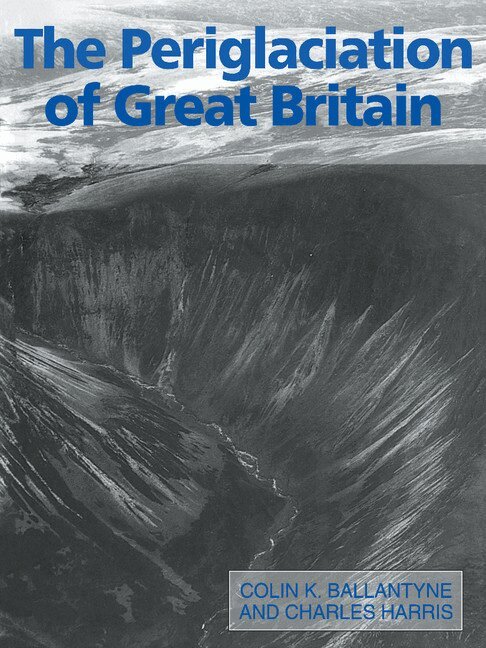
A climate of arctic severity prevailed in Britain throughout much of the last two million years, resulting in the widespread formation of a great range of periglacial landforms and deposits. Many of these features provide key evidence for understanding the evolution of the present landscape and reconstructing former climate. Appreciation of the significance of periglacial deposits and structures is also important in many engineering operations and in understanding the development of present-day soils. This book, first published in 1994, provides a synthesis of theory in periglacial geomorphology and applies this to the study of periglacial phenomena in Great Britain. The first part of the book introduces the chronological and environmental background to periglaciation in Britain. The second and third parts deal respectively with the periglaciation of lowland Britain and upland Britain. The book concludes by considering the implications of periglacial phenomena for environmental reconstruction.
849 kr
Skickas inom 7-10 vardagar
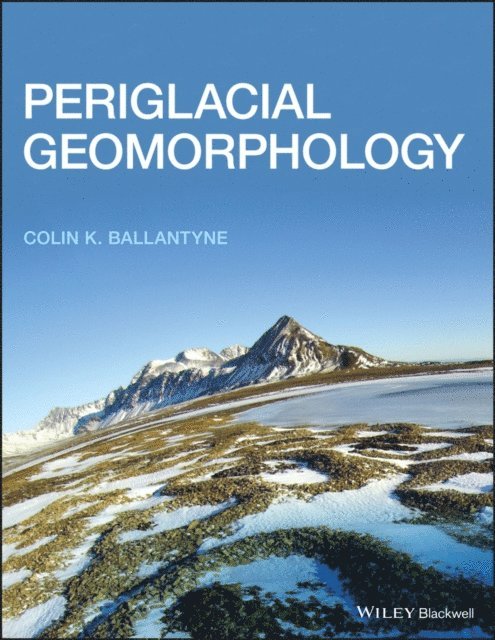
A FASCINATING AND INFORMATIVE EXPLORATION OF PERIGLACIAL PROCESSES, PAST AND PRESENT, AND THEIR ROLE IN LANDSCAPE EVOLUTION Periglacial Geomorphology presents a comprehensive introduction to the processes that operate in present periglacial environments and discusses the inferences that can be drawn about former periglacial environments from those processes. Organized into six parts, the book opens with the historical and scientific context of periglacial geomorphology and the nature of periglacial environments. Following chapters provide systematic coverage of the full range of topics germane to a thorough understanding of periglacial geomorphology, including: The physics of ground freezing and thawing, characteristics of permafrost, and the nature and origin of underground iceCharacteristics, formation and significance of landforms, sediments, and structures associated with permafrost, permafrost degradation, and seasonal ground freezing and thawingRock weathering in periglacial environments, periglacial processes operating on hillslopes, and the characteristic landforms produced by rock breakdown and slope processes in cold environmentsThe operation of fluvial, aeolian and coastal processes in cold environments, and the resulting distinctive landforms and sedimentsThe use of relict periglacial features to reconstruct past cold environments in midlatitude regions and the responses of periglacial environments to recent and predicted climate changePeriglacial Geomorphology is an important resource for undergraduate and graduate students studying geomorphology or Quaternary science within the context of geography and geology degree programs. It will be of use to all scientists whose research involves an understanding of cold environments, whether from a geographical, geological, ecological, climatological, pedological, hydrological, or engineering perspective.
737 kr
Skickas inom 7-10 vardagar
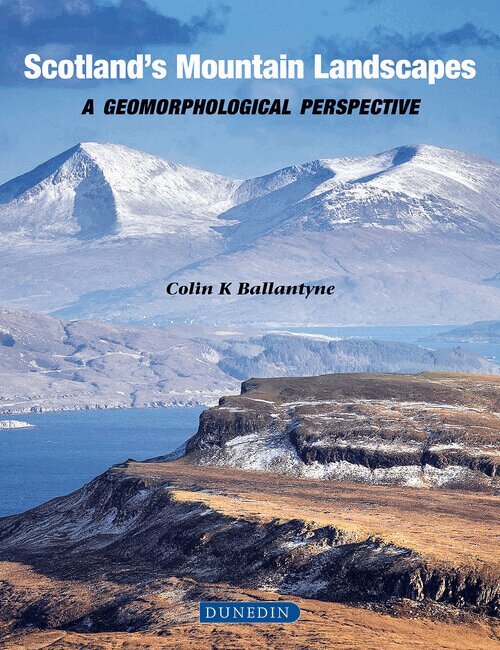
The diversity of Scotland's mountains is remarkable, encompassing the isolated summits of the far northwest, the serrated ridges of Skye, the tor-studded high plateau of the Cairngorms and the rolling hills of the Southern Uplands. Born on ancient continents and uplifted by tectonic forces, the mountains of Scotland have been sculpted by successive ice sheets, landslides, frost, wind and running water. This book explains the geological evolution of Scotland's mountains, and how this has produced an unparalleled variety of mountain forms. It outlines the effects of successive ice sheets on mountain scenery, and explains the dramatic changes in climate that terminated the Ice Age only 11,500 years ago. In non-technical terms it explains the effects of frost action in forming the rubble that mantles many mountain summits, and how such debris has slowly migrated downslope by freezing and thawing of the ground. The dramatic effects of deglaciation and earthquakes in triggering catastrophic landslides and downslope displacement of entire mountainsides are described, along with accounts of more recent events involving the rapid downslope flow of saturated debris. The book also outlines how Scottish mountains experience frequent gale-force winds, and their impact of wind in scouring plateaus and depositing expanses of windblown sand on lee slopes. The role of floods in eroding upland terrain and depositing floodplains, terraces and fans of sediment is described in the context of possible human influence on river regime through forest clearance.Written in clear, non-technical language and abundantly illustrated, this book is designed to provide an essential guide to landforms for all those who walk, climb, live and work in the mountains of Scotland.
1 800 kr
Skickas inom 10-15 vardagar
This book provides an appealing and informative overview of the outstanding landforms and landscapes of Scotland. Scotland is internationally renowned for the diversity of its geology, landforms and landscapes. The rock record spans most of geological time, from the Archaean to the Palaeogene, and represents the outcome of tectonic plate movements, associated geological processes, and sea-level and climate changes. Scotland incorporates primeval gneiss landscapes, the deeply eroded roots of the Caledonian mountain chain, landscapes of extensional tectonics and rifting, and eroded remnants of volcanic complexes that were active when the North Atlantic Ocean opened during the Palaeogene. The present relief reflects uplift and deep weathering during the Cenozoic, strongly modified during successive episodes of Pleistocene glaciation. This striking geodiversity is captured in this book through 29 chapters devoted to the evolution of Scotland’s sceneryand locations of outstanding geomorphological significance, including ancient palaeosurfaces, landscapes of glacial erosion and deposition, evidence of postglacial landscape modification by landslides, rivers and wind, and coastal geomorphology. Dedicated chapters focus on Ice Age Scotland and the associated landscapes, which range from alpine-type mountains and areas of selective glacial erosion to ice-moulded and drift-covered lowlands, and incorporate accounts of internationally renowned sites such as the ‘Parallel Roads’ of Glen Roy, the Cairngorm Mountains and the inselbergs of Assynt. Other chapters consider the record of postglacial rock-slope failures, such as the famous landslides of Trotternish on Skye, and the record of fluvial changes since deglaciation. The sea-level history of Scotland is addressed in terms of its raised and submerged shorelines, while several chapters discuss the contrasting coastal landscapes, which range from the spectacular sea cliffs of Shetland andOrkney to the beaches and dunes of eastern Scotland. The role of geoconservation in preserving Scotland’s outstanding geomorphological heritage is outlined in the final chapter. The book offers an up-to-date and richly illustrated reference guide for geomorphologists, other Earth scientists, geographers, conservationists, and all those interested in geology, physical geography, geomorphology, geotourism, geoheritage and environmental protection.
1 800 kr
Skickas inom 10-15 vardagar
This book provides an appealing and informative overview of the outstanding landforms and landscapes of Scotland. Scotland is internationally renowned for the diversity of its geology, landforms and landscapes. The rock record spans most of geological time, from the Archaean to the Palaeogene, and represents the outcome of tectonic plate movements, associated geological processes, and sea-level and climate changes. Scotland incorporates primeval gneiss landscapes, the deeply eroded roots of the Caledonian mountain chain, landscapes of extensional tectonics and rifting, and eroded remnants of volcanic complexes that were active when the North Atlantic Ocean opened during the Palaeogene. The present relief reflects uplift and deep weathering during the Cenozoic, strongly modified during successive episodes of Pleistocene glaciation. This striking geodiversity is captured in this book through 29 chapters devoted to the evolution of Scotland’s sceneryand locations of outstanding geomorphological significance, including ancient palaeosurfaces, landscapes of glacial erosion and deposition, evidence of postglacial landscape modification by landslides, rivers and wind, and coastal geomorphology. Dedicated chapters focus on Ice Age Scotland and the associated landscapes, which range from alpine-type mountains and areas of selective glacial erosion to ice-moulded and drift-covered lowlands, and incorporate accounts of internationally renowned sites such as the ‘Parallel Roads’ of Glen Roy, the Cairngorm Mountains and the inselbergs of Assynt. Other chapters consider the record of postglacial rock-slope failures, such as the famous landslides of Trotternish on Skye, and the record of fluvial changes since deglaciation. The sea-level history of Scotland is addressed in terms of its raised and submerged shorelines, while several chapters discuss the contrasting coastal landscapes, which range from the spectacular sea cliffs of Shetland andOrkney to the beaches and dunes of eastern Scotland. The role of geoconservation in preserving Scotland’s outstanding geomorphological heritage is outlined in the final chapter. The book offers an up-to-date and richly illustrated reference guide for geomorphologists, other Earth scientists, geographers, conservationists, and all those interested in geology, physical geography, geomorphology, geotourism, geoheritage and environmental protection.