
Colin P. Williams – författare
Visar alla böcker från författaren . Handla med fri frakt och snabb leverans.
7 produkter
7 produkter
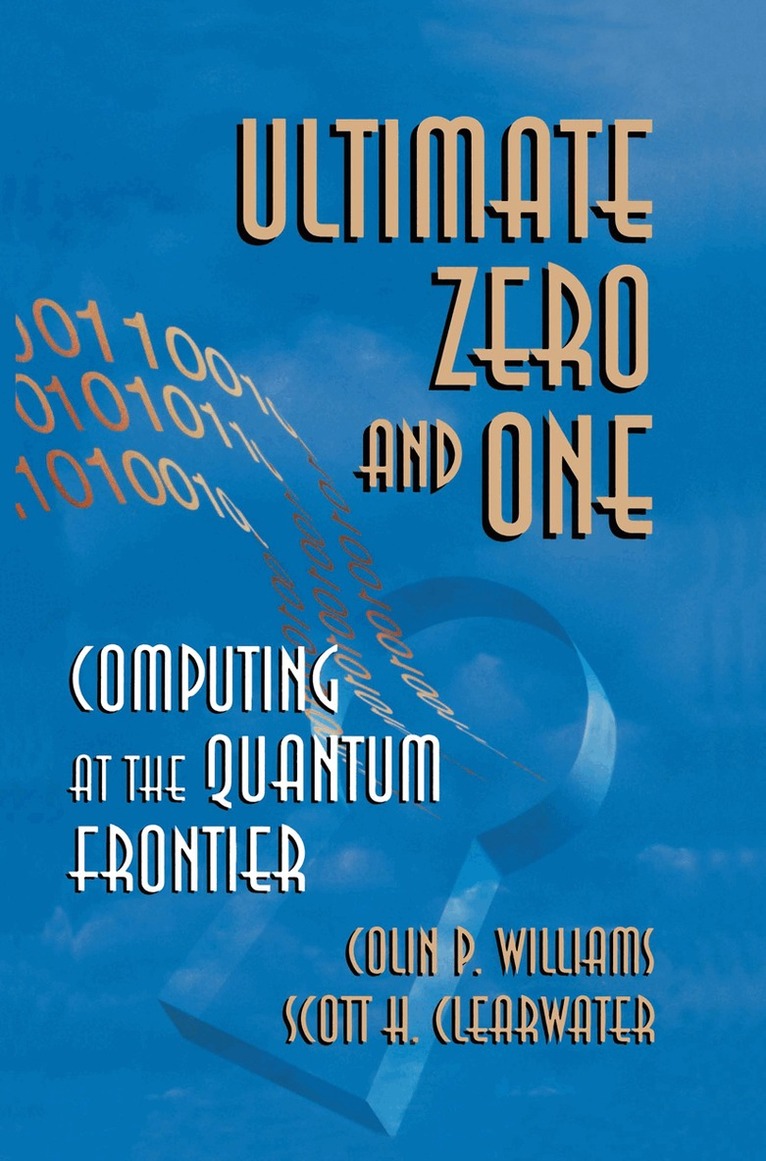
Inbunden, Engelska, 1999
340 kr
Skickas inom 10-15 vardagar
As miniaturization deepens, and nanotechnology and its machines become more prevalent in the real world, the need to consider using quantum mechanical concepts to perform various tasks in computation increases. Such talks include: the teleporting of information, breaking heretofore "unbreakable" codes, communicating with messages that betray eavesdropping, and the generation of random munbers. To date, there has been no book written which applies quantum physics to the basic operations of a computer. This one does, thus presenting us with the ideal vehicle for explaining the complexities of quantum mechanics to students, researchers and computer engineers, alike, as they prepare to design and create the computing and information delivery systems for the future. Both authors have solid backgrounds in the subject matter at the theoretical and research level, as well as experience on a more practical plane. While also intended for use as a text for senior/grad level students in computer science/physics/engineering, this book has its primary use as an up-to-date reference work in the emerging interdisciplinary field of quantum computing. It does require knowledge of calculus and familiarity with the concept of the Turing machine.
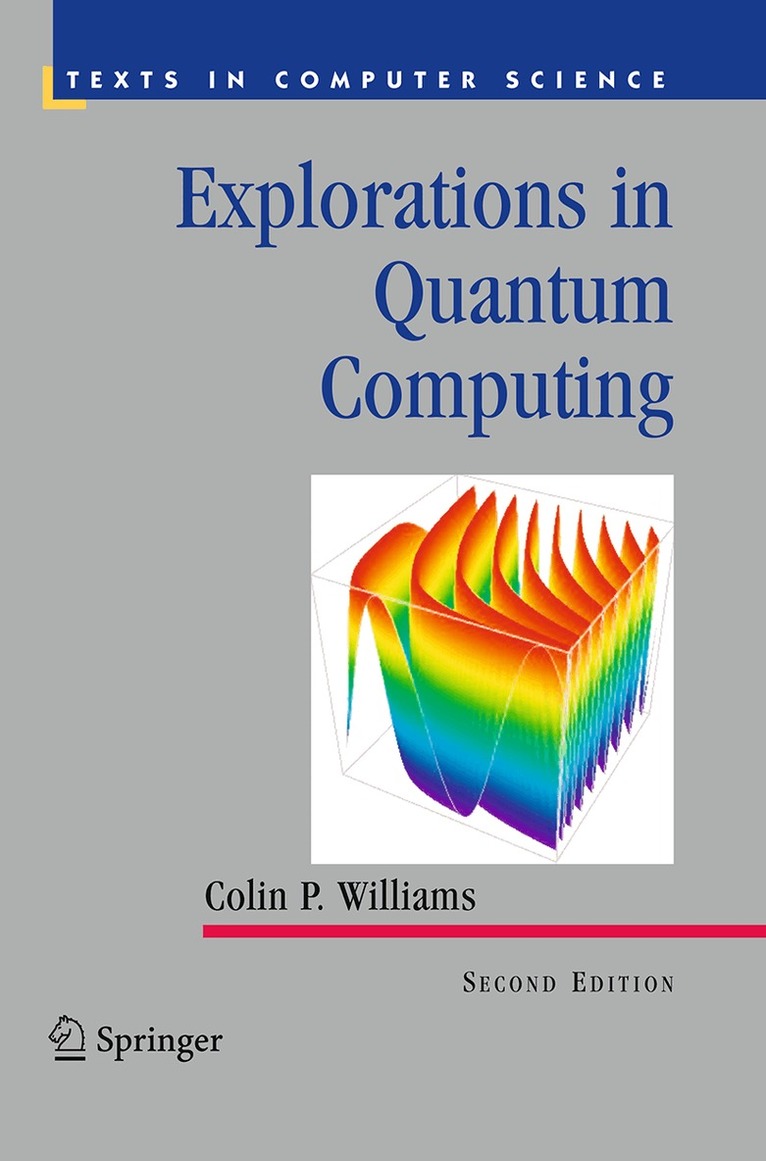
Häftad, Engelska, 2010
756 kr
Skickas inom 10-15 vardagar
By the year 2020, the basic memory components of a computer will be the size of individual atoms. At such scales, the current theory of computation will become invalid."Quantum computing" is reinventing the foundations of computer science and information theory in a way that is consistent with quantum physics - the most accurate model of reality currently known. Remarkably, this theory predicts that quantum computers can perform certain tasks breathtakingly faster than classical computers – and, better yet, can accomplish mind-boggling feats such as teleporting information, breaking supposedly "unbreakable" codes, generating true random numbers, and communicating with messages that betray the presence of eavesdropping.This widely anticipated second edition of Explorations in Quantum Computing explains these burgeoning developments in simple terms, and describes the key technological hurdles that must be overcome to make quantum computers a reality. This easy-to-read, time-tested, and comprehensive textbook provides a fresh perspective on the capabilities of quantum computers, and supplies readers with the tools necessary to make their own foray into this exciting field.Topics and features: concludes each chapter with exercises and a summary of the material covered; provides an introduction to the basic mathematical formalism of quantum computing, and the quantum effects that can be harnessed for non-classical computation; discusses the concepts of quantum gates, entangling power, quantum circuits, quantum Fourier, wavelet, and cosine transforms, and quantum universality, computability, and complexity; examines the potential applications of quantum computers in areas such as search, code-breaking, solving NP-Complete problems, quantum simulation, quantum chemistry, and mathematics; investigates the uses of quantum information, including quantum teleportation, superdense coding, quantum data compression, quantum cloning, quantum negation, and quantumcryptography; reviews the advancements made towards practical quantum computers, covering developments in quantum error correction and avoidance, and alternative models of quantum computation.This text/reference is ideal for anyone wishing to learn more about this incredible, perhaps "ultimate," computer revolution.Dr. Colin P. Williams is Program Manager for Advanced Computing Paradigms at the NASA Jet Propulsion Laboratory, California Institute of Technology, and CEO of Xtreme Energetics, Inc. an advanced solar energy company. Dr. Williams has taught quantum computing and quantum information theory as an acting Associate Professor of Computer Science at Stanford University. He has spent over a decade inspiring and leading high technology teams and building business relationships with and Silicon Valley companies. Today his interests include terrestrial and Space-based power generation, quantum computing, cognitive computing, computational material design, visualization, artificial intelligence, evolutionary computing, and remote olfaction. He was formerly a Research Scientist at Xerox PARC and a Research Assistant to Prof. Stephen W. Hawking, Cambridge University.

E-bok
PDF, Engelska, 2012475 kr
Läs direkt efter köp
As miniaturization deepens, and nanotechnology and its machines become more prevalent in the real world, the need to consider using quantum mechanical concepts to perform various tasks in computation increases. Such talks include: the teleporting of information, breaking heretofore "unbreakable" codes, communicating with messages that betray eavesdropping, and the generation of random munbers. To date, there has been no book written which applies quantum physics to the basic operations of a computer. This one does, thus presenting us with the ideal vehicle for explaining the complexities of quantum mechanics to students, researchers and computer engineers, alike, as they prepare to design and create the computing and information delivery systems for the future. Both authors have solid backgrounds in the subject matter at the theoretical and research level, as well as experience on a more practical plane. While also intended for use as a text for senior/grad level students in computer science/physics/engineering, this book has its primary use as an up-to-date reference work in the emerging interdisciplinary field of quantum computing. It does require knowledge of calculus and familiarity with the concept of the Turing machine.
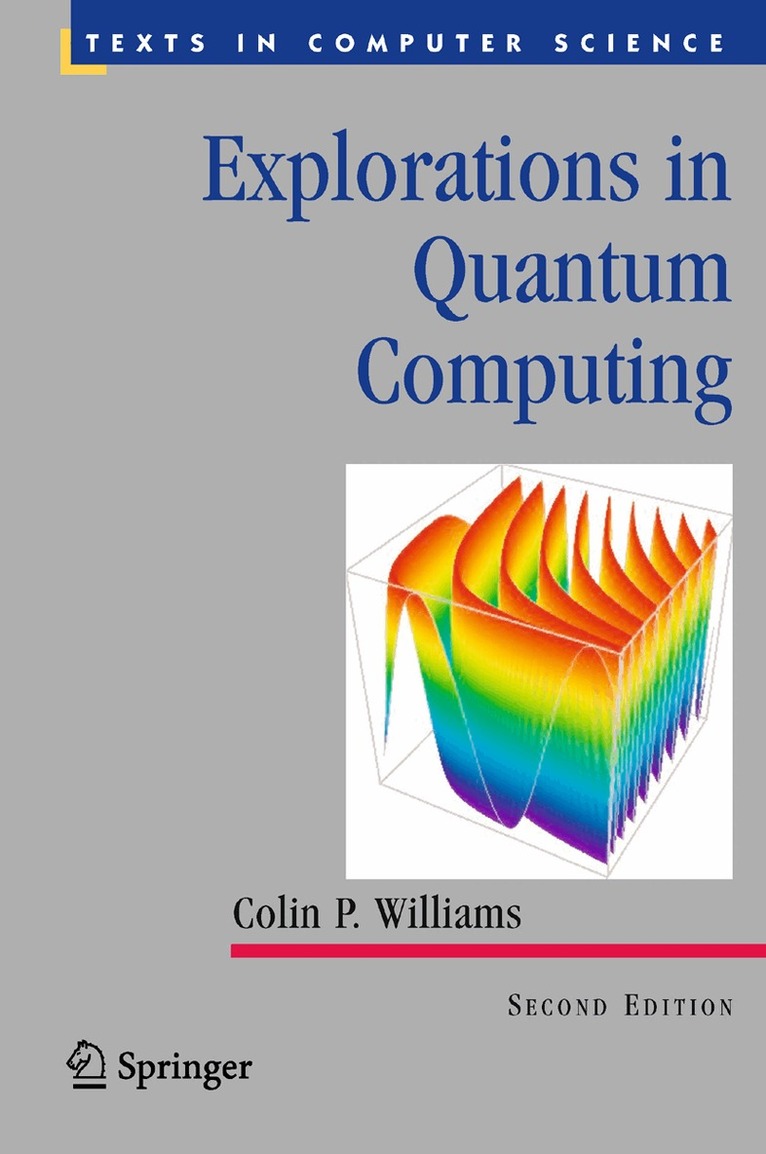
Inbunden, Engelska, 2010
1 109 kr
Skickas inom 10-15 vardagar
By the year 2020, the basic memory components of a computer will be the size of individual atoms. At such scales, the current theory of computation will become invalid."Quantum computing" is reinventing the foundations of computer science and information theory in a way that is consistent with quantum physics - the most accurate model of reality currently known. Remarkably, this theory predicts that quantum computers can perform certain tasks breathtakingly faster than classical computers – and, better yet, can accomplish mind-boggling feats such as teleporting information, breaking supposedly "unbreakable" codes, generating true random numbers, and communicating with messages that betray the presence of eavesdropping.This widely anticipated second edition of Explorations in Quantum Computing explains these burgeoning developments in simple terms, and describes the key technological hurdles that must be overcome to make quantum computers a reality. This easy-to-read, time-tested, and comprehensive textbook provides a fresh perspective on the capabilities of quantum computers, and supplies readers with the tools necessary to make their own foray into this exciting field.Topics and features: concludes each chapter with exercises and a summary of the material covered; provides an introduction to the basic mathematical formalism of quantum computing, and the quantum effects that can be harnessed for non-classical computation; discusses the concepts of quantum gates, entangling power, quantum circuits, quantum Fourier, wavelet, and cosine transforms, and quantum universality, computability, and complexity; examines the potential applications of quantum computers in areas such as search, code-breaking, solving NP-Complete problems, quantum simulation, quantum chemistry, and mathematics; investigates the uses of quantum information, including quantum teleportation, superdense coding, quantum data compression, quantum cloning, quantum negation, and quantumcryptography; reviews the advancements made towards practical quantum computers, covering developments in quantum error correction and avoidance, and alternative models of quantum computation.This text/reference is ideal for anyone wishing to learn more about this incredible, perhaps "ultimate," computer revolution.Dr. Colin P. Williams is Program Manager for Advanced Computing Paradigms at the NASA Jet Propulsion Laboratory, California Institute of Technology, and CEO of Xtreme Energetics, Inc. an advanced solar energy company. Dr. Williams has taught quantum computing and quantum information theory as an acting Associate Professor of Computer Science at Stanford University. He has spent over a decade inspiring and leading high technology teams and building business relationships with and Silicon Valley companies. Today his interests include terrestrial and Space-based power generation, quantum computing, cognitive computing, computational material design, visualization, artificial intelligence, evolutionary computing, and remote olfaction. He was formerly a Research Scientist at Xerox PARC and a Research Assistant to Prof. Stephen W. Hawking, Cambridge University.
E-bok
PDF, Engelska, 2010981 kr
Läs direkt efter köp
By the year 2020, the basic memory components of a computer will be the size of individual atoms. At such scales, the current theory of computation will become invalid."Quantum computing" is reinventing the foundations of computer science and information theory in a way that is consistent with quantum physics - the most accurate model of reality currently known. Remarkably, this theory predicts that quantum computers can perform certain tasks breathtakingly faster than classical computers – and, better yet, can accomplish mind-boggling feats such as teleporting information, breaking supposedly "unbreakable" codes, generating true random numbers, and communicating with messages that betray the presence of eavesdropping.This widely anticipated second edition of Explorations in Quantum Computing explains these burgeoning developments in simple terms, and describes the key technological hurdles that must be overcome to make quantum computers a reality. This easy-to-read, time-tested, and comprehensive textbook provides a fresh perspective on the capabilities of quantum computers, and supplies readers with the tools necessary to make their own foray into this exciting field.Topics and features: concludes each chapter with exercises and a summary of the material covered; provides an introduction to the basic mathematical formalism of quantum computing, and the quantum effects that can be harnessed for non-classical computation; discusses the concepts of quantum gates, entangling power, quantum circuits, quantum Fourier, wavelet, and cosine transforms, and quantum universality, computability, and complexity; examines the potential applications of quantum computers in areas such as search, code-breaking, solving NP-Complete problems, quantum simulation, quantum chemistry, and mathematics; investigates the uses of quantum information, including quantum teleportation, superdense coding, quantum data compression, quantum cloning, quantum negation, and quantumcryptography; reviews the advancements made towards practical quantum computers, covering developments in quantum error correction and avoidance, and alternative models of quantum computation.This text/reference is ideal for anyone wishing to learn more about this incredible, perhaps "ultimate," computer revolution.Dr. Colin P. Williams is Program Manager for Advanced Computing Paradigms at the NASA Jet Propulsion Laboratory, California Institute of Technology, and CEO of Xtreme Energetics, Inc. an advanced solar energy company. Dr. Williams has taught quantum computing and quantum information theory as an acting Associate Professor of Computer Science at Stanford University. He has spent over a decade inspiring and leading high technology teams and building business relationships with and Silicon Valley companies. Today his interests include terrestrial and Space-based power generation, quantum computing, cognitive computing, computational material design, visualization, artificial intelligence, evolutionary computing, and remote olfaction. He was formerly a Research Scientist at Xerox PARC and a Research Assistant to Prof. Stephen W. Hawking, Cambridge University.
E-bok
PDF, Engelska, 2003712 kr
Läs direkt efter köp
Häftad, Engelska, 1999
558 kr
Skickas inom 10-15 vardagar
? Colin P. Williams Jet Propulsion Laboratory, California Institute of Technology, 4800 Oak Grove Drive, Pasadena, CA 91109-8099, email: Colin. P. Williams@jpl. nasa. gov Over the past half century computers have gone from being the room-sized servants of a privileged few to the totable companions of business travellers, schoolchildren,andjust aboutanyonewho canpoint andclick a mouse. Inpart, this transformation was made possible by the dramatic miniaturization in the basic components of a computer. This trend was quantied in 1964 by Gordon Moore, one of the founders of Intel, who noticed that the amount of information that could be stored on a given amount of silicon doubled roughly every 18 months. The doubling trend continues to this day and, by crude extrapolation, predicts that the computers of 2020 might be approaching the one-atom-per-bit level. Physical systems such as atoms, however, behave in ways that are very d- ferent from everyday objects. In fact they are governed by the laws of quantum mechanics rather than classical mechanics.In the early 1980's some foresighted physicists,suchesCharlesBennett(ourconferenceChairperson),RolfLandauer, Paul Benio, David Deutsch, and Richard Feynman, began to question what it would mean for a computer to operate at the one-atom-per-bit scale. The - ementary operations of such a computer would need to be described in terms of quantum mechanics. Recently, physicists and computer scientists have come to appreciate that certain quantum e ects, in particular superposition, int- ference, entanglement, non-locality, indeterminism, and non-clonability, allow entirely new kinds of tasks to be performed.