Colleen O'Neill - Böcker
Visar alla böcker från författaren Colleen O'Neill. Handla med fri frakt och snabb leverans.
4 produkter
4 produkter
312 kr
Skickas inom 10-15 vardagar
Noted tax economist Frederick C. Stocker has observed that the property tax ""resembles a structure designed by a mad architect, erected on a shaky foundation by an incompetent builder, and made worse by the well-intentioned repair work of hordes of amateur tinkerers."" While that may still be a popular view, Glenn Fisher suggests that the actual history of this much-maligned tax should make us less inclined to such easy ridicule. The frequent scapegoat of rebellious taxpayers, yet essential for the functioning of modern local governments, the property tax has a long and controversial history. Fisher's richly detailed account reveals the fundamental difficulties confronting all past attempts at designing an equitable and efficient system of property taxation during the past two centuries. The general property tax-a locally administered tax ostensibly levied at equal rates on all wealth evolved out of the struggle for political and economic equality in the early American republic. It was, as Fisher shows, consistent with Jacksonian democratic principles that kept the tax power decentralized, limited, and close to home, while producing sufficient revenue to support state and local government even in thinly populated frontier states. But as new states and their constitutions emerged throughout the nineteenth century, many citizens criticized the Jacksonian approach for its inconsistencies and inequities. Advocating principles long-associated with Alexander Hamilton and the Federalists, these critics called for uniform taxes centrally administered by professional bureaucracies. This tension between Jacksonian and Hamiltonian principles is an integral part of Fisher's story and remains unresolved as our local governments continue to cope with the conflict between their revenue needs and the desire for equitable taxation. Drawing upon economic, legal, political, and public administration perspectives, Fisher has fashioned an illuminating chronicle of popular government and intergovernmental relations (federal, state, and local) that will be of equal interest to scholars, students, local governments, and reform-minded taxpayers.
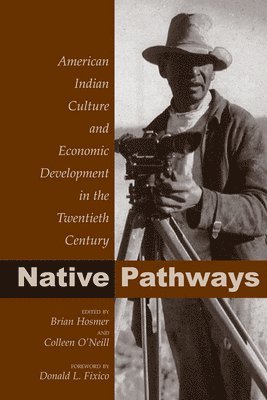
Native Pathways
American Indian Culture and Economic Development in the Twentieth Century
Häftad, Engelska, 2004
379 kr
Skickas inom 3-6 vardagar
How has American Indians' participation in the broader market - as managers of casinos, negotiators of oil leases, or commercial fishermen - challenged the U.S. paradigm of economic development? Have American Indians paid a cultural price for the chance at a paycheck? How have gender and race shaped their experiences in the marketplace? Contributors to Native Pathways ponder these and other questions, highlighting how indigenous peoples have simultaneously adopted capitalist strategies and altered them to suit their own distinct cultural beliefs and practices. Including contributions from historians, anthropologists, and sociologists, Native Pathways offers fresh viewpoints on economic change and cultural identity in twentieth-century Native American communities. Foreword by Donald L. Fixico.
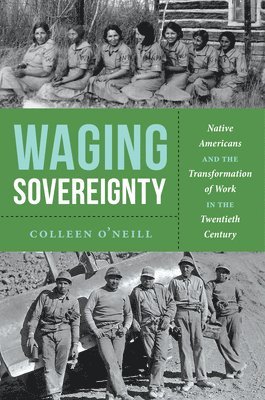
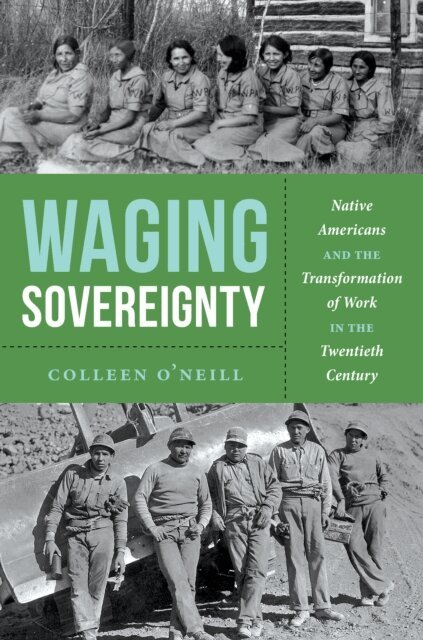
Waging Sovereignty
Native Americans and the Transformation of Work in the Twentieth Century
Inbunden, Engelska, 2026
1 055 kr
Skickas inom 10-15 vardagar
Wage work was supposed to “kill the Indian and save the man,” or so thought Richard Pratt and other late nineteenth-century policymakers. Nevertheless, even as American Indians entered the workforce, they remained connected to their lands and cultures. In this powerful history of resilience and transformation, Colleen O'Neill uncovers the creative strategies Native workers employed to subvert assimilation and fight for justice in the workplace, their collective strength expanding the very meaning of sovereignty.Drawing on federal archives, Native memoirs, oral histories, and field research, O'Neill traces a sweeping story that stretches from the era of boarding schools to the contemporary world of high-stakes gaming. For more than a century, federal policymakers tried to reshape Native lives through labor. In some cases, children were sent to pick crops and scrub settlers' homes. In others, families were relocated to distant cities for permanent year-round jobs that were designed to replace traditional seasonal labor and lifestyle patterns. But Native workers persevered. They rebuilt their communities, fought to reclaim control of the reservation workplace, and developed distinctive institutions to defend their cultural, political, and economic sovereignty. As Waging Sovereignty illuminates, wage work was a focal point of assimilationist efforts and, in turn, labor became a key factor in Native workers’ anti-colonial struggle.
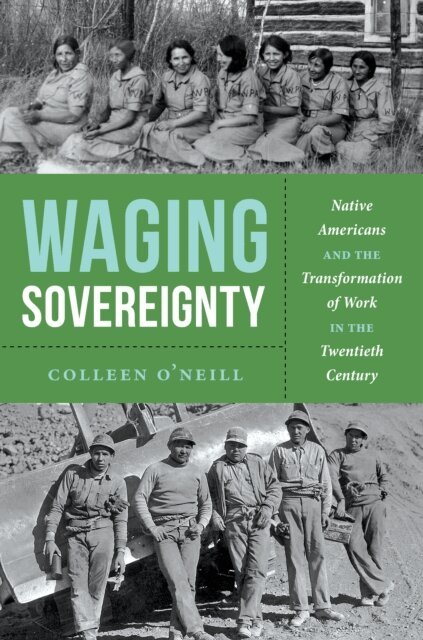
Waging Sovereignty
Native Americans and the Transformation of Work in the Twentieth Century
Häftad, Engelska, 2026
312 kr
Skickas inom 10-15 vardagar
Wage work was supposed to “kill the Indian and save the man,” or so thought Richard Pratt and other late nineteenth-century policymakers. Nevertheless, even as American Indians entered the workforce, they remained connected to their lands and cultures. In this powerful history of resilience and transformation, Colleen O'Neill uncovers the creative strategies Native workers employed to subvert assimilation and fight for justice in the workplace, their collective strength expanding the very meaning of sovereignty.Drawing on federal archives, Native memoirs, oral histories, and field research, O'Neill traces a sweeping story that stretches from the era of boarding schools to the contemporary world of high-stakes gaming. For more than a century, federal policymakers tried to reshape Native lives through labor. In some cases, children were sent to pick crops and scrub settlers' homes. In others, families were relocated to distant cities for permanent year-round jobs that were designed to replace traditional seasonal labor and lifestyle patterns. But Native workers persevered. They rebuilt their communities, fought to reclaim control of the reservation workplace, and developed distinctive institutions to defend their cultural, political, and economic sovereignty. As Waging Sovereignty illuminates, wage work was a focal point of assimilationist efforts and, in turn, labor became a key factor in Native workers’ anti-colonial struggle.