Colton Fehr - Böcker
Visar alla böcker från författaren Colton Fehr. Handla med fri frakt och snabb leverans.
6 produkter
6 produkter
406 kr
Kommande
Critics describe homicide law in Canada as outdated and unprincipled in application. While early jurisprudence compelled limited reform, constitutional challenges subsided near the turn of the twentieth century, and legislative amendments have been rare and piecemeal.Rethinking Homicide makes a compelling case for constitutionally restructuring homicide law and considers how Parliament might respond. Colton Fehr contends that the distinctions between first- and second-degree murder and manslaughter unfairly label some offenders, challenges the infanticide provision, and explains why the provocation defence has no constitutional status and should be repealed. He also argues that murder’s exclusion from the duress defence is inconsistent with the principle prohibiting conviction for morally involuntary conduct. From that principle, Fehr develops a broader constitutional structure for substantive defences implicated by homicide offences. He further contends that the minimum sentences applicable to homicide constitute cruel and unusual punishment. In response, Parliament will have to choose between a sentencing safety valve and a diminished responsibility defence, with the former option being the preferable policy.The arguments offered in Rethinking Homicide provide a timely and important contribution to criminal law. Scholars, judges, and lawyers alike will appreciate its much-needed contemplation of the Charter within this core area of criminal law.
873 kr
Skickas inom 7-10 vardagar
Constitutionalizing Criminal Law calls for an overhaul of the way the Supreme Court of Canada has developed the relationship between criminal and constitutional law. After the adoption of the Charter of Rights, the court employed principles of criminal law theory when striking down criminal laws. More recently, it has invoked principles of instrumental rationality in doing so. In both cases, the court has consistently turned to the concept of fundamental justice under section 7 of the Charter to constitutionally challenge criminal laws in place of specifically enumerated rights. The existence of multiple avenues to challenge criminal laws constitutionally raises the question: Which set of rights should the court employ? This book persuasively argues that rights decisions should be based on enumerated rights where possible, the principles of instrumental rationality abandoned, and the principles of criminal law theory invoked only when an unjust criminal law cannot otherwise be challenged under the Charter.
355 kr
Skickas inom 7-10 vardagar
Constitutionalizing Criminal Law calls for an overhaul of the way the Supreme Court of Canada has developed the relationship between criminal and constitutional law. After the adoption of the Charter of Rights, the court employed principles of criminal law theory when striking down criminal laws. More recently, it has invoked principles of instrumental rationality in doing so. In both cases, the court has consistently turned to the concept of fundamental justice under section 7 of the Charter to constitutionally challenge criminal laws in place of specifically enumerated rights. The existence of multiple avenues to challenge criminal laws constitutionally raises the question: Which set of rights should the court employ? This book persuasively argues that rights decisions should be based on enumerated rights where possible, the principles of instrumental rationality abandoned, and the principles of criminal law theory invoked only when an unjust criminal law cannot otherwise be challenged under the Charter.
728 kr
Skickas inom 7-10 vardagar
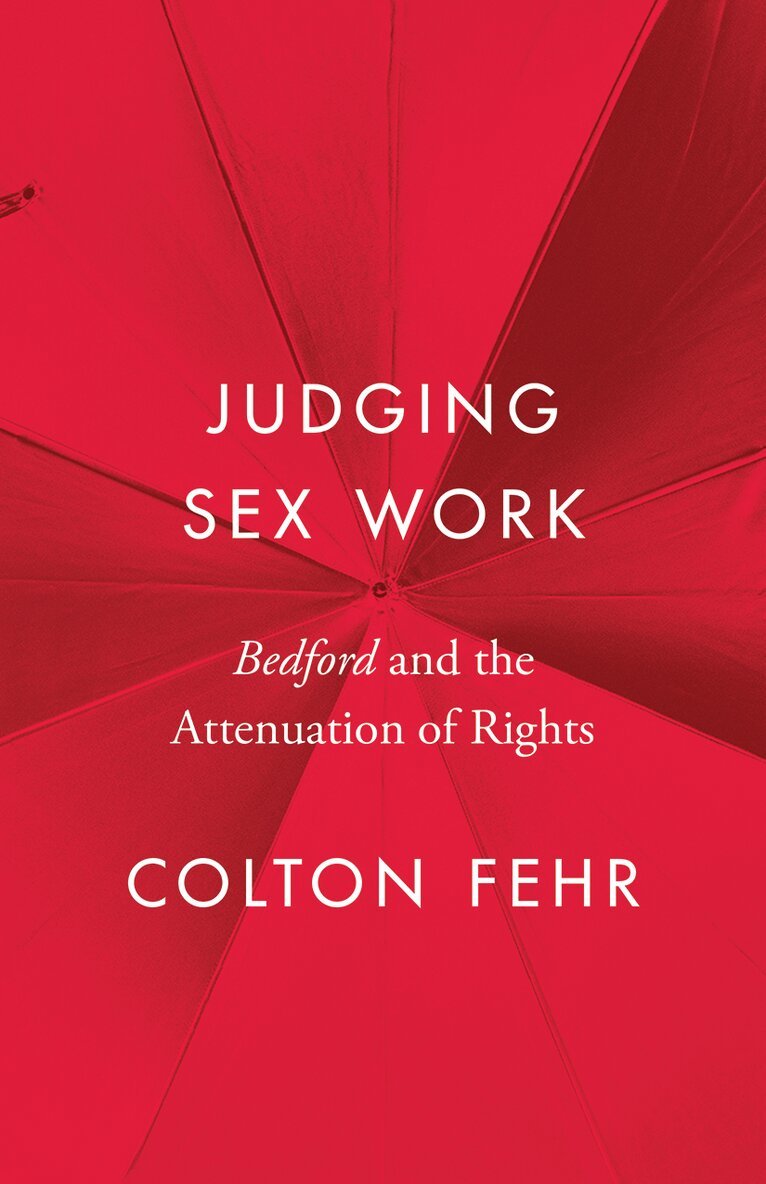
In Bedford, the Supreme Court struck down prohibitions against communicating in public for the purpose of sex work, living on its avails, and working from a bawdy house. Its narrow constitutional reasoning nevertheless allowed Parliament to respond by adopting the "end demand" or "Nordic Model" of sex work regulation, an approach widely criticized for failing to ensure sex worker safety. Judging Sex Work takes stock of the Bedford decision, arguing that the constitutional issue was improperly framed. Because the most vulnerable sex workers have no realistic choice but to commit the impugned offences, they already possess a legal defence. The constitutionality of the sex work laws should therefore have been assessed by their application to those who choose sex work, an approach that militates in favour of upholding these laws based on current jurisprudence. While this approach leads to the former restrictions on sex work being constitutional, it also has the salutary effect of forcing litigants to consider a more pressing question: Can sex work be rationalized as a criminal matter at all?
331 kr
Skickas inom 7-10 vardagar
In Bedford, the Supreme Court struck down prohibitions against communicating in public for the purpose of sex work, living on its avails, and working from a bawdy house. Its narrow constitutional reasoning nevertheless allowed Parliament to respond by adopting the "end demand" or "Nordic Model" of sex work regulation, an approach widely criticized for failing to ensure sex worker safety. Judging Sex Work takes stock of the Bedford decision, arguing that the constitutional issue was improperly framed. Because the most vulnerable sex workers have no realistic choice but to commit the impugned offences, they already possess a legal defence. The constitutionality of the sex work laws should therefore have been assessed by their application to those who choose sex work, an approach that militates in favour of upholding these laws based on current jurisprudence. While this approach leads to the former restrictions on sex work being constitutional, it also has the salutary effect of forcing litigants to consider a more pressing question: Can sex work be rationalized as a criminal matter at all?
655 kr
Kommande
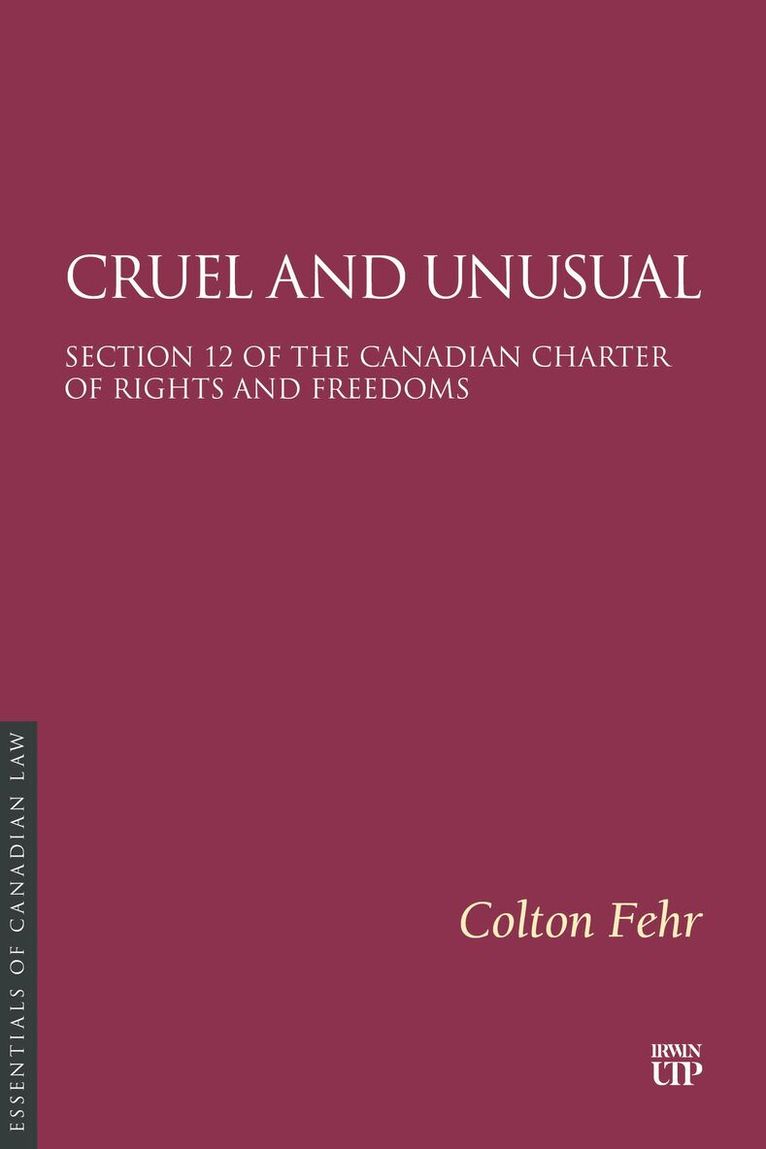
Cruel and Unusual presents an overview of and critical discussion surrounding the judicial interpretation of section 12 of the Canadian Charter of Rights and Freedoms. This book explains the various components of section 12 of the Charter including the judicial development and application of the terms "punishment," "treatment," and "cruel and unusual." It provides a rigorous discussion of the remedies available upon proving that the state imposed "cruel and unusual" consequences, as well as whether any law mandating such a draconian-sounding consequence may be justified under section 1 of the Charter. Law professor Colton Fehr also puts forward various reform recommendations and criticisms of current doctrine. He contends that the judicial development of section 12 and its methodology for proving an infringement provide a principled framework upon which to consider a variety of issues that are sure to come before the courts including the consideration of the constitutionality of various minimum sentences and other methods of treatment used in Canadian prisons. Written in a concise and accessible manner, Cruel and Unusual is tailored to both law students seeking to develop an understanding of this complex area of law and jurists seeking to apply and develop this important constitutional right.