Columba Stewart – författare
Visar alla böcker från författaren Columba Stewart. Handla med fri frakt och snabb leverans.
3 produkter
3 produkter
E-bok
PDF, Engelska, 1998322 kr
Läs direkt efter köp
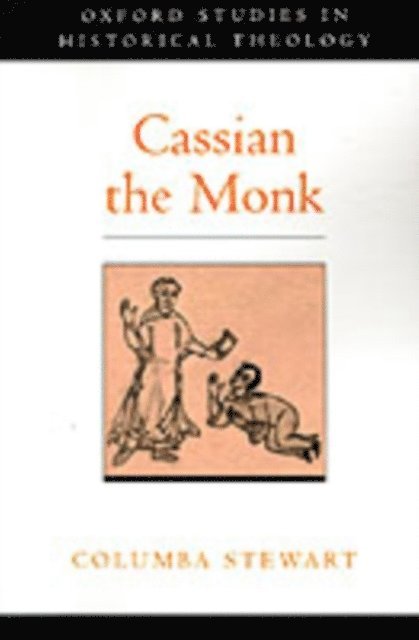
This book is a study of the life, monastic writings, and spiritual theology of John Cassian (c., 360-435). His Institutes and Conferences are a remarkable synthesis of earlier monastic traditions, especially those of fourth-century Egypt, informed throughout by Cassian''s awareness of the particular needs of the Latin monastic movement he was helping to shape. Sometimes portrayed as simply an advocate of the sophisticated spiritual theology of Evagrius of Ponticus (360-435), Cassian was actually a theologian of keen insight, realism, and creativity. His teaching on sexuality is unique in early monastic literature in both its breadth and its depth, and his integration of biblical interpretation with the ways of prayer and teaching on ecstatic prayer are of fundamental importance for the western monastic tradition. The only Latin writer included in the classic Greek collections of monastic sayings, Cassian was the major spiritual influence on both the Rule of the Master and the Rule of Benedict, as well as the source for Gregory the Great''s teaching on capital sins and compunction. Columba Stewart''s book is the first major study of Cassian to be published in twenty years. It begins by establishing Cassian''s credibility as a teacher on the basis of his own experience as a monk and his familiarity with the fundamental literary sources. Stewart then turns to Cassian''s spiritual theology, paying particular attention to Cassian''s view of the monastic journey in eschatological perspective, his teaching on continence and chastity, the Christological basis of biblical interpretation and prayer, his method of unceasing prayer, and his integration of ecstatic experience with an Evagrian theology of prayer.
Inbunden, Engelska, 1997
2 240 kr
Skickas inom 5-8 vardagar
Studies in Seventeenth-Century European Philosophy is a collection of new, specially written essays on the flowering of modern philosophy on the continent of Europe. It is the second volume in a series designed to combine historical and analytical commentary on significant topics or periods in the history of philosophy. The philosophy of seventeenth-century Europe was shaped by scientific and theological tensions. These are reflected in different readings of and reactions to Aristotle's philosophy and to the scholastic and other traditions, in the light of new learning and of concerns about matter and mechanism. This volume focuses on the work of Descartes, later Cartesians, Leibniz, and Bayle. It reassesses the influence of Augustine on Descartes and of the Reformed tradition on Leibniz, and traces anticipations of Leibniz's monadology in the cabalistic notions of van Helmont, the preformationist theories of Malebranche, and the experimental work of Dutch microscopists. New light is shed on the occasionalist theory of causation. The controversy over mind and matter is typical of the sceptical impasses that led Bayle to support toleration in all speculative matters, but how far this was a shield for free thinking in matters of faith and morals continues to attract debate.
Inbunden, Engelska, 1991
1 904 kr
Skickas inom 5-8 vardagar
This study provides a complete reassessment of the Messalian controversy of the fourth and fifth centuries AD. The Messalians were an ascetic group, their name (of Syriac derivation) meaning `praying people'. Their extraordinary claims and graphic spiritual vocabulary were considered heretical by the early Christian Church and were condemned at the Council of Ephesus in 431.Dr Stewart reconstructs the history of the controversy from its beginnings, carefully avoiding all previous suppositions and flawed methodologies. He considers in depth the spiritual vocabulary which lies at the root of the controversy and which can also be found in the Greek pseudo-Macarian writings. He proves that the pseudo-Macarian vocabulary can be traced to a Syriac milieu and demonstrates this by comparisons with such early Syriac texts as the writings of Ephrem, Aphrahat, and especially the anonymous Liber graduum. In this light, the claims of the Messalians are shown to result from the influence upon Greek Christian culture of an equally orthodox tradition, the Semitic Syriac culture of the Christian East. Christian writers of both cultures were determined to show others a way to 'work the earth of the heart', an image favoured by pseudo-Macarius for its evocation of the patient labour of asceticism. The controversy was thus not indeed a question of heresy, but of misperceived differences of culture and of spiritual idiom.